
NEW
Font size
 Worksheets
Umbelliferae Family Introduction
Total questions: 25
Worksheet time: 13mins
Identify the botanical origin of fennel shown in the images.
Coriandrum sativum species
Pimpinella anisum species
Carum carvi species
Foeniculum vulgare species
Which constituent is a major component of fennel’s volatile oil?
Thymol compound
Anethol compound
Menthol compound
Linalool compound
Which traditional medicinal use is correctly associated with fennel?
Carminative and digestive use
Topical keratolytic use
Sedative hypnotic use
Anticoagulant therapy use
Which botanical source provides caraway used in health sciences practice?
Carum carvi plant source
Foeniculum vulgare herb
Cuminum cyminum species
Pimpinella anisum plant
Which major volatile constituent in caraway contributes to its characteristic aroma?
Eugenol key constituent
Menthol dominant compound
Carvone primary component
Thymol principal oil
What is the primary medicinal action of caraway in managing digestive discomfort?
Carminative relieving gas
Expectorant clearing mucus
Antipyretic reducing fever
Diuretic increasing urine
Which botanical name correctly identifies the plant source of coriander used in pharmacognosy?
Pimpinella anisum
Foeniculum vulgare
Cuminum cyminum
Corianderum sativum
Which volatile oil is a principal constituent of coriander fruits and contributes to its aroma?
Linalool (coriandrol)
Menthol (peppermint)
Thymol (thyme oil)
Eugenol (clove oil)
Which therapeutic action best explains coriander’s use for relieving intestinal spasms?
Sedative activity
Expectorant activity
Diuretic activity
Antispasmodic activity
Which botanical name correctly identifies poison hemlock in the Umbelliferae family?
Cicuta virosa plant
Conium maculatum species
Daucus carota herb
Foeniculum vulgare shrub
Which primary toxic constituent in Conium disrupts nicotinic acetylcholine receptors in the CNS?
Strychnine indole compound
Nicotine pyridine alkaloid
Coniine alkaloid toxin
Morphine alkaloid base
Which clinical effect best explains fatal outcomes after small-dose ingestion of Conium?
Renal tubular necrosis shock
Severe hemolysis with anemia
Acute hepatic necrosis failure
Respiratory collapse leading death
Which botanical source provides Asafoetida used in health sciences?
Zingiber officinale roots
Allium sativum bulbs
Coriandrum sativum seeds
Ferula foetida species rhizomes
What is the main constituent of Asafoetida volatile oil responsible for key activity?
Caffeic acid phenolate
Isobutylpropanyldisulphide compound
Ascorbic acid derivative
Menthol terpene fraction
Which part of the plant is processed to obtain Asafoetida for medicinal use?
Mature seeds oil only
Oleo-gum resins from rhizomes
Dried leaves and stems
Flowering umbels extracts
Which growth forms are characteristic of plants in the Apocynaceae family?
Twiners, woody climbers, erect herbs, shrubs, trees
Prostrate grasses, aquatic ferns, epiphytic mosses only
Annual grasses, succulent cacti, parasitic mistletoes
Only tall canopy trees with buttressed trunks
Which plant family does Rauwolfia belong to?
Solanaceae botanical family
Apocynaceae botanical family
Fabaceae botanical family
Rutaceae botanical family
Which alkaloid from Rauwolfia is specifically noted as an antihypertensive and tranquilizer?
Serpentine minor root alkaloid
Yohimbine adrenergic alkaloid
Ajmaline antiarrhythmic alkaloid
Reserpine therapeutic alkaloid
Which plant is the botanical source of the Vinca alkaloids used in cancer therapy?
Catharanthus roseus (Vinca rosea)
Digitalis purpurea (Foxglove)
Cinchona officinalis (Quinine tree)
Papaver somniferum (Opium poppy)
Which pair lists the two important alkaloids isolated from Catharanthus used as antineoplastic agents?
Paclitaxel and Docetaxel
Quinine and Quinidine
Morphine and Codeine
Vincristine and Vinblastine
Vinblastine sulphate is primarily classified as which type of pharmacological agent?
Analgesic opioid, CNS depressant
Antitumor alkaloid, cytotoxic
Antimalarial quinoline, blood schizonticide
Broad-spectrum antibiotic, bactericidal
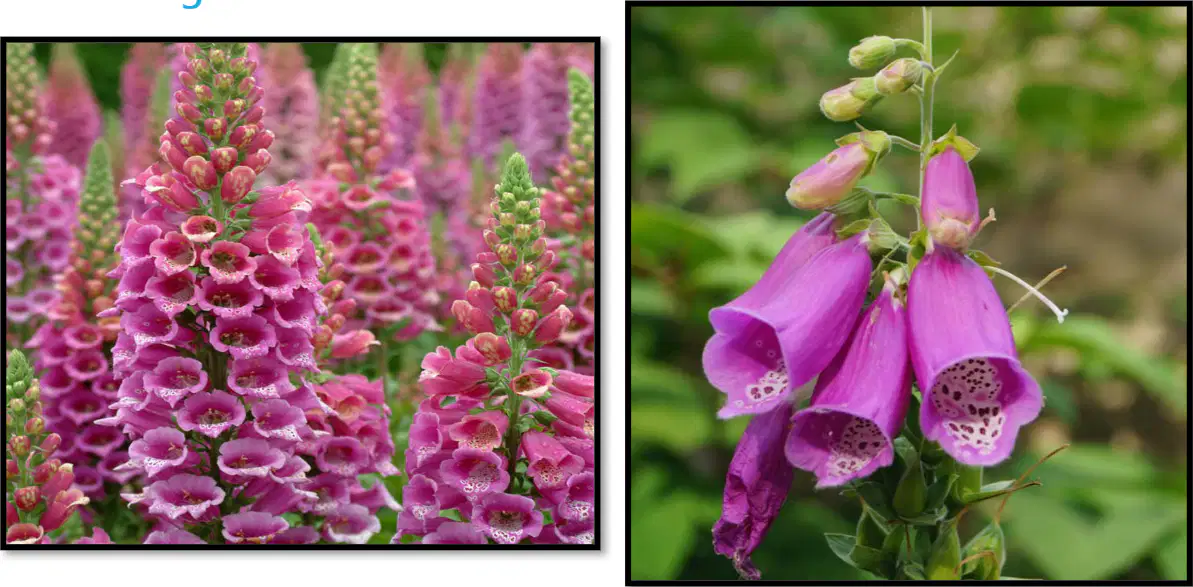
Identify the plant family that includes Digitalis species shown in the images.
Rosaceae family group
Lamiaceae family group
Solanaceae family group
Scrophulariaceae family group
Which botanical name corresponds to the plant commonly called mullein that yields medicinal leaves?
Thapsus verbascum
Verbascum officinale
Verbascum thapsus
Scrophulariaceae thapsus
Which constituent is notably present in mullein leaves and contributes to their therapeutic effects?
Volatile oils
Polysaccharide starch
Alkaloid nicotine
High vitamin K
Which property best explains why mullein leaf preparations soothe irritated mucosa?
Prokinetic effect
Vasoconstrictor action
Diuretic effect
Demulcent action

