
 Worksheets
Introduction to Business Communication
Total questions: 108
Worksheet time: 54mins
Which statement best defines business communication in organizational settings?
Storage of data in company databases
Flow of information among business parties
Movement of goods across supply chains
Exchange of emotions within close friends
Which option lists common purposes of business communication in daily operations?
To replace all marketing decisions
To entertain only without action
To conceal facts and avoid contact
To give information and receive feedback
Which item is MOST aligned with the idea that communication is two-way traffic?
Broadcasting ads without contact channels
Sending messages and inviting responses
Posting notices without reading replies
Issuing orders with no clarification
Which example illustrates persuasion as a core use of business communication?
Archiving emails for future audits
Measuring inventory with barcodes
Printing internal phone directories
Urging customers to try a service
A manager wants to improve customer service. Which communication action best supports this aim?
Delaying responses until month end
Automating replies without follow‑up
Ignoring negative reviews to protect morale
Listening to complaints and advising solutions
Which characteristic reflects the nature of business communication as systematic?
Avoiding any written documentation
Relying only on informal hallway talks
Sending spontaneous messages at random times
Following defined channels and feedback loops
Wilbur Schramm’s view emphasizes understanding how people relate to each other. What capability does this mainly develop in business communication?
Interpreting context and shared meaning
Calculating financial break‑even points
Designing physical product features
Scheduling warehouse deliveries
Which combination best captures the importance outcomes of effective business communication?
Random messaging, isolated teams, passive staff
Stronger bonds, better decisions, higher productivity
Higher prices, lower quality, slower delivery
Fewer meetings, stricter silence, limited access
Which step involves transforming thoughts into symbols like words, visuals, or gestures?
Sender selecting audience and goals
Decoding interpreting received content
Message arranging content components
Encoding translating ideas into symbols
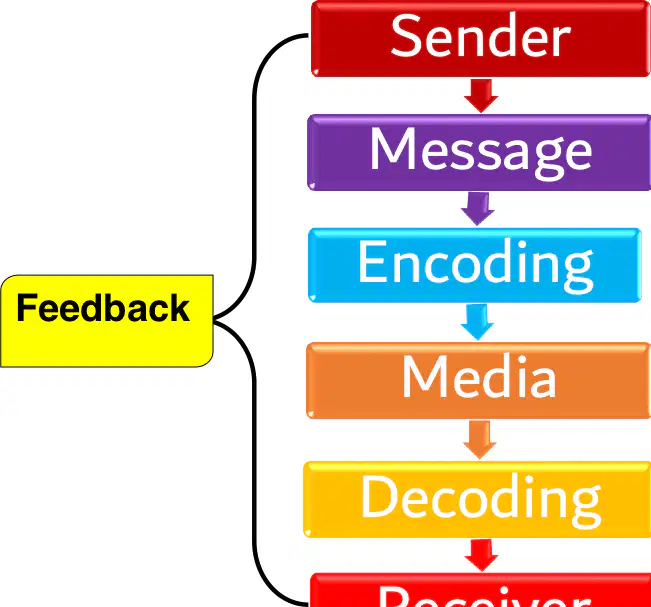
In the diagram of the communication process, which component immediately follows Encoding?
Media as transmission channel
Message in structured form
Receiver as target audience
Feedback as response signal
What best defines Noise in the communication process?
Any deliberate persuasive tactic
Any obstruction distorting communication
Any extra information for clarity
Any feedback that is negative
A consumer reads a print advertisement and decides to buy the product. Within the process, this purchase most directly represents which element?
Media because print was used
Decoding because meaning formed
Feedback because response given
Sender because action initiates
Which pairing correctly matches role with example given?
Sender — vehicle carrying message
Receiver — maker of the brand
Media — channel like print or TV
Decoding — crafting the headline
If a reader misinterprets an ad due to personal prejudice, which stage primarily fails?
Decoding by the reader
Feedback to the company
Media carrying the message
Encoding by the advertiser
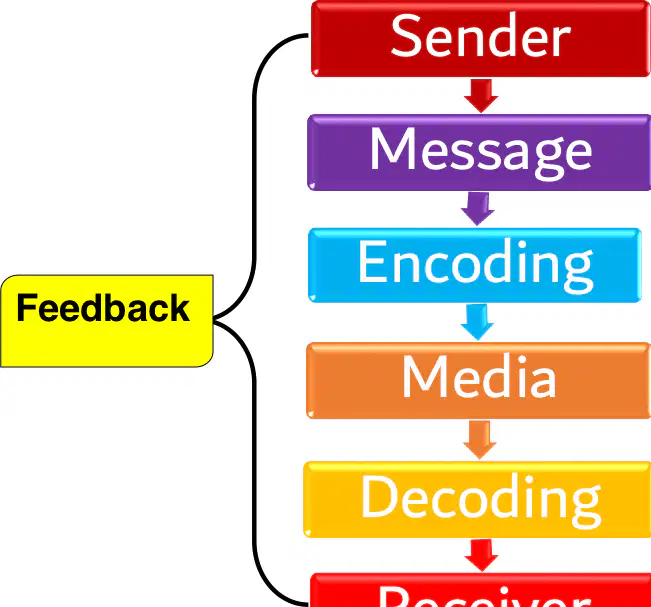
Strategically, where can Noise intervene according to the diagram and description?
Only at media during transmission
Only at receiver after decoding
At multiple stages across process
Only at sender before encoding
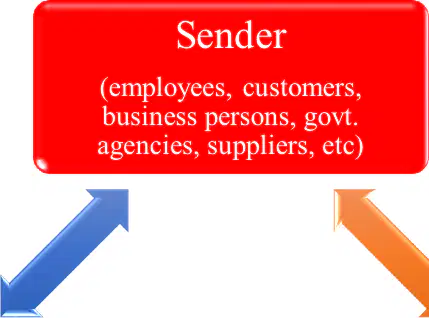
Which component initiates the communication by encoding and transmitting a message in a business setting?
Business information archive
Feedback from stakeholders
Receiver within the network
Sender within the organization
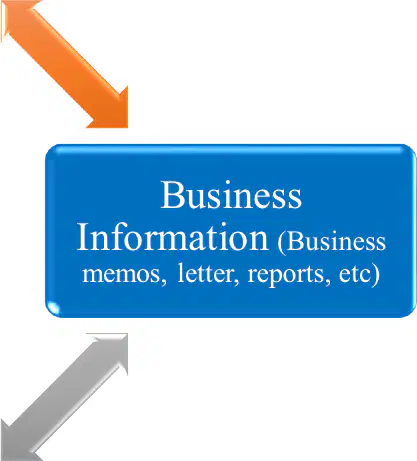
What best describes business information in organizations?
Data and messages relevant to operations
Personal opinions about colleagues
Entertainment content for employees
Legal codes unrelated to work
Who primarily decodes the message and takes action based on its content?
Receiver such as clients or employees
Sender such as managers or teams
External auditors and regulators
Public audiences and communities
Which option illustrates feedback in business communication?
A server stores archived files
A printer outputs the memo
A supervisor replies to a report
A department drafts the message
A manager must choose the channel for a policy update. Which function of communication is most directly served by doing this effectively?
Conveying message accurately to staff
Creating image for investors
Publicizing goods to customers
Controlling supplier contracts
A team faces delays due to misunderstanding between units. Which communication function should be emphasized first to resolve this?
Publicizing goods and services
Managing coordination and cooperation
Performance evaluation procedures
Creating image and reputation
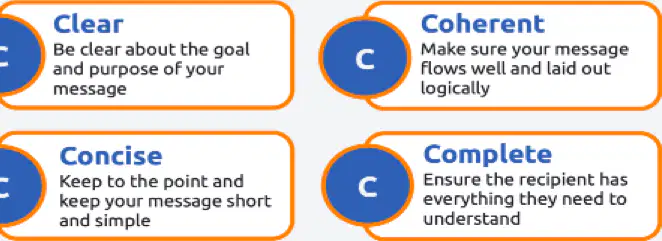
Which C of effective communication ensures the message flows well and is logically organized?
Concrete with enough detail
Concise and short wording
Coherent and logically laid out
Clear and purpose-focused structure

In the 7 Cs, which principle emphasizes keeping the message to the point and brief?
Courteous, friendly and open
Concrete but not overly detailed
Complete with all needed details
Concise and short and simple
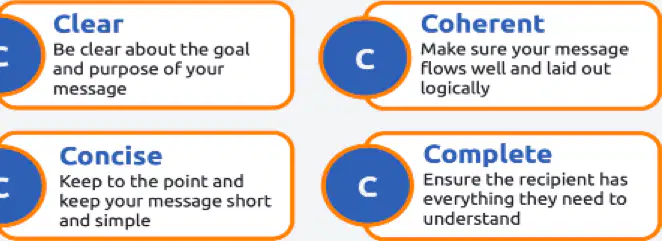
A manager adds sufficient facts so the recipient has everything needed to understand. Which C is being applied?
Complete information provided
Concrete examples included
Correct grammar ensured
Courteous tone maintained

Which option best matches the definition: “Be clear, not fuzzy; provide detail, but not too much detail”?
Concrete communication approach
Coherent message sequencing
Correct and accurate wording
Clear goal and purpose stated
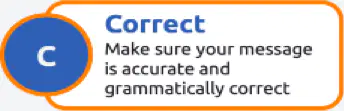
A message is grammatically accurate and free of errors. Which C is demonstrated?
Correct message construction
Clear purpose articulation
Coherent logical ordering
Courteous professional tone
Which item is explicitly shown as a commonly experienced barrier to communication?
Excessive feedback loops
Noise during transmission
Poor channel selection
Overly technical jargon
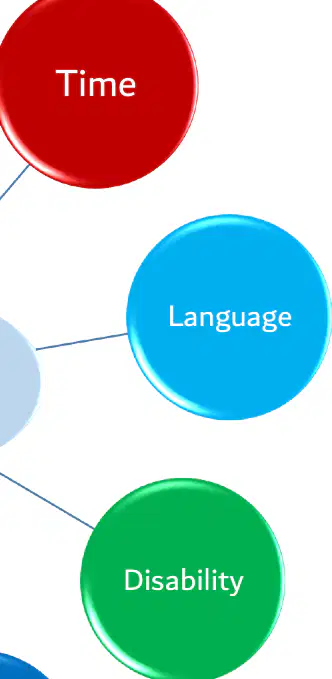
In the barrier diagram, which factor is depicted as a separate bubble alongside Language and Time?
Power distance issues
Conflicting objectives
Unclear message source
Disability as an impediment
Which barrier is most associated with distance, noise, or poor lighting during interactions?
Perceptual barrier from personal beliefs and biases
Psychological barrier caused by anxiety or fear
Semantic barrier from unfamiliar specialist terminology
Physical barrier in environments with sensory issues
A misunderstanding due to ambiguous vocabulary and faulty translation best exemplifies which barrier?
Technological barrier from software and connectivity
Semantic barrier involving language and meaning issues
Organizational barrier due to hierarchy protocols
Cultural barrier in norms and values differences
Differences in norms, values, and communication styles across groups primarily create which barrier?
Physiological barrier from hearing limitations
Cultural barrier across diverse social backgrounds
Technological barrier from tool malfunctions
Perceptual barrier from individual biases
Stress, fear, and personal biases that impede understanding are examples of which barrier?
Perceptual barrier interpreting messages differently
Psychological barrier based on emotional states
Physical barrier from spatial separation issues
Organizational barrier within formal structures
Which action most directly reduces perceptual barriers in conversation?
Apply empathy and practice active listening
Upgrade video conferencing software
Standardize hierarchical reporting lines
Increase message frequency with repetition
Providing assistive technologies and speaking clearly at a moderate pace mainly addresses which challenge?
Technological barrier arising from software glitches
Semantic barrier involving ambiguous technical jargon
Cultural barrier due to divergent social norms
Physiological barrier related to disabilities or limitations
Unclear channels, bureaucratic policies, and competing priorities typically hinder communication through which barrier?
Physical barrier stemming from noise levels
Perceptual barrier driven by personal beliefs
Technological barrier from equipment issues
Organizational barrier within internal structures
Which combined strategy best targets multiple barriers at once during a meeting?
Assume shared norms and skip cultural accommodation
Use clear language and confirm understanding through clarification
Rely on specialized jargon without explanation
Ignore nonverbal cues to avoid mixed signals
Which statement best defines verbal communication?
Transmitting messages using spoken words
Sharing ideas through body language only
Exchanging data with written documents
Communicating feelings via facial expressions
Which example is a conversation in verbal communication?
An infographic showing sales charts
A nod acknowledging someone
A poster listing safety rules
Two friends discussing weekend plans
Which type involves one person delivering a speech to an audience with visual aids?
Presentations with slides and charts
Interviews with structured prompts
Storytelling using folklore
Debates judged by a panel
In interviews, what primary purpose does questioning serve?
Assessing suitability for a role
Entertaining a large audience
Sharing opposing arguments
Narrating an inspiring story
Which scenario best represents debates as verbal communication?
Private reflection on personal goals
A solo keynote with visual slides
Casual small talk at a cafeteria
Opposing viewpoints argued before judges
What distinguishes intrapersonal verbal communication from other types?
Internal dialogue or self-talk
Dialogue between two colleagues
Discussion among several friends
Address to a large auditorium
Which description fits interpersonal verbal communication?
Formal lecture to conference attendees
Silent reflection on inner experiences
Unidirectional broadcast to mass audiences
Two-party exchange with listening and response
Group verbal communication typically involves which feature?
More than three people sharing turns
A single interviewer asking questions
One narrator entertaining listeners
A panel addressing thousands remotely
Which is an advantage of verbal communication in workplaces?
Immediate feedback and quick clarification
Permanent record with detailed logs
Unlimited reach across time zones
Minimal risk of message distortion
Which limitation is commonly associated with verbal communication?
Lack of a permanent record
Efficient handling of complex data
High durability of stored messages
Universal clarity without effort
Which statement best defines oral communication?
Sharing ideas using visual symbols only
Transmitting data via digital networks
Recording information for permanent storage
Exchanging messages through spoken words
Which is a primary advantage of oral communication in organizations?
Complete elimination of bias
Guaranteed legal validity
Immediate clarification of doubts
Permanent archival of records
Which is a common disadvantage of oral communication?
Overreliance on punctuation rules
Inability to use tone of voice
High cost of printing materials
No record for future reference
Written communication is best characterized by which feature?
Provision of a permanent record
Fastest real-time feedback
Highest emotional expressiveness
Least need for grammar rules
Which is an advantage of written communication in professional settings?
Removes literacy barriers
Guarantees instant replies
Eliminates security risks
Serves as a legal record
Which is a disadvantage of written communication compared to oral?
Lack of immediate feedback
Excessive emotional richness
Minimal time to compose
Zero risk of misinterpretation
Non-verbal communication primarily relies on which elements?
Detailed written procedures
Encrypted digital protocols
Formal contractual clauses
Gestures and facial expressions
Which scenario most benefits from oral communication over written?
Distributing standard operating procedures
Documenting terms for legal compliance
Resolving a conflict during a meeting
Archiving project milestones for audits
Which choice reflects a realistic disadvantage of non-verbal cues?
Guaranteed clarity without context
Universal understanding across cultures
Automatic creation of written records
High potential for misinterpretation
Which advantage is common to non-verbal communication in relationships?
Enhances persuasion and understanding
Eliminates cultural communication gaps
Ensures immediate written verification
Provides immutable legal evidence
Which function of non-verbal communication is illustrated when a head nod replaces saying yes?
Repeating a spoken affirmation
Complementing a spoken affirmation
Accenting a spoken affirmation
Substituting a spoken affirmation
Saying I love you in a monotone voice best represents which function of non-verbal communication?
Regulating conversational flow
Complementing verbal content
Contradicting verbal content
Deceiving with leakage cues
Which principle states that non-verbal messages may send mixed meanings across contexts and channels?
Conscious and intentional control
Ambiguous and context dependent
Multichannel transmission
Continuous and ongoing nature
Which is a correct pairing of kinesics element and meaning?
Slouching—communicates attentiveness and respect
Head nods—display disagreement and rejection
Gestures—indicate involvement and emphasis
Eye contact—signals boredom and apathy
Which example shows the contradicting function of non-verbal communication?
Pointing to stress the key idea strongly
Nodding to repeat a verbal yes
Whispering to regulate a quiet meeting
Smiling while saying I am very angry
In proxemics, which space is typically reserved for close family members and intimate partners?
Intimate space zone
Semi-fixed workspace
Personal space zone
Social and public zone
Which statement about fixed and semi-fixed space is most accurate?
Fixed space implies movable seating choices
Semi-fixed space prevents any environmental change
Semi-fixed space conveys high formality
Fixed space signals permanence and formality
A round table meeting most strongly communicates which message about participants?
Hierarchy and authority differences
Equality and shared status
Distance and limited access
Urgency and time pressure
Which is the best example of accenting in non-verbal communication?
Pointing a finger to stress your idea
Head nod replacing a spoken yes
Maintaining silence to deceive others
Crossed arms contradicting friendly words
Which body language cue is commonly perceived as negative in professional settings?
Consistent eye engagement
Upright attentive posture
Being clumsy with objects
Open relaxed shoulders
Which claim about non-verbal versus verbal information is highlighted in the material?
Nearly all is sent through written text
Exactly half is sent through gestures
Only 7 percent is sent through words
Only 7 percent is non-verbal content
Which pairing aligns with proxemics in workplace design?
Random seating—fixed space cues authority
Permanent room size—semi-fixed space cues flexibility
Movable chairs—semi-fixed space cues informality
Assigned round head seat—equality signaling hierarchy
Which nonverbal channel primarily conveys universal emotions such as happiness, anger, and fear without words?
Chronemics or timing
Artifacts like jewelry
Gestures with the hands
Facial expressions on the face
A firm but not crushing handshake best represents effective use of which nonverbal type?
Paralinguistics or tone
Kinesics or body movement
Proxemics or space
Haptics or touch cues
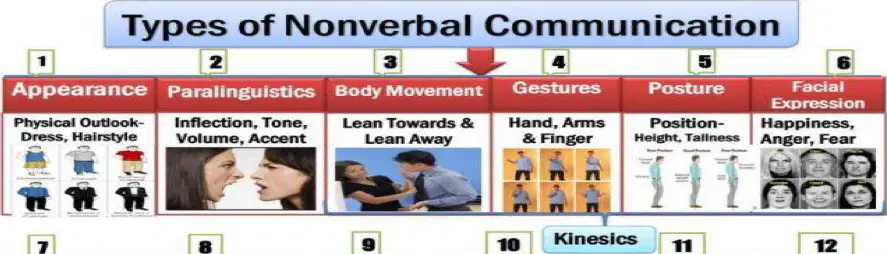
Leaning toward a speaker most directly communicates interest through which channel?
Environment and location
Artifacts and adornment
Chronemics and pacing
Body movement and posture
Which behavior most reduces the chance of misreading nonverbal cues during conversation?
Avoiding all eye contact
Checking your phone briefly
Planning your next response
Staying fully present and attentive
In high-stress moments, which immediate strategy is recommended before resuming discussion?
Take a brief time-out to regain balance
Increase speaking volume for clarity
Stand closer to assert confidence
Use more emphatic gestures for impact

Which example best illustrates proxemics in interpersonal communication?
Adjusting pitch and vocal inflection
Choosing an appropriate conversation distance
Wearing a watch and accessories
Maintaining steady eye contact

A colleague arrives late to meetings, signaling a nonverbal message through which channel?
Chronemics related to time
Haptics related to touch
Artifacts related to dress
Kinesics related to gait
Which action best develops rapid in-the-moment stress relief according to the material?
Engage a soothing sensory cue
Rehearse rebuttals silently
Avoid all physical movement
Hold eye contact intensely
To reduce cross-cultural misinterpretation, which guideline for gestures is emphasized?
Be careful since meanings vary widely
Use larger motions to be clearer
Prefer pointing to reduce ambiguity
Avoid facial expressions entirely
Which voice feature most influences how listeners ‘read’ your feelings beyond words?
Room temperature only
Seating arrangement only
Vocabulary selection only
Tone, pace, and loudness
Which outcome best reflects strong emotional awareness in interpersonal exchanges?
Accurately read others and build trusting signals
Ignore emotions to stay fully objective at work
Rely only on spoken words for understanding
Assume everyone feels the same as you
When reading body language, what is the first check if words and cues conflict?
Time how long each person speaks
Ask for a written summary of statements
Focus solely on facial expressions
Look for inconsistencies between message and cues
Which approach avoids overinterpreting a single gesture?
Prioritize eye contact above all other cues
Trust clothing style more than vocal tone
Consider nonverbal signals together as a group
Assume crossed arms always mean hostility
You sense something is off despite friendly words. What is the recommended action?
Disregard feelings and accept statements
Trust instincts about mismatched verbal cues
Confront loudly to force a confession
Stop listening to nonverbal information
Which question best evaluates eye contact during a conversation?
Is eye contact balanced rather than intense
Are the shoes polished and fashionable
Is the meeting room brightly decorated
Did the person arrive exactly on time
What does a relaxed posture with lowered shoulders most likely signal?
Comfort and openness in the interaction
Complete disinterest in the topic
Dishonesty and intentional deception
High stress and imminent conflict
Which description captures a constructive tone of voice in discussion?
Projects warmth, confidence, and interest
Becomes melodramatic, loud, and erratic
Sounds monotone, flat, and disengaged
Appears strained, blocked, and tense
In evaluating nonverbal timing, what indicates effective exchange?
No variation because only one speaks
Long pauses that stall every reply
Rapid responses that always interrupt
Easy back‑and‑forth flow without rushing
Which statement best defines business communication?
Exchange of information to achieve organizational goals
Private journaling by employees for personal growth
Informal chatting unrelated to any workplace outcomes
Broadcasting advertisements to the general public only
Which characteristic reflects the nature of business communication?
Purely verbal without written channels
Casual tone regardless of culture
Random and unstructured delivery
Purpose‑oriented and audience‑focused
Which purpose best captures why organizations share information through business communication?
To keep stakeholders informed about policies and progress
To entertain employees during routine work hours
To replace formal procedures with casual conversations
To avoid documenting decisions and responsibilities
Why is communication essential for decision-making in firms?
It eliminates the need for managerial judgment
It guarantees unanimous agreement every time
It prevents stakeholders from debating alternatives
It supplies data and feedback for analyzing options
Which outcome most directly reflects building relationships through business communication?
Automating every workflow without human input
Reducing payroll costs across all departments
Outsourcing all customer support to third parties
Maintaining rapport and resolving conflicts professionally
Open and transparent communication primarily promotes innovation by doing what?
Encouraging idea exchange and constructive feedback
Limiting cross-functional collaboration and risk
Prioritizing routine tasks over creative efforts
Enforcing strict secrecy across all teams
How does effective communication enhance efficiency in organizations?
By clarifying tasks and minimizing errors in workflows
By increasing the number of approvals required
By encouraging frequent changes to job roles
By replacing guidelines with unstructured dialogue
Which statement best explains the role of communication in marketing and sales?
Restricting product details to technical staff only
Avoiding direct contact with prospective customers
Focusing strictly on internal memos about budgets
Conveying persuasive messages that build brand loyalty

A project is behind schedule due to repeated misunderstandings among teams. Which communication action is most likely to correct the issue?
Rely on informal rumors to coordinate work
Add more tasks without changing instructions
Reduce meetings and stop sharing progress updates
Clarify roles, expectations, and timelines explicitly
A manager wants to strengthen customer loyalty over the next quarter. Which communication approach is most effective?
Send generic promotions without feedback channels
Limit interactions to automated responses only
Listen to needs, address concerns, and deliver clear service updates
Avoid difficult conversations after service failures
Which option best defines upward communication in an organization?
Information sent from executives to staff
Information sent from employees to management
Information exchanged with outside partners
Information shared between peer departments
Downward communication primarily involves which direction of information flow?
From top levels to lower levels
From lower levels to top levels
Between company and customers
Between same-level colleagues
Lateral communication most accurately refers to which interaction?
Executive memos to frontline staff
Manager-to-executive briefings
Peer-to-peer or cross-team exchanges
Press releases to media outlets
External communication is best described as information exchanged with whom?
Customers or outside organizations
Supervisors within the company
Direct reports in a department
Peers across internal teams
Which example fits upward communication?
Design and sales teams coordinating work
CEO issuing policy to department heads
Company posting updates on social media
Direct report giving feedback to a manager
Which is a key strength of upward communication?
Helps management identify issues early
Maximizes external brand exposure
Ensures strict top-down compliance
Eliminates the need for supervisors
Which is a common weakness of upward communication?
Messages become too widely broadcast
Power dynamics discourage open sharing
Vendors control internal priorities
Teams duplicate peer-level messages
A department head sends new safety procedures to frontline staff. Which communication type is this?
Lateral communication
External communication
Upward communication
Downward communication
Two project teams coordinate timelines to avoid conflicts. Which communication type fits best?
Upward communication
External communication
Downward communication
Lateral communication
Which scenario demonstrates external communication?
Negotiating terms with a supplier
Escalating concerns to a director
Sharing updates between peer teams
Clarifying tasks with subordinates
Which benefit is most directly linked to effective upward communication?
Leadership stays informed about operations
Customers receive promotional emails
Peer teams reduce meeting frequency
Policies bypass normal approval layers
Which strategy would most likely reduce weaknesses in upward communication?
Route employee input through vendors
Create clear channels that increase access
Limit feedback to quarterly surveys
Require only anonymous suggestion boxes

