
 Worksheets
Overview of Lanthanides
Total questions: 108
Worksheet time: 54mins

Which range of atomic numbers corresponds to the lanthanide series in the periodic table?
58 to 70
56 to 69
58 to 71
57 to 70

Where are lanthanides located within the periodic table classification?
First row of inner transition metals
Rightmost row of p-block elements
Top row of transition metals
Second row of inner transition metals

Which statement best characterizes lanthanides as a group?
Nonmetallic and inert gases
Highly electropositive metals
Metalloids with low reactivity
Strongly electronegative metals

How many metallic elements are included in the lanthanide series?
15 metallic elements
14 metallic elements
12 metallic elements
13 metallic elements
Which statement best describes why lanthanides are called rare earths today?
They were recently synthesized in laboratories
They are virtually absent from Earth’s crust
Name persists though abundance not extremely rare
They are found only in outer space deposits
Where are lanthanides located in the periodic table in terms of electron configuration?
Block characterized by 5f subshell vacancy
Group featuring 6p subshell half filling
Series with progressive 4f subshell filling
Row with complete 3d subshell filling
Which feature distinguishes lanthanides in bonding behavior?
4f electrons are entirely absent in metals
4f electrons are typically not involved
4f electrons form strong covalent bonds
4f electrons delocalize across the lattice
Which statement about radioactivity among lanthanides is accurate?
Radioactivity arises only when fully oxidized
Most are non‑radioactive, with some slightly radioactive
None of the lanthanides shows any radioactivity
All lanthanides exhibit strong radioactivity inherently
Select the properties commonly observed in lanthanide elements.
Principal oxidation state of +3
Good conductors of heat and electricity
Generally high melting and boiling points
Soft, silvery‑white, highly reactive metals
Which statement about magnetism of lanthanides is correct?
Diamagnetism due to paired 4f electrons
Paramagnetism due to unpaired electrons
Antiferromagnetism unique to cerium only
Ferromagnetism in all elemental forms
Which is a typical chemical characteristic of lanthanide ions in solution?
Many form colored ions
They instantly disproportionate to gases
They only form anions in water
All are strictly colorless ions
Which set correctly matches symbol usage for lanthanides?
No common generic symbol is used
Generic notation Ln for lanthanide elements
Symbol Ld reserved for lanthanide series
Ln denotes only actinide elements
Which trend occurs for lanthanide hardness, melting point, and boiling point from Ce to Lu?
They fluctuate irregularly with atomic number
They all decrease steadily across the series
They all increase due to stronger metallic bonding
They remain constant across most elements
What primarily causes the increase in lanthanide melting and boiling points from Ce to Lu?
Higher oxidation states stabilize the lattice
Formation of covalent networks across the series
Stronger attraction as atomic size decreases
Greater atomic size reduces bonding strength
Which statement best explains lanthanide electrical and thermal behavior?
They are poor conductors of electricity and heat
They are good conductors of electricity and heat
They conduct only when oxidized to trioxides
They conduct only at high temperatures

Which description matches lanthanide chemical reactivity compared to another metal?
They behave like aluminum forming strong oxides
They behave like copper with limited reactivity
They behave like calcium in many reactions
They behave like zinc under most conditions

Which product is generally formed when lanthanides burn in air, and what is the main exception?
Trioxides for most lanthanides
Monoxides for all lanthanides
Nitrides as primary combustion products
Ce forming CeO2 instead of trioxide

Which set correctly lists nonmetals that commonly combine with lanthanides?
Nitrogen as a combining nonmetal
Sulfur as a combining nonmetal
Hydrogen as a combining nonmetal
Chlorine as a typical nonmetal partner

What is characteristic of lanthanide hydrides and their behavior with water?
Ionic MH4 salts, dissolve without gas evolution
Covalent MH2 networks, absorb water strongly
Non-stoichiometric MH3 composition, liberate hydrogen
Stoichiometric MH compounds, inert to water

Which statement about lanthanide compounds and oxidation state is accurate?
Predominantly covalent, metals in +2 state
Predominantly ionic, metals in +3 state
Predominantly metallic, zero oxidation state
Predominantly molecular, metals in +4 state

How do lanthanide hydrides behave with dilute non-oxidizing acids?
They show little reaction and no gas
They form stable peroxides in solution
They passivate and stop reacting
They vigorously evolve hydrogen gas
Which statement best explains why heavy lanthanides are less reactive than light lanthanides in air?
Higher melting points reduce molecular collisions
Presence of stable LnO monolayer on surface
Surface passivation by thin Ln2O3 layer
Lower electronegativity prevents oxygen adsorption
Which set shows very low first, second, and third ionization energies for trivalent lanthanides?
Tb3+, Dy3+, Ho3+ (f8, f9, f10)
Eu3+, Yb3+ (f6, f13)
Ce3+, Pr3+, Nd3+ (f1, f2, f3)
La3+, Gd3+, Lu3+ (f0, f7, f14)
For which trivalent lanthanide ions is the third ionization energy especially high?
Ce3+ and Pr3+ with early f
Gd3+ and Tb3+ with mid-filled f
La3+ and Lu3+ with empty or filled f
Eu3+ and Yb3+ with half-filled or near-filled f
How do standard reduction potentials of lanthanide metals change as atomic size decreases across the series?
They oscillate without size dependence
They remain constant across the series
They are low and increase with decreasing size
They are high and decrease with decreasing size
Arrange Mg, La, and Al in order of decreasing reactivity based on electropositivity trends.
La > Al > Mg
Mg > La > Al
Al > La > Mg
La > Mg > Al
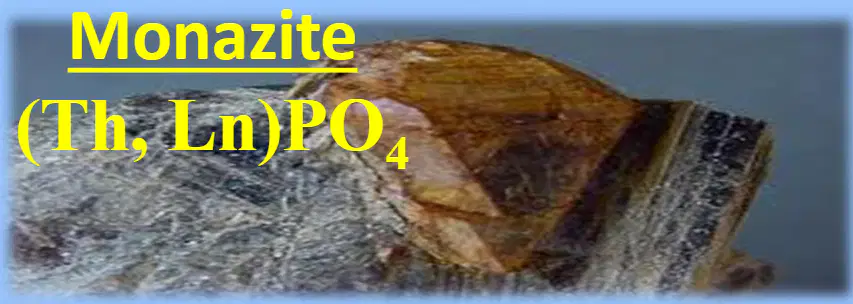
Which minerals are major sources of lanthanides in nature?
Cinnabar HgS
Monazite (Th, Ln)PO4
Bastnasite LnCO3F
Galena PbS

Which statement about the natural occurrence of lanthanides is correct?
Promethium does not occur naturally; produced artificially
All lanthanides occur naturally in monazite sands
Ytterbium is the only synthetic lanthanide element
Lanthanum and cerium are absent from bastnasite
Which factor primarily lowers lanthanide reactivity with non‑metals upon atmospheric exposure?
Formation of adherent oxide Ln2O3 film
Rapid hydride LnH3 lattice expansion
Increase in standard electrode potential
Complete passivation by fluoride layer

Which statement best captures the Oddo–Harkins rule for elemental abundances?
Elements with even atomic numbers are more abundant
Elements with atomic numbers divisible by three dominate
Elements with prime atomic numbers are most abundant
Elements with odd atomic numbers are more abundant
Which minerals are the principal commercial sources of lanthanides?
Magnetite and hematite
Quartz and feldspar
Monazite and bastnäsite
Galena and sphalerite

Which lanthanide is essentially absent in nature due to radioactivity and must be produced artificially?
Terbium
Promethium
Europium
Gadolinium
Why do lanthanides with even atomic numbers tend to be more abundant in the crust than their odd-numbered neighbors?
Odd-Z elements are preferentially removed by hydrothermal fluids
Even-Z elements oxidize faster during weathering
Even-Z nuclei are generally more stable energetically
Odd-Z nuclei bind more strongly to silicates
Which pair correctly matches a major lanthanide source deposit with typical geographic occurrences?
Monazite—rare-earth placers in coastal sands
Bastnäsite—found only in deep-sea nodules
Monazite—exclusive to carbonate veins
Bastnäsite—ubiquitous in granite countertops
Select all statements that accurately describe lanthanide occurrence and abundance patterns.
Oddo–Harkins rule relates abundance to nuclear stability
Promethium is a common constituent of monazite
Monazite and bastnäsite host many rare earth elements
Even-Z lanthanides tend to be more abundant than odd-Z
Which lanthanide element has an atomic structure [Xe] 5d1 6s2 and commonly exhibits a +3 oxidation state?
Cerium
Lanthanum
Lutetium
Gadolinium
Which pair correctly lists lanthanide elements that possess a single 5d electron in their ground state?
Lanthanum and Gadolinium
Cerium and Europium
Lutetium and Samarium
Praseodymium and Terbium
For Ce, which oxidation states are commonly observed and include one used as a strong oxidizing agent in solution?
+1 and +3
+4 and +5
+3 and +4
+2 only
Which lanthanide ion configuration corresponds to a zero-filled 4f sub-shell?
La3+ : 4f0 5s2 5p6
Eu2+ : 4f7 5s2 5p6
Tb4+ : 4f7 5s2 5p6
Yb2+ : 4f14 5s2 5p6
Which statement about lanthanide ionic structures is correct for trivalent ions?
They commonly show [Ne] 2p n
They commonly show [Ar] 3d n
They commonly show [Xe] 4f n
They commonly show [Kr] 4d n
Identify the lanthanide with ground state [Xe] 4f7 5d1 6s2 and stable +3 oxidation state.
Gadolinium
Dysprosium
Terbium
Europium
Which lanthanide most commonly forms a +2 oxidation state due to a half-filled 4f7 configuration?
Praseodymium
Europium
Samarium
Cerium
Which combination matches a half-filled 4f7 sub-shell in a stable ion?
Tb4+ : 4f7 5s2 5p6
Gd3+ : 4f7 5s2 5p6
Eu2+ : 4f7 5s2 5p6
La3+ : 4f7 5s2 5p6
Which lanthanide shows a completely filled 4f14 configuration in a divalent ion?
Yb2+
La3+
Ce4+
Lu3+
Which is the common compound of Ce4+ used as an oxidizing agent in volumetric analysis?
CeF3
CeO2
Ce2O3
CeCl3
Which lanthanide has an atomic configuration [Xe] 4f11 6s2 and predominantly forms +3 ions?
Erbium
Thulium
Holmium
Dysprosium
Which statement best explains why +3 is the most stable oxidation state across lanthanides?
d-orbital contraction stabilizes +2
Lanthanides prefer +1 due to s-electron loss
Removal of three valence electrons yields 4f core
4f electrons strongly participate in bonding
Which lanthanide ion exemplifies a zero-filled 4f subshell, giving enhanced stability due to an empty 4f configuration?
Yb2+ with 4f14 configuration
Gd3+ with 4f7 configuration
Nd3+ with 4f3 configuration
Ce4+ with 4f0 configuration
Select all ions that are stabilized by a half-filled or completely filled 4f subshell.
Eu2+ showing 4f7 configuration
Tb3+ showing 4f8 configuration
Gd3+ showing 4f7 configuration
Yb2+ showing 4f14 configuration
Which statement best explains why certain lanthanide ions with 4f0, 4f7, or 4f14 are unusually stable?
Higher nuclear charge always increases stability
Exchange energy and symmetry stabilize special fillings
4f orbitals are fully shielded by 5f electrons
Empty 4f shells reduce ionic radii drastically

The ionic radius steadily decreases from cerium lanthanide to lutetium (Lu). What is this effect called?
Shielding increase from p-orbitals
Actinide expansion due to 5f filling
Lanthanide contraction across the series
Relativistic expansion of 6s orbitals
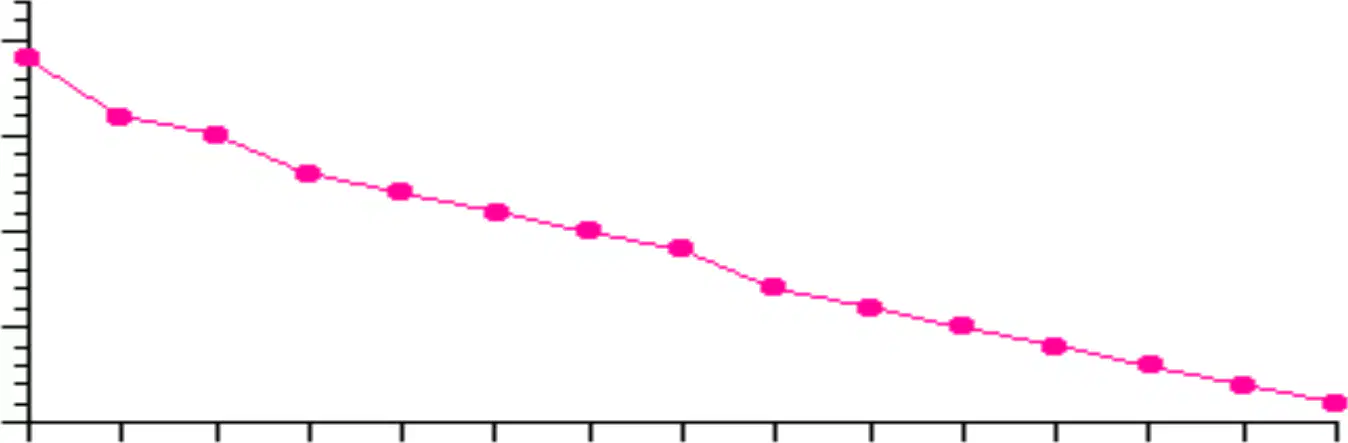
Which trend is shown by Ln3+ ionic radii from Ce to Lu in the lanthanoid series?
Constant radius without change
Steady increase across the series
Steady decrease across the series
Alternating increase then decrease
Which factor primarily causes the lanthanoid contraction?
Decreasing nuclear charge across series
Population of 5d orbitals only
Strong shielding by 4f electrons
Poor shielding by 4f electrons
As the lanthanoid contraction progresses from Ce to Lu, which property typically increases?
Atomic number decreases
Extent of complex formation
Ionic radius of Ln3+
Density of the metals
Which statement best describes hydration behavior of small Ln3+ ions due to contraction?
They are highly hydrated
Hydration decreases then increases
They are poorly hydrated
Hydration does not change
Which shielding effectiveness order is correct for orbitals contributing to contraction?
d > f > s > p
p > s > f > d
f > d > p > s
s > p > d > f
Which lanthanide ions are exceptions to paramagnetism according to the note?
Lu3+
Yb2+
Ce4+
La3+
Why do lanthanide magnetic moments deviate from the spin-only formula?
Absence of unpaired electrons
Constant ionic radii
Significant orbital contributions
Complete quenching of spin
Which statement best explains why most Ln3+ ions show sharp absorption bands in electronic spectra?
f orbitals are shielded, giving sharp f–f transitions
f–f transitions are Laporte allowed and delocalized
d–d transitions dominate and are strongly vibronically coupled
ligands strongly perturb 4f orbitals causing broad bands
Which lanthanide ions are expected to be colourless due to absence of f–f transitions?
La3+ with 4f0 configuration
Lu3+ with 4f14 configuration
Ce3+ with 4f1 configuration
Yb3+ with 4f13 configuration

The strong yellow colour of Ce4+ solutions primarily arises from which electronic process?
Ligand-to-metal charge transfer transitions
d–d transitions within 5d orbitals
Metal-to-ligand charge transfer transitions
f–f transitions within 4f orbitals
Ce3+ and Yb3+ are noted to be colourless with broad bands. What causes their broad spectral features?
Charge transfer contributions dominating
Vibronic coupling in d–d transitions
Spin–orbit coupling in 4f shell
Crystal field splitting of 4d orbitals
Which pair of ions is isoelectronic with colourless Ln3+ species as listed?
Eu3+ is isoelectronic with Sm2+
La3+ is isoelectronic with Ce4+
Lu3+ is isoelectronic with Yb2+
Gd3+ is isoelectronic with Eu2+
According to the colour table, which aqueous lanthanide ion exhibits a green solution?
Tm3+ with 4f12 electrons
Tb3+ with 4f8 electrons
Pr3+ with 4f2 electrons
Nd3+ with 4f3 electrons
Which statement about ligand effects on lanthanide electronic spectra is accurate?
Ligands strongly split 4f orbitals causing broad bands
Ligands convert f–f transitions into d–d transitions
Ligands have little effect; 4f orbitals are shielded
Ligands completely quench f–f transitions
Identify the ions that are explicitly labelled green in the colour table.
Dy3+ with 4f9 configuration
Nd3+ with 4f3 configuration
Tm3+ with 4f12 configuration
Pr3+ with 4f2 configuration
Which aqueous lanthanide ions are listed as lilac in colour?
Nd3+ with 4f3 electrons
Er3+ with 4f11 electrons
Tb3+ with 4f8 electrons
Ho3+ with 4f10 electrons
For which 4f electron counts do lanthanide ions lack f–f transitions entirely?
f1 and f13 electron configurations
f0 and f14 electron configurations
f2 to f12 electron configurations
f6 and f8 electron configurations
In aqueous solution, many Ln3+ ions show pale colors because f–f transitions are Laporte-forbidden. Which statement best explains this observation?
4f electrons strongly mix with ligand p orbitals
Charge-transfer bands overshadow all f–f bands
4f orbitals are shielded, reducing transition probability
d–d transitions dominate over f–f transitions
Which lanthanide property most directly causes sharp, line-like absorption bands in electronic spectra?
Strong crystal-field splitting of 4f orbitals
Extensive 4f delocalization increases band widths
High-spin 4f configurations broaden transitions
Minimal 4f–ligand overlap limits vibronic coupling
For Ln3+ ions, colors correlate with the number of unpaired 4f electrons. Which pair both tend to be colorless due to f0 or f14 configurations?
La3+ and Lu3+
Ce3+ and Tb3+
Pr3+ and Nd3+
Eu3+ and Yb3+
Which statement correctly contrasts f–f transitions and charge-transfer bands in lanthanide compounds?
f–f are weak, CT are intense
f–f are spin-allowed, CT are spin-forbidden
f–f give broad bands, CT give sharper peaks
f–f occur in UV, CT occur only in IR
Consider [Nd(H2O)6]3+. Which feature mainly determines its pink-violet color?
Intra-4f f–f transitions of Nd3+
Ligand-to-metal charge transfer
Metal-to-ligand charge transfer
d–d transitions within Nd3+
Match the lanthanide ion to a typical color arising from f–f transitions.
Pr3+ often green, Nd3+ often violet
Pr3+ often colorless, Nd3+ deep black
Pr3+ bright red, Nd3+ colorless
Pr3+ yellow-orange, Nd3+ brown
Which factor makes lanthanide colors relatively insensitive to the ligand field compared to transition-metal ions?
4f electrons occupy antibonding orbitals
4f–ligand overlap is extensive
4f orbitals point directly at ligands
4f orbitals are core-like and shielded
Select all statements that correctly describe spectral properties of Ln3+.
Ligand changes drastically shift f–f energies
Colors arise from 4f–4f excitations
Transitions are parity-forbidden
Bands are weak but sharp
Which misconception about lanthanide colors is most accurate to reject?
Some ions are colorless with f0 or f14
Colors often arise from f–f transitions
Colors mainly come from d–d transitions
Charge-transfer can give intense bands
An intense yellow band appears in a Ce4+ solution. What is the most plausible assignment?
Ligand-to-metal charge transfer
Intra-d transition within Ce4+
4f–4f parity-forbidden transition
Metal-to-ligand charge transfer
Which process gives Ce4+ solutions their strong yellow color?
charge transfer from ligand to Ce4+
vibrational overtones of coordinated water
Rayleigh scattering by hydrated ions
d–d electronic transitions within Ce4+
Lanthanide contraction primarily leads to which consequence for separating adjacent lanthanides?
Easier separation due to larger ionic size gaps
Separation depends only on oxidation state
More difficult separation from similar ionic radii
No effect on separation techniques at all
Which statement best explains how lanthanide contraction affects the basic strength of Ln(OH)3 hydroxides across the series?
Basicity fluctuates randomly without a trend
Basicity remains constant for all lanthanides
Basicity steadily decreases as ionic radius contracts
Basicity steadily increases with decreasing ionic radius
Select all correct statements about charge transfer colors and Ce4+.
Charge transfer requires electron movement between centers
Ce4+ shows yellow due to ligand-to-metal transfer
d–d transitions dominate Ce4+ color intensity
Charge transfer bands are typically intense
Why does lanthanide contraction make Ln3+ ions challenging to separate by ion-exchange?
They hydrolyze completely to insoluble bases
Their ionic radii and charge densities are very similar
They form volatile molecular halides easily
Their magnetic moments are identical across the series
Across the lanthanide series, the shrinking Ln3+ ionic radius causes what change in M–OH bond character in Ln(OH)3?
More covalent character and lower basicity
More ionic character and higher basicity
No change in bond character or basicity
Formation of amphoteric hydroxides throughout
Which pair correctly matches phenomenon to effect of lanthanide contraction?
Hydroxide basicity: stronger base for heavier lanthanides
Separation difficulty: increased similarity in ionic size
Ionization energy: dramatic increase only for Eu3+
Charge transfer color: weaker absorption bands
Which statement best describes LnH2 in the lanthanide series?
Ionic solid with poor conductivity
Molecular solid with low melting point
Metallic solid with good conductivity
Covalent network with high hardness
Under high hydrogen pressure, many lanthanides form LnH3. What is a typical property of LnH3 compared to LnH2?
More metallic and more conductive
More covalent and more volatile
Less metallic and less conductive
More ionic and more soluble
Non-stoichiometric hydrides of lanthanides most commonly occur because
Variable hydrogen occupancy in metal lattice
Presence of mixed-valent lanthanide oxides
Formation of molecular LnH units in gas phase
Complete conversion to LnH3 at low pressure
Which combination correctly matches hydride formula and typical metal oxidation state in the solid?
LnH3 with Ln(0) dominant character
LnH3 with Ln(II) dominant character
LnH2 with Ln(III) dominant character
LnH2 with Ln(II) dominant character
Which statements about lanthanide hydrides are valid? Select all that apply.
Hydrides can be non-stoichiometric
LnH3 phases are often semiconducting
Hydride formation requires high hydrogen pressure
LnH2 phases are metallic conductors
Lanthanide metals reacting with cold water show what behavior regarding rate?
Fast reaction releasing H2 gas
Slow reaction that accelerates with heat
Explosive reaction forming nitrides
No reaction even at high temperature
Which balanced equation represents the formation of a lanthanide hydroxide from water?
Ln + 2H2O → Ln(OH)2 + H2
2Ln + 6H2O → 2Ln(OH)3 + 3H2
Ln + H2O → Ln2O3 + H2
Ln + NH4OH → Ln2O3 + NH3
Lanthanide hydroxides Ln(OH)3 can be described as
Acidic, covalent, crystalline solids
Neutral, molecular, volatile solids
Amphoteric, covalent, gaseous species
Basic, ionic, gelatinous solids
Across the lanthanoid series, the basicity of Ln(OH)3 shows what trend?
Decreases with decreasing ionic radius
Oscillates randomly with atomic number
Increases with decreasing ionic radius
Remains constant across the series
Which hydroxide is noted as most basic among lanthanides?
Lu(OH)3 shows highest basicity
La(OH)3 shows highest basicity
Ce(OH)3 shows highest basicity
Yb(OH)3 shows highest basicity
What product is formed when Ln(OH)3 absorbs carbon dioxide?
Lanthanide bicarbonate Ln(HCO3)3
Lanthanide carbonate Ln2(CO3)3
Lanthanide hydride LnH2
Lanthanide oxide Ln2O3
Hot concentrated NaOH dissolves Yb(OH)3 and Lu(OH)3 to form
Oxidized lanthanide species Ln4+
Lanthanide sulfates in solution
Neutral aquo complexes of Ln3+
Hexahydroxo complexes [Ln(OH)6]3−
In air, lanthanide metals typically form a thin protective layer of
LnO acting as reactive scale
Ln2S3 acting as barrier
Ln2O3 acting as passive film
Ln(OH)3 acting as passivator
Which lanthanide uniquely forms a dioxide upon oxidation rather than a trioxide?
La forms LaO2 often
Ce forms CeO2 instead
Lu forms LuO2 commonly
Yb forms YbO2 mainly
Producing Yb2O3 or Lu2O3 from the metals may require heating to about 1000°C primarily to
Reduce oxides to hydrides
Drive off water from hydroxides
Melt the metal for casting
Remove the passive surface layer
Which statement best describes the composition of a typical lanthanide dicarbide designated LnC2?
Lanthanide attached to carbonate CO3 groups
Lanthanide forming interstitial carbon solid solution
Lanthanide coordinated to acetylide C2 units
Lanthanide bonded to isolated carbide ions
Which combination of phases is most consistent with the existence of Ln4(C2)3 in lanthanide–carbon systems?
Binary ionic carbide lattice only
Mixed-metal carbide with discrete C2 groups
Pure metallic lanthanide with dissolved carbon
Polymeric carbon network without metal ions
Identify the synthesis route most likely to yield LnC2 at high temperature.
Electrolysis of lanthanide chloride in molten salt
Hydrothermal treatment of lanthanide nitrate with graphite
Direct reaction of lanthanide with methane gas
Carbothermal reduction of lanthanide oxide with carbon
Which products are expected when reactive lanthanide carbides contact liquid water?
Lanthanide oxides and no gaseous products
Lanthanide carbonates and hydrogen gas
Lanthanide hydroxides and acetylene formation
Stable hydrates without gas evolution
Which lanthanide carbide behavior aligns with metallic electrical conductivity?
Wide band gap and insulating behavior
Partial covalency and semiconducting response
Delocalized electrons enabling metallic conduction
Localized electrons restricted to C2 units
Select all correct statements about reactivity of lanthanide carbides with water.
Many lanthanide carbides hydrolyze rapidly
Hydrolysis can release acetylene gas
Resulting solids are typically lanthanide hydroxides
Water exposure leaves carbides unchanged
Which factor most strongly facilitates carbide formation in lanthanides compared with late transition metals?
Higher electronegativity and strong M–C covalency
Oxidation to stable +5 carbocation states
Large ionic radii favoring interstitial carbon
Preference for volatile carbonyl complexes
Which pair correctly matches phase and electrical property for lanthanide carbides?
Ln4(C2)3 — metallic conductor
LnC2 — strong insulator
LnC2 — metallic conductor
Ln4(C2)3 — wide band gap insulator

