
 Worksheets
Oxford chronic pain and Cardiac Anesthesia
Total questions: 86
Worksheet time: 4hrs 18mins
Which of the following hemodynamic changes is NOT commonly associated with cross-clamping of the infrarenal aorta?
Increase in central venous pressure
Increase in cardiac output
Decrease in pulmonary artery pressure
No change in pulmonary artery occlusion pressure
Increase in systolic pressure
Which of the following statements regarding the use of alpha-stat and pH-stat management during cardiopulmonary bypass with moderate systemic hypothermia is INCORRECT?
Alpha-stat management requires knowledge of actual patient temperature, whereas alpha-stat does not
Alpha-stat management results in higher cerebral blood flow than pH-stat management
pH-stat management results in a lower blood pH than alpha-stat management
Alpha-stat management is based on maintenance of the electrochemical neutrality of the imidazole buffering system
The difference between alpha-stat and pH-stat management is more pronounced as patient temperature decreases
The most common combination of acid–base disorders seen during cardiopulmonary resuscitation is
Respiratory alkalosis and metabolic alkalosis
Respiratory acidosis and metabolic acidosis
Respiratory alkalosis and metabolic acidosis
Respiratory acidosis and metabolic alkalosis
None of the above
Which of the following conditions would not likely cause an increased difference between pulmonary artery diastolic pressure and left ventricular end-diastolic pressure?
Mitral stenosis
Primary pulmonary hypertension
Hypoxemia
Pulmonic stenosis
Hypothermia
After determining that a patient has no pulse, which of the following forms of treatment should be used initially for the patient with ventricular fibrillation?
CPR
Defibrillation
Epinephrine IV
Lidocaine IV
Vasopressin IV
Which of the following factors is the LEAST likely explanation for a prolonged activated clotting time (ACT)?
Heparin
Warfarin
Platelet dysfunction
Hyperthermia
Hemodilution
Which of the following therapeutic interventions is NOT indicated in the management of acute, severe aortic regurgitation?
Increasing heart rate to 75 to 85 bpm
Placement of an intra-aortic balloon counterpulsation device
Afterload reduction by titration of vasodilators
Inotropic support of reduced contractility
Immediate surgical consult
Which of the following pharmacologic agents is commonly avoided for effective symptomatic treatment of acute cocaine toxicity?
Labetalol
Nitroglycerin
Nitroprusside
Metoprolol
Phentolamine
During open reduction of a fractured hip, an 80-year-old with moderate mitral stenosis develops atrial fibrillation with hypotension to 63/37 mmHg. Which of the following is the most appropriate therapeutic intervention?
Diltiazem 15 mg IV bolus
Heparin 5{,}000 units and phenylephrine 200 µg IV bolus
Transcutaneous pacing at 60 bpm
Heparin 5{,}000 units IV bolus and rapid IV administration of 1 liter of 0.9% normal saline
Synchronized cardioversion with 100 joules
Which of the following therapeutic interventions is LEAST indicated in the management of acute left ventricular failure?
Initiation of intravenous dobutamine
Placement of an intra-aortic balloon pump
Initiation of intravenous milrinone
Initiation of extracorporeal membrane oxygenation
Placement of a left ventricular assist device
Which of the following is a key hemodynamic goal in the management of patients with acute mitral regurgitation?
Increased afterload
Decreased afterload
Increased systemic vascular resistance
Decreased heart rate
Increased preload
Which of the following changes in cardiovascular function is NOT generally associated with increasing age?
Decreased contractility
Decreased ventricular filling pressure
Increased myocardial stiffness
Increased vascular stiffness
Increased beta-adrenergic sensitivity
Antegrade coronary blood flow occurs during what phase of manual chest compressions?
Relaxation phase
Compression phase
Whenever the pressure in the aorta exceeds the right atrial pressure
Whenever the pressure in the right atrium exceeds the aorta pressure
Both relaxation and compression phases
Which of the following antiemetics does not produce a significant dose-dependent prolongation of the QTc interval?
Ondansetron
Droperidol
Haloperidol
Scopolamine
Prochlorperazine
Which of the following antiplatelet drugs inhibit platelet aggregation at the ADP receptor site?
Abciximab only
Clopidogrel only
Ticlopidine only
Clopidogrel and ticlopidine
Abciximab, clopidogrel, and ticlopidine
Which of the following hemodynamic parameters should be avoided in a patient with aortic insufficiency?
Tachycardia
Bradycardia
Decreased afterload
A and C
B and C
Which of the following diseases is NOT associated with aortic regurgitation?
Marfan syndrome
Ehlers–Danlos syndrome
Ankylosing spondylitis
Primary Sjögren syndrome
Syphilis
In a patient with severe aortic stenosis, which of the following therapies is LEAST indicated?
Beta blockade to reduce heart rate to 80 bpm
Nitroprusside to reduce afterload and diastolic BP to 45 mm Hg
Nitroglycerin titrated to a BP of 130/80 mm Hg
Increase FiO 2
Transfusion
An 80-year-old woman with severe aortic stenosis requires an ORIF of her hip. Your primary concern associated with spinal anesthetic would NOT include
Hypotension secondary to a reduction in preload
Hypotension secondary to a fall in reduction in systemic vascular resistance
Symptomatic bradycardia
Increased risk for postoperative cognitive impairment
Use of prophylaxis for deep venous thrombosis
During a general anesthetic, a 70-year-old woman with severe aortic stenosis becomes hypotensive. Which of the following would be the LEAST likely cause for hemodynamic instability in this patient?
Development of a junctional rhythm
Redistribution of splanchnic venous blood
Vagal response with resultant sinus bradycardia
Tachycardia to a heart rate of 110 bpm
After an aortic valve has been replaced for aortic stenosis, left ventricular end-systolic volume will be
Increased
Decreased
Increased
Decreased, due to reduction in impedance to ventricular ejection
Unchanged
Which of the following pharmacologic agents does NOT increase the risk of digoxin-induced arrhythmias?
Amiodarone
Quinidine
Verapamil
Rifampin
Thiopental

Which of the flow–volume loops in Figure 9.1 represents pressure–volume changes typical with severe aortic stenosis?
Graph A
Graph B
Graph C
Graph D
None of the above
Which of the following physical exam maneuvers is used to assess the adequacy of the collateral circulation of the hand?
Phalen’s test
Tinel’s test
Allen’s test
Watson’s test
Kleinman’s test
An underdamped arterial tracing with a transducer positioned below the level of the patient’s heart will result in which of the following blood pressure interpretations relative to the actual reading?
Overestimation
Underestimation
No change
Cannot be determined
Cannot be determined
The systolic components of the arterial pressure waveform follow which ECG wave?
P wave
Q wave
R wave
S wave
T wave
Which of the following is an important hemodynamic goal in managing a patient with hypertrophic obstructive cardiomyopathy?
Increased myocardial contractility
Decreased myocardial contractility
Increased heart rate
Decreased preload
Decreased afterload
Which of the following statements regarding the autonomic nervous system is true?
The sympathetic nervous system is exclusively an efferent system
The parasympathetic nervous system is limited to the cranial nerves
Acetylcholine is the neurotransmitter of the parasympathetic system, exclusively
The sympathetic nervous system efferents exit through the thoracic and lumbar spinal segments, exclusively
The preganglionic neurotransmitter of the sympathetic nervous system is norepinephrine
Which of the following volatile anesthetics is the most potent depressant of the normal baroreceptor response?
Sevoflurane
Halothane
Isoflurane
Desflurane
Enflurane
Which of the following responses is NOT consistent with beta-adrenergic stimulation?
Bronchodilation
Increased myocardial contractility
Vasodilation
Glycogenolysis
Decreased plasma renin production
A noninvasive blood pressure cuff is placed on both upper extremities in a patient positioned in the right lateral decubitus position. There is a 20-cm difference in the height of the two cuffs. How would the pressure reading from the cuff on the left arm differ from that of the right arm?
It will be 20 mm Hg higher
It will be 20 mm Hg lower
It will be 14 mm Hg higher
It will be 14 mm Hg lower
The systemic blood pressure in a noninvasive blood pressure measurement corresponds to what phase of arterial or venous blood flow relative to cuff inflation/deflation?
Return of blood flow through the artery during cuff inflation
Return of blood flow through the vein during cuff inflation
Return of blood flow through the artery during cuff deflation
Return of blood flow through the vein during cuff deflation
The point of maximal cuff pressure fluctuation
The hematocrit of a patient on cardiopulmonary bypass is 18%. If the patient is transfused with packed red blood cells and the hematocrit is increased to 30% with no other changes, what would be the expected change in mean arterial blood pressure?
Increased
Decreased
No change
Cannot determine
Cannot determine

Three days after aortic valve replacement (AVR), a patient is noted to have the ECG shown in Figure 9.2. Of the following, which is the most likely cause of this abnormality?
Persistent hyperkalemia
Obstruction of blood flow to the posterior interventricular artery
Reperfusion injury
Sterile pericardial inflammation
Acute bilateral enlargement
During carotid endarterectomy, an 80-year-old woman develops sinus bradycardia with hypotension. What is the best initial course of treatment?
Atropine 0.3 mg IV push
Infiltration of the carotid body with 0.5% bupivacaine
Initiation of transcutaneous pacing at 70 bpm
Immediate cessation of surgical carotid manipulation
Naloxone 0.04 mg IV push
Upon initiation of cardiopulmonary bypass, mean arterial pressure decreases. What is the most likely cause?
Hypothermia-induced vasodilation
Myocardial ischemia
Hemodilution from crystalloid pump prime
Reduced left ventricular preload
Reduced right ventricular preload
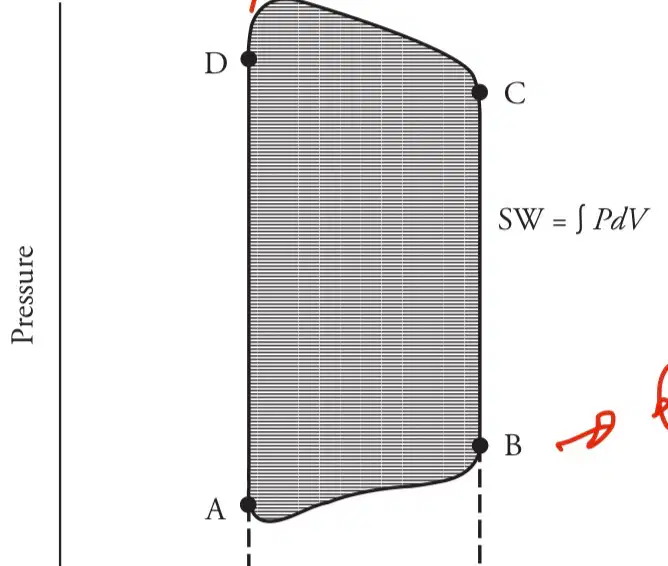
At what point on the cardiac pressure–volume loop shown in Figure 9.3 can preload be determined?
Point A
Point B (end-diastolic volume)
Point C
Point D
Shaded area under the curve
An 82-year-old woman with acute-onset pulmonary edema, blood pressure 90/50 mm Hg, heart rate 110 bpm. Which treatment is most appropriate?
Dobutamine
Dopamine
Amiodarone
Milrinone
Metoprolol
Which of the following statements regarding the effects of aging on cardiac function is true?
The left ventricle becomes more compliant
The myocardium has an increased sensitivity to beta agonists
Myocardial contractility is unchanged under submaximal demand conditions
Cardiac output is decreased despite increased metabolic demands
Stroke volume remains unchanged
Which of the following statements regarding thermodilution cardiac output measurements in the setting of significant tricuspid regurgitation is true?
Cardiac output will be overestimated
Cardiac output will be underestimated
Cardiac output will be accurate
Cardiac output can be accurate, overestimated, or underestimated
Cardiac output will be accurate if a continuous cardiac output catheter is used
In which of the following diseases is a cardiac pacemaker NOT indicated?
Dilated cardiomyopathy
Asymptomatic sinus disease
Hypertrophic obstructive cardiomyopathy
Long QT syndrome
Symptomatic AV node dysfunction
Which of the following management strategies is LEAST indicated in the management of cardiac tamponade?
Beta blockade to maintain strict heart rate control in the 50- to 60-bpm range
Maintenance of spontaneous ventilation
Aggressive volume resuscitation
Avoidance of venodilation
None of the above
Which of the following electrophysiologic findings is characteristic of lidocaine cardiotoxicity?
PR interval prolongation (and QRS widening)
Increased conduction velocity
Reduced phase 4 depolarization
Reduced automaticity
QRS shortening
For a witnessed cardiac arrest, which of the following interventions performed in isolation significantly improves survival outcome?
Head tilt, chin lift
Mouth-to-mouth ventilation
Intubation
Chest compressions
None of the above
Which of the following hemodynamic parameters cannot be obtained in a patient with a pulmonary artery catheter that has a non-functional balloon?
Cardiac output
Systemic vascular resistance
Pulmonary vascular resistance
Stroke volume
Mixed venous saturation
Which of the following cardiovascular reflexes does NOT cause a decrease in heart rate?
Carotid sinus massage
Cushing’s reflex
Oculocardiac reflex
Valsalva maneuver
Bainbridge reflex
Which one of the following parameters in arterial blood modifies the neural output of the carotid body chemoreceptors?
Oxygen tension
Temperature
Carbon dioxide tension
Oxygen saturation
All of the above
Thirty minutes after arrival in the PACU, a 72-year-old man status post carotid endarterectomy is hypertensive. Which is LEAST likely to be the cause of his hypertension?
Surgical denervation of the carotid sinus baroreceptors
Impairment of cerebral autoregulation
History of hypertension
Hyperventilation
None of the above
Which of the following neurologic structures is involved in the autonomic reflexes associated with the carotid sinus?
Glossopharyngeal nerve
Vagus nerve
Celiac plexus
A and B
All of the above
A 27-year-old man presents for ORIF and is dyspneic with prominent rales. Which of the following is most likely the cause?
Acute cannabis toxicity
Chronic cocaine abuse (cardiomyopathy)
Salicylate toxicity
Acute acetaminophen toxicity
Chronic opiate abuse
Which of the following describes the typical changes in myocardial oxygen supply and demand associated with congestive heart failure?
Increased myocardial oxygen supply and demand
Decreased myocardial oxygen supply and demand
Increased myocardial oxygen supply and decreased demand
Decreased myocardial oxygen supply and increased demand
No change
Which of the following are NOT characteristic of the effects of cocaine on the heart?
Increased PR and QRS intervals on ECG
Decreased QT interval on ECG
Increased heart rate and blood pressure
Increased coronary artery resistance
Prolonged ventricular repolarization
Which of the following best describes the impact of constrictive pericarditis on a central venous pressure waveform?
Ventricular dip and plateau (square root sign)
Ventricular plateau and dip
Ventricular peak and plateau
Ventricular plateau and peak
Ventricular dip and peak
Which of the following has the LEAST impact on coronary blood flow?
Heart rate
Cardiac output
Coronary vascular resistance
Diastolic blood pressure
Maximum pressure gradient across the aortic valve
Which of the following neurologic structures is involved in the autonomic reflexes associated with the carotid sinus?
Nucleus of the solitary tract
Vagus nerve and cervical plexus
Mechanoreceptors
Glossopharyngeal and vagus nerves
Carotid nerve plexus
Which of the following properties is NOT a determinant of coronary blood flow?
Perfusion pressure
Myocardial intravascular compression
Myocardial metabolism
Myocardial extravascular compression
Neurohumoral control
During transesophageal echocardiography (TEE) examination, which of the following findings is NOT consistent with coronary blood flow?
Color Doppler exam demonstrating predominant flow during diastole
Origination of flow on color Doppler from aortic sinus
Blood flow on color Doppler initiating from above the right and left coronary cusps of the aortic valve
Biphasic flow pattern on pulse-wave Doppler
None of the above
Which of the following pharmacologic agents does NOT produce coronary steal?
Nitroprusside
Dipyridamole
Adenosine
Sildenafil
Isoflurane
A 79-year-old woman taking warfarin has an INR of 6.5. Which of the following is LEAST indicated to control life-threatening hemorrhage?
Vitamin K
Recombinant factor VIIa
Fresh frozen plasma
Platelets
Prothrombin complex concentrate
Thirty minutes after separation from cardiopulmonary bypass, 2-mm ST segments and ventricular fibrillation are noted. Which of the following is a possible cause?
Hyperkalemia
Hypothermia
Intracoronary air embolism
Atrial pacing during repolarization
All of the above
During hypothermic cardiopulmonary bypass, a PaO2 of 64 mm Hg is noted despite an FiO2 of 0.9. Which of the following would LEAST likely explain this result?
Inadequate heparin administration
Inadequate muscle relaxation
Leak in the cardiopulmonary bypass gas circuit
Slightly decreased sweep speed during bypass
None of the above
Following separation from cardiopulmonary bypass for mitral valve repair, an oxygen saturation of 92% is observed despite an FiO2 of 1.0. Which of the following is an UNLIKELY cause for this finding?
Malfunction of expiratory valve
Endobronchial location of the endotracheal tube
Atelectasis
Severe mitral stenosis
Severe aortic insufficiency
Which of the following parameters is LEAST important in determining adequate cardiopulmonary bypass pump flow and pressure during the aortic cross-clamp phase of a coronary artery bypass grafting procedure?
Hematocrit
Severity of coronary artery stenoses
Temperature
Patient size
Mixed venous saturation
During routine cardiopulmonary bypass (CPB) with a massive gas embolism, which maneuver should be instituted immediately?
Cessation of cardiopulmonary bypass
Steep Trendelenburg positioning
Initiation of retrograde superior vena cava perfusion
Deepening of hypothermia
All of the above
Which statement regarding the effects of aging on the cardiovascular system is FALSE?
Myocardial contractility is uncompromised under submaximal demand.
Resting cardiac index is decreased.
The myocardium atrophies with age.
The ventricle undergoes relaxation late in diastole.
Passive ventricular filling is reduced.
Acute onset of which condition would be expected to have the LEAST impact on the central venous pressure (CVP) or CVP waveform?
Junctional rhythm
Atrial fibrillation
Right ventricular systolic dysfunction
Tricuspid regurgitation
Atrial pacing
Which statement regarding central venous pressure (CVP) tracings is true?
The right atrial "a" wave occurs before the left atrial a wave seen on a pulmonary capillary wedge tracing.
The "x" descent is caused by rapid atrial filling.
The "c" wave is caused by passive atrial filling.
The "v" wave is caused by downward displacement.
The "y" descent represents ventricular filling.
Which statement regarding a DDD pacemaker is true?
The pacemaker has both triggered and inhibited responses to sensing.
This is the preferred pacemaker mode for avoiding issues with electrocautery interference.
Placing a magnet on this pacemaker will likely change its mode to VOO.
Rate responsiveness is not compatible with this pacemaker mode.
This mode should not be used with a junctional rhythm.
Which statement regarding thoracic impedance and defibrillation is INCORRECT?
Increased pressure on the defibrillator paddles against the skin decreases impedance.
Impedance increases after prior defibrillation attempts.
Impedance is lower for internal defibrillation paddles compared to external paddles.
Impedance is increased during inspiration compared to end-expiration.
None of the above
Which of the following are NOT determinants of coronary blood flow?
Aortic diastolic blood pressure
Aortic valve area
Myocardial metabolism
Heart rate
Left ventricular end-diastolic pressure
Which statement regarding dominance in coronary circulation is correct?
In a right-dominant system the right coronary artery supplies blood to the sinoatrial node.
In a right-dominant system the right coronary artery supplies blood to the circumflex artery.
In a right-dominant system the right coronary artery supplies blood to the posterior descending artery.
In a right-dominant system the right coronary artery supplies blood to the left atrium.
Most patients have a balanced supply of both the right and left coronary arteries.
Which characteristic of treatment with doxorubicin is mostly associated with the development of heart failure?
Time of last treatment
Time between each treatment
Number of treatments
Total dosage
Combination with irradiation
Which best describes the impact of volatile and intravenous anesthetics on myocardial ion channels?
Activate sodium ion channels
Inhibit sodium ion channels
Activate calcium ion channels
Inhibit calcium ion channels
Inhibit potassium ion channels
Which statement regarding asynchronous pacing is true?
Asynchronous pacing should be avoided to prevent ventricular defibrillation.
Asynchronous pacing is preferred when bipolar electrocautery is used.
In asynchronous pacing, the PR interval changes continuously.
Asynchronous pacing requires both atrial and ventricular pacing leads.
None of the above
Which statement regarding the ECG changes seen with myocardial ischemia and/or infarction is INCORRECT?
Subendocardial ischemia may manifest as QT prolongation.
T‑wave inversion results from reversal of the normal direction of repolarization.
Injury and ischemia result in different ECG findings.
In left bundle branch block, ST‑segment changes cannot be used to help diagnose ischemia.
Persistent ST elevation after acute myocardial infarction may be due to a ventricular aneurysm.
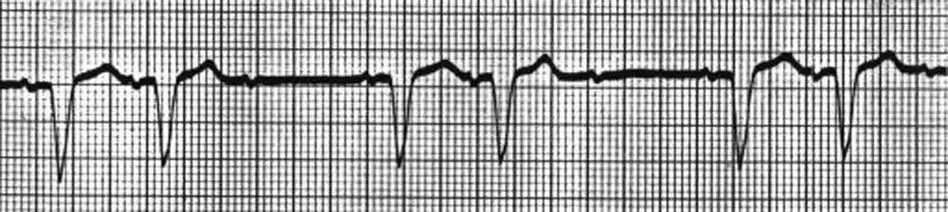
Which statement regarding the ECG shown in Figure 9.6 is true?
Most likely results from disease of the AV node
Placement of a permanent pacemaker is likely indicated
Should be treated with amiodarone by IV push
Should be treated by synchronized cardioversion if the patient is hemodynamically unstable
Frequently seen under anesthesia in otherwise healthy patients
Which ECG finding is consistent with left atrial enlargement?
Increased P‑wave amplitude
Increased P‑wave duration
Increased P‑wave amplitude and duration
Terminal P negativity in lead I
All of the above
A 77‑year‑old patient status post aortic valve replacement has a suspected air embolus in the right coronary artery. Which ECG change would be most consistent with this diagnosis?
2‑mm ST elevation in leads V5 and V6
3‑mm ST elevations in leads II, III, and aVF (inferior ischemia)
T‑wave inversions in leads I, aVL
1‑mm ST depressions
2‑mm ST depressions
A healthy 22‑year‑old undergoing knee arthroscopy develops a junctional rhythm at 70 bpm. Which statement regarding this event is true?
This rhythm is likely caused by slowed SA node spontaneous depolarization.
This rhythm should be treated with atropine 1 mg by IV bolus.
This rhythm will likely lead to hemodynamic instability.
This rhythm represents a significant functional abnormality.
This rhythm is frequently converted to sinus rhythm by beta‑blocker administration.
Which statement regarding the ECG of a patient with a normally functioning DDD pacemaker is correct?
Atrial and ventricular pacing spikes should always be visible.
There should not be any native P waves visible on the ECG.
V pacing spikes should be followed by a narrow QRS complex.
During complete AV pacing, the PR interval should be the same.
The heart rate seen on ECG will match the preprogrammed rate.
Which of the following is NOT a likely cause of pulseless electrical activity (PEA)?
Ventricular fibrillation
Cardiac tamponade
Tension pneumothorax
Digitalis overdose
Pulmonary embolus
Five minutes after placement of a right subclavian introducer and pulmonary artery catheter, a patient is noted to be pulseless with a heart rhythm of sinus tachycardia at 130 bpm. Which management statement is most reasonable?
Defibrillation should be performed immediately.
Atropine 1 mg IV should be administered immediately.
Epinephrine 1 mg IV should be immediately administered and right‑sided pleural decompression or pericardial decompression should be considered.
At least 2 units of packed red blood cells should be transfused.
All of the above
For which condition is the administration of antibiotics before a dental procedure for endocarditis prevention NOT recommended?
Mitral valve prolapse
Presence of prosthetic heart valves
Status post cardiac transplantation with aortic stenosis
Two months after placement of an atrial septal defect closure device
None of the above
Which treatment option is appropriate for management of obstructive cardiomyopathy?
Dobutamine
Afterload reduction
Fluid bolus (optimize preload)
Nitroglycerin
Phosphodiesterase inhibitors
Which of the following can lead to worsened ventricular function in obstructive cardiomyopathy?
Mitral regurgitation
Hypertrophy of the left ventricle
Aortic stenosis
Venturi effect
All of the above
Which coagulation factor is NOT affected by enoxaparin?
Antithrombin III
Factor Xa
Thrombin
Factor IXa
Factor VIIa

