
 Worksheets
1.4 Construction Revision Quiz
Total questions: 30
Worksheet time: 15mins
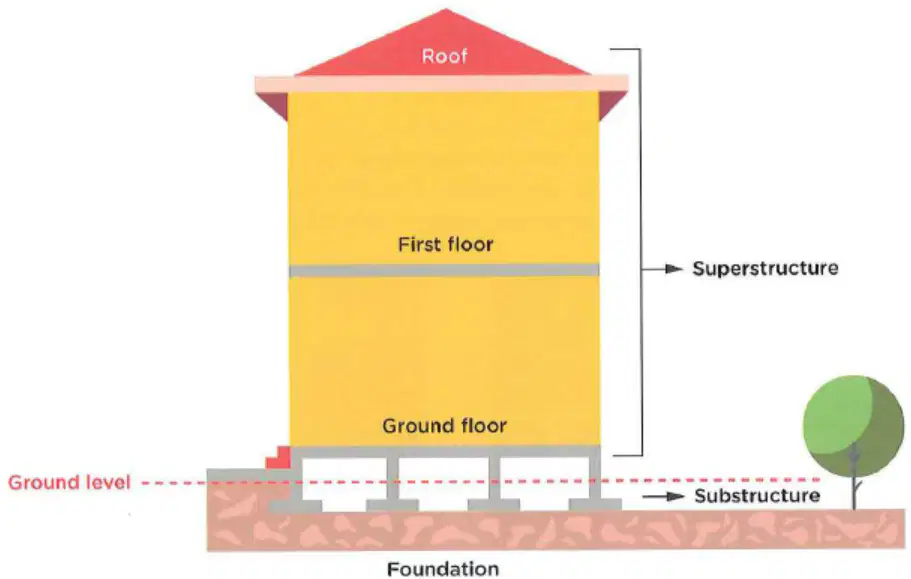
Which part of a building is considered the substructure?
Elements above ground level
Parts below ground level
Only the roof assembly
Interior finishes and fittings
Which component primarily spreads building loads into the soil?
Foundations and footings
Upper floors and stairs
Roof trusses and ties
External cladding panels
Which set lists primary structural elements?
Doors, windows, cladding
Basins, cabinets, fixtures
Columns, beams, slabs
Paint, flooring, furniture
Which statement best distinguishes shallow from deep foundations?
Shallow use steel only; deep use timber only
Shallow are cheaper; deep always cost-free
Shallow are near surface; deep reach stronger strata
Shallow resist wind; deep resist gravity loads
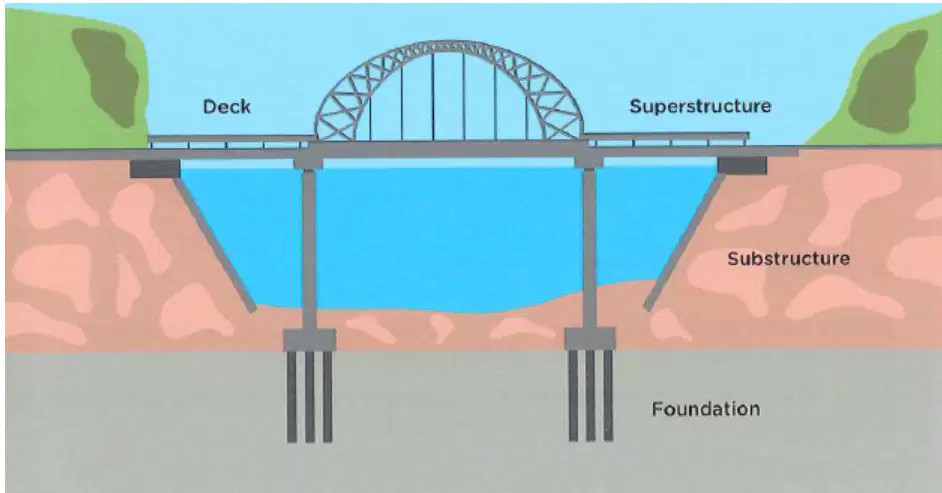
In the bridge illustration, which parts are superstructure components?
Basement and trench fill
Footings and retaining walls
Pile caps and soil layers
Deck and arch above supports
A low-rise building needs to carry loads safely. Which option correctly describes the load path?
Roof to floors, to walls, to foundations, to soil
Soil to foundations, to walls, to roof, to air
Windows to cladding, to paint, to furniture
Basement to stairs, to doors, to ceilings
Which practice most directly supports sustainability in construction projects?
Avoiding any recycled content to improve structural strength
Selecting only the cheapest materials available for projects
Using locally sourced materials to reduce transport emissions
Importing specialized materials from distant suppliers
Which statement best describes Structural Insulated Panels (SIPs)?
Rigid mineral wool boards laminated with aluminium sheets
An insulating foam core sandwiched between structural facings
Panels with a hollow timber core between plywood skins
Solid concrete slabs with embedded steel reinforcement
Why is temperature insulation important for external walls?
It prevents corrosion of steel components in the frame
It keeps heat in winter and reduces cooling in summer
It increases wall thickness for added structural strength
It allows walls to be built with thinner cladding materials
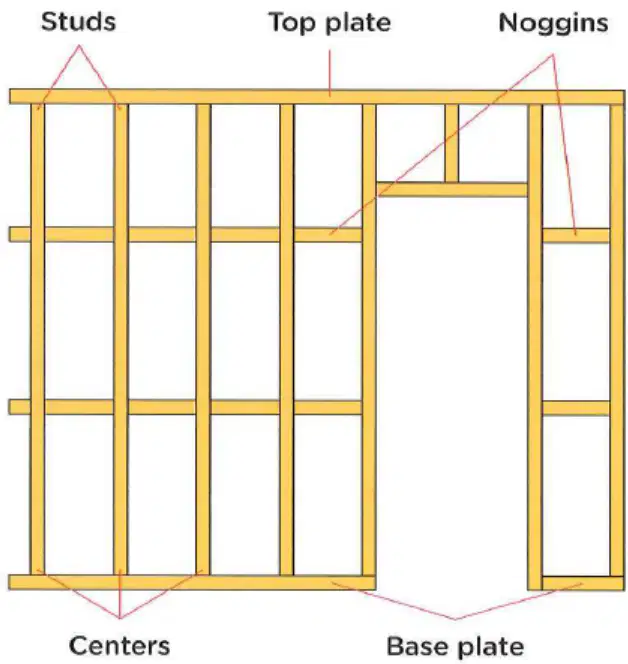
In a stud partition, which component runs horizontally at the bottom and anchors the vertical members?
Centers marking stud spacing
Noggins between studs
Base plate along the floor
Top plate at the upper frame
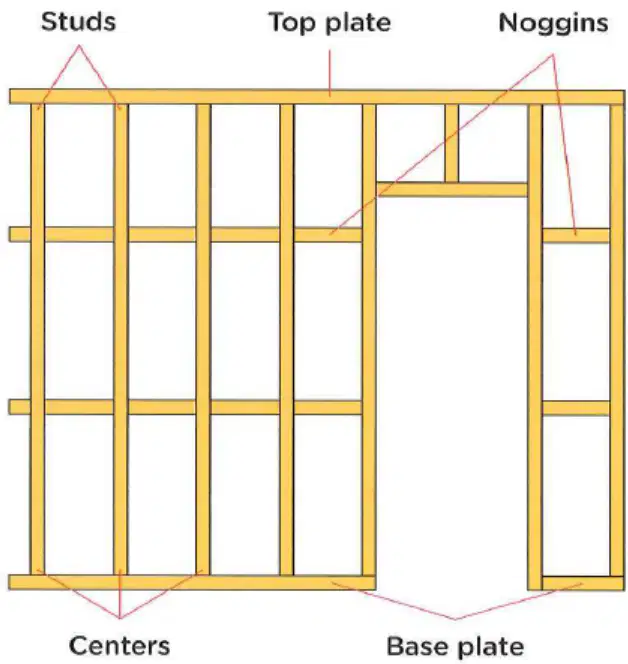
Which material is typically used to clad both sides of a stud partition for a smooth internal finish?
Plywood sheathing panels
Plasterboard lined sheets
Timber tongue boards
Steel liner trays
Laminate flooring is laid on a foam underlay. What is the main purpose of this underlay?
Support and cushion the laminate
Increase nail holding strength
Provide rigid structural spanning
Create a waterproof external layer
Screed is a mix of cement and sharp sand. What is its primary purpose before applying floor finishes?
Bond timber joists together
Provide a smooth, level base
Insulate against heat loss
Seal external roof joints
Which materials are most commonly used for distributing water and gas within buildings?
Brick, concrete, plaster pipes
Steel, timber, glass pipes
MDPE, uPVC, copper pipes
Lead, rubber, fiber pipes
Where are incoming utility services typically routed when entering a building?
Only via suspended ceiling voids
Across roof parapets and skylights
Directly through interior finish walls
Through substructure walls near ground
Which statement best explains why services are routed discreetly inside buildings?
To eliminate the need for insulation
To increase water pressure at fixtures
To protect and hide services from view
To reduce electrical voltage levels
Which comparison correctly distinguishes renewable from non‑renewable fuels?
Renewables never fluctuate; non‑renewables always steady
Renewables need no infrastructure; non‑renewables do
Renewables are always cheaper; non‑renewables cost more
Renewables replenish naturally; non‑renewables deplete
Which statement best describes photovoltaic (PV) technology?
It stores sunlight as heat inside insulated water tanks
It reflects sunlight to reduce heat gain on building roofs
It turns wind energy into mechanical energy for water pumping
It converts light directly into electric power using semiconductors
What is the role of an inverter in a PV system?
It cools solar cells to improve summertime efficiency
It tracks the sun to adjust panel orientation
It changes DC from panels into usable AC electricity
It concentrates sunlight onto the PV modules
Solar thermal systems primarily generate energy by heating a fluid. Which outcome can result from this process?
Capturing wind to rotate a horizontal-axis rotor
Increasing panel voltage through semiconductor doping
Creating direct current without any moving parts
Producing steam to drive a power generator
Which sequence correctly explains how a wind turbine produces electricity?
Wind heats fluid, steam forms, turbine rotates, AC is generated
Wind turns blades, rotor spins generator, electrical power is produced
Water boils, pressure rises, propeller moves, DC is created
Sun warms panels, electrons flow, battery charges, power is stored
A homeowner wants reliable energy during cloudy winter days. Which technology continues generating electricity without direct sunlight?
Wind turbines only when temperatures are above 20°C
Only solar thermal collectors during summer months
PV systems only when panels are perfectly sun-tracked
PV panels can still produce electricity in diffuse light
Which source does a ground source heat pump use to provide warmth for buildings and hot water?
Heat from burning natural gas
Heat from indoor air circulation
Heat from solar panels on roofs
Heat from underground soil and rock
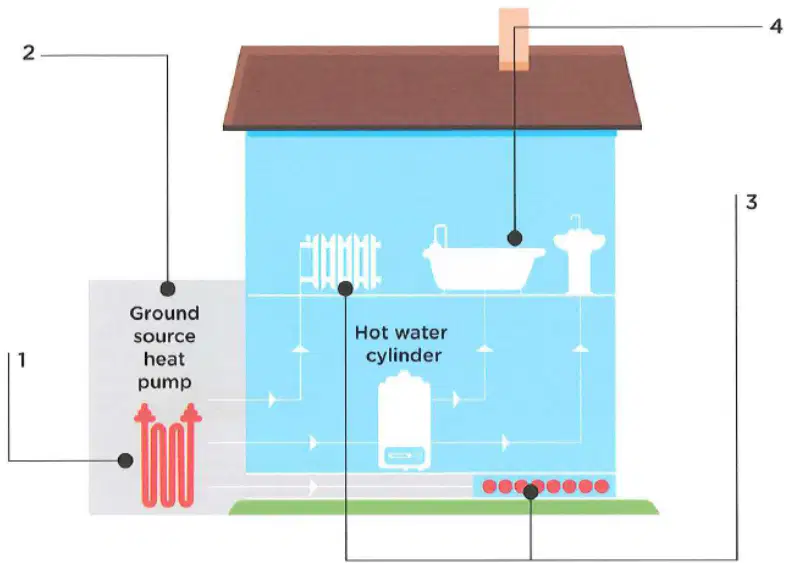
In a ground source heat pump loop, what is circulated through underground pipes to absorb ground heat?
Saltwater without additives
Water mixed with antifreeze
Pure refrigerant only
Compressed steam vapor
An air source heat pump can still operate when the outside temperature is above which threshold?
25°C summer average
10°C mild weather
0°C freezing point
−18°C outside ambient
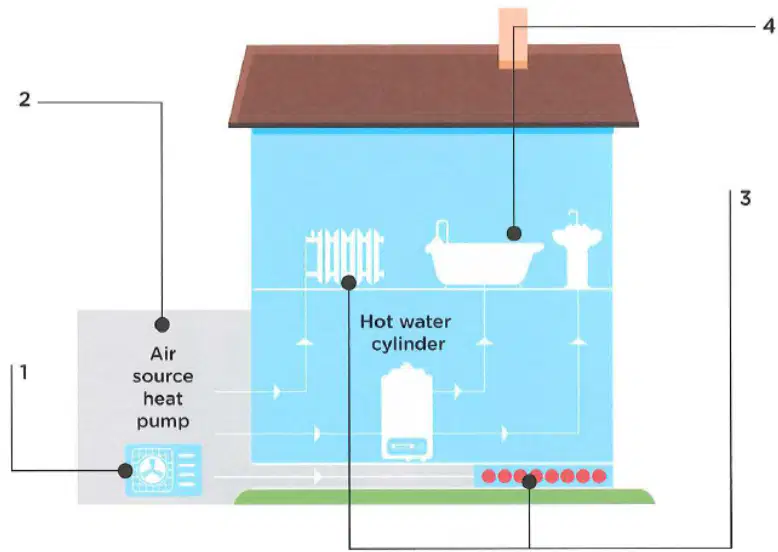
What sequence correctly describes the air source heat pump refrigerant cycle?
Compress without absorbing, then release
Release heat, then absorb, then condense
Condense first, absorb later, compress
Absorb heat, compress, condense, release
Which natural sources can feed water to a water source heat pump via a suction pump and intermediate heat exchanger?
Ground boreholes excluded
Rainwater butts exclusively
Indoor taps and baths only
Lakes, ponds, rivers, springs
During water source heat pumping, what happens when the refrigerant absorbs heat in the evaporator?
It immediately condenses
It becomes colder liquid
It freezes into solid ice
It turns from liquid into gas
Which statement best defines grey water and a typical reuse in buildings?
Wastewater from showers reused for toilet flushing
Sewage from toilets reused for drinking
Rainwater from roofs reused for cooking
Industrial effluent reused for bathing
Plan a simple rainwater harvesting setup for a house. Which component list is most appropriate for non‑potable use like garden irrigation?
Solar PV panels, inverter, grid meter, battery
Gas boiler, radiator, thermostat, flue
Deep borehole drill, submersible pump, turbine
Roof catchment, guttering, downpipe diverter, storage butt

