
 Worksheets
CAMBODIAN ARCHITECTURE_HOA 03
Total questions: 15
Worksheet time: 10mins
Cambodia, known as the "Kingdom of ________", is a Southeast Asian nation. It is bordered by
Thailand, Laos, Vietnam, and the Gulf of Thailand.
ASIA
WONDER
ROCK
COSMOS
What are the religion has profoundly shaped Cambodian culture and architecture?
HINDUISM & BUDDHISM
KHMERISM & ANGKORNISM
ISLAMIC & BUDDHISM
CATHOLICISM & HINDUISM
This is the Angkorian era, the high point of ______
civilization/period, marked by the construction of magnificent temple cities like Angkor Wat and the
establishment of a vast, powerful empire.
FRENCH COLONIAL
CHENLA
KHIVER
KHMER
Many Khmer temple-mountains were built to represent this mythical sacred cosmic
mountain, the dwelling place of the gods.
MOUNT MANDALA
MOUNT EVEREST
MOUNT MERU
MOUNT WAT
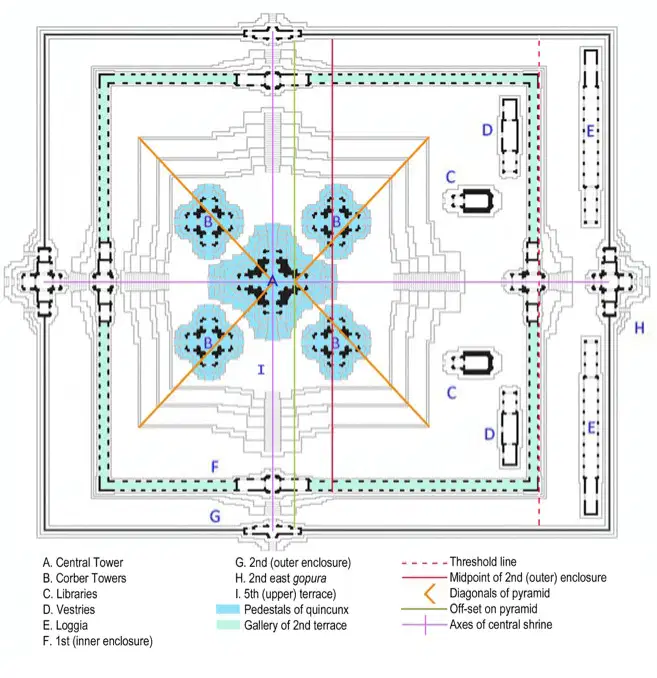
A characteristic of urban design and temple complexes, reflecting a
sophisticated understanding of engineering, cosmology, and a hierarchical social structure.
ORTHOGONAL PLANNING
ORTHOPEDIC PLANNING
COSMIC PLANNING
STACK PLANNING
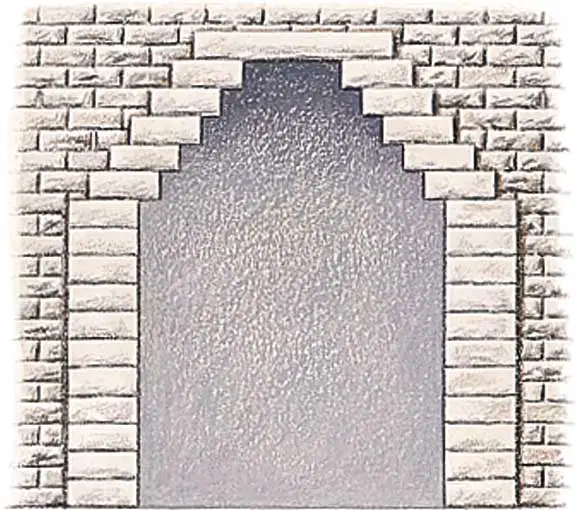
This technique involves overlapping successive courses of bricks or stones until the
span is closed, creating a "false arch" for passageways, rooms, and openings.
TREFOIL ARCH
OGEE ARCH
GOTHIC ARCH
CORBEL ARCH

Depicted as a powerful warrior and the mount of Vishnu.
GARUDA
BAKUNAWA
MULAWIN
NAKBA
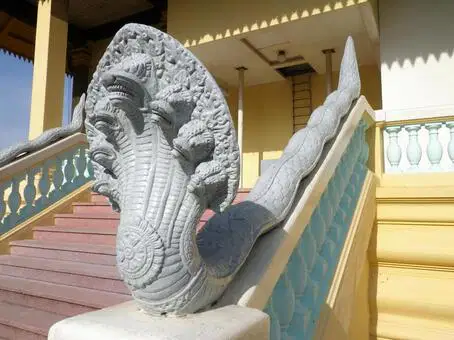
Mythical, multi-headed serpent (often seven-headed) revered as a protector, a symbol of
water, and an ancestor of the Khmer people.
MANTA
NAGA
CHIMERA
HYDRA

The _________ is the holiest and most elevated structure, acting as the spiritual heart of the
temple. The central sanctuary is the ultimate focus of worship and
represents the axis of the universe.
PRASAT
PRANG
PEROME
BAYON

The ________ is the monumental gateway placed at cardinal points of the temple’s enclosure. Architecturally, it features multi-tiered roofs, richly carved lintels, pediments, and
common Khmer motifs such as nagas, apsaras, and kala faces.
TEMPURA
TEMPERA
GOPURA
GORENG

Built in the early 12th century by King Suryavarman II.
World’s largest religious monument, symbolizing Mount Meru, with five central towers
and perfect symmetry.
ANGKOR WHAT
ANGKOR SIEM
ANGKOR REAP
ANGKOR WAT
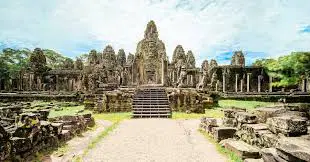
Famous for its massive stone faces (over 200 serene and smiling visages) carved into
towers. Built in the late 12th to early 13th century by King Jayavarman VII.
ANGKOR WAT
ANGKOR THOM
ANGKOL TOM
SIEM REAP
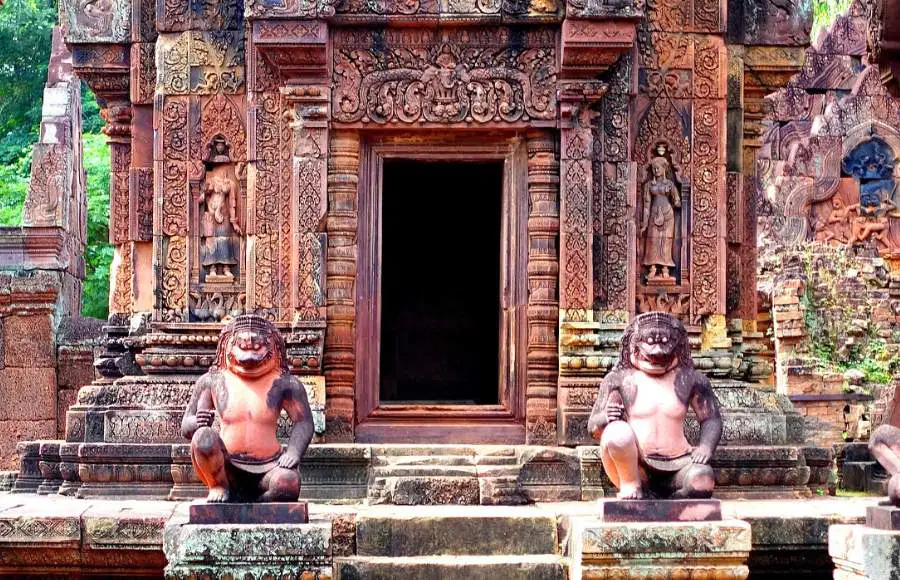
Constructed from pink sandstone, allowing for intricate carvings and elaborate reliefs.
Significance: Dedicated to the Hindu god Shiva, known for its delicate, detailed ornamentation.
Built in the 10th century.
BANTEAY SARADO
BANTEAY SREI
BANTEAY BHATA
BANTEAY WAT
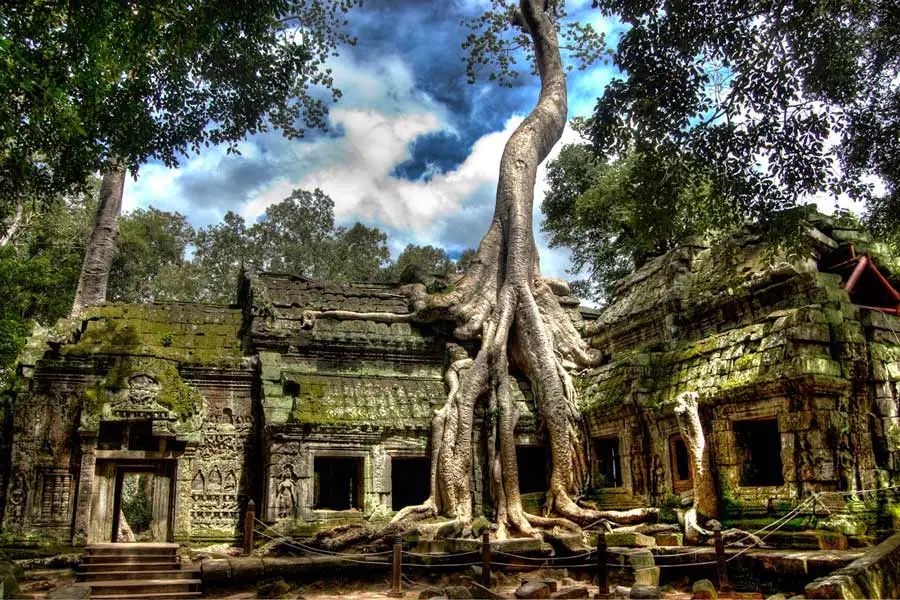
Overgrown by giant tree roots, symbolizing nature reclaiming man-made structures.
Built in the late 12th century by King Jayavarman VII.
THA PREHE
THA RAAH
TA PHROM
THARA NAH

A pyramid-shaped temple-mountain representing Mount Meru with seven levels and 108
towers. Built in the late 9th to early 10th century by King Yasovarman I.
PROM TARAT
PROM BAEKHA
PHROM NOM
PHNOM BAKHENG

