
NEW
Font size
 Worksheets
Chapter 28: Exploring the Universe Overview
Total questions: 38
Worksheet time: 19mins

Which observation best supports the Big Bang theory as a model for the universe’s origin?
Equal planet sizes in most planetary systems
Constant temperature stars in all nearby galaxies
Uniform cosmic microwave background across the sky
Identical chemical elements in every galaxy
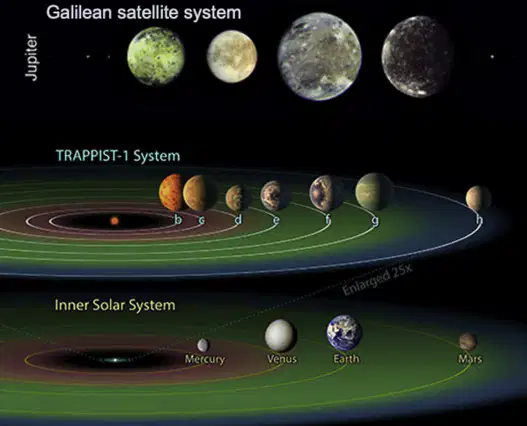
A planetary system forms around a star. Which sequence best explains its origin in this context?
Gas and dust form a protoplanetary disk, planets gather.
Comets merge to create a star before planets
Stars eject planets directly as solid bodies
Planets appear suddenly fully formed without matter
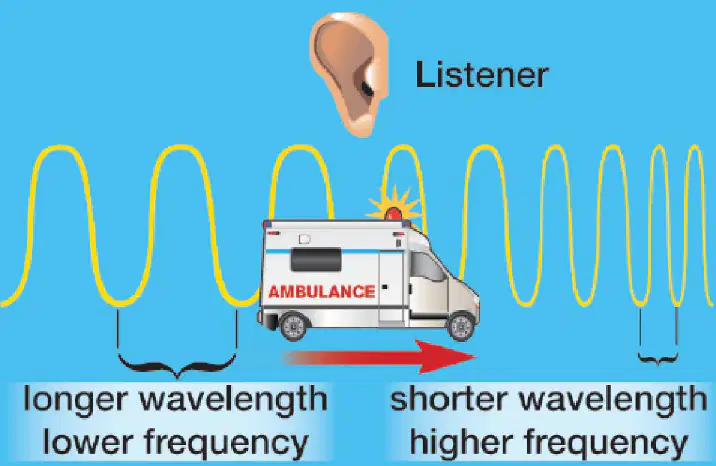
In the diagram with the ambulance and listener, what happens to the wavelength of sound waves behind the moving ambulance compared to in front of it?
Randomly varies behind and in front
Stays equal behind and in front
Becomes shorter behind, longer in front
Becomes longer behind, shorter in front
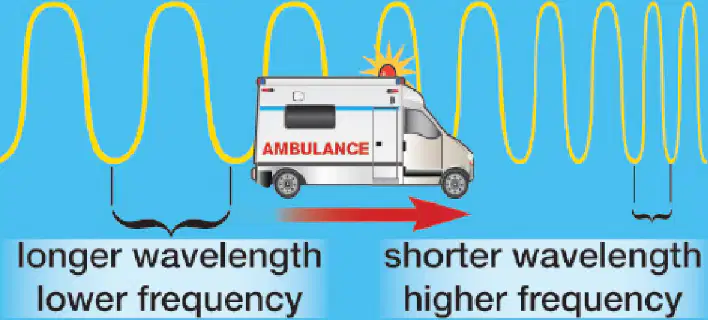
Which statement best describes pitch change as a sound source moves toward a listener in the ambulance diagram?
Pitch increases due to higher frequency
Pitch decreases due to lower frequency
Pitch remains constant for all speeds
Pitch fluctuates unrelated to motion
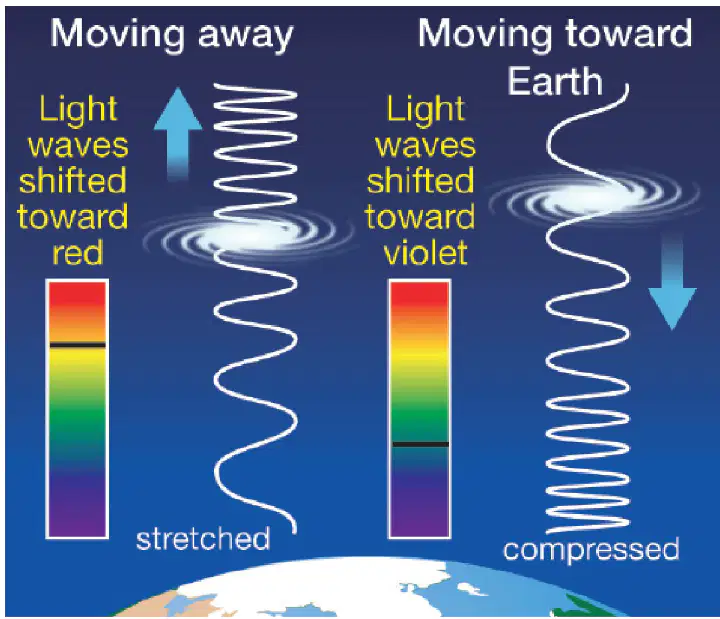
In the light-wave diagram, what shift indicates an object moving away from Earth?
Shift toward red, wavelengths stretched
Shift toward violet, wavelengths compressed
No shift, wavelengths unchanged
Shift toward green, wavelengths randomized

A train approaches along the tracks in the photo. What change in sound would a nearby listener most likely experience as it approaches?
Lower pitch while approaching
Higher pitch while approaching
Random pitch unrelated to motion
No pitch change at any time

Astronomers use Doppler shift mainly to determine which property of distant objects?
Their motion through space
Their internal chemical bonds
Their absolute size and shape
Their surface temperature maps
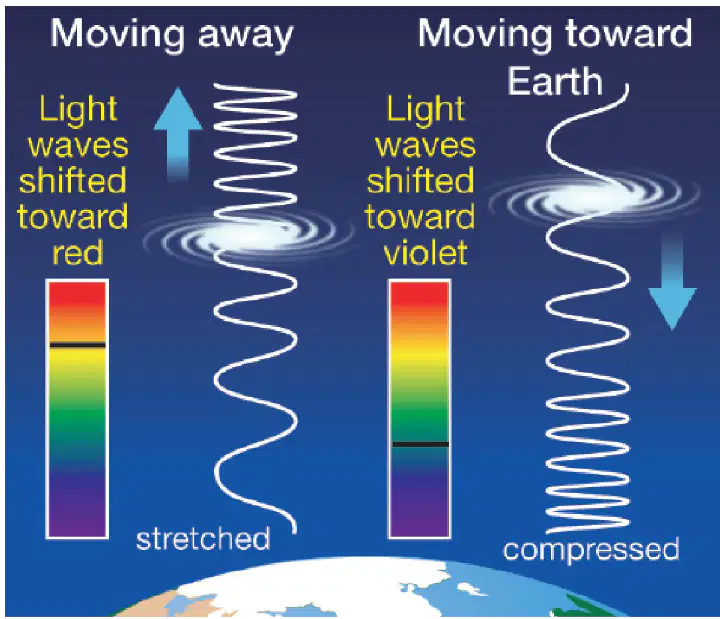
In the light-wave diagram, what happens to light from objects moving toward Earth?
Shift toward yellow without change
Shift toward violet with compression
Shift toward infrared randomly
Shift toward red with stretching
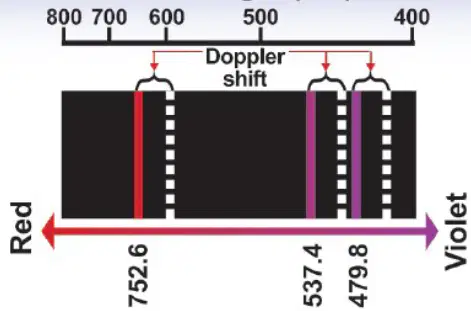
Which observation indicates a redshift in a star’s light spectrum as shown in the diagrams?
Spectral lines remain at original wavelengths
Spectral lines broaden without shifting
Spectral lines shift toward shorter wavelengths
Spectral lines shift toward longer wavelengths
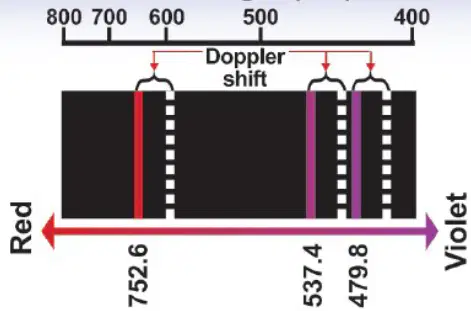
What does a blueshift signify about an object’s motion relative to an observer?
Object stationary relative to the observer
Object rotating but not translating
Object moving away from the observer
Object moving toward the observer
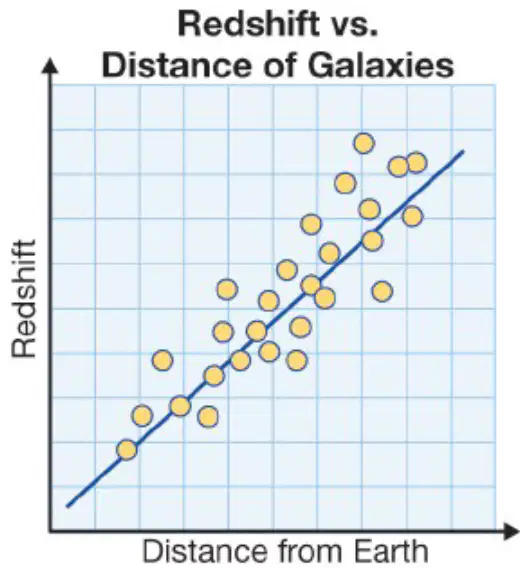
Edwin Hubble’s key finding relating galaxy distance to motion was that:
Nearby galaxies always remain stationary
More distant galaxies approach Earth faster
More distant galaxies recede faster from Earth
Galaxy speed is unrelated to distance
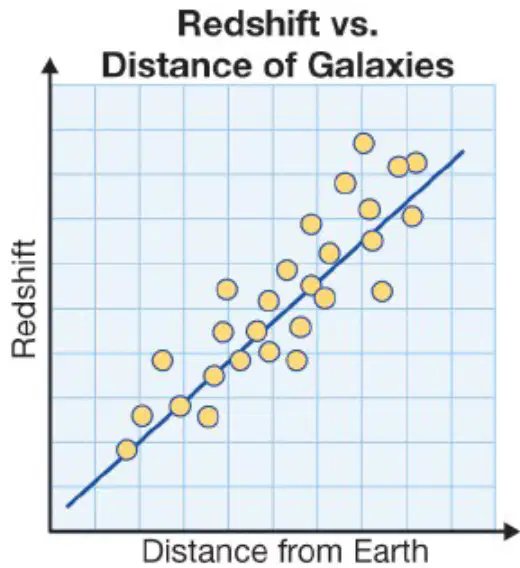
Which graph trend best supports the expanding universe concept?
Negative slope between redshift and distance
Random scatter with no clear slope
Flat line between redshift and distance
Positive slope between redshift and distance
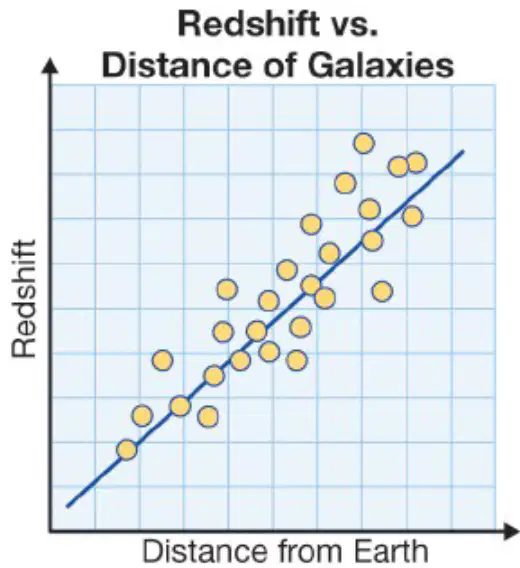
A galaxy shows twice the redshift of a similar nearby galaxy. Which inference is most reasonable?
It is stationary and simply brighter
It is likely closer and receding slower
It is likely farther and receding faster
It is at the same distance but hotter
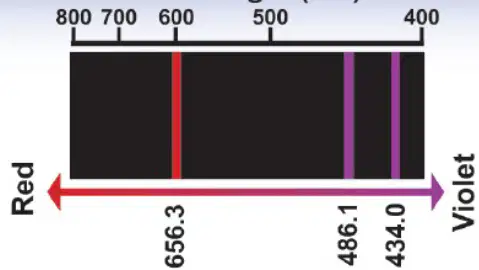
In the top spectrum labeled Standing object, spectral lines appear at fixed wavelengths. In the Moving star spectrum, those lines shift. What causes this change?
Doppler effect due to relative motion
Gravitational lensing by nearby mass
Intrinsic changes in atomic energy levels
Instrument calibration errors only

In the diagram of the universe’s timeline, which event occurs about 4 minutes after the Big Bang?
Stars and galaxies begin forming
Protons and neutrons form nuclei
Cosmic background radiation appears
Planets condense from dust

What does the observation that the universe is expanding logically imply?
The universe was larger in the past
The universe has always been static
The universe was smaller in the past
The universe is contracting now

According to the Big Bang theory, where did the universe expand from?
A rotating gas disk
A cluster of early stars
A single, extremely dense point
A large spiral galaxy center
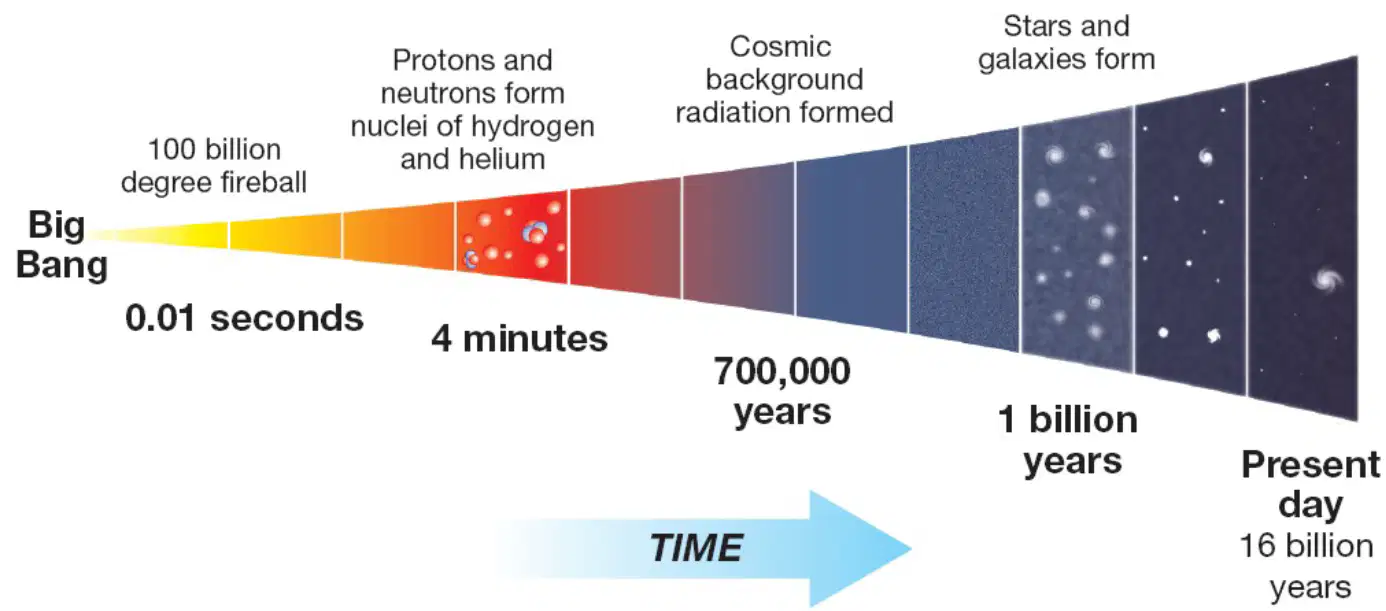
Based on the timeline image, when did cosmic background radiation form?
Approximately 1 billion years later
About 700,000 years after the Big Bang
Immediately at 0.01 seconds
Around 4 minutes after the Big Bang
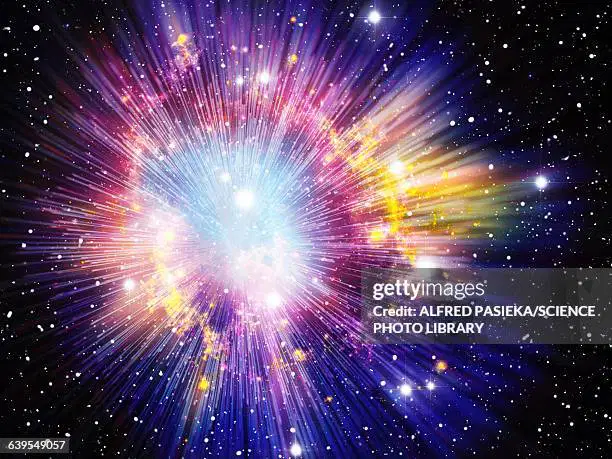
Which statement best describes the initial state of matter and energy in the Big Bang slide?
Spread across a massive galaxy
Compressed in a space smaller than an atomic nucleus
Trapped inside early stars
Evenly distributed through empty space

Which temperature condition is shown near 0.01 seconds after the Big Bang?
A 100 billion degree fireball
A cool nebula at 1000 K
Stable stellar cores forming
Cold molecular clouds forming
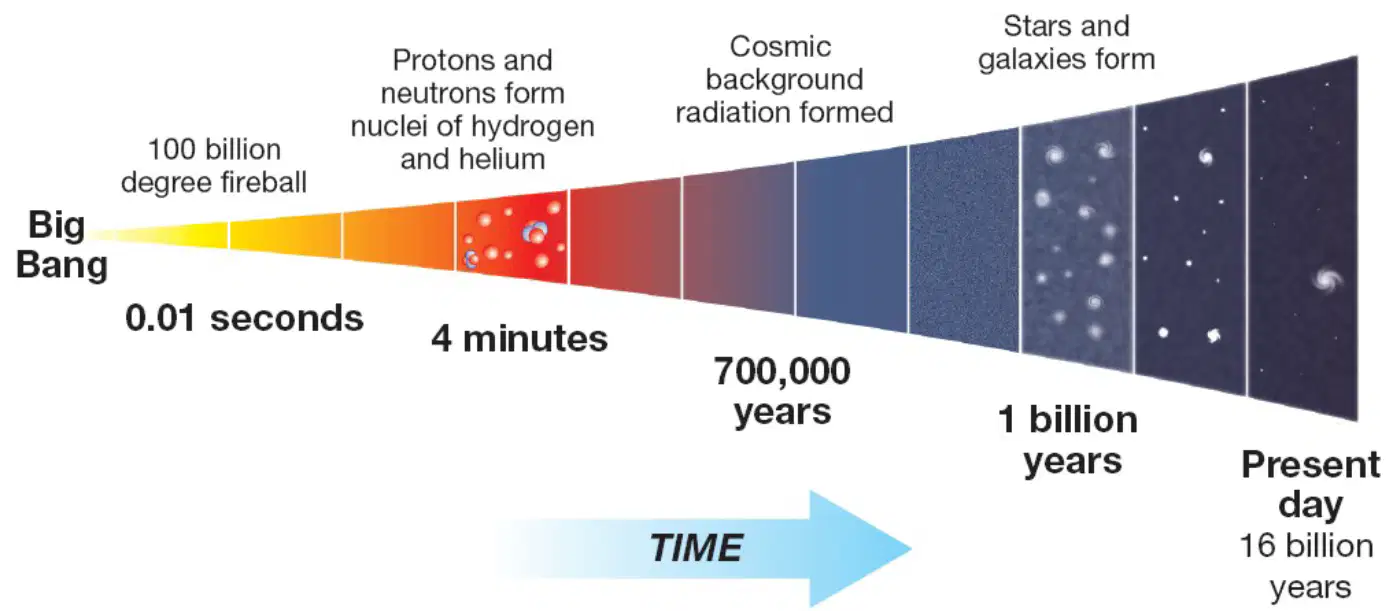
Which event on the timeline precedes the formation of stars and galaxies?
Heavy elements like iron form
Cosmic background radiation formed
Planetary systems emerge
Black holes dominate space

What time range does one slide give for when the universe began?
Between 50 and 60 billion years ago
Between 100 and 200 million years ago
Between 10 and 20 billion years ago
Between 1 and 2 billion years ago
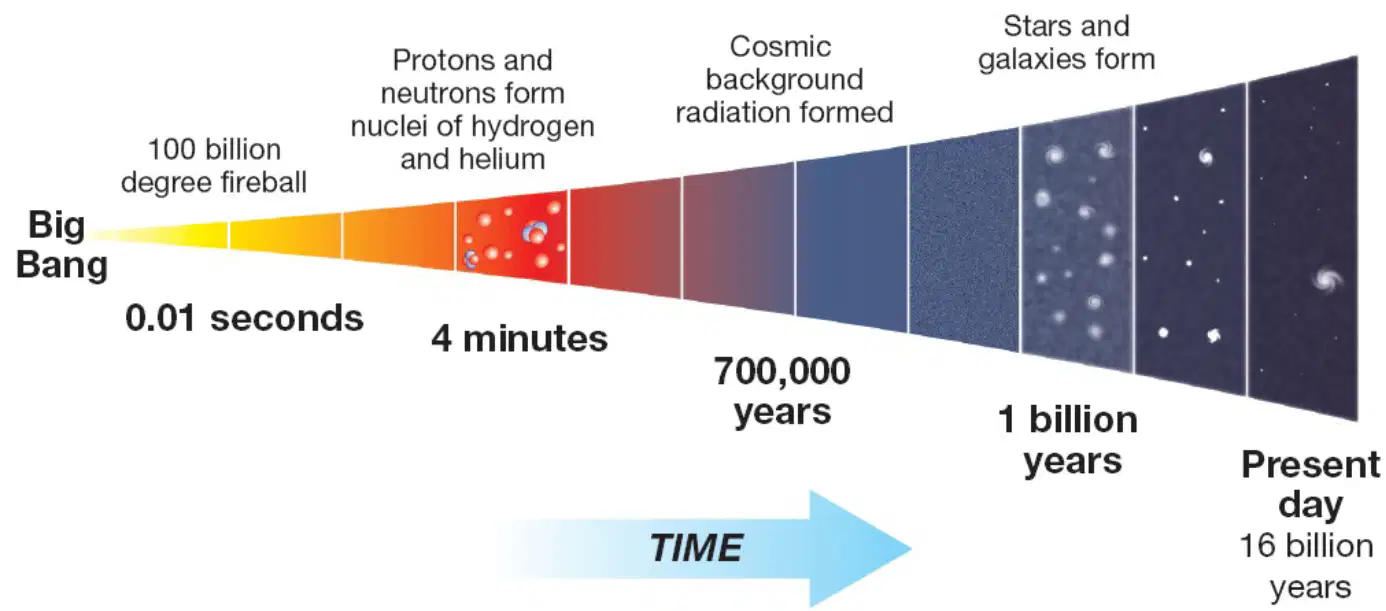
Which sequence correctly orders early events shown in the timeline?
CBR forms → stars form → nuclei form
Nuclei form → CBR forms → stars form
CBR forms → nuclei form → stars form
Stars form → CBR forms → nuclei form
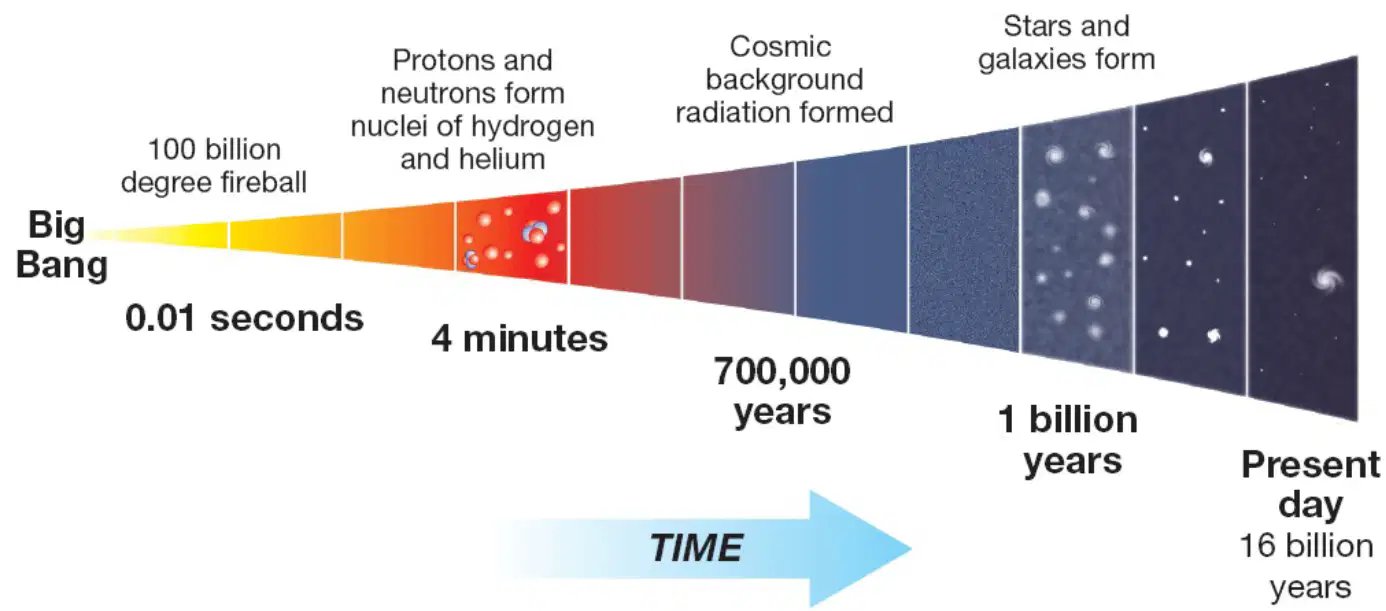
Which evidence is directly referenced by the timeline and supports the Big Bang theory?
Composition of Earth’s atmosphere
Discovery of exoplanets
Seasonal changes on Earth
Presence of cosmic background radiation
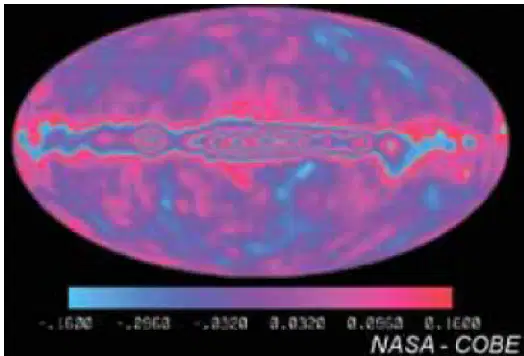
Why is the cosmic microwave background considered evidence for a hot, dense early universe?
It proves that stars formed simultaneously
It reveals current temperatures inside galaxies
It is a relic radiation cooling as space expands
It shows starlight scattered by interstellar dust

The observed cosmic abundance of elements is approximately 91.9% hydrogen and 8% helium. What does this ratio suggest?
Rapid early nucleosynthesis mainly produced light elements
Long periods of heavy-element synthesis dominated early space
Frequent supernovae immediately enriched space with metals
Stars initially formed with mostly carbon and oxygen

If the universe were significantly older than current estimates, which trend in element abundances would most likely be observed?
Equal amounts of hydrogen, helium, and heavy elements
No change because element ratios remain constant
Fewer heavy elements due to fewer supernovae
More heavy elements relative to hydrogen and helium

Which statement best connects the hydrogen–helium ratio to Big Bang physics?
Early conditions favored forming mostly heavy nuclei
Primordial nucleosynthesis created many light nuclei
Element ratios depend only on present-day star ages
Microwave radiation determines stellar metal content
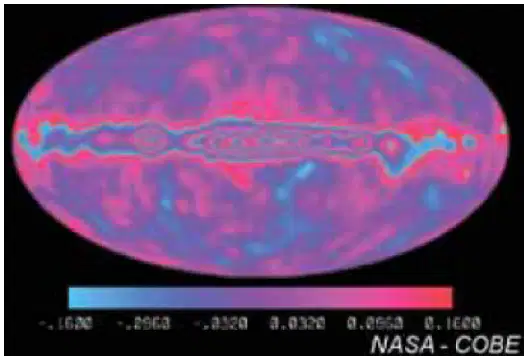
A radio telescope detects an all-sky microwave signal evenly distributed in every direction. Which conclusion is most consistent with this observation?
Earth’s atmosphere generates stable microwave noise
The signal is the cosmic microwave background radiation
Galactic dust clouds reflect solar microwaves evenly
Local stars emit uniform microwaves at all times
Which statement best defines a planetary system?
Two stars orbiting each other
A galaxy of many stars
Planets orbiting a black hole
A star with orbiting planets

According to the nebular hypothesis, what is the starting material for forming stars and planets?
A collapsing nebula cloud
An exploding supernova remnant
Matter ejected by comets
Gas captured from other galaxies
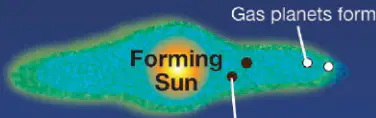
Where do terrestrial planets primarily form relative to the young Sun in the model shown?
Close to the Sun
Far beyond the Kuiper belt
Between gas giants
Inside the Sun’s corona
What evidence-based idea about planets is highlighted by scientists in this unit?
Planets require binary stars to exist
Planets condense after stars fully age
Planets form only in rare galaxies
Planets are a natural byproduct of star formation
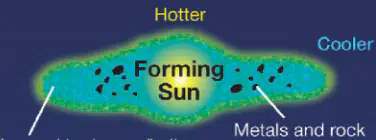
Which process begins when particles in the collapsing cloud collide and heat the center?
Radioactive decay of ice grains
Nuclear fusion in the forming Sun
Magnetic braking of planets
Gravitational lensing of starlight
What defines a binary star system?
Two planets sharing one orbit
Two stars orbit each other gravitationally
A star with multiple planets
Many stars bound in a galaxy
Approximately what fraction of the 60 nearest stars are in binary or multiple systems?
About one-half of them
Nearly all of them
About one-tenth of them
Around one-quarter of them

In the final stage of solar system formation shown, what remains after the nebula clears?
Sun and planets, plus Kuiper belt objects
Only gas giants without terrestrial planets
A binary star replacing the Sun
Just the Sun with no planets
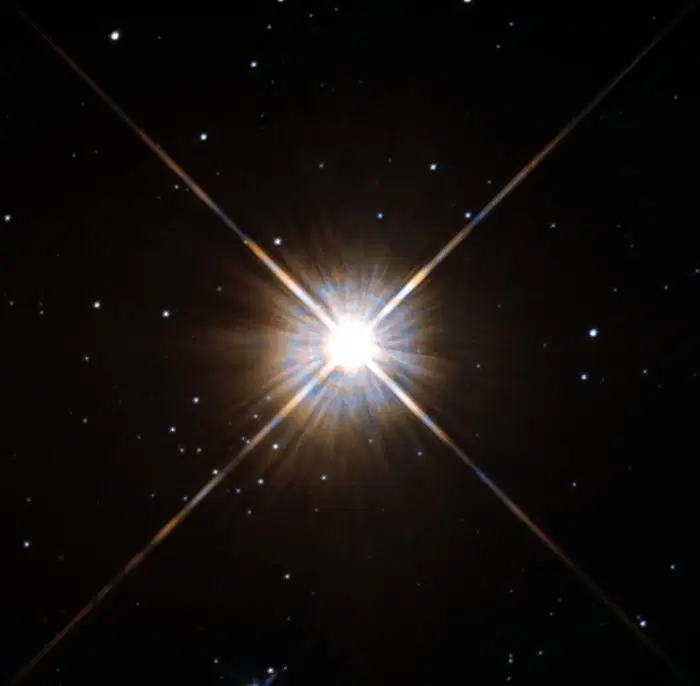
Starlight reaching Earth demonstrates which concept about light and distance?
Light cannot reach Earth from far stars
Light speed depends on object color only
Light travels instantaneously across space
Light takes time to travel from distant stars

