
 Worksheets
Keywords and Definitions
Total questions: 30
Worksheet time: 15mins
Which statement best describes Quality Assurance (QA) in manufacturing?
Measuring parts to confirm exact dimensions
Ensuring the process prevents mistakes and maintains quality
Inspecting each finished item for defects
Comparing products to competitors’ market prices
A factory measures parts during production to meet safety standards. Which term fits this activity?
Quality Assurance (QA)
Standardisation
Tolerance
Quality Control (QC)
A metal rod may vary by ±0.5 mm and still be acceptable. What design term describes this allowed variation?
Quality Assurance (QA)
Tolerance
Standardisation
Quality Control (QC)
A company makes switches with identical components and identical assembly steps across all sites. What is this practice called?
Standardisation
Quality Assurance (QA)
Quality Control (QC)
Tolerance

Which statement best describes Quality Assurance in manufacturing?
Checking finished products for faults after assembly
Replacing broken parts when defects are discovered later
Testing a few samples at the end of the production line
Improving the production process to prevent mistakes early
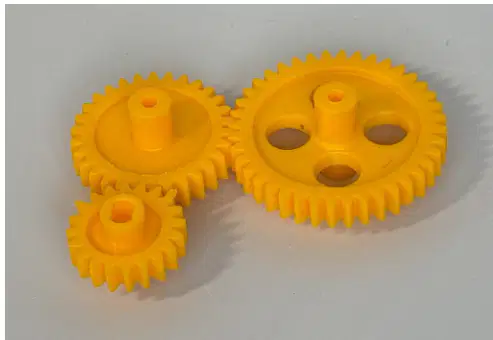
Which is a benefit of using standardised components in production?
Ensures consistent size and function
Makes parts unique each time
Increases random variation in products
Stops all maintenance from being needed
A factory wants fewer defects and more consistent products. Which plan shows strategic use of standardisation?
Change machine settings every shift
Train workers on the same techniques
Use custom parts for every product
Skip training to save production time
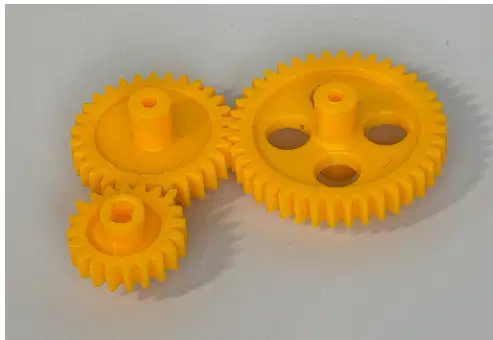
Which set lists standardised components correctly for design projects?
Screws, LEDs, USB ports
Clay, paint, random shapes
Unique hand‑carved pegs only
Unmeasured wires of any length
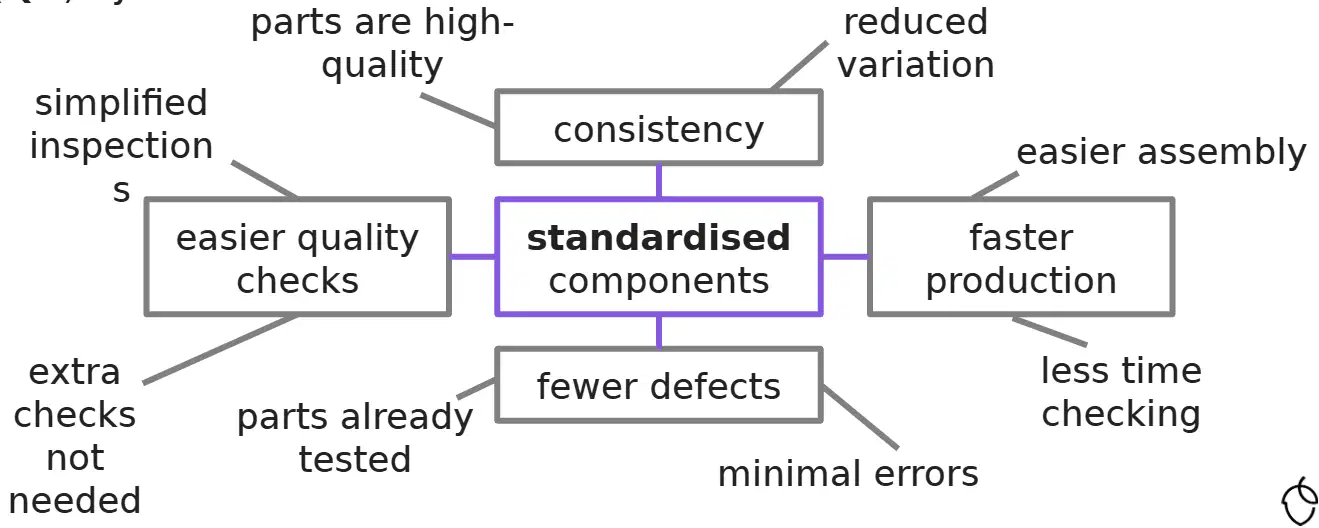
In the first diagram, what is a direct benefit of using standardised components for quality checks?
assembly becomes more complex
variation between parts increases
inspection becomes simplified
extra checks become necessary
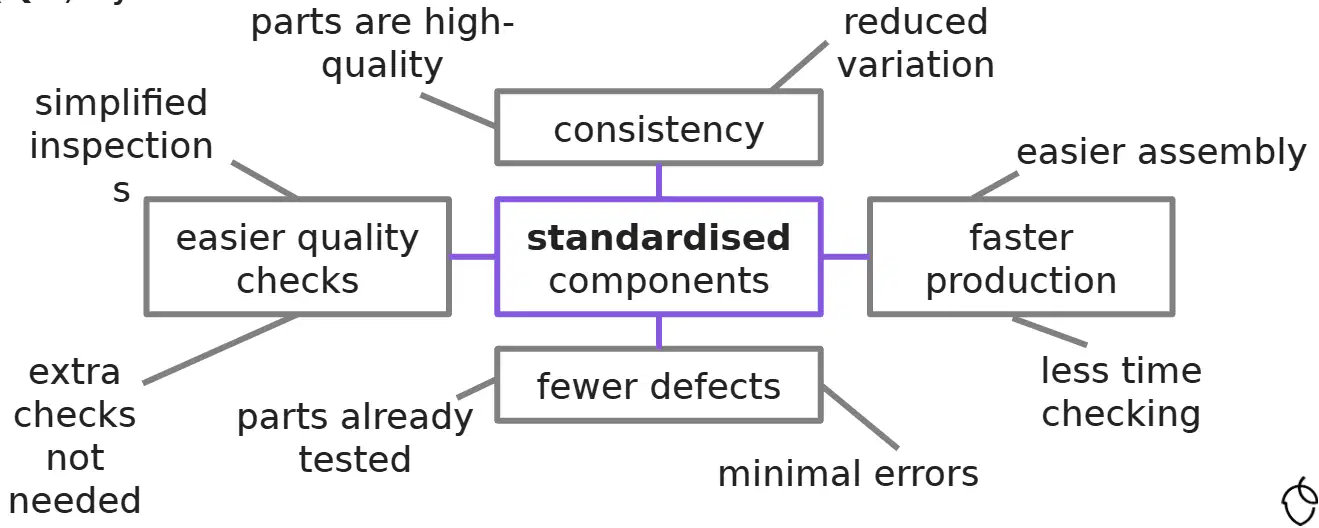
Looking at the first diagram, which outcome most supports faster production when components are standardised?
reduced variation between parts
greater chance of defects
more time spent checking
random assembly methods used
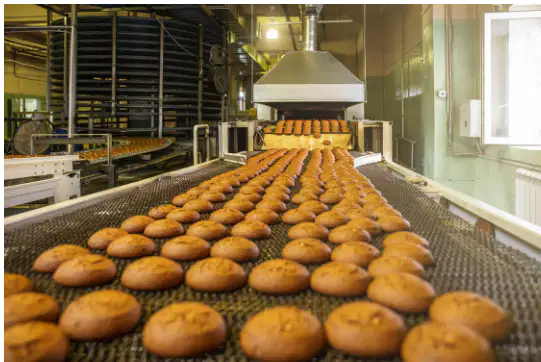
In the bakery production photo and text, why does using standardised methods help products meet safety standards?
recipes change every batch
each product is made the same way
machines run at random speeds
workers skip inspection steps
Which statement best describes standardising production?
Testing only the finished items
Letting workers choose any tools
Using consistent methods and materials
Changing methods for each product batch
When standardising the smartphone screen attachment, which step belongs to the process?
Advertising the product online
Ordering more smartphones
Designing new packaging
Clean, apply adhesive, use jigs
Which components are already standardised in the smartphone example?
Screens and apps
Cables and cases
Batteries and chargers
Adhesives and screws
Which outcome is a typical result of standardising processes?
More errors and defects
Improved efficiency
Less repeatability
Unpredictable quality
Why might a phone manufacturer standardise how screens are attached?
To avoid training workers
To follow the same steps every time
To make every phone unique
To change designs daily
Which action aligns with QA’s preventive approach?
Inspect only final products
Replace parts after failure
Design steps to avoid errors
Ignore process instructions
What does standardising materials help ensure?
Faster shipping only
No need for testing ever
Same quality level every time
Each item feels different
If a factory uses different adhesives randomly, what risk increases?
Consistency of quality
Chance of screen misalignment
Predictable assembly times
Uniform strength of joints
Which phrase defines standardising in simple terms?
Keeping steps the same each time
Doing steps differently each time
Ignoring instructions and tools
Letting everyone improvise daily
A team wants every product to meet the same quality level. What should they do?
Standardise methods and components
Change the process daily
Use random materials and tools
Skip cleaning steps entirely
Which step would come first when attaching a phone screen using a standard process?
Apply adhesive immediately
Clean the surfaces thoroughly
Install the battery first
Test the ringtone settings
How does using the same machines support QA?
It creates random results
It prevents any training need
It reduces variation and errors
It slows production dramatically

What is the purpose of adhesive in screen attachment?
Store user data safely
Change the phone color
Decorate the phone edges
Hold the screen securely
Which statement is true about QA and standardisation working together?
Standardisation always slows production
QA ignores materials and components
QA prevents defects by standardising processes
QA only checks products at the end
Which statement best describes Quality Control (QC) in manufacturing?
Advertising products to increase customer sales
Checking and testing products for defects
Planning the production schedule for workers
Designing new products to meet market trends
How is QC different from Quality Assurance (QA)?
QC focuses on the product only
QC prevents mistakes before production
QC manages supplier contracts
QC sets company-wide policies

You receive a batch of bolts: target diameter 10 mm ±0.5 mm. Which plan shows good QC reasoning?
Skip measurements and trust supplier labels
Only check bolts that look visibly damaged
Measure samples and reject outside tolerance
Increase tolerance to avoid rework costs
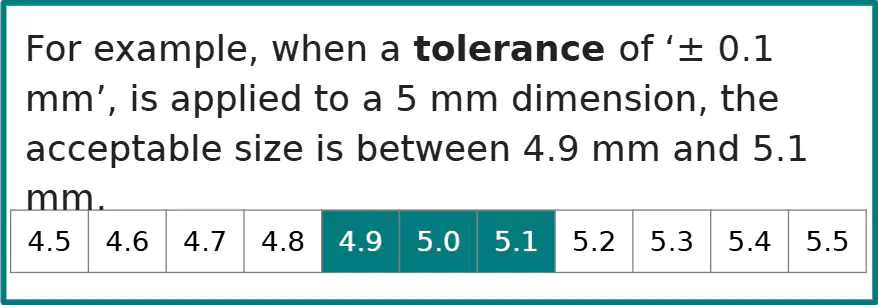
A metal rod is specified as 5 mm ± 0.1 mm. Which size is acceptable during a QC check?
4.8 mm measurement
4.9 mm measurement
5.2 mm measurement
5.3 mm measurement

Why do skateboard parts use tight tolerances?
To avoid polishing the metal
To make wheels spin slower
To ensure smooth and safe riding
To reduce material color changes

