
 Worksheets
N5 UNIT 1 QUIZ
Total questions: 50
Worksheet time: 55mins

which of the following statements is correct?
This animal cell has shrunk after being placed in pure water.
This animal cell has burst after being placed in pure water.
This animal cell has burst after being placed in a concentrated salt solution.
This animal cell has shrunk after being placed in a concentrated salt solution.

which of the following statements is correct?
This animal cell has shrunk after being placed in pure water.
This animal cell has burst after being placed in pure water.
This animal cell has burst after being placed in a concentrated salt solution.
This animal cell has shrunk after being placed in a concentrated salt solution.

The diagram shows stages in the production of a protein in a cell. Which option identifies the exact location of each stage?
Stage 1: nucleus; Stage 2: cytoplasm
Stage 1: nucleus; Stage 2: ribosome
Stage 1: cytoplasm; Stage 2: ribosome
Stage 1: cytoplasm; Stage 2: nucleus
A single strand of DNA contains 830 adenine, 929 cytosine, 774 guanine and 615 thymine bases. How many guanine bases would be in the complementary strand?
615
774
830
929
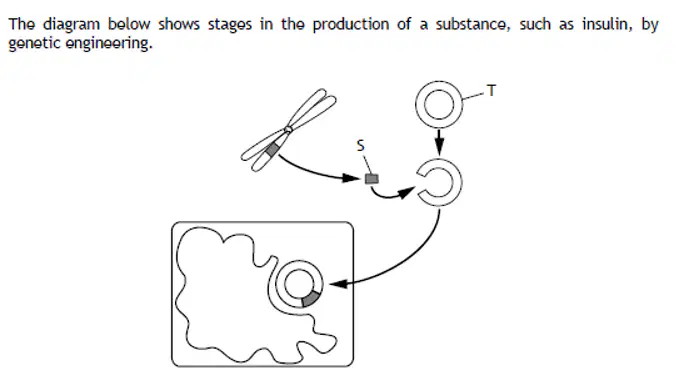
The diagram shows stages in the production of a substance, such as insulin, by genetic engineering. Which option below correctly identifies S and T?
S: Gene; T: Plasmid
S: Gene; T: Bacterium
S: Chromosome; T: Plasmid
S: Chromosome; T: Bacterium
Enzymes act as catalysts because they
are composed of protein
act on any substrate
are unaffected by temperature
speed up chemical reactions in cells
The bases in a strand of DNA make up the code for the production of proteins. The DNA for every individual person varies.
Describe the way in which this code differs from person to person.
Name the single stranded molecule which carries a complementary copy of the code from the DNA in the nucleus to the ribosome for protein synthesis.
(a)
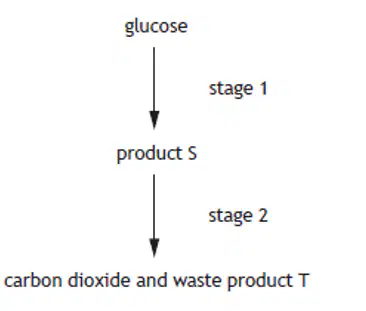
The diagram represents the process of aerobic respiration in yeast cells. Name product S.
(a)
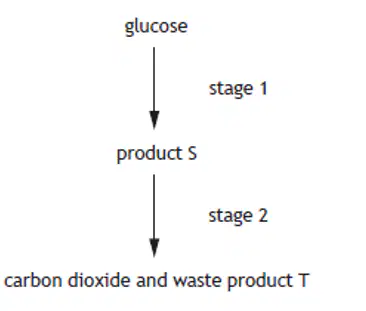
The diagram represents the process of aerobic respiration in yeast cells. Name waste product T.
(a)
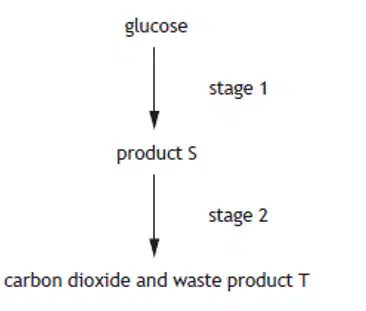
The diagram represents the process of aerobic respiration in yeast cells. Name the substance that must be present for yeast to respire aerobically.
(a)
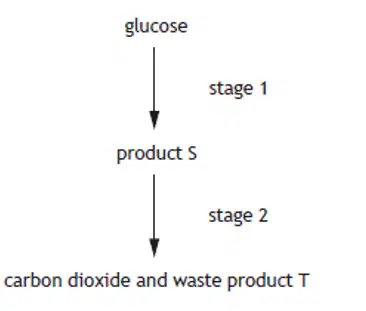
The diagram represents the process of aerobic respiration in yeast cells. Identify which of the two stages releases the larger quantity of ATP.
stage 1
stage 2
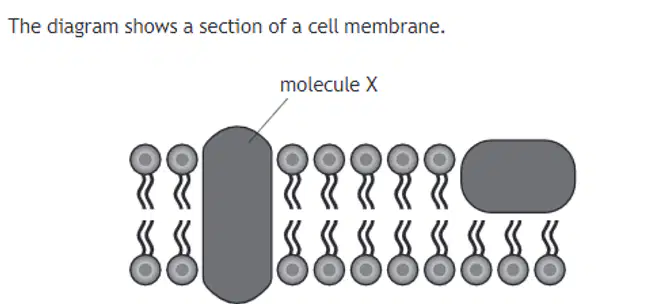
The diagram shows a section of a cell membrane. Molecule X is involved in active transport. Name this type of molecule.
Which of the following statements apply to diffusion?
movement of molecules
movement of water
movement is from a low to high concentration
movement is from a high to low concentration
Which of the following statements apply to osmosis
movement of water from a low to high concentration
movement of water from a high to low concentration
does not require energy (passive process)
does require energy
Which of the following statements apply to active transport
movement of molecules from a low to high concentration
movement of molecules from a high to low concentration
does not require energy (passive process)
does require energy
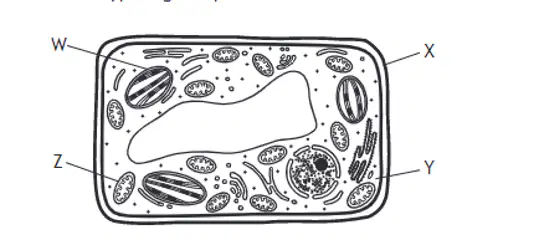
The diagram shows a typical green plant cell and some of its structures.
Using a letter from the diagram, identify one structure that would also be found in an animal cell.
The site of protein synthesis is the
(a)
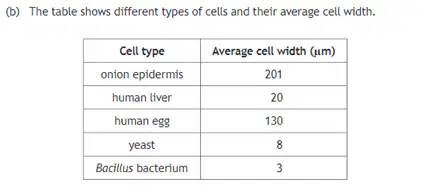
The table shows different types of cells and their average cell width.
Calculate how many times wider an onion epidermis cell is than a Bacillus bacterium cell.
Which of the following describes the function of the cell wall?
controls what substances enter/exit the cell
site of aerobic respiration
site of photosynthesis
provides cell with support
Which of the following describes the function of the mitochondria?
site of chemical reactions
site of aerobic respiration
site of photosynthesis
contains cell sap.
plant cell walls are composed of
(a)
The type of energy released from the breakdown of glucose is (a) energy

Which of the following statements is correct?
this plant cell is turgid. It has been placed in pure water.
this plant cell is plasmolysed. It has been placed in a concentrated salt solution.
this plant cell is plasmolysed. it has been placed in pure water.
this plant cell is turgid. it has been placed in a concentrate salt solution.

Which of the following statements is correct?
this plant cell is turgid. It has been placed in pure water.
this plant cell is plasmolysed. It has been placed in a concentrated salt solution.
this plant cell is plasmolysed. it has been placed in pure water.
this plant cell is turgid. it has been placed in a concentrate salt solution.
A section of DNA that codes for a protein is a
(a)
The small sub units of proteins are
(a)
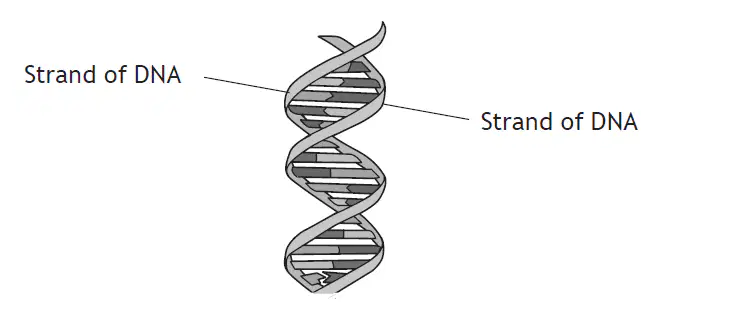
Give the term which describes the shape of a DNA molecule as
shown in the diagram
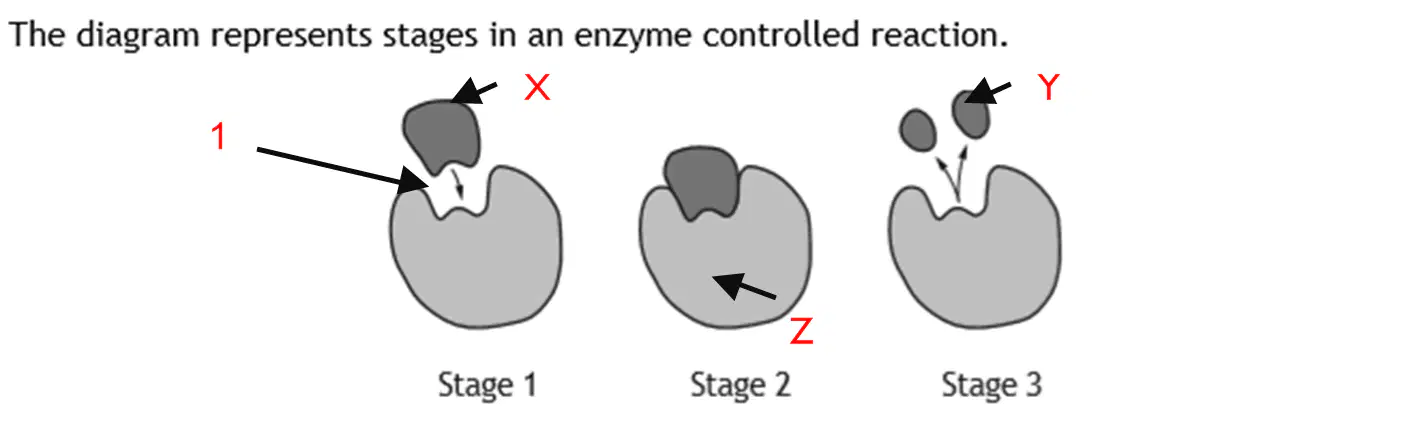
Which letter identifies the enzyme?
X
Y
Z
Which letter identifies the substrate
X
Y
Z
Which letter identifies the product?
X
Y
Z
The structure identified by number 1 is the
(a)
Identify a factor that can affect enzyme activity.
When the temperature or pH changes beyond an enzymes optimum, the active site changes shape. The enzyme is described as being (a)
When larger substrate molecules are broken down in to smaller products, this a
degradation reaction
synthesis reaction
When smaller substrate molecules are built up in to larger products this is a
degradation reaction
synthesis reaction
The conditions at which an enzyme is most active is known as the
(a)
A
B
C
D
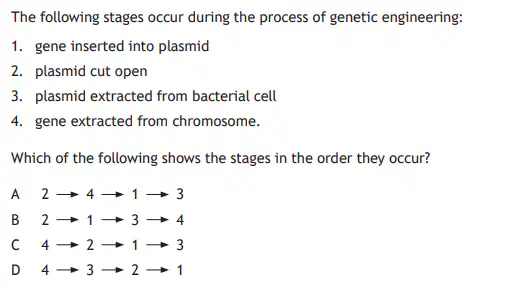
A
B
C
D
Which of the following builds up in animal cells as a result of fermentation?
lactate
ethanol
carbon dioxide
oxygen
Which of the following are products of fermentation in plant & yeast cells?
lactate and glucose
lactate and ethanol
Carbon dioxide and ethanol
carbon dioxide and lactate
fermentation occurs in the absence of
(a)
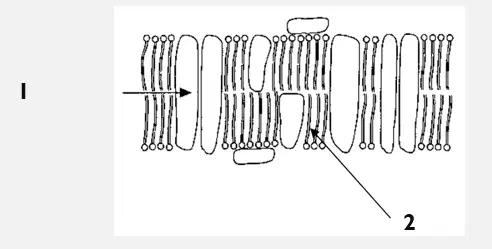
Number 2 identifies which component of the cell membrane?
Which of the following best defines the term "selectively permeable" in relation to the cell membrane?
will only allow small soluble molecules to enter/exit the cell
will not allow small soluble molecules to enter/exit the cell
will only allow large insoluble molecules to enter/exit the cell
Muscle cells require more energy (ATP) than skin cells.
Which cell organelle will a muscle cell have more of?
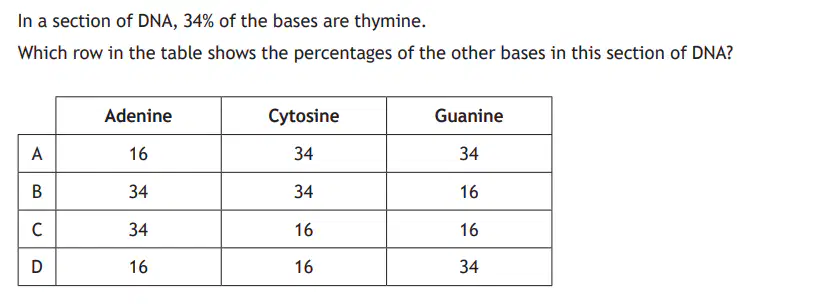
A
B
C
D
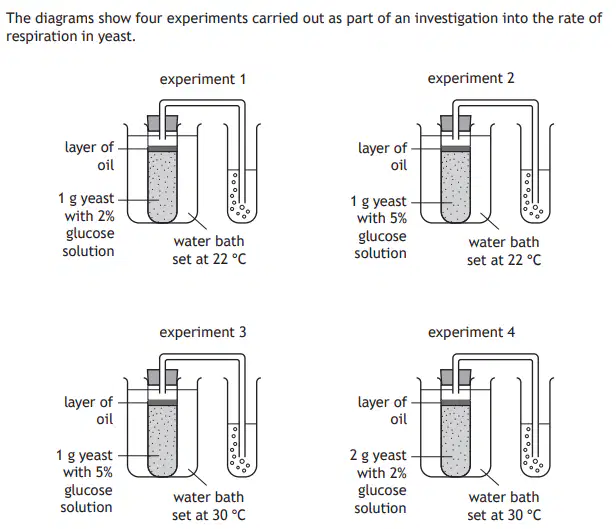
Which two experiments should be compared to show the effect of temperature on the rate of reaction?
1 AND 2
1 AND 3
2 AND 3
1 AND 4
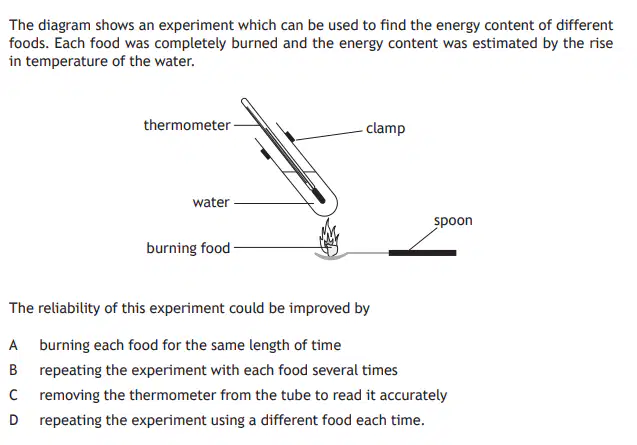
A
B
C
D
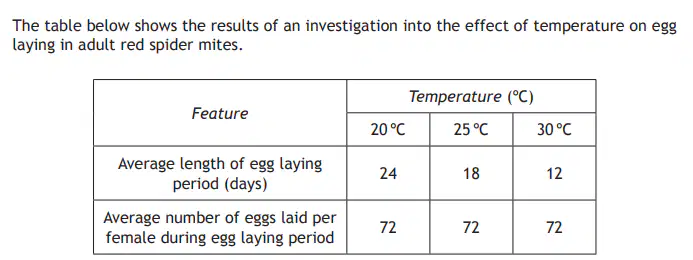
As the temperature increases, the average number of eggs laid per female per day
increases
decreases
stays the same
halves

