
 Worksheets
Review Worksheet (3) — Arab World Geography and History
Total questions: 59
Worksheet time: 30mins
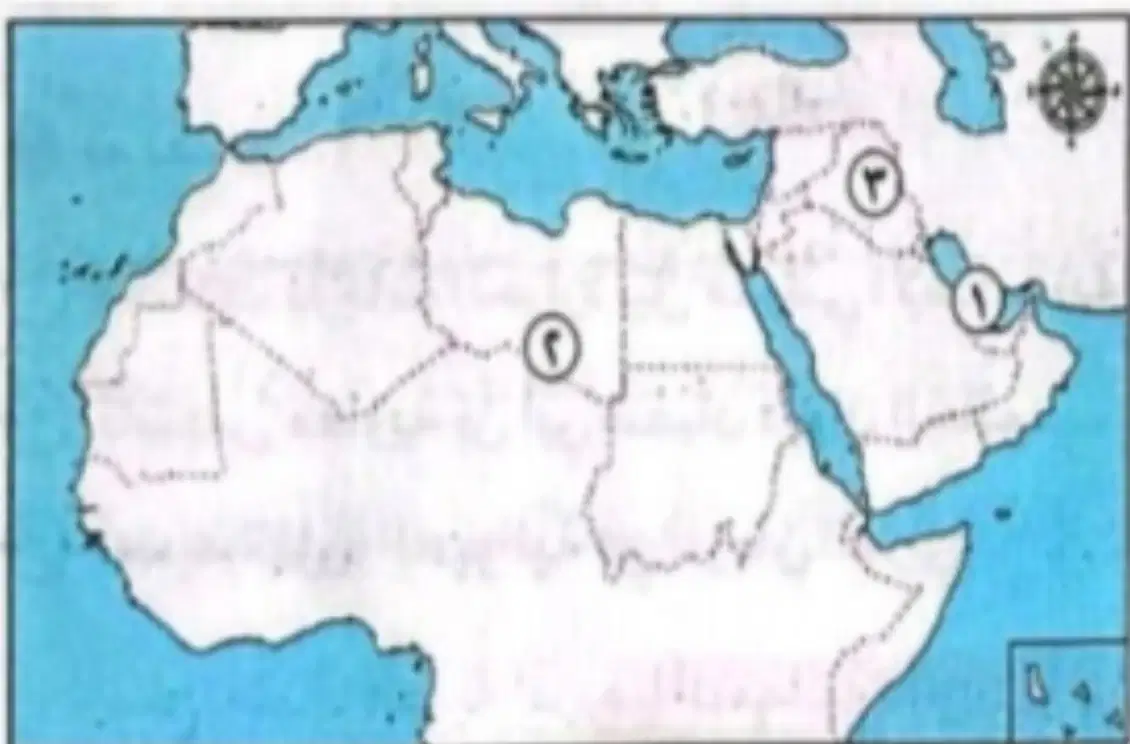
Observe the outline map of the Arab world with three numbered markers. Which river is indicated by marker 1?
Nile River
Euphrates River
Jordan River
Senegal River
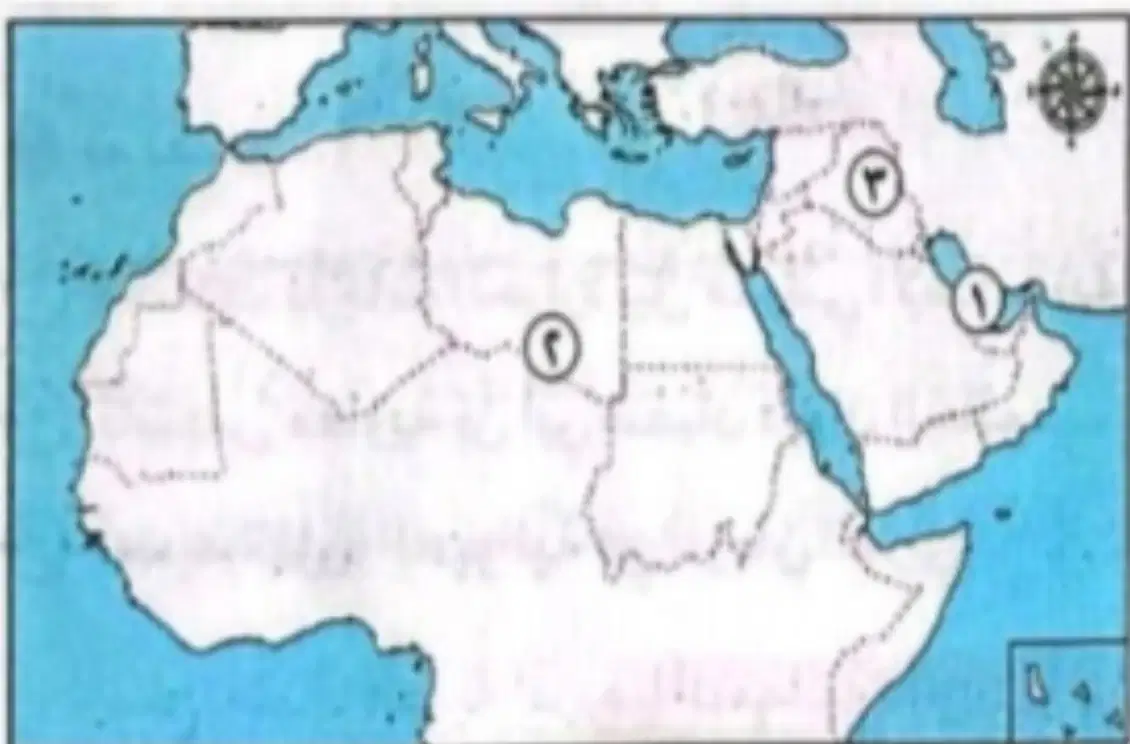
Observe the same map. Which country is indicated by marker 2?
Mauritania
Somalia
Iraq
Sudan
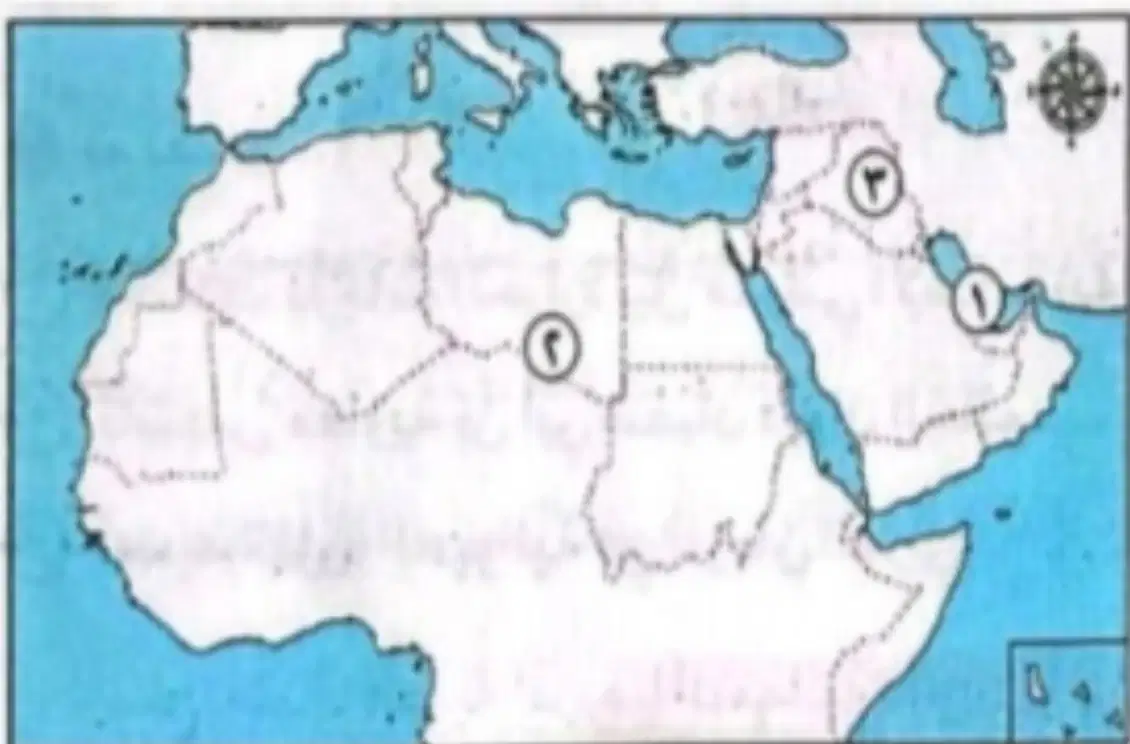
Observe the same map. Marker 3 points to which plateau?
Najd Plateau
Hadramaut Plateau
Syrian Desert Plateau
Ethiopian Plateau
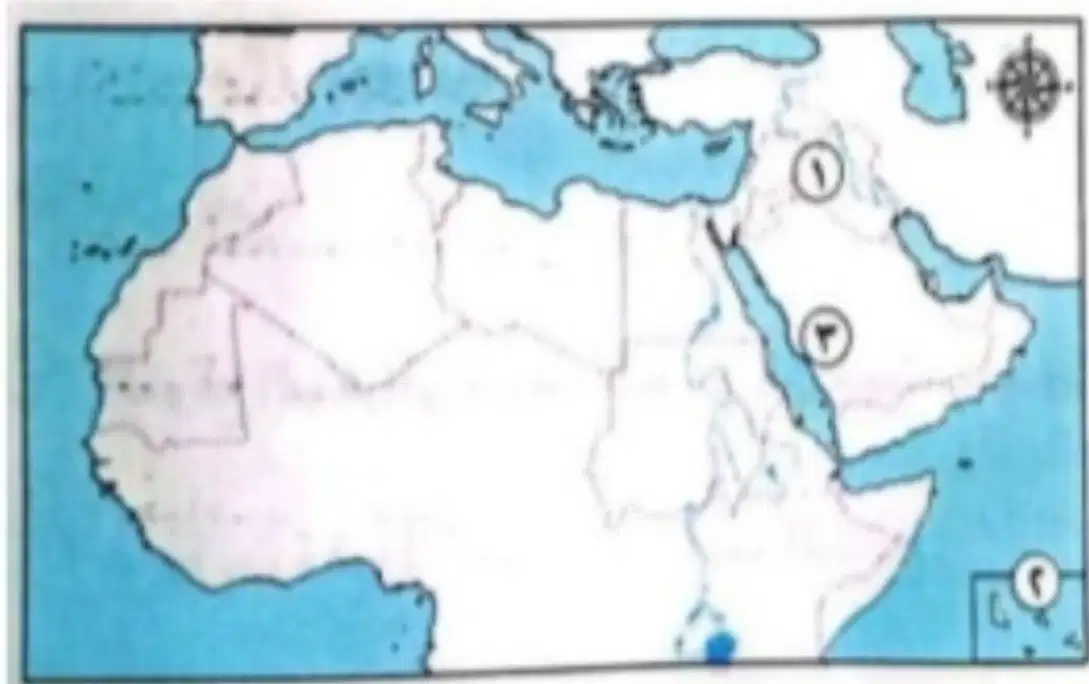
Observe the outline map of the Arab world with two numbered markers. Marker 1 points to which gulf?
Arabian (Persian) Gulf
Gulf of Aden
Gulf of Suez
Gulf of Oman

Observe the same map. The country indicated by marker 2 is well known for producing iron. Which country is it?
Algeria
Mauritania
Egypt
Lebanon

On the same map, agriculture in the Arabian Peninsula largely depends on which water source?
Seasonal rivers
Groundwater
Heavy monsoon rains
Glacial meltwater
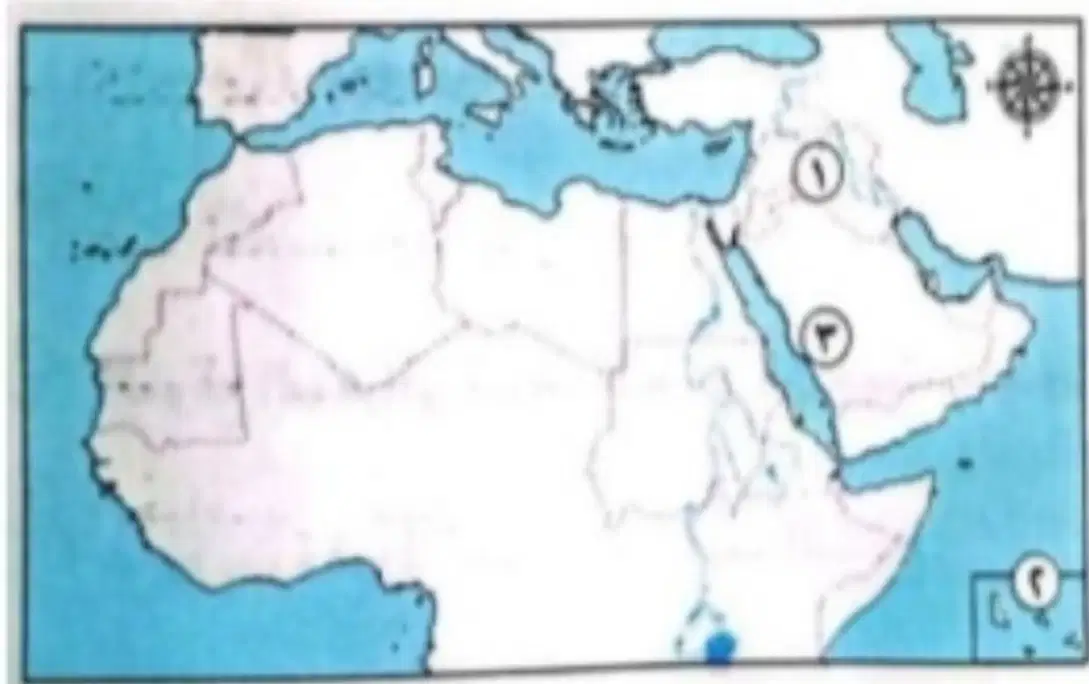
Observe another outline map of the Arab world with two numbered markers. Marker 1 points to which gulf?
Gulf of Aden
Gulf of Aqaba
Gulf of Oman
Arabian (Persian) Gulf

Observe the same map. Marker 2 points to the Sahara Desert.
True
False

Which country in the Arab region is noted for large quantities of sulfur?
Iraq
Morocco
Jordan
Bahrain
Cotton with long staple fibers is mainly used to make luxury clothing and fine textiles.
True
False
Protecting antiquities and preserving them is a duty on everyone.
True
False
The Strait of Gibraltar is a route between the Atlantic Ocean and the Mediterranean Sea.
True
False
Camels live primarily in the desert climate region.
True
False
The Strait of Bab al-Mandeb lies between the Gulf of Aden and the Mediterranean Sea.
True
False
The Arabian Peninsula was a cradle for many prophets.
True
False
Complete the statement: The Prophet delivered the Farewell Sermon while performing the duty of ______.
Hajj (pilgrimage)
Zakat (almsgiving)
Sawm (fasting)
Jihad
Complete the statement: Abd al‑Malik ibn Marwan built the Dome of the Rock in the country of ______.
Palestine
Egypt
Saudi Arabia
Iraq
Complete the statement: A metal used in making jewelry and coins is ______.
Gold
Iron
Copper
Aluminum
Which of the following borders the Arab world to the south?
Atlantic Ocean
Arabian Sea
Mediterranean Sea
Arabian (Persian) Gulf
Savanna grasslands within the Arab world mainly appear in which country?
Sudan
Lebanon
Palestine
Tunisia
Hydropower for generating electricity is most widely used in which of the following?
Qatar
Bahrain
Egypt
Djibouti
Which of the following was a known achievement of Abd al‑Malik ibn Marwan?
Leading the Battle of al‑Zab
Conquest of Amorium
Moving the caliphate capital to al‑Andalus
Arabization of the government bureaus (Diwans)
Mountains formed as a result of tectonic building movements include which of the following?
Asir Mountains
Yemen Highlands
Atlas Mountains
Hejaz Mountains
Which civilizations originated within the Arab region? Select all that apply.
Phoenicians
Egyptian civilization
Mesopotamian (Iraqi) civilization
Greek civilization
Egypt was opened (conquered) by which noble companion?
Khalid ibn al‑Walid
Al‑Nu‘man ibn Muqrin
Amr ibn al‑‘As
Sa‘d ibn Abi Waqqas
Which of the following is among the largest Arab producers of poultry?
Yemen
Palestine
Lebanon
Saudi Arabia
Correct the underlined part: The largest plateau in the Arab world by area is the Syrian Desert Plateau. What is the correct name?
Najd Plateau
Hadramaut Plateau
Ethiopian Plateau
Jordan Plateau
Correct the underlined part: It was stated that Umar ibn al‑Khattab was martyred during the Asr (afternoon) prayer. What is the correct prayer time?
Fajr (dawn)
Dhuhr (noon)
Maghrib (sunset)
Isha (night)
Correct the underlined part: The Toshka project in Egypt’s Southern Valley aims to achieve industrial security. What is the correct aim?
Food security
Military security
Tourism development
Oil self‑sufficiency
Select one correct work for Abd al‑Muttalib, the Prophet’s grandfather.
He led the Battle of Badr
He rediscovered the Zamzam well
He compiled the Qur’an
He built the Dome of the Rock
Select one correct statement about Abdullah ibn Saba.
He initiated a large textile industry
He was a key instigator of sedition in early Islamic history
He discovered the Strait of Gibraltar
He ruled Egypt during the Fatimid period
Select one correct work of Al‑Hubab ibn al‑Munzir.
He advised relocating near the wells at the Battle of Badr
He founded the city of Kairouan
He opened Egypt
He translated Greek science into Arabic
What is meant by water erosion?
The build‑up of soil through plant roots
The wearing away of soil and rock by running water and rainfall
Pollution of rivers by sewage
Formation of new land by volcanic lava
What is meant by drought?
A period of heavy rainfall causing floods
A long period with very little rainfall leading to water shortage
A windy spell with falling temperatures
A humid season with frequent storms
What is meant by the apostates in early Islamic history?
People who migrated from Mecca to Medina
Groups who renounced Islam after the Prophet’s death, leading to the Ridda wars
Tribes who signed peace treaties with Medina
Merchants who supported Muslim trade routes
What is meant by dry valleys (wadis)?
Permanent rivers that flow all year
Sand dunes formed by wind
Valley beds that remain dry most of the year and carry water only during rain
High mountain passes used by travelers
What is meant by desertification?
Turning desert into fertile farmland
The spread of urban areas into rural land
The transformation of once‑productive land into desert due to misuse and climate change
Seasonal flooding along river banks
How do you explain that Arab countries are interested in poultry farming?
It requires very cold climates that the region has
It quickly provides affordable animal protein and suits available feed and facilities
It depends mainly on oceans and large fishing fleets
It is the only source of export income in the region
How do you explain that many occupiers tried to control the Arab world through different eras?
It is isolated from trade routes and resources
It has a small population and few cities
Its strategic location linking continents and its rich natural resources
Its severe cold climate prevents settlement
How do you explain that the Prophet sent many expeditions (saraya)?
To explore rainforests for new crops
To protect the Muslim community, secure routes, and deter hostile tribes
To build large palaces in Medina
To collect rare minerals from distant lands
How do you explain the difference in temperatures between Alexandria and Riyadh?
Alexandria is inland desert while Riyadh is on the coast
Alexandria’s proximity to the Mediterranean moderates its climate, while Riyadh’s inland desert location produces hotter summers and greater extremes
Both have identical latitudes causing the same climate
Riyadh is colder because it is north of the Tropic of Cancer
How do you explain that Muawiya ibn Abi Sufyan established the Diwan al‑Khatam (Chancery seal)?
To collect agricultural taxes only
To prevent forgery and protect official correspondence by sealing documents
To build new markets for trade
To train cavalry units
How do you explain the importance of animal wealth in the Arab world? Select all that apply.
It provides meat, milk, wool, and leather products
It supports related industries and jobs
It increases soil erosion in farms
It can contribute to export earnings
What are the results of Egypt establishing the “Future of Egypt” project for sustainable agriculture? Select all that apply.
Expansion of cultivated area and improved food security
Adoption of modern irrigation and mechanization
Permanent abandonment of desert lands
Increased production of strategic crops
What are the results of climate changes in the Arab world? Select all that apply.
More frequent heat waves and droughts
Rising sea levels threatening low‑lying coasts
Universal increase in rainfall making all areas wetter
Greater risk of sandstorms and water scarcity
Give evidence that efforts of Arab countries to develop animal wealth are numerous. Select all that apply.
Improving breeds and veterinary services
Expanding rangelands and fodder cultivation
Reducing vaccination programs
Supporting modern farms and training workers
Give evidence that relief features in the Arab world are diverse. Select all that apply.
Presence of mountains such as the Atlas
Extensive plateaus and deserts
Only flat plains with no valleys
Coastal plains and river valleys like the Nile
Show that the natural components for tourism in the Arab world are numerous. Select all that apply.
Warm climate and sunny beaches
Varied landscapes including deserts, mountains, and oases
Lack of heritage sites
Unique marine environments in seas such as the Red Sea
What best shows that Caliph al‑Walid ibn Abd al‑Malik cared for the Two Holy Mosques?
He abandoned maintenance to save money
He expanded and renovated Al‑Masjid al‑Haram and the Prophet’s Mosque
He moved the mosques to new cities
He ordered that pilgrims stop visiting
What is the relationship between non‑renewable energy sources and air pollution?
Burning fossil fuels releases pollutants and greenhouse gases that pollute the air
Oil and coal naturally clean the atmosphere
Air pollution causes fossil fuels to form
Non‑renewable energy does not affect air quality
What is the relationship between the diversity of the Arab world’s relief and its economic activities?
Economic activities are unrelated to landforms
Different landforms support different activities—for example, plains favor agriculture, mountains mining, and coasts fishing and trade
Only deserts support farming
Mountains always prevent all human activity
What is the relationship between the Prophet’s birth and Abraha the Abyssinian?
They occurred in different centuries with no link
The Prophet was born in the Year of the Elephant, when Abraha attempted to attack the Kaaba
Abraha was the Prophet’s teacher
The Prophet led Abraha’s army
Which statement correctly compares natural vegetation in the Mediterranean climate region and the tropical region?
Both regions have identical vegetation
Mediterranean regions have drought‑resistant shrubs and olive trees, while tropical regions have dense rainforests or savannas depending on rainfall
Tropical regions grow only coniferous forests
Mediterranean regions are covered by tundra
Which pairing of actions is correctly matched to Caliph Abu Bakr as‑Siddiq and Caliph Uthman ibn Affan?
Abu Bakr—standardized the Mushaf; Uthman—Ridda wars
Abu Bakr—Ridda wars to preserve unity; Uthman—standardized the Mushaf and expanded the state
Abu Bakr—built the Kaaba; Uthman—stopped naval activity
Abu Bakr—invented paper; Uthman—closed markets
What are the climatic characteristics of the Mediterranean region?
Hot, wet summers and cold, dry winters
Mild, rainy winters and hot, dry summers
Perpetually cold and snowy all year
Extremely humid and rainy in all seasons
Which natural components support agriculture in the Arab world? Select all that apply.
Fertile river valleys such as the Nile and Tigris–Euphrates
Suitable climates in some regions with seasonal rainfall
Total absence of groundwater
Level coastal plains with good soils
Where does the North African plateau extend within the Arab world?
Only in Yemen and Oman
Across much of Morocco, Algeria, Tunisia, Libya, and parts of Egypt
Only along the Levantine coast
Exclusively in the Arabian Peninsula
How do you explain the establishment of diwans (bureaus) in the era of Umar ibn al‑Khattab?
To organize state finances, record stipends, and manage administration efficiently
To decorate palaces with murals
To train poets for court ceremonies
To reduce the number of officials
Name two efforts by Egypt to promote tourism. Select all that apply.
Developing infrastructure and transportation to tourist sites
Restoring and preserving antiquities and museums
Banning foreign visitors from archaeological areas
International promotion and hosting cultural events

