
NEW
Font size
 Worksheets
S1 Practice Exam
Total questions: 52
Worksheet time: 29mins
When leaving a movie theater, a person notices that the sidewalk is now wet. If the person assumes it rained during the movie, the person is making
a hypothesis.
an inference.
an observation.
a prediction.
When designing an experiment, scientists test a relationship between a “cause” and an “effect.” The “effect,” represented by what the scientist measures and records, is known as the
dependent variable
constant
independent variable
control group
A researcher is studying the effect of light on plant growth. Which of the following would be the best way to present the data collected from this study?
A pie chart showing the distribution of plant species
A bar graph comparing plant height under different light conditions
A line graph showing temperature changes over time
A table listing the types of soil used
Kia, Jay, and Gabi test factors influencing water absorption by an egg. They remove the shell from 3 eggs by dissolving them in vinegar and place each egg in one of three solutions for 24 hours: 100% distilled water, a 50% water/50% corn syrup mixture, and 100% corn syrup. The mass of each egg is measured before and after the 24-hour soak. Recorded changes in mass: distilled water from 65.1 g to 77.8 g (change +12.7 g); 50/50 mixture from 62.0 g to 52.2 g (change −9.8 g); 100% corn syrup from 66.7 g to 48.9 g (change −17.8 g). In this experiment, the independent variable they are testing is
the change in the mass of the eggs.
the ending mass of the eggs.
the amount of time they were in the solution.
the type of solution the egg is place in.
Kia, Jay, and Gabi conduct the egg-mass investigation with three solutions for 24 hours (distilled water, 50/50 water/corn syrup, and 100% corn syrup). Data show changes in mass: +12.7 g in distilled water, −9.8 g in the 50/50 mixture, and −17.8 g in 100% corn syrup. This group also recorded a dependent variable, which is represented by
the change in mass of the eggs
the starting mass of the eggs
the amount of time they were in the solution
the type of solution the egg is place in
Using the egg-mass data (distilled water: +12.7 g; 50/50 mixture: −9.8 g; 100% corn syrup: −17.8 g), the most appropriate hypothesis would be
“If an egg is placed in corn syrup, it will gain weight.”
“If an egg is placed in vinegar overnight, then its shell will dissolve.”
“If eggs are placed in three different solutions, then the egg in distilled water will lose weight.”
“When an egg is placed in a distilled water solution the egg will gain weight.”
If the experimenters were to graph the egg-mass data from the three solutions, what type of graph would make the most sense to use?
Line graph
Bar graph
Pie chart
Scatter plot
When writing a conclusion, what should you always refer back to?
the procedures
your hypothesis
your textbook
the materials list
When comparing a trend or change in data over time, what is the best way to organize the data?
Line graph
Bar graph
Scatter plot
Pie chart
A scientist observes an organism uses energy from its environment to carry out life processes. Based on this information, which characteristic of life is most likely being described?
Homeostasis
Metabolism
Reproduction
Growth and development
Which of the following statements best describes the relationship between growth and development in living organisms?
Growth is a result of cell division, while development is the process by which an organism becomes more complex and specialized over time.
Growth and development refer to the same process; there is no difference between them.
Growth involves the movement of materials through the organism, while development involves only the organism’s ability to reproduce.
Growth only refers to the increase in size of an organism, while development does not affect the organism.
Which of the following is an example of a living organism maintaining homeostasis?
A snake changing color to absorb more heat from the sun.
A bird building a nest in a tree.
A plant producing seeds for reproduction.
A dog increasing its breathing rate to cool down after exercise.
If available, the body will always digest which macromolecule for energy first?
lipids
Proteins
enzymes
carbohydrates
Which type of macromolecule are enzymes?
Carbohydrates
Protein
Lipids
Nucleic acids
Organic chemistry is the study of compounds that contain bonds with ____.
Hydrogen
Carbon
Oxygen
Nitrogen
Which category of carbon-based molecules includes sugars and starches?
unsaturated fatty acids
phospholipids
proteins
carbohydrates
If the activation energy of a biochemical reaction is lowered, then ____.
the reaction will happen faster
this will not affect the rate of the reaction
the reaction will happen more slowly
nothing will happen
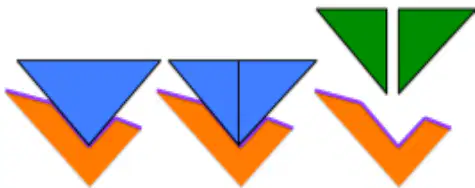
In the lock-and-key model of enzyme function, what is happening during the second step? The diagram shows three panels: first, the substrate shaped like a blue triangle approaches the orange active site of the enzyme; second, the substrate fits into the active site; third, the green product leaves the active site.
The catalyzed reaction is releasing a product.
The enzyme is keeping the bonds the same in the substrate.
The enzyme is breaking bonds in the substrate.
The substrate is beginning to bind to the enzyme.
The four types of macromolecules found in organisms are carbohydrates, lipids, nucleic acids, and ____.
starches
fatty acids
monosaccharides
proteins
Organize the parts of this body system in the CORRECT order (starting with the organism level) according to the levels of organization in a multi-cellular organism.
human being → central nervous system → brain → nerve tissue → neurons (brain cell)
human being → neurons (brain cell) → brain → central nervous system → nerve tissue
human being → central nervous system → neurons (brain cell) → nerve tissue → brain
human being → brain → central nervous system → nerve tissue → neurons (brain cell)
Which level of organization is represented by a group of different tissues working together to perform a complex function?
Cell
Tissue
Organ
Organism
Which of the following is a direct result of mitosis in a plant root tip?
Production of pollen grains.
Growth of new root cells.
Formation of seeds.
Photosynthesis in leaves.
Which of the following scenarios is an example of a positive feedback mechanism?
Regulation of blood pressure
Blood clotting process
Maintenance of blood pH
Regulation of body temperature
Which of the following is a characteristic of a system in homeostasis?
Internal temperature staying within range regardless of external conditions
Internal conditions changing in response to external changes
Complete isolation from external environmental changes
Unregulated internal processes
What is the significance of cellular differentiation in multicellular organisms?
It allows cells to become identical.
It enables cells to perform specialized functions.
It causes cells to lose their function.
It prevents cells from dividing.
What makes stem cells different from other cells in the body?
They are larger than other cells, and can absorb broken cells to repair them.
They repair cells by breaking open and making their cell parts available for absorption into other cells.
They are undifferentiated cells that can turn into a number of different kinds of cells as needed.
They are cells that grow uncontrollably.
How can cells become different types of cells, such as nerve cells?
Through the division of the parent cell
Through the activation of different parts of DNA
By going through the stages of mitosis
By going through the stages of meiosis
Which things are possible due to the division of cells?
An organism can grow
Mutated cells are removed
Dead cells can be replaced
Damaged cells can be repaired
growth and replacing cells
Which of the following best describes an isotonic solution?
There is more solute outside the cell than inside the cell.
There is less solute outside the cell than inside the cell.
The concentration is equal on both sides of the membrane.
None of the above.
If a cell has 8 chromosomes, how many chromosomes will each of its daughter cells have after mitosis?
4
6
8
16
In a hypotonic solution, water will move ____ the cell, causing the cell to ____.
Into; shrivel
Into; lyse/swell
Out of; lyse/swell
Out of; shrivel
Unit 3: Energy Flow — Which phrase best describes the function of the ATP molecule?
Absorbs energy
Increases energy
Carries energy
Creates energy
Unit 3: Energy Flow — Energy is released from an ATP molecule for cellular processes when it
Converts a phosphate group to ADP.
Attaches an extra phosphate group.
Loses a phosphate group.
Produces a sugar molecule.
Unit 3: Energy Flow — What is the chemical equation that represents the overall process of photosynthesis?
6CO2 + 6H2O + light energy → C6H12O6 + 6O2
C6H12O6 + 6O2 → 6CO2 + 6H2O + energy
6CO2 + 6O2 → C6H12O6 + 6H2O
6O2 + C6H12O6 → 6CO2 + 6H2O + energy
Unit 3: Energy Flow — The purpose of photosynthesis is to
To convert light energy into chemical energy stored in glucose
To convert oxygen into carbon dioxide
To release stored energy from glucose
To break down water into hydrogen and oxygen
Unit 3: Energy Flow — At the beginning of cellular respiration __________________________ occurs, where glucose is broken down into pyruvate and ATP. This step does not require any oxygen.
Glycolysis
Krebs/Citric acid cycle
Electron Transport Chain
Alcohol fermentation
Unit 3: Energy Flow — Akshay is in a weight-lifting program for one hour a day several days a week. During his workout, each exercise lasts only a minute or so because of how difficult the work is. A few hours after exercise, he notices that his muscles are sore and slightly swollen. His muscle cells have experienced ______________ that led to production of _______________.
Fermentation; alcohol
Nitrogen fixation; water
Anaerobic respiration; lactic acid
Aerobic respiration; carbon monoxide
Unit 3: Energy Flow — At the beginning of cellular respiration __________________________ occurs, where glucose is broken down into pyruvate and ATP. This step does not require any oxygen.
Glycolysis
Krebs/Citric acid cycle
Electron Transport Chain
Alcohol fermentation
Unit 3: Energy Flow — Which of the following chemical reactions best represents the overall process of cellular respiration?
6CO2 + 6H2O → C6H12O6 + 6O2
C6H12O6 + 6O2 → 6CO2 + 6H2O + ATP
6CO2 + 6H2O + light energy → C6H12O6 + 6O2
C6H12O6 → 2CO2 + 2H2O + ATP
Unit 4: Genetics — The process of duplicating DNA, producing DNA from DNA, is known as ____________.
Transcription
Replication
Translation
Protein synthesis
Unit 4: Genetics — The process by which a message in DNA is copied into RNA is known as ____________.
Transcription
Replication
Translation
Protein synthesis
Unit 4: Genetics — The process by which a message in RNA is turned into a sequence of amino acids in protein is known as ____________.
transcription
replication
translation
protein synthesis
Unit 4: Genetics — A sequence of 3 nucleotides found in the DNA of a chromosome codes for a specific protein. This segment of DNA is known as a(n) ____________.
allele
codon
gene
phenotype
Use the choices to identify the correct complementary strand of DNA for the following strand: TGT-TTA-TAT
UCU-UUT-UTU
GCG-AAU-GUA
ACA-AAT-ATA
GCG-UUT-GTU
During transcription, what does mRNA do?
It delivers DNA’s instructions for making proteins to the ribosome
It constructs proteins out of random amino acids
It strings together two complementary RNA strands
It strings together two complementary DNA strands
Which of the following best describes the relationship between DNA, RNA, and proteins?
DNA directly codes for proteins without the need for RNA.
RNA is the blueprint for the synthesis of proteins, which are determined by the DNA sequence.
Proteins are made directly from the DNA sequence without any involvement of RNA.
DNA and RNA are not involved in protein synthesis.
How does the sequence of nucleotides in DNA determine the structure of a protein?
The DNA sequence directly codes for the order of amino acids in the protein.
The DNA sequence determines the shape of the protein by folding it into its three-dimensional structure.
The DNA sequence creates the ribosomes that make proteins.
The DNA sequence produces a carbohydrate that helps form proteins.

Transcribe and translate the following strand of DNA: TAC-CAA-GCC-GAT-ATC
UAU-GUU-CGG-CUA-AGG
AUG-GTT-CGG-CTA-AGG
Met-Val-Arg-Leu-stop
Tyr-Gln-Ser-Leu-Arg
Which structure, composed mainly of proteins and lipids, aids in maintaining homeostasis in a cell?
chromosome
centrosome
cell membrane
nucleolus
Homeostasis
allows for a wildly fluctuating internal environment
is impossible in vertebrates
is the maintenance of a relatively stable internal environment and often incorporates a form of feedback regulation
static and dynamic
Particle of movement from an area of lower concentration to an area of higher concentration.
Active transport
Passive transport

