
 Worksheets
Lesson 1: Why do we eat?
Total questions: 23
Worksheet time: 12mins
Which is a primary reason humans eat food?
Improving air quality
Changing blood type
Energy for movement
Creating new senses
Food provides building materials mainly for which process?
Growth of tissues
Coloring of eyes
Skin tanning
Hair styling
Which benefit of eating helps the body fix damage?
Sound production
Light absorption
Tissue repair
Memory storage
Eating can help protect the body against what?
Gravity
Sunshine
Disease
Noise
Which statement best describes energy from food?
It replaces organs
It changes DNA
It powers muscles
It makes bones glow
Building materials from food are mainly used for which life stage?
Night vision
Daily weather
Seasonal changes
Childhood growth
Which example shows tissue repair after eating well?
Changing eye color
Healing a cut
Learning a song
Growing extra fingers
Why might a recovering athlete need more building materials from food?
Reducing stadium noise
Improving jersey color
Balancing shoe sizes
Repairing muscle fibers
Which function of eating supports the immune system?
Enhancing sound waves
Changing hair patterns
Cooling body metals
Protection against disease
Which label item helps you estimate energy from food?
Calories per serving
Barcode number
Brand slogan
Package color
Which is the best reason infants need frequent feeding?
Rapid growth needs
Seasonal clothing
Music preference
Phone battery
Which food-related claim is most relevant on a nutrition label?
Box texture
Font style
Sticker shape
Protein content
Which habit most supports tissue repair after injury?
More screen brightness
Extra perfume use
Adequate protein intake
Longer fingernails
Which choice links a food function with a realistic example?
Growth: sunglasses lengthen bones
Protection: vitamin C supports immunity
Movement: perfume increases speed
Repair: shampoo rebuilds tendons
A teen in a growth spurt should focus on which nutrient function?
Building materials for growth
Artificial color for style
Caffeine for noise
Extra salt for taste
If someone skips meals for a week, which function is first affected during exercise?
Eye brightness
Skin color uniformity
Hair pattern changes
Energy for movement
Which statement best explains why allergy advice appears on some food packets?
It compares fresh and processed salt levels
It warns about ingredients that may trigger reactions
It helps track calorie-to-kilojoule conversion
It lists vitamin and mineral daily targets
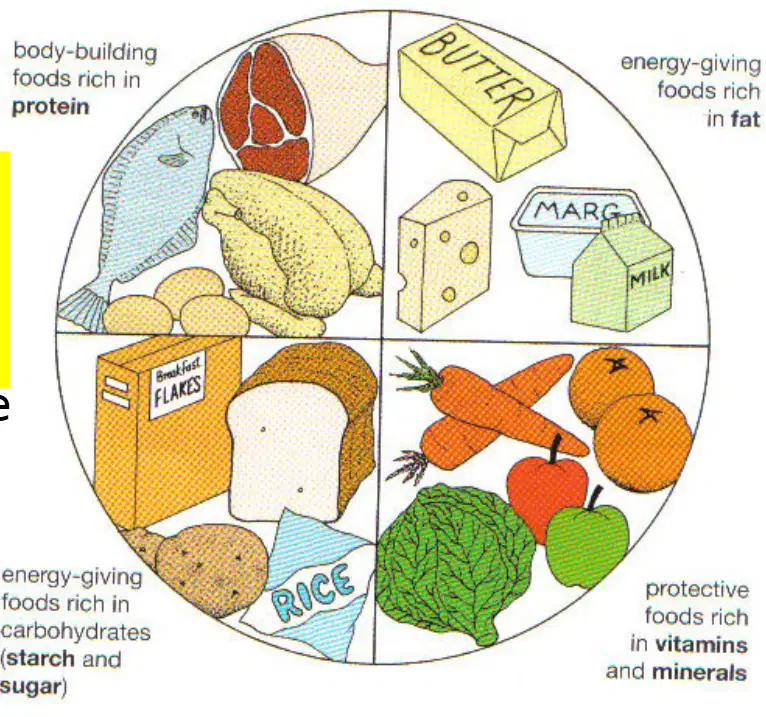
Which statement best defines a balanced diet shown by the plate image?
Eliminates carbohydrates from daily meals
Focuses mainly on protein-rich animal foods
Contains only low-fat and low-sugar foods
Includes food from four different groups
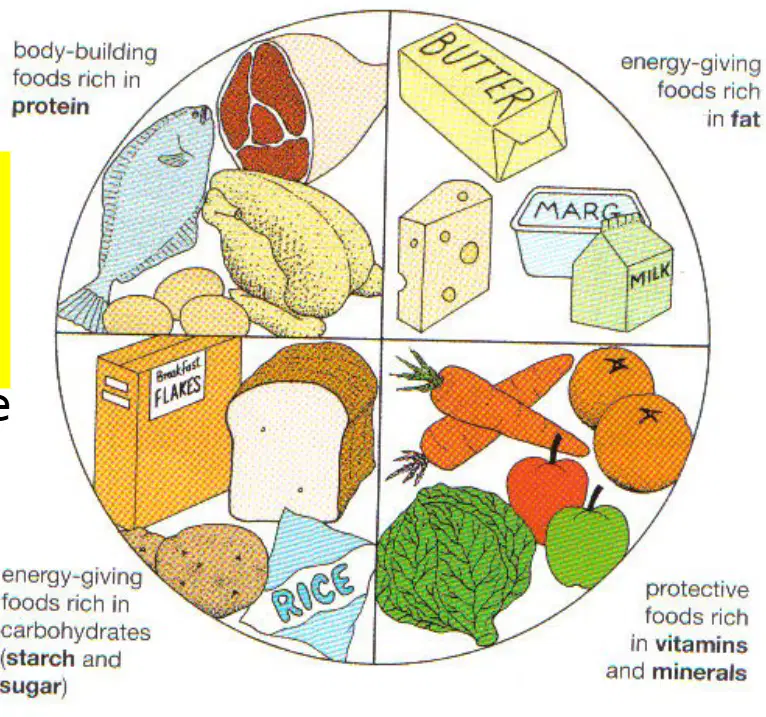
A student plans meals for one day. Which choice meets the daily fruit and vegetable guidance highlighted?
One portion as a snack after dinner
Three portions every other day
Two portions with dinner only
Five portions across breakfast, lunch, dinner
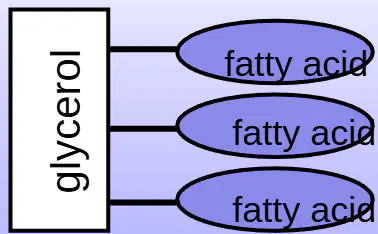
In the diagram showing a molecule labeled glycerol connected to three oval shapes labeled fatty acid, what does this structure represent?
A typical fat made of glycerol and three fatty acids
A vitamin complex joined to three mineral ions
A protein subunit linked to three amino acids
A carbohydrate formed from three glucose units
Using the images and bullet points, which function of body fat is best supported by the examples shown?
Storing calcium in the skeletal system
Breaking down amino acids for growth
Producing red blood cells in bone marrow
Insulating under the skin to reduce heat loss
What is the test for starch
iodine
benedict's
amylase
maltose
What does an enzyme do?
make a substrate
slows down chemical reactions
Speeds up chemical reactions
break down food only

