
 Worksheets
Chapter 1: Meet the Colonists
Total questions: 15
Worksheet time: 8mins
Which term best describes a person who moves from one country to another to live?
Explorer mapping new lands
Native resident staying put
Immigrant starting a new life
Colonist seeking local trade
By 1750, how many English colonies existed along the East Coast of North America?
Twenty frontier colonies
Ten coastal colonies
Five established colonies
Thirteen English colonies
Which statement explains a major reason many Europeans came to the colonies in the 1700s?
To avoid farm work entirely
To enforce strict trade rules
To gain opportunities and land
To return to their old towns
What proportion of people brought from Africa were enslaved and traveled unwillingly?
About one in five people
About one in two people
About two in five people
Almost none of the people
Most colonial families lived on farms. Which activity best shows their self-sufficiency, or ability to live on their own?
Buying all tools at markets
Importing furniture monthly
Hiring crews to build homes
Making clothes and tools

Look at the harbor illustration. Which detail is related to immigration in the colonies?
Soldiers guarding a fort
Large sailing ships arriving
Closed warehouses inland
Empty docks at sunrise
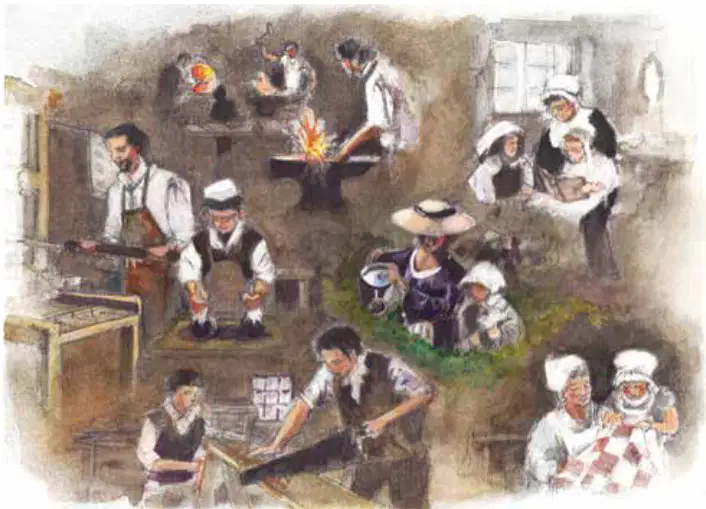
Which statement best describes how colonists lived?
Farmers relied mainly on imported European goods
Families produced most daily necessities themselves
Plantations bought everything from distant port cities
Villagers depended on government stores for supplies
What reason most increased the size and importance of port cities like Philadelphia in the mid-1700s?
Discovery of gold near eastern seaports
Growth of trade with colonies and other countries
Closure of rural markets and fairs
Military bases replacing fishing villages
Which job was commonly created by expanding trade and shipping activity?
Hunting whales on inland rivers
Teaching Latin in rural parish schools
Planting crops in isolated mountain farms
Loading and unloading cargo at city docks

Immigrant groups began sharing ideas and customs over time. Which example shows this exchange clearly?
Settlers from many countries building Swedish-style log cabins
Colonists returning to Europe to learn architecture
Frontier families adopting royal British fashions
Merchants refusing to copy foreign building methods
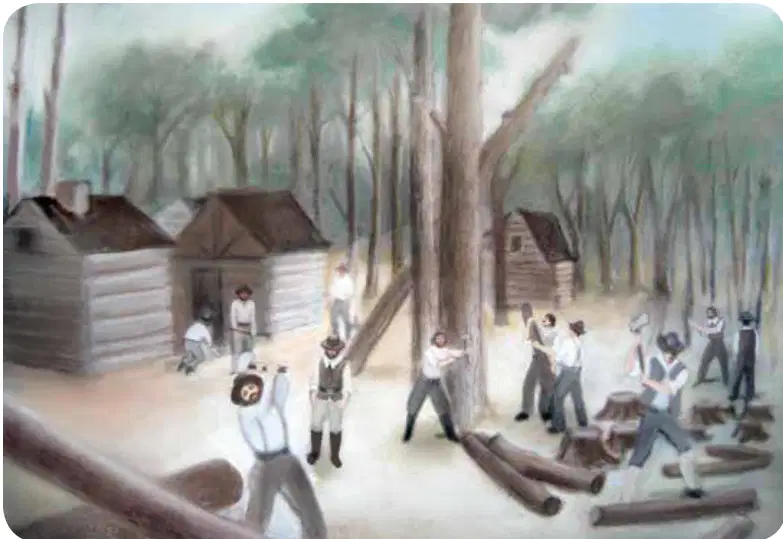
Look at the scene of colonists building near log cabins. Which statement best explains how such settlements supported cultural diffusion in the colonies?
Communities banned foreign words and new practices
Settlers lived far apart and rarely shared customs
Colonists avoided contact to protect private traditions
Neighbors exchanged tools and farming methods
What makes American English unique?
American English is the same as other forms of English
American English borrows words from other languages, like Dutch, German, and Swedish
The language is harder to learn
Dutch people were the first people to begin using American English
Why did improved roads in the 1750s help colonists develop a shared identity?
Faster mail spread the same news widely
Roads kept cities isolated from farms
Travel slowed trade between regions
Colonists stopped borrowing new words
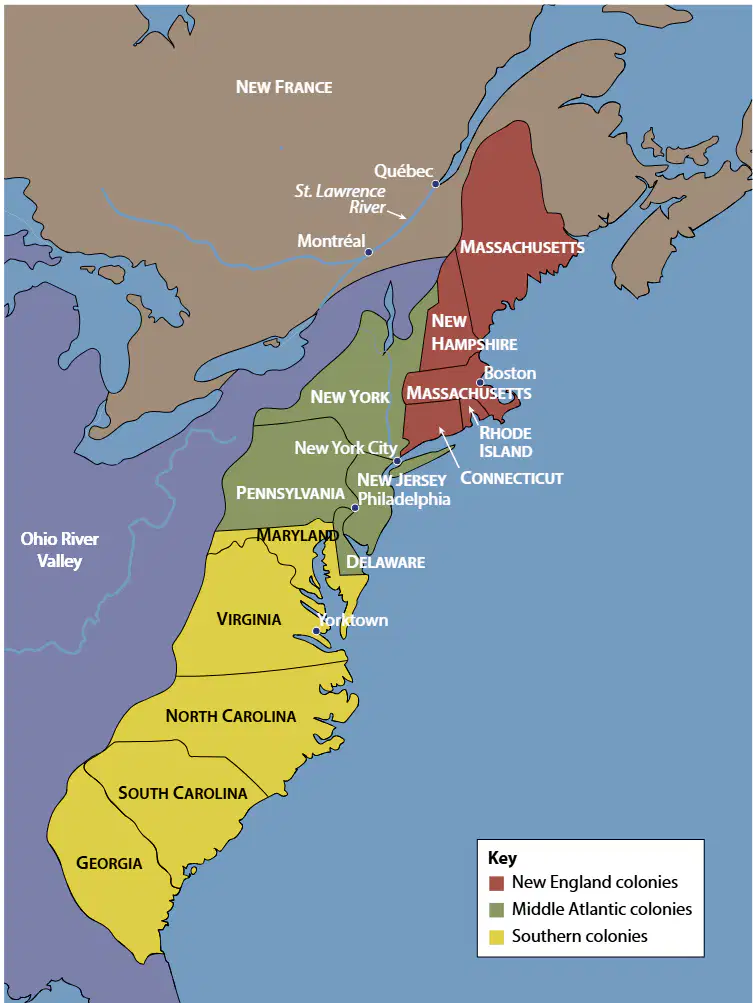
Using the map, which colony belongs to the Middle Atlantic region?
Pennsylvania
Georgia
Massachusetts
South Carolina
A newspaper editor in Boston wants the countryside to read city news sooner. Which change would best make this happen in the mid-1750s?
Increase mail delivery from once every other week to weekly
Close muddy roads to reduce wear and tear
Limit printers to publish less frequently
Send messages only by ships along the coast

