
 Worksheets
A&P Midterm Worksheet Questions (Grade 10)
Total questions: 183
Worksheet time: 2hrs 40mins
How an organ functions is the study of:
Anatomy
Physiology
Chemistry
Biology
All the organ systems working together forms:
An organ
A tissue
An organism
Homeostasis
Which body region includes the lungs?
Cranial
Vertebral
Abdominopelvic
Thoracic
Which body region is the most superior?
Orbital Region
Oral Region
Sternal Region
Thoracic Region
What body region is the most lateral?
Nasal
Umbilical
Brachial
Sternal

This model shows a _____ section or plane view of the head.
Transverse
Midsagittal
Frontal
Acute
True or False: The stomach is anterior to the back.
True
False
Which of the following is not a part of the 4 requirements of human life?
Water
Light
Oxygen
Pressure
What is the name of the process of regulating the level of glucose, water, ions, and temperature in the body so that it can remain at equilibrium?
Respiration
Gross Anatomy
Homeostasis
Anabolism
Which level of the structural organization of the human body is the least complex?
Cellular
Tissue
Organ
Chemical
True or False: Body temperature is an example of a negative feedback mechanism.
True
False
______ feedback mechanisms enhance or accelerate processes.
Positive
Negative
Reactive
______ is a metabolic reaction where smaller molecules are created into larger molecules (building reaction).
Anabolic
Catabolic
Hydrophilic
Which of the following is not one of the four elements that make up about 96% of the human body?
Carbon
Oxygen
Calcium
Hydrogen
Atoms with the same number of protons but different numbers of neutrons are called:
Ions
Isotopes
Molecules
Compounds
Which chemical bond is responsible for sharing electrons
Ionic
Covalent
Metallic
Which type of chemical bond involves the transfer of electrons?
Covalent bond
Ionic bond
Hydrogen bond
Peptide bond
A substance with a pH of 2 is best described as:
A weak base
Neutral
A strong acid
A strong base
Which state of matter maintains a constant volume but not a fixed shape?
Solid
Liquid
Gas
Plasma
Which organic compound is made of amino acids linked by peptide bonds?
Lipids
Carbohydrates
Proteins
Nucleic acids
Which of the following reactions builds larger molecules from smaller ones?
Decomposition (catabolism)
Synthesis (anabolism)
Exchange
Hydrolysis
What determines the chemical properties of an element:
Number of protons
Number of electrons in the valence shell
Number of neutrons
Atomic mass
Which type of transport requires ATP?
Facilitated diffusion
Osmosis
Active transport
Filtration
______ occurs when the genetic code is converted to messenger RNA (mRNA).
Transcription
Translation
mRNA
tRNA
______ occurs when a copy of the genetic code is converted into an amino acid sequence (protein) by ribosomes.
Transcription
Translation
mRNA
tRNA
Ribosome — match the correct function.
Synthesizes lipids, steroids, and glycogen
Site of protein synthesis
Packages proteins for export and modifies plasma membrane
Digests worn-out organelles and pathogens
Synthesizes proteins for export; has ribosomes attached
Lysosome — match the correct function.
Synthesizes lipids, steroids, and glycogen
Site of protein synthesis
Packages proteins for export and modifies plasma membrane
Digests worn-out organelles and pathogens
Synthesizes proteins for export; has ribosomes attached
Rough ER — match the correct function.
Synthesizes lipids, steroids, and glycogen
Site of protein synthesis
Packages proteins for export and modifies plasma membrane
Digests worn-out organelles and pathogens
Synthesizes proteins for export; has ribosomes attached
Smooth ER — match the correct function.
Synthesizes lipids, steroids, and glycogen
Site of protein synthesis
Packages proteins for export and modifies plasma membrane
Digests worn-out organelles and pathogens
Synthesizes proteins for export; has ribosomes attached
Golgi apparatus — match the correct function.
Synthesizes lipids, steroids, and glycogen
Site of protein synthesis
Packages proteins for export and modifies plasma membrane
Digests worn-out organelles and pathogens
Synthesizes proteins for export; has ribosomes attached
Hypotonic means
Water moves in to the cell
Water moves out of the cell
No net movement
Which direction does water move during osmosis?
Up & Down
Side to Side
Low to High
High to Low
Which phrase best fits the function of epithelial tissue?
Movement
Boundary
Sending messages
Connecting
What is the difference between the apical surface of epithelial tissue and the basal surface?
The apical surface is not attached and is exposed; the basal surface is attached to underlying connective tissue
The basal surface is not attached and is exposed; the apical surface is attached to the underlying connective tissue
The apical surface attaches to the basement membrane; the basal surface does not
The apical surface is avascular; the basal surface is vascular
Which type of epithelial cell classification describes a flat cell?
Squamous
Simple
Cuboidal
Columnar
Pseudostratified
Which is true about the layers of the epidermis versus the dermis?
There are 5 layers of the epidermis and 2 layers of the dermis
There are 5 layers of the epidermis and 5 layers of the dermis
There are 2 layers of the epidermis and 5 layers of the dermis
There are 5 layers of the epidermis, but no layers of the dermis
There are no layers to the epidermis, but 5 layers of the dermis
Which is the proper order of the layers of the epidermis from superficial to deep?
Stratum basale – stratum spinosum – stratum granulosum – stratum lucidum – stratum corneum
Stratum corneum – stratum lucidum – stratum spinosum – stratum granulosum – stratum basale
Stratum corneum – stratum lucidum – stratum granulosum – stratum spinosum – stratum basale
Stratum corneum – stratum granulosum – stratum lucidum – stratum spinosum – stratum basale
Stratum corneum – stratum granulosum – stratum spinosum – stratum lucidum – stratum basale
Which is NOT a function of connective tissue?
Binding & supporting
Insulating
Sending messages
Transporting substances
What is the difference between loose and dense connective tissue proper?
Dense has many spaces in the matrix, loose has few spaces in the matrix
Loose has many spaces in the matrix, dense has few spaces in the matrix
Which type of cell produces new bone matrix?
Chondrocytes
Condroblasts
Osteocytes
Osteoblasts
A muscle is contracted when it is
Flexed because electricity is present
Lengthened because electricity is absent
Shortened because electricity is present
Lengthened because electricity is present
Which type of muscle tissue is completely voluntary?
Skeletal
Cardiac
Smooth
Both a & b
Which characteristic of muscle tissue allows it to return to its original shape after being stretched or contracted?
Extensibility
Contractility
Flexibility
Elasticity
Which characteristic of muscle tissue enables it to receive and respond to stimulation from nerves?
Excitability
Responsiveness
Contractility
Elasticity
What is the proper order of structures of a skeletal muscle from largest to smallest?
Muscle – muscle fiber – fascicle – sarcomere – myofilament – myofibril
Muscle – fascicle – muscle fiber – myofibril – sarcomere – myofilament
Muscle – fascicle – myofibril – sarcomere – muscle fiber – myofilament
What happens first in muscle contraction?
Cross-bridge cycling
Delivery of an action potential at the neuromuscular junction
Myosin detachment
Calcium release from the sarcoplasmic reticulum
What happens first in muscle contraction?
Cross-bridge cycling
Delivery of an action potential at the neuromuscular junction
Myosin detachment
Calcium release from the sarcoplasmic reticulum
A cross-bridge forms when which two specific components meet?
Actin & troponin
Myosin & ATP
Myosin heads & myosin binding sites
Calcium ions & troponin
Which of the major four types of tissue includes bone?
Adipose tissue
Epithelial tissue
Skeletal muscle tissue
Connective tissue
Nervous tissue
The skull is part of which skeleton?
Axial
Appendicular
Peripheral
Sagittal
Which type of bone is typically cube-shaped and found in areas like the wrist and ankle?
Flat bone
Irregular bone
Short bone
Sesamoid bone
Which type of bone includes examples like the ribs, sternum, and some skull bones, and provides protection for underlying structures?
Flat bone
Long bone
Short bone
Irregular bone
What role do osteoblasts play in bone development?
Break down bone
Reabsorb calcium
Building and forming new bone matrix
Forming new blood vessels
True or False: Blood vessels do not regrow in a bone after a fracture.
True
False
Cells require oxygen for which essential biological process?
Protein synthesis
Hormone regulation
ATP production through cellular respiration
Clot formation
The purpose of your cardiovascular system is to ________.
Produce hormones that function as chemical messengers through the body
Bring oxygen into the body and send CO2 out of the body
Send, receive, and interpret electrical impulses
Transport blood to and from every living cell in the body
Rid the body of waste products, such as urea and excess vitamins
What is your heart made of?
Smooth muscle
Cardiac muscle
Skeletal muscle
Dense regular connective tissue
What is the difference between an artery and a vein?
Arteries carry blood away from the heart; veins carry blood to the heart
Arteries carry blood to the heart; veins carry blood away from the heart
Arteries deliver blood to the lungs; veins deliver blood to the body cells
Arteries deliver blood to the body cells; veins deliver blood to the lungs
Where does the left side of the heart pump blood to?
The lungs
The body tissues
The right side of the heart
The pulmonary veins carry ______ blood.
Oxygen-rich
Oxygen-poor
The right side of the heart carries ______ blood.
Oxygen-rich
Oxygen-poor
What does an EKG measure?
Blood sugar levels
Oxygen saturation in the bloodstream
Electrical activity of the brain
Electrical activity of the heart
What is the valve that opens to send blood from the left atrium to the left ventricle?
Tricuspid valve
Bicuspid valve
Aortic valve
Pulmonary valve
Which blood vessels carry blood from the heart to the lungs?
Aorta
Inferior vena cava
Pulmonary arteries
Pulmonary veins
Which is NOT a process of respiration?
External respiration
Transport of O2 and CO2
Internal respiration
Filtration and secretion
Pulmonary ventilation
Pulmonary ventilation is also known as ________.
External respiration
Internal respiration
Breathing
Diffusion
Where does external respiration occur?
Tissue cells
Mouth and nose
Lungs
Heart
Which system most directly helps the respiratory system to transport oxygen to our cells?
Nervous system
Reproductive system
Endocrine system
Cardiovascular system
Which body cavities is the diaphragm between?
Cranial and thoracic
Abdominal and pelvic
Thoracic and abdominal
Thoracic and spinal
Which structure monitors the level of CO2 carried in the blood?
Lungs
Heart
Kidneys
Brain stem
Which best describes breathing rate?
It is completely voluntary
It is completely involuntary
It is typically voluntary, but the body can take over in times of high anxiety and stress
It is mainly involuntary, but a person can override the system and control their own breathing rate
When blood reaches the tissue cells, which is true of the concentration of CO2?
CO2 is higher in the blood than it is in the body tissues, so it diffuses into the body tissues from the blood
CO2 is lower in the blood than it is in the body tissues, so it diffuses out of the body tissues and enters the blood
CO2 is equal in the blood and body tissues, so it passes by the body tissues without diffusing
Which type of bone has a long diaphysis and two epiphyses?
Long bone
Short bone
Flat bone
Irregular bone
All types of bones!
Which of the following is the final step in the fracture repair process?
Hard callus formation
Hematoma formation
Soft callus formation
Bone remodeling

Fill in the blanks below to label the 3 different body planes. Identify the plane that divides the body into left and right portions.
Sagittal (median) plane
Frontal (coronal) plane
Transverse (horizontal) plane
Oblique plane

Fill in the blanks below to label the 3 different body planes. Identify the plane that divides the body into anterior and posterior portions.
Frontal (coronal) plane
Sagittal (median) plane
Transverse (horizontal) plane
Oblique plane

Fill in the blanks below to label the 3 different body planes. Identify the plane that divides the body into superior and inferior portions.
Transverse (horizontal) plane
Frontal (coronal) plane
Sagittal (median) plane
Oblique plane

Use the directional terms below to label the anterior view of the cadaver. Which anatomical term refers to the armpit region on the anterior view diagram?
Axillary
Antebrachial
Carpal
Coxal

Use the directional terms below to label the anterior view of the cadaver. Which anatomical term refers to the forearm region on the anterior view diagram?
Antebrachial
Brachial
Carpal
Crural

Use the directional terms below to label the anterior view of the cadaver. Which anatomical term refers to the arm (upper limb proximal segment) on the anterior view diagram?
Brachial
Antebrachial
Femoral
Crural

Use the directional terms below to label the anterior view of the cadaver. Which anatomical term refers to the wrist region on the anterior view diagram?
Carpal
Tarsal
Patellar
Pubic

Use the directional terms below to label the anterior view of the cadaver. Which anatomical term labels the digits of the upper limb on the anterior view diagram?
Digital (upper limb)
Patellar
Pelvic
Frontal

Use the directional terms below to label the anterior view of the cadaver. Which anatomical term labels the digits of the lower limb on the anterior view diagram?
Digital (lower limb)
Carpal
Tarsal
Coxal

Use the directional terms below to label the anterior view of the cadaver. Which anatomical term refers to the ankle region on the anterior view diagram?
Tarsal
Carpal
Crural
Femoral

Use the directional terms below to label the anterior view of the cadaver. Which anatomical term refers to the anterior knee region on the diagram?
Patellar
Femoral
Pubic
Pelvic

Use the directional terms below to label the anterior view of the cadaver. Which anatomical term refers to the thigh region on the diagram?
Femoral
Crural
Coxal
Brachial

Use the directional terms below to label the anterior view of the cadaver. Which anatomical term refers to the leg (lower limb between knee and ankle) on the diagram?
Crural
Femoral
Coxal
Brachial

Use the directional terms below to label the anterior view of the cadaver. Which anatomical term refers to the hip region on the diagram?
Coxal
Pelvic
Pubic
Axillary

Use the directional terms below to label the anterior view of the cadaver. Which anatomical term refers to the pelvis region on the diagram?
Pelvic
Pubic
Coxal
Abdominal

Use the directional terms below to label the anterior view of the cadaver. Which anatomical term refers to the genital/groin area on the diagram?
Pubic
Pelvic
Coxal
Abdominal

Use the directional terms below to label the anterior view of the cadaver. Which anatomical term refers to the mouth region on the diagram?
Oral
Otic
Nasal
Buccal

Use the directional terms below to label the anterior view of the cadaver. Which anatomical term refers to the ear region on the diagram?
Otic
Oral
Buccal
Frontal

Use the directional terms below to label the anterior view of the cadaver. Which anatomical term refers to the cheek region on the diagram?
Buccal
Oral
Otic
Mental

Use the directional terms below to label the anterior view of the cadaver. Which anatomical term refers to the chin region on the diagram?
Mental
Nasal
Frontal
Buccal

Use the directional terms below to label the anterior view of the cadaver. Which anatomical term refers to the nose region on the diagram?
Nasal
Oral
Buccal
Frontal

Use the directional terms below to label the anterior view of the cadaver. Which anatomical term refers to the forehead region on the diagram?
Frontal
Nasal
Mental
Buccal

Use the directional terms below to label the anterior view of the cadaver. Choose the positional description that labels an area above the umbilical region on the diagram.
Superior to the umbilical region
Inferior to the umbilical region
Lateral thoracic
Medial thoracic

Use the directional terms below to label the anterior view of the cadaver. Choose the positional description that labels an area below the umbilical region on the diagram.
Inferior to the umbilical region
Superior to the umbilical region
Lateral thoracic
Medial thoracic

Use the directional terms below to label the anterior view of the cadaver. Which label best describes a mark near the midline of the chest on the diagram?
Medial thoracic
Lateral thoracic
Axillary
Pelvic

Use the directional terms below to label the anterior view of the cadaver. Which label best describes a mark toward the sides of the chest on the diagram?
Lateral thoracic
Medial thoracic
Axillary
Pelvic

Use the directional terms below to label the anterior view of the cadaver. Which regional term labels the abdomen on the diagram?
Abdominal
Pelvic
Pubic
Coxal

Use the directional terms below to label the anterior view of the cadaver. Which label indicates the far end of the femur near the knee on the diagram?
Distal end of femur
Proximal end of femur
Distal end of tibia
Proximal end of humerus

Label the epithelium shown under the panel titled Flat cells with its correct shape classification. Use the image as reference.
Squamous epithelium
Cuboidal epithelium
Columnar epithelium

Label the epithelium shown under the panel titled Box-like cells with its correct shape classification. Use the image as reference.
Squamous epithelium
Cuboidal epithelium
Columnar epithelium

Label the epithelium shown under the panel titled Tall & skinny cells with its correct shape classification. Use the image as reference.
Squamous epithelium
Cuboidal epithelium
Columnar epithelium

Label the epithelium shown under the panel titled One layer of cells with its correct layering classification. Use the image as reference.
Simple epithelium
Stratified epithelium
Pseudostratified epithelium

Label the epithelium shown under the panel titled Two or more layers of cells with its correct layering classification. Use the image as reference.
Simple epithelium
Stratified epithelium
Pseudostratified epithelium

Label the epithelium shown under the panel titled Appears layered, but is only one layer with its correct layering classification. Use the image as reference.
Simple epithelium
Stratified epithelium
Pseudostratified epithelium

Using the word bank (biceps brachii, sternocleidomastoid, soleus, gracilis, sartorius, gastrocnemius, rectus abdominis, adductors, deltoid), identify the muscle labeled at the rounded shoulder cap in the anterior view.
Deltoid
Biceps brachii
Sternocleidomastoid
Rectus abdominis

Using the word bank, identify the long anterior neck muscle labeled at the side of the neck in the anterior view.
Sternocleidomastoid
Deltoid
Biceps brachii
Gastrocnemius

Using the word bank, identify the anterior upper arm muscle labeled on the front of the humerus.
Biceps brachii
Deltoid
Sartorius
Gracilis

Using the word bank, identify the vertical muscle group labeled in the midline of the abdomen (the "six-pack") in the anterior view.
Rectus abdominis
Adductors
Gastrocnemius
Soleus

Using the word bank, identify the medial thigh muscle group labeled along the inner thigh responsible for bringing the legs together.
Adductors
Sartorius
Gracilis
Soleus

Using the word bank, identify the long strap-like muscle labeled that runs diagonally across the anterior thigh from the hip to the medial knee.
Sartorius
Gracilis
Adductors
Gastrocnemius

Using the word bank, identify the slender medial thigh muscle labeled near the inner knee that lies superficial to the adductors.
Gracilis
Sartorius
Adductors
Deltoid

Using the word bank, identify the prominent calf muscle labeled on the posterior portion visible from the anterior view near the upper calf.
Gastrocnemius
Soleus
Tibialis anterior
Rectus abdominis

Using the word bank, identify the deeper calf muscle labeled along the lower sides of the calf just above the ankle in the anterior view.
Soleus
Gastrocnemius
Biceps brachii
Deltoid


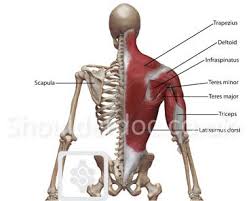


The spine is _______ compared to the face.
anterior
lateral
posterior
proximal

What does pseudostratified mean?
Many layers of cells
Single layer that looks like many layers of cells
Single layer of cells
No layer of cells
Which type of tissue is avascular (no blood vessels) and tightly packed?
Epithelial
Connective
Areolar
Adipose

The hypodermis is part of your skin.
True
False
Sweat is also known as sebum.
True
False
Hair is made of dead melanocytes.
True
False
Which is NOT an appendage of the skin?
Sweat glands
Oil glands
Hair
The hypodermis
Nails
Which is NOT a function of your skin?
Protecting your body from outside invaders
Regulating temperature
Taking in oxygen
Sensing touch and temperature
Which layer of your skin is replaced about every 4 weeks?
Epidermis
Dermis
Hypodermis
All of them

During what phase of the cell cycle is DNA replicated?
G1 phase
G2 phase
S phase
M phase
PMAT helps us remember the correct order of the phases of Mitosis. Which of the following has the phases of Mitosis in the correct Order
Interphase, Mitosis, Cytokinesis
Prophase, Metaphase, Anaphase, Prophase
Anaphase, Telophase, Prophase, Telophase
Prophase, Metaphase, Anaphase, Telophase

The functions are the skeletal system are
To support the body, protect the organs, store calcium, and produce blood cells
to regulate the composition of body fluids by removing metabolic wastes and retain the balance of water, salt, and other nutrients
to regulate and maintain bodily functions by producing hormones and releasing them into the blood stream
to enable the diffusion of oxygen into the bloodstream and the removal of carbon dioxide from the bloodstream

Where is new blood cells created?
In the scapula
In bone marrow, located inside the bone
In the patella
In bone marrow, located inside the muscle tissue
This is present at the end of a bone and acts as a cushion.
cartilage
tendon
ligament
bone marrow


The axial skeleton is
the head and trunk
the limbs
the whole skeleton
just the head
Where does the bone get its nutrients?
yellow marrow
arteries
red marrow
calcium
Epiphyseal plate is also known as the
epiphyseal line
growth plate
kid bone plate
Cartilage on the ends of the bone is the
hyaline cartilage
articular cartilage
soft cartilage
When a bone is broken and a fragment of bone protrudes through an open wound in the skin it is __________.
Open Fracture
Closed Fracture
Simple Fracture
Compound Fracture
What is the primary function of the cardiovascular system?
To digest food
To transport nutrients, gases, and waste products throughout the body
To produce hormones
To control body temperature
Which blood vessel carries oxygen-rich blood from the lungs to the heart?
Pulmonary artery
Superior vena cava
Aorta
Pulmonary vein
Which of the following is the correct sequence for the intrinsic conduction system?
SA node → AV node → Purkinje fibers → bundle branches
AV node → SA node → bundle branches → Purkinje fibers
AV node → AV bundles → Purkinje fibers → SA node
SA node → AV node → bundle branches → Purkinje fibers

Which numbers represent the Right atria and ventricle?
9 & 7
8 & 6
8 & 9
6 & 7

Identify the following structures based on the diagram below Which numbers represent the pulmonary artery and veins?
1 & 13
2 & 3
2 & 10
3 & 13
Deoxygenated blood from the body enters the heart through the _____.
Aorta
Pulmonary Arteries
Vena Cava
Pulmonary Veins
Oxygenated blood is brought from the lungs to the heart through the ___.
Aorta
Vena Cava
Pulmonary Veins
Pulmonary Arteries
This is the site of gas exchange in the lungs.
Alveoli
Bronchus
Trachea
Pharynx
Which is NOT a process of respiration?
External respiration
Transport of O2 and CO2
Internal respiration
Filtration and secretion
Pulmonary ventilation
Pulmonary ventilation is also known as _______________________.
External respiration
Internal respiration
Breathing
Diffusion
What happens during internal respiration?
O2 diffuses out from the lungs into the blood; CO2 diffuses into the lungs from the blood
O2 diffuses into the lungs into the blood; CO2 diffuses out of the lungs from the blood
O2 diffuses out from the tissues into the blood; CO2 diffuses into the tissues from the blood
O2 diffuses into the tissues into the blood; CO2 diffuses out of the tissues from the blood
Which best describes breathing rate?
It is completely voluntary
It is completely involuntary
It is typically voluntary, but the body can take over in times of high anxiety and stress
It is mainly involuntary, but a person can override the system and control their own breathing rate
Matching: Respiratory Tract Anatomy – Select the structure that matches: 300 million air-filled sacs in each lung.
Alveoli
Bronchioles
Bronchi
Nasal cavity
Matching: Respiratory Tract Anatomy – Select the structure that matches: Covered in capillaries.
Alveoli
Trachea
Larynx
Nose
Matching: Respiratory Tract Anatomy – Select the structure that matches: Full of hair and mucous to trap microbes.
Nose
Nasal cavity
Pharynx
Mouth
Matching: Respiratory Tract Anatomy – Select the structure that matches: Contracts and relaxes to cause inspiration and expiration.
Diaphragm
Larynx
Bronchioles
Trachea
Fill-in-the-Blank: Vocabulary – Choose the correct term to complete the sentence: The process by which our cells convert oxygen and glucose to ATP is known as _____.
Cellular respiration
External respiration
Internal respiration
Ventilation
Fill-in-the-Blank: Vocabulary – Choose the correct term to complete the sentence: When a substance moves from high to low concentration, this is known as _____.
Diffusion
Osmosis
Filtration
Ventilation
How do the cardiovascular system and the respiratory system work together? (3 points)
The respiratory system loads oxygen into the blood and removes CO2, and the cardiovascular system transports these gases between the lungs and body tissues
The cardiovascular system controls breathing rhythm while the respiratory system pumps blood
The respiratory system digests nutrients for the heart, and the cardiovascular system absorbs them through alveoli
The cardiovascular system filters air in the trachea, while the respiratory system moves blood through arteries
Do alveoli have large or small surface area? Why? (2 points)
Large surface area to maximize diffusion and gas exchange
Small surface area to reduce water loss
Large surface area to prevent airflow resistance
Small surface area to minimize oxygen uptake
Which electron shell can hold a maximum of 8 electrons and has more energy than the k shell?
L shell
M shell
Valence Shell
Core shell
What happens first in muscle contraction?
Cross-bridge cycling
Delivery of an action potential at the neuromuscular junction
Myosin detachment
Calcium release from the sarcoplasmic reticulum

