
NEW
Font size
 Worksheets
Anatomy/Histology Mock Board Exam – Extracted Questions
Total questions: 50
Worksheet time: 25mins
A 25-year-old housewife complains of headaches of 4 months’ duration. She is obese and has bilateral papilledema, and her vision is deteriorating. Her opening CSF pressure is elevated; other CSF findings are normal. CT and MRI scans are normal. These signs are due to impairment of CSF egress. Obstruction at which of the following loci is most likely?
Arachnoid villi
Cerebral aqueduct
Foramen of Luschka
Foramen of Magendie
Foramen of Monro
Which part of the ventricular system contains choroid plexus?
Frontal horn
Occipital horn
Cerebral aqueduct
Third ventricle
Terminal ventricle
Which one of the following tumors contains cellular whorls and psammoma bodies?
Astrocytoma
Acoustic schwannoma
Glioblastoma multiforme
Oligodendroglioma
Meningioma
A 50-year-old hypertensive woman complains of numbness and weakness in her left leg and foot. Occlusion of which of the following vessels may account for this complaint?
Anterior choroidal artery
Anterior cerebral artery
Interior carotid artery
Middle cerebral artery
Posterior artery
A 15-year-old boy is hit on the temple with a baseball and becomes unconscious. After about 10 minutes, he regains consciousness, but he soon becomes lethargic, and over the next 2 hours, he becomes stuporous. His pupils are unequal. Intracranial hemorrhage is suspected. Which of the following vessels is most likely to be the source of the hemorrhage?
Anterior cerebral artery
Anterior communicating artery
Basilar artery
Middle cerebral artery
Middle meningeal artery
An elderly woman fell at home and fractured the greater trochanter of her femur. Which of the following muscles would continue to function normally?
Piriformis
Obturator internus
Gluteus medius
Gluteus maximus
Gluteus minimus
A 78-year-old man has carcinoma of the rectum. The cancer is likely to metastasize via the veins into which of the following structures?
Spleen
Kidney
Liver
Duodenum
Suprarenal gland
A 14-year-old gymnastics silver medalist falls from the uneven bars and complains of pain in the knee and ankle joints. On physical examination, her physician found that the muscle responsible for flexing the leg at the knee joint and plantar flexing the foot is severely weakened. Which of the following muscles involved in both movements was most likely damaged in this accident?
Tibialis posterior
Gastrocnemius
Soleus
Fibularis longus
Flexor digitorum longus
The neural retina is derived from the
alar plate
choroid
neural crest
neural tube
telencephalic vesicle wall
An obstetrician is about to perform a pudendal block so that a woman can experience less pain when she delivers her child. He recalls what he learned in medical school about this nerve. Which of the following statements is correct?
It passes superficial to the sacrotuberous ligament
It innervates the testis and epididymis in a male
It provides motor fibers to the coccygeus
It courses dorsally over the ischial spine
It arises from the lumbar plexus
A 21-year-old tennis player comes to an emergency room and complains of pain in the knee joint. On examination, he has an infection inside the knee joint capsule but outside the synovial cavity. Which of the following structures is preserved from this infection?
Anterior cruciate ligament
Posterior cruciate ligament
Lateral meniscus
Lateral collateral ligament
Medial meniscus
While playing football, a 19-year-old college student receives a twisting injury to his knee when being tackled from the lateral side. Which of the following conditions most likely has occurred?
Tear of the medial meniscus
Ruptured fibular collateral ligament
Tenderness on pressure along the fibular collateral ligament
Injury of the posterior cruciate ligament
Swelling on the back of the knee joint
A 10-year-old boy has severed his radial nerve. Which of the following cells plays a major role in axonal regrowth?
Fibrous astrocytes
Fibroblasts
Oligodendrocytes
Protoplasm astrocytes
Schwann cells
The obturator nerve and the sciatic (tibial portion) nerve of a 15-year-old boy are transected as a result of a motorcycle accident. This injury would result in complete paralysis of which of the following muscles?
Rectus femoris
Biceps femoris, short head
Pectineus
Adductor magnus
Sartorius
A 46-year-old female nurse complains of right-sided hearing loss and vertigo (dizziness). A small tumor was demonstrated within the internal auditory canal. Which structure listed below accounts for the hearing loss and vertigo?
arachnoid cyst
ependymoma
epidermoid cyst
meningioma
Schwannoma
A patient with a deep knife wound in the buttock walks with a waddling gait that is characterized by the pelvis falling toward one side at each step. Which of the following nerves is damaged?
Obturator nerve
Nerve to obturator internus
Superior gluteal nerve
Inferior gluteal nerve
Femoral nerve
Which of the following reflexes is monosynaptic?
Achilles reflex
Babinski reflex
Corneal reflex
Extensor plantar reflex
Pupillary light reflex
A 17-year-old boy was stabbed during a gang fight, resulting in the transection of the obturator nerve. Which of the following muscles is completely paralyzed?
Pectineus
Adductor magnus
Adductor longus
Biceps femoris
Semimembranosus
Which spinal nerve rami contain unmyelinated postganglionic sympathetic nerve fibers?
White communicating
Dorsal primary
Gray communicating
Ventral primary
Meningeal
A 41-year-old man was involved in a fight and felt weakness in extending the knee joint. On examination, he was diagnosed with a lesion of the femoral nerve. Which of the following symptoms would be a result of this nerve damage?
Paralysis of the psoas major muscle
Loss of skin sensation on the lateral side of the foot
Loss of skin sensation over the greater trochanter
Paralysis of the vastus lateralis muscle
Paralysis of the tensor fasciae latae
The ability to recognize an unseen familiar object placed in the hand depends on the integrity of which pathway?
Spinospinal tract
Dorsal column
Dorsal spinocerebellar tract
Spino-olivary tract
Spinothalamic tract
A 20-year-old patient cannot flex and medially rotate the thigh while running and climbing. Which of the following muscles is most likely damaged?
Semimembranosus
Sartorius
Rectus femoris
Vastus intermedius
Tensor fasciae latae
The sensation produced by a wisp of cotton on one’s fingertip is mediated by the
Cuneocerebellar tract
Dorsal column–medial lemniscus pathway
Ventral spinocerebellar tract
Ventral corticospinal tract
Ventral spinothalamic tract
A 50-year-old woman complains of clumsiness in her hands while working in the kitchen; she recently burned her hands on the stove without experiencing any pain. Neurologic examination reveals bilateral weakness of the shoulder girdles, arms, and hands, as well as a loss of pain and temperature sensation covering the shoulder and upper extremity in a cape-like distribution. Severe atrophy is present in the intrinsic muscles of the hands. The most likely diagnosis is
Amyotrophic lateral sclerosis
Subacute combined degeneration
Werdnig-Hoffmann disease
Syringomyelia
Tabes dorsalis
A knife wound penetrates the superficial vein that terminates in the popliteal vein. Bleeding occurs from which of the following vessels?
Posterior tibial vein
Anterior tibial vein
Peroneal vein
Great saphenous vein
Lesser saphenous vein
Transection of the spinothalamic tract results in
Loss of pain and temperature sensation
Complete flaccid paralysis
Spastic paresis
Cerebellar incoordination
Areflexia
Clasp-knife spasticity results from a lesion in the
Ventral corticospinal tract
Ventral spinothalamic tract
Lateral corticospinal tract
Dorsal spinocerebellar tract
Lateral spinothalamic tract
Which of the following syndromes is associated with an absent Achilles tendon reflex?
Filum terminale
Cauda equina
Conus medullaris
Epicomus
Syringomyelia
An example of a peripheral nervous system lesion is
Guillain-Barré syndrome
Charcot-Marie-Tooth disease
Friedreich ataxia
Lou Gehrig disease
Brown-Séquard syndrome
A 28-year-old basketball player falls while rebounding and is unable to run and jump. On physical examination, he has pain and weakness when extending his thigh and flexing his leg. Which muscle involved in both movements is most likely injured?
Short head of biceps femoris
Gastrocnemius
Semitendinosus
Sartorius
Gracilis
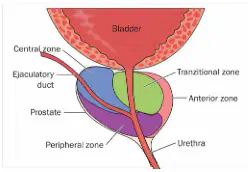
An elderly man with a benign enlargement of his prostate experiences difficulty in urination, urinary frequency, and urgency. Which of the following is commonly involved in benign hypertrophy that obstructs the prostatic urethra?
Anterior zone
Transitional zone
Central zone
Peripheral zone
Ejaculatory ducts
The cerebral aqueduct is found in which part of the brain?
Telencephalon
Diencephalon
Mesencephalon
Metencephalon
Myelencephalon
A 55-year-old patient with idiopathic trigeminal neuralgia reports sharp, stabbing pain in the upper lip and nose. Which branch of the trigeminal nerve is affected?
Ophthalmic
Maxillary
Mandibular
Lacrimal
Corneal
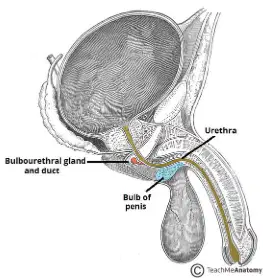
A 58-year-old man is diagnosed as having a slowly growing tumor in the deep perineal space. Which of the following structures would most likely be injured as it continues to grow?
Bulbourethral glands
Crus of penis
Bulb of vestibule
Spongy urethra
Great vestibular gland
The dorsal trigeminothalamic tract is a pathway for which type of sensation?
Light touch
Extreme pain
Discriminative tactile
Hot temperature
Cold temperature
A 29-year-old woman is admitted to a hospital because the birth of her child is almost 2 weeks overdue. Tearing of the pelvic diaphragm during childbirth leads to paralysis of which of the following muscles?
Piriformis
Sphincter urethrae
Obturator internus
Levator ani
External anal sphincter
A 59-year-old woman comes to a local hospital for uterine cane surgery. As the uterine artery passes from the internal iliac artery to the uterus, it crosses superior to which of the following structures that is sometimes mistakenly ligated during such surgery?
Ovarian artery
Ovarian ligament
Uterine tube
Ureter
Round ligament of the uterus
A 22-year-old woman receives a deep cut in the inguinal canal 3 cm lateral to the pubic tubercle. Which of the following ligaments may be lacerated within the inguinal canal?
Suspensory ligament of the ovary
Ovarian ligament
Mesosalpinx
Round ligament of the uterus
Rectouterine ligament
A 32-year-old carpenter fell from the roof. The lateral longitudinal arch of his foot was flattened from fracture and displacement of the keystone for the arch. Which of the following bones is damaged?
Calcaneus
Cuboid bone
Head of the talus
Medial cuneiform
Navicular bone
A 37-year-old man was newly diagnosed with carcinoma of the skin of the penis. With advanced disease, cancer cells are likely to metastasize directly to which of the following lymph nodes?
External iliac nodes
Internal iliac nodes
Superficial inguinal nodes
Lumbar (aortic) nodes
Deep inguinal nodes
An obstetrician performs a median episiotomy on a woman before parturition to prevent uncontrolled tearing. If the perineal body is damaged, the function of which of the following muscles might be impaired?
Ischiocavernosus and sphincter urethrae
Deep transverse perineal and obturator internus
Bulbospongiosus and superficial transverse perineal
External anal sphincter and sphincter urethrae
Bulbospongiosus and ischiocavernosus
A 22-year-old man has a gonorrheal infection that has infiltrated the space between the perineal membrane of the urogenital diaphragm and the superficial perineal fascia (Colles). Which of the following structures might be inflamed
Bulb of the penis
Bulbourethral gland
Membranous part of the male urethra
Deep transverse perineal muscle
Sphincter urethrae
A 21-year-old marine biologist asks about her first bimanual examination, and it is explained to her that the normal position of the uterus is
Anteflexed and anteverted
Retroflexed and anteverted
Anteflexed and retroverted
Retroverted and retroflexed
Anteverted and retroverted
A 62-year-old man is incapable of penile erection after rectal surgery with prostatectomy. The patient most likely has a lesion of which of the following nerves?
Dorsal nerve of the penis
Perineal nerve
Hypogastric nerve
Sacral splanchnic nerve
Pelvic splanchnic nerve
A 43-year-old woman presents with a prolapsed uterus. Repair of a prolapsed uterus requires knowledge of the supporting structures of the uterus. Which of the following structures plays the most important role in the support of the uterus?
Levator ani
Sphincter urethrae
Uterosacral ligament
Ovarian ligament
Arcuate pubic ligament
A basketball player was hit in the popliteal region by an opponent's knee. Damage to which of the following arteries might cause ischemia to the extensor muscles of the leg?
Popliteal
Deep femoral
Anterior tibial
Posterior tibial
Peroneal
A woman is delivering a breech baby. The obstetrician decides that it is best to perform a mediolateral episiotomy. Which of the following structures should the obstetrician avoid incising?
Vaginal wall
Superficial transverse perineal muscle
Bulbospongiosus
Levator ani
Perineal membrane
A 49-year-old woman has a large mass on the pelvic brim. Which of the following structures is most likely compressed by this mass when crossing the pelvic brim?
Deep dorsal vein of the clitoris
Uterine tube
Ovarian ligament
Uterine artery
Lumbosacral trunk
A 26-year-old man comes to a hospital with fever, nausea, pain, and itching in the perineal region. On examination by a urologist, he is diagnosed as having infected bulbourethral (Cowper) glands. Which of the following structures is/are affected by this infection?
Superficial perineal space
Sphincter urethrae
Production of sperm
Testes
Seminal vesicles
A 6-month-old male infant is admitted to the children's hospital because only one testis is in his scrotum. During physical examination, the pediatrician palpates the undescended testis in the inguinal canal. What is the diagnosis of this condition?
Male pseudohermaphroditism
Hypospadias
Epispadias
Cryptorchid testis
Chordee

