
NEW
Font size
 Worksheets
Introduction to Food Spoilage
Total questions: 10
Worksheet time: 5mins
Look at the timeline showing temperatures. At which temperature range do bacteria, moulds, and yeasts grow fastest, increasing food spoilage risk?
Around 100°C boiling temperature
Between 5°C and 63°C danger zone
At −18°C deep-freeze temperature
Below 5°C cold storage range
Which condition most favors rapid bacterial growth in foods?
Dry storage at high temperature
Strongly acidic, low pH conditions
Moist environment at room temperature
Cold environment below freezing point
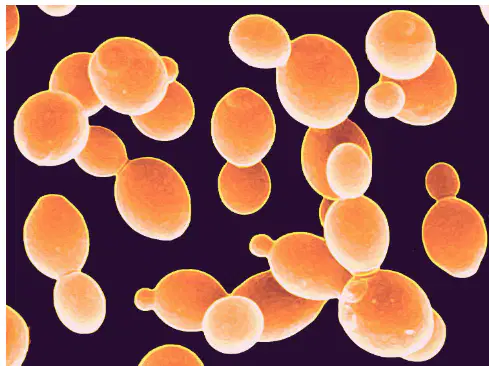
A baker uses yeast to make bread rise. Which explanation best describes why yeast is useful here?
Yeast neutralizes acids raising dough pH
Yeast ferments sugars releasing carbon dioxide
Yeast produces spores that destroy gluten
Yeast forms slimy patches that trap air
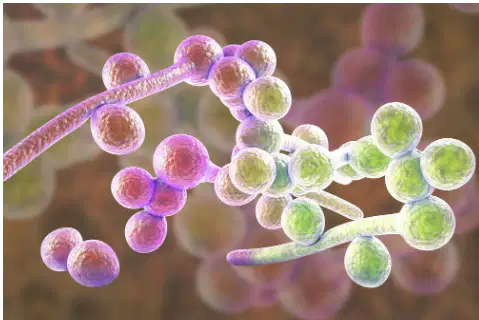
You find green mould on a bag of nuts stored in a dry pantry. What is the safest action, and why?
Toast nuts because heat fully destroys mycotoxins
Cut off visible mould because spores are harmless
Rinse nuts because water removes airborne spores
Discard entire nuts because mould may produce mycotoxins
Which storage condition best reduces rancidity in high‑fat foods like nuts and chips shown in the images?
Humid pantry beside stove heat
Open bowl under bright kitchen lights
Cool, dry place away from sunlight
Warm shelf near sunlight exposure
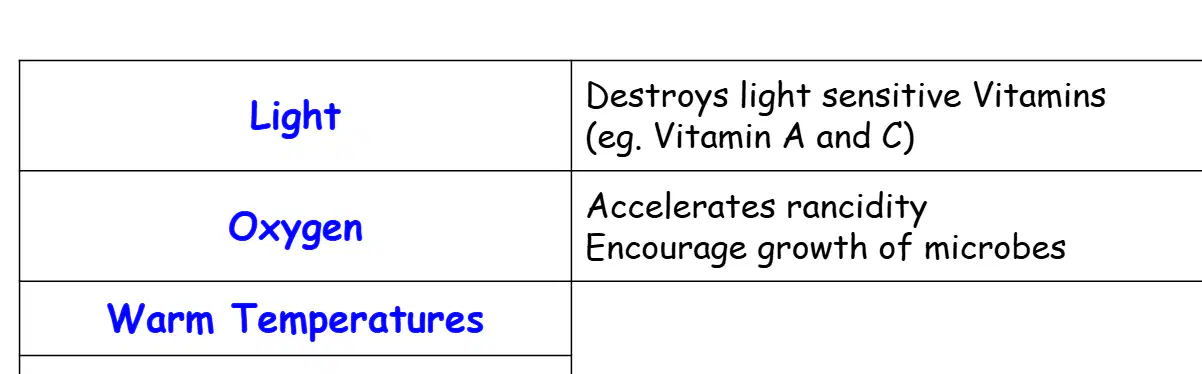
Look at the diagram of environmental factors. Which factor most directly destroys light‑sensitive vitamins like A and C in stored food?
Light breaks down sensitive vitamins
Moisture encourages microbial growth
Oxygen accelerates rancidity in fats
Warm temperatures encourage microbial growth

Which action best prevents cross-contamination during food preparation?
Marinate raw chicken on the serving platter
Rinse utensils quickly under cold water
Use separate boards for raw and cooked foods
Store raw meat above cooked leftovers
A pot of soup was cooked at noon and kept hot safely. By what time should it be consumed to stay within safe serving guidelines?
By 2:00 p.m. at the latest
By 3:30 p.m. at the latest
By 4:30 p.m. at the latest
By 4:00 p.m. at the latest

Where should opened UHT milk and cooked leftovers be stored in the refrigerator?
Both in the freezer at −18°C
Both in the chiller between 0°C and 4°C
Milk in crisper, leftovers on door shelf
Leftovers above raw meat in chiller

Which action best prevents cross-contamination during food preparation in a home kitchen?
Wash and disinfect towels regularly
Keep nails short and clean
Tie trash bag tightly before disposing
Replace sponge on a fixed schedule

