
Font size
 Worksheets
Introduction to Eco-Design
Total questions: 37
Worksheet time: 19mins
Liam is leading a team to design a new smartphone. The company wants to ensure the product is environmentally responsible from start to finish. Which statement best defines the approach Liam should take for eco-design in product development?
A materials swap to reduce immediate waste
A system-oriented approach considering lifecycle impacts
A cost-cutting method focused on cheaper parts
A marketing strategy highlighting green features
Benjamin is designing a new product and wants to ensure it follows eco-design principles. Which environmental categories should Benjamin explicitly address?
Materials, energy, pollution/waste
Water, biodiversity, carbon tax
Packaging, transport, labor
Design aesthetics, ergonomics, branding
Match each green design focus area with its corresponding example of change.
Incremental adjustments like material or energy reductions
Reducing packaging waste in a product
Government policy reform at national scale
Implementing new environmental regulations
Complete system redesign across supply chains
Reinventing the entire manufacturing process for sustainability
User behavior transformation over decades
Encouraging long-term lifestyle changes for sustainability
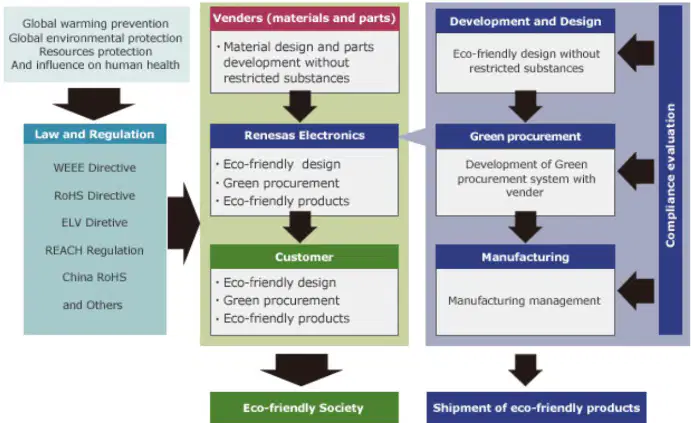
Emma is working on an eco-design project for her company. She wants to make a significant impact on sustainability. Which option shows a systems approach in eco-design practice?
Integrating vendors, procurement, manufacturing, and customers
Switching only to recycled plastic in one component
Adding a recyclable logo to the packaging
Running a single energy audit for one machine
Abigail is a manager at a manufacturing company. She believes strongly in environmental responsibility and wants her company to adopt eco-design practices. Which is an internal driver for adopting eco-design within a company?
Market demand
Government regulations
Managers’ sense of responsibility
Competitor pressure
Mia is working at a company that is considering adopting eco-design practices. She is analyzing various factors that could influence this decision. Which is an external driver that can push eco-design adoption?
Employee motivation and innovation
Government and market demand
Quality improvement and cost reduction
Corporate image enhancement
Zoe is working on designing a new product for her company. She is considering two approaches: eco-design and traditional green design. Which comparison correctly contrasts eco-design with traditional green design?
Eco-design is low risk; green design is high risk
Eco-design ignores energy use; green design prioritizes energy
Eco-design is faster; green design requires long timescale
Eco-design covers whole lifecycle; green design targets limited objectives
Charlotte is leading a green design initiative at her company. A typical practice in this context is (a)
Match each eco-design principle focus area with the environmental concern it best addresses.
Biodiversity, water footprint, land use
Preserving natural habitats and resources
Durability, aesthetics, user comfort
Enhancing product longevity and user experience
Compliance, branding, sales growth
Meeting regulations and market objectives
Materials, energy, pollution/waste
Minimizing resource use and environmental impact
Olivia is working on redesigning a product for her company. She learns that eco-design is often described as more complex than green design. Why is this the case?
It replaces a single material with a greener alternative
It considers system-wide lifecycle impacts across stakeholders
It focuses solely on manufacturing energy efficiency
It relies on one department without cross-functional work
Emma is designing a new product and wants to ensure it follows eco-design principles. Which statement aligns with examples of eco-design frameworks?
Brand storytelling and color theory drive ecological impact
Mass customization and ergonomics replace lifecycle analysis
Lean manufacturing and just-in-time focus only on speed
Cradle-to-Cradle and circular economies embody systems thinking
Priya works at a factory where raw materials like iron ore are transformed into steel. Which stage of a product’s life cycle is Priya involved in?
Distribution to retailers
Processing of materials
Repair and maintenance
User disposal actions
Nora is evaluating the environmental impact of a new product using Life Cycle Analysis. She wants to understand the embodied energy involved. The embodied energy refers to the energy associated with which activities?
Packaging and branding
Making, using, and disposing
Retail pricing decisions
Customer satisfaction surveys
Scarlett works at a factory where smartphones are made. After the smartphones are manufactured, the next stage in their typical life cycle is (a) .
Mia is working on a product design and uses LCA to identify which type of inputs besides energy?
Relevant material inputs
Financial budget inputs
Marketing media inputs
Employee training inputs
Michael is working for a company that manufactures electronic devices. The company wants to understand the environmental consequences of their products throughout their lifecycle. Which outcome is a key reason for conducting an LCA?
Increase market share
Optimize aesthetic appeal
Evaluate environmental impact
Maximize brand loyalty
Kai is designing a new smartphone and wants to consider its environmental impact throughout its entire life cycle, from production to disposal. Which statement best describes this approach?
Considers only manufacturing impacts
Tracks impacts from manufacture to disposal
Eliminates waste through reuse loops
Focuses on user repair practices
Jackson is designing a new product for his company and wants to follow the cradle-to-cradle approach. What is Jackson primarily aiming to achieve?
Reduce branding costs
Increase transportation efficiency
Eliminate waste through continual cycles
Shorten product lifespans
Priya is reviewing her company's carbon footprint diagram. Which activity is shown within Scope 1 emissions?
Customer use phase
Purchased electricity and steam
Sawmill operations
Transportation logistics
Daniel is studying a circular garment diagram to understand sustainable fashion. He wants to know which element in the diagram represents the biological cycle. Which one should he focus on?
Dyes and bleaching loop
Biodegradable fibre loop
Purchased chemicals loop
Metal zippers loop
Charlotte manages a manufacturing facility and wants to most directly reduce greenhouse gas emissions in Scope 2, which includes purchased electricity and steam. Which step should she take?
Improving sawmill efficiency
Switching to renewable electricity
Enhancing customer maintenance
Optimizing truck routing
Aria is evaluating coffee machine filters during use to determine their impact. She is focusing on which LCA aspect?
Transportation scheduling
End-of-life landfill fees
Consumable material inputs
Marketing lifecycle
Noah regularly cleans and services his bicycle to keep it in good working condition. Which life cycle stage does this activity belong to?
Manufacture and assembly
Extraction of raw materials
Distribution and logistics
Repair and maintenance
After William finishes using his synthetic fabric jacket, it is (a) in the cradle-to-cradle technical cycle.
Aria is designing a new line of garments and wants to ensure her choices support circular economy principles. Which design decision should she prioritize?
Maximizing single-use packaging
Specifying toxic dyes extensively
Designing for easy disassembly
Bonding mixed materials irreversibly
After using a refrigerator for several years, David decides to dispose of it by sending it to a landfill. This most reflects the (a) philosophy.
Samuel is leading a team to develop a new electronic gadget. He wants to ensure that the product is environmentally friendly throughout its lifecycle. Which statement best describes the Design for Environment (DfE) approach Samuel should consider?
Making products where parts can be reused at end of life
Designing products for maximum market appeal only
Focusing solely on rapid prototyping and iteration
Selecting premium materials for luxury aesthetics
Anika is designing a new product in SolidWorks Sustainability and wants to evaluate its overall impact. Which aspect does life cycle analysis (LCA) primarily assess for her product?
Mechanical strength across service loads
Manufacturing cost for each production batch
Environmental impact across the product life cycle
User experience during typical operation
Emma is evaluating the environmental impact of a product using Life Cycle Assessment (LCA). She wants to know which stage assesses the impact of moving goods from the manufacturing site to the locations where they will be used. Which LCA stage should Emma focus on?
End-of-life disposal methods
Product assembly and finishing
Transportation between regions
Material processing and extraction
Daniel is using CAD-based LCA to design a new product. He decides to change the selected material for the product. Which outcomes will this decision primarily influence?
Retail pricing and warranty terms
Carbon, energy, air, and water metrics
Packaging size and color options
Marketing claims and branding text
Mia is designing a new product and uses LCA results to guide her decisions. Which design action aligns with DfE principles?
Ignore end-of-life to simplify manufacturing
Optimize material and process choices to reduce impact
Maximize energy use to boost performance
Prioritize aesthetics over lifecycle assessment
David works for a tech company that is developing a smartwatch that combines fitness tracking, mobile payments, and communication features into a single device. Which core idea does this project reflect?
Eliminating electronics from everyday products
Separating unrelated technologies into niches
Restricting devices to single-purpose functions
Amalgamating existing technologies into new forms
Emma wants to watch movies, make phone calls, and browse the internet using just her smartphone. Modern telecommunications convergence most directly enables which benefit for Emma?
Reduced information availability across networks
Separate devices for voice and entertainment
Better personal access on a single platform
Heavier devices with longer cables
Emma is designing a new line of clothing that incorporates technology. The example that best illustrates wearable technology integration is (a)
James is part of a design team planning a fitness band that measures heart rate and glucose and uploads data wirelessly. Which converging element makes this possible?
Exclusive use of high-end metals and ceramics
Removal of software to save power consumption
Combination of bio-sensing, information, and telecom
Manual logging of data using paper notebooks
Henry is part of a team evaluating new converging products for their company. Which eco-design consideration is most appropriate for Henry and his team to focus on?
Disassembly, recyclability, and energy consumption
Patent counts and trademark registrations
Exclusive retail partnerships in large cities
Celebrity endorsements and launch events
Emma is managing the disposal of used packaging materials for her company. She wants to choose an end-of-life option that typically lowers environmental impact according to Life Cycle Assessment (LCA). Which should she select?
Incineration without energy recovery
Recycling with material recovery processes
Exporting waste to distant countries
Landfilling with mixed municipal waste

