
 Worksheets
End of Semester 2026
Total questions: 50
Worksheet time: 25mins
Name
Class
Date
1.
A baby is born in a hospital in North Carolina to parents who are citizens of the U.S.
Which word describes a person born in the United States?
a)
naturalized citizen
b)
native-born
c)
legal alien
d)
foreign-born
2.

Imagine you are at a town hall meeting where citizens are discussing their freedoms. Which of the following freedoms is NOT protected in the United States?
a)
the freedom to learn.
b)
the freedom to choose a job or a career.
c)
the freedom to disregard the rights of others.
d)
the freedom to own a house.
3.
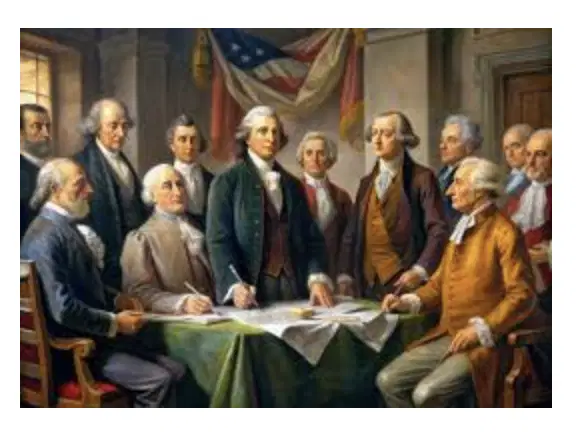
Colonists argue that government should only rule with permission of the people.
The principle that the government derives its power from the consent of the governed is best exemplified by which document?
a)
The Magna Carta
b)
The English Bill of Rights
c)
The Declaration of Independence
d)
The Articles of Confederation
4.

The new nation needs rules to unite the states after independence.
Which document established the first form of national government for the United States?
a)
The Constitution
b)
The Declaration of Independence
c)
The Articles of Confederation
d)
The Federalist Papers
5.
The States argue over money, trade, and leadership under a weak system.
Which event led to the drafting of the U.S. Constitution?
a)
The War of 1812
b)
The collapse of the Articles of Confederation
c)
The Louisiana Purchase
d)
The signing of the Treaty of Paris
6.
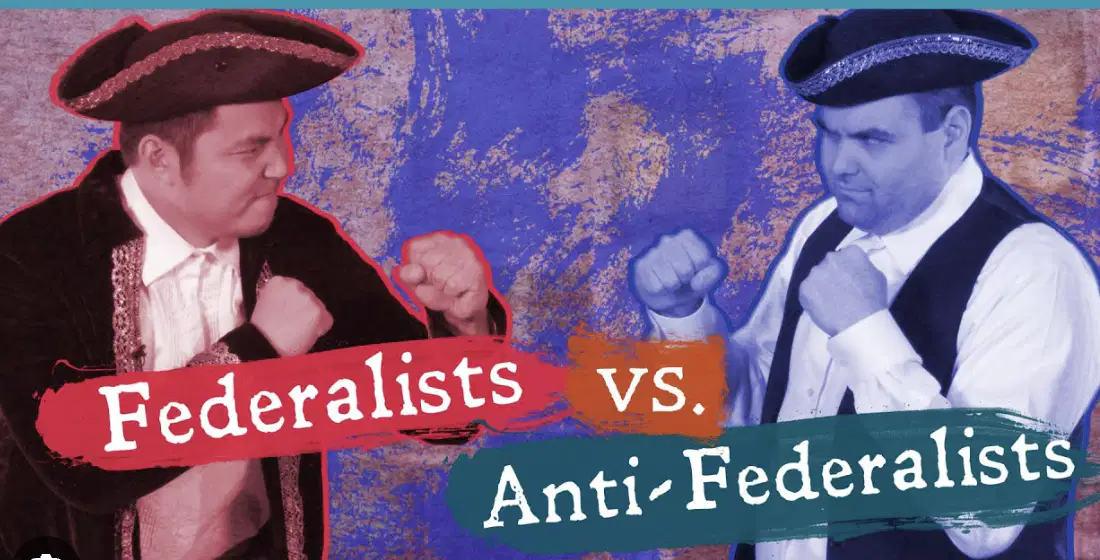
In a debate between Federalists and Anti-Federalists, what would have been the Anti-Federalists' main concern about the Constitution?
a)
It made voting too difficult
b)
It lacked power to regulate commerce
c)
It gave too much power to the states
d)
It created too strong a central government
7.
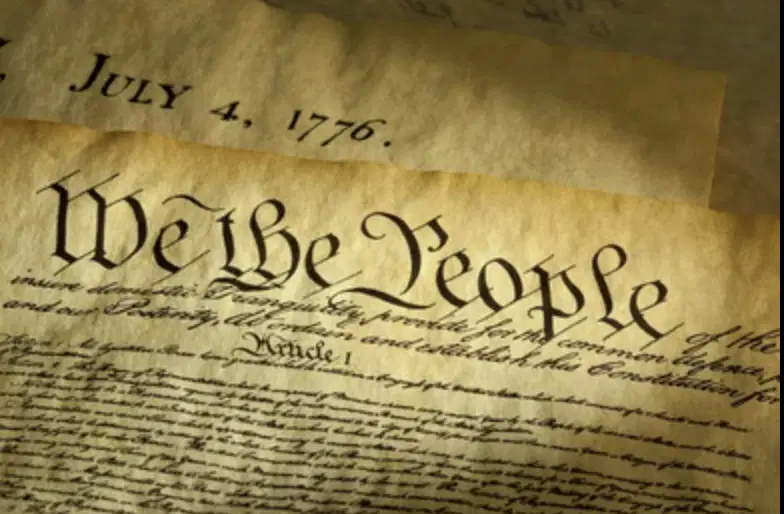
If you were to analyze the Preamble to the U.S. Constitution, what would you identify as its primary purpose?
a)
To list the rights of citizens
b)
To establish the structure of the government
c)
To outline the goals of the Constitution
d)
To declare independence from Britain
8.
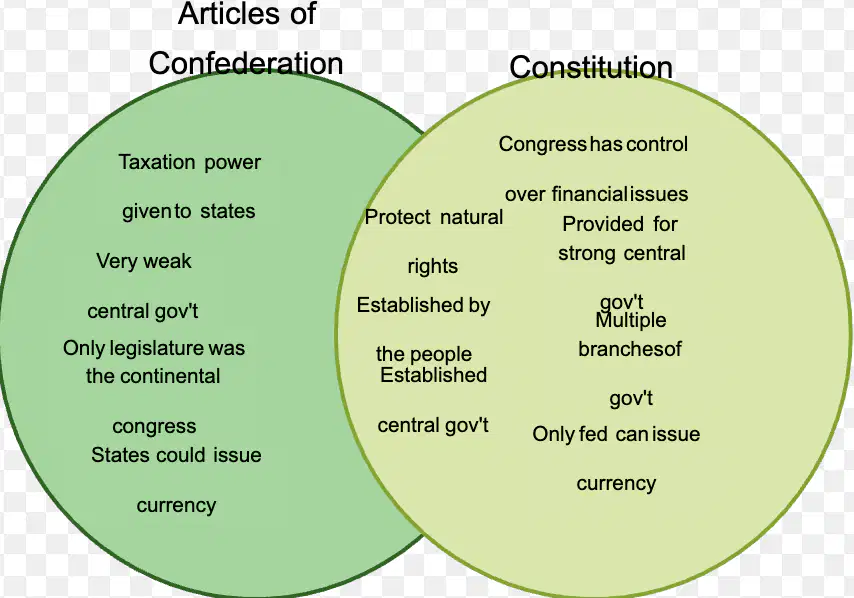
How did the Constitution improve upon the Articles of Confederation?
a)
It banned political parties
b)
It removed states' rights
c)
It strengthened the national government
d)
It eliminated all taxation
9.
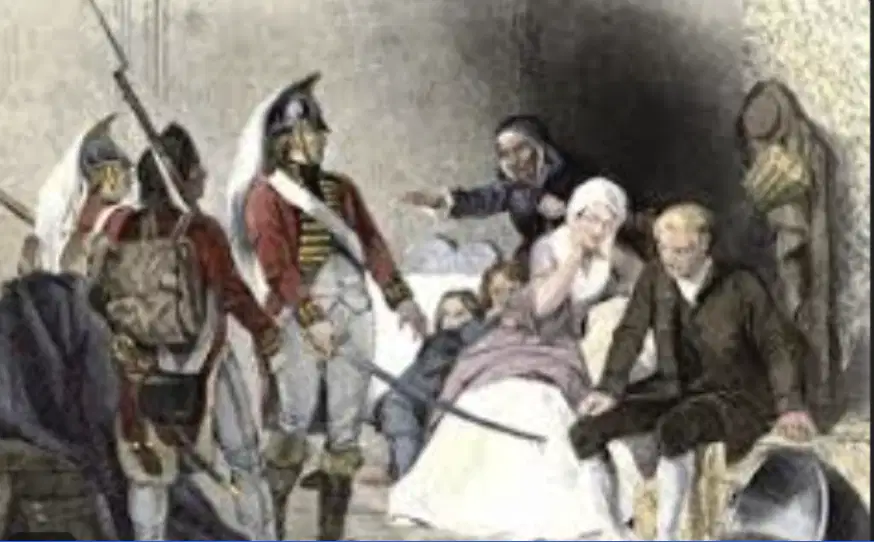
A family refuses to let soldiers live in their home.
Which amendment stated that the government cannot MAKE you house soldiers?
a)
4
b)
5
c)
10
d)
3
10.
Even the president must follow the law.
Which principle means government leaders must obey the law?
a)
Judicial review
b)
Rule of law
c)
State sovereignty
d)
Executive supremacy
11.
Which principle is reflected when citizens vote to elect their representatives?
a)
Rule of Law
b)
Popular Sovereignty
c)
Separation of Powers
d)
Judicial Review
12.
Obligations = MUST
Responsibilities = SHOULD
Which of the following best describes the relationship between civic responsibilities and civic obligations?
a)
Responsibilities are enforced by law, while obligations are optional.
b)
Obligations are voluntary acts that benefit democracy.
c)
Obligations are legally required, while responsibilities are encouraged but voluntary.
d)
Both must be followed or result in legal punishment.
13.
Which of the following is a legal obligation of all U.S. citizens, not just a civic responsibility?
a)
Voting in federal elections
b)
Serving on a jury
c)
Donating to political campaigns
d)
Volunteering in the community
14.
Which of the following actions would best represent the responsibility of participating in civic life?
a)
Avoiding jury duty when it conflicts with work
b)
Filing taxes on time
c)
Becoming informed about public issues
d)
Applying for a driver's license
15.
What is one purpose of political parties?
a)
cast electoral votes.
b)
set the age for voting.
c)
administer literacy tests.
d)
nominate candidates for public office.
16.
What makes the U.S. a two-party system?
a)
The Constitution mandates it
b)
Two parties dominate elections
c)
Parties are selected by Congress
d)
Parties alternate every 2 years
17.
Which of the following is a common criticism of the two-party system?
a)
It increases government stability
b)
It simplifies voter education
c)
It limits representation of diverse viewpoints
d)
It prevents majority rule
18.
Which of the following ran as a third-party candidate in a presidential election?
a)
George Bush
b)
Ross Perot
c)
Bill Clinton
d)
Donald Trump
19.
What is one constitutional requirement to become U.S. President?
a)
Prior government service
b)
Born in any U.S. territory
c)
U.S. citizen for 10 years
d)
Minimum age of 35
20.
How many electoral votes must a candidate receive to win the presidency?
a)
100
b)
435
c)
538
d)
270
21.
When media chooses which stories to show, what role is it playing?
a)
Publisher
b)
Influencer
c)
Watchdog
d)
Gatekeeper
22.
What do lobbyists do?
a)
Enforce federal laws
b)
Appoint judges
c)
Influence lawmakers
d)
Write campaign speeches
23.
What is a key difference between political parties and interest groups?
a)
Political parties are neutral; interest groups are not
b)
Political parties run candidates for office; interest groups do not
c)
Interest groups write laws; parties vote on them
d)
Interest groups only exist during election
24.
How many years must a person be a U.S. citizen to run for the House of Representatives?
a)
9 years
b)
10 years
c)
5 years
d)
7 years
25.
How is representation in the Senate determined?
a)
By number of districts in the state
b)
Based on population size
c)
Two per state
d)
One per district
26.
What is the main function of the legislative branch of the U.S. government?
a)
To enforce laws
b)
To interpret laws
c)
To make laws
d)
To execute laws
27.
In the U.S. system of government, which branch is responsible for interpreting laws?
a)
Legislative
b)
Executive
c)
Judicial
d)
Administrative
28.
Which article of the U.S. Constitution outlines the powers of Congress?
a)
Article II
b)
Article III
c)
Article I
d)
Article V
29.
Which best defines concurrent powers?
a)
Powers exclusive to Congress
b)
Powers held only by the judiciary
c)
Powers shared by both federal and state governments
d)
Powers listed only in the Bill of Rights
30.
What power does the House of Representatives have that the Senate does not?
a)
Ratifying treaties
b)
Trying impeachment cases
c)
Approving cabinet members
d)
Initiating tax bills
31.
Who can veto a bill passed by Congress?
a)
Vice President
b)
President
c)
Chief Justice
d)
Speaker of the House
32.
What is a presidential executive order?
a)
A speech made to Congress
b)
A command with the weight of law
c)
A treaty with another nation
d)
A law passed by Congress
33.
What type of power is the ability to tax, shared by both federal and state governments?
a)
Enumerated
b)
Reserved
c)
Absolute
d)
Concurrent
34.
What does Article IV of the U.S. Constitution primarily address?
a)
The relationship between the states
b)
The lawmaking powers of Congress
c)
The powers of the presidency
d)
Judicial review in federal courts
35.
Why is Article V of the Constitution important?
a)
It gives the president supreme power
b)
It abolishes the Supreme Court
c)
It outlines how to amend the Constitution
d)
It describes the duties of Congress
36.
What does 'domestic policy' refer to?
a)
Policies related to national defense
b)
Policies dealing with internal affairs
c)
Policies regarding space exploration
d)
Policies for international trade
37.
Which of the following is an example of domestic policy?
a)
Signing a treaty with Canada
b)
Increasing funding for public schools
c)
Sending humanitarian aid to another country
d)
Negotiating with Russia on nuclear disarmament
38.
What government agency handles domestic environmental policies?
a)
The Federal Bureau of Investigation (FBI)
b)
The Environmental Protection Agency (EPA)
c)
The International Monetary Fund (IMF)
d)
The Department of Defense
39.
The principal organization for carrying out U.S. foreign policy as established by the president is the
a)
Department of State.
b)
National Security Council.
c)
Department of Defense.
d)
Central Intelligence Agency.
40.
The three kinds of alliances that the United States uses to accomplish its goals around the world are
a)
political, military, and economic.
b)
political, diplomatic, and balance of trade.
c)
cultural, economic, and peacekeeping.
d)
military, defense, and offense.
41.
Which organization aims to promote peace and security among countries?
a)
NATO
b)
The United Nations
c)
The World Trade Organization
d)
NAFTA
42.
What is judicial review?
a)
The courts interpreting the Constitution and overturning unconstitutional acts
b)
States reviewing Supreme Court rulings
c)
The president reviewing laws before signing them
d)
Congress evaluating judicial nominees
43.
What type of law involves no crimes but resolves disputes?
a)
Civil law
b)
Military law
c)
Criminal law
d)
Juvenile law
44.
If a soldier is late reporting to duty, this situation is governed by:
a)
A) Criminal Law
b)
B) Juvenile Law
c)
C) Military Law
d)
D) Civil Law
45.
Which scenario is an example of a federal criminal case?
a)
Miss Martin sues a chair company for $19,000.
b)
Mr. Jones uses his car to distribute illegal drugs across multiple states.
c)
Mr. Ward sues the hospital for firing him due to his participation in a political protest.
d)
Mr. Tate files for bankruptcy.
46.
What was the significance of Brown v. Board of Education (1954)?
a)
It upheld "separate but equal" in public schools.
b)
It declared school segregation unconstitutional.
c)
It limited free speech in schools.
d)
It created affirmative action policies.
47.
In Miranda v. Arizona (1966), the Supreme Court ruled that...
a)
suspects must be told their rights before being questioned by police.
b)
police can search property without a warrant.
c)
students lose free speech rights in school.
d)
segregation is legal under certain conditions.
48.
Why is it important to study the Holocaust in civic education?
a)
To promote international trade
b)
To understand the importance of military power
c)
To recognize the consequences of prejudice, hate, and authoritarianism
d)
To encourage support for communism
49.
Which civil rights leader is most associated with nonviolent protest and the "I Have a Dream" speech?
a)
Malcolm X
b)
Thurgood Marshall
c)
Martin Luther King Jr.
d)
Rosa Parks
50.
What was the primary purpose of Nazi propaganda during the Holocaust?
a)
To dehumanize Jewish people and other minorities
b)
To promote equality among all citizens
c)
To recruit allies for international peace efforts
d)
To encourage political debate
100 %

