
 Worksheets
Screw Thread Fundamentals
Total questions: 37
Worksheet time: 19mins
Which statement best describes a right-hand thread on a screw?
Tightens when turned clockwise
Used only for special applications
Tightens when turned counterclockwise
Slopes upward to the left
In what situation are left-hand threads typically chosen?
To resist loosening under reverse rotation
To reduce manufacturing cost
To match female threads on bolts
To increase thread pitch distance
What does the term thread gender refer to?
Coarse versus fine thread pitch
Single-start versus multi-start threads
Left-hand versus right-hand threads
External versus internal threads
Identify the correct pairing of gender for a nut and bolt.
Bolt has male threads; nut has female threads
Both bolt and nut have female threads
Bolt has female threads; nut has male threads
Both bolt and nut have male threads
Which description correctly defines pitch in screw threads?
Angle between thread flanks and the axis
Number of thread starts per unit length
Axial travel in one full rotation of the screw
Distance from the crest of one thread to the next
Which description correctly defines lead in screw threads?
Axial travel in one full rotation of the screw
Radial distance from core to thread crest
Distance from crest of one thread to the next
Number of threads per inch on the screw
For a single-start thread, how are lead and pitch related?
Lead equals pitch exactly
Lead is half the pitch value
Lead is twice the pitch value
Lead is unrelated to pitch
For a two-start thread, how are lead and pitch related?
Lead equals two times the pitch
Lead equals the pitch exactly
Lead equals half the pitch
Lead equals three times the pitch
Which pair correctly matches thread handedness with typical usage?
Right-hand threads: most commonly used
Left-hand threads: always used on bolts
Right-hand threads: used only in nuts
Left-hand threads: special applications
Select all statements that correctly describe thread gender.
Gender indicates left-hand or right-hand orientation
Gender classifies matched external and internal threads
Female threads are inside holes such as nuts
Male threads are on external parts like bolts
Which change increases the lead while keeping pitch constant?
Use a finer surface finish
Increase the number of starts
Decrease thread crest height
Switch from right-hand to left-hand
A screw advances 4 mm per full turn and has a pitch of 2 mm. What kind of thread is it?
Female-threaded screw
Two-start thread
Single-start thread
Left-hand thread
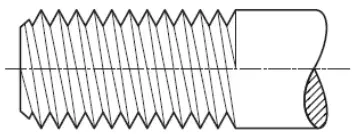
In the top diagram, which representation shows full tooth profiles for clarity when other styles would be unclear?
Symbolic representation
Schematic representation
Detailed representation
Simplified representation
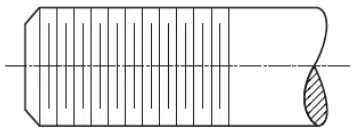
When is the schematic representation preferred over the simplified one in technical drawings of threads?
When maximum realism is needed
When simplified could be confused
When the part is hidden
When tolerances are unknown
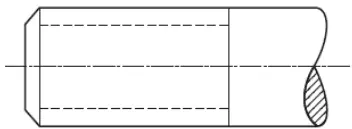
Which representation uses two parallel lines to convey thread information quickly without losing clarity?
Detailed representation
Sectioned representation
Simplified representation
Schematic representation

Identify the type of thread shown on the left component in the second image.
Internal thread
External thread
Left-hand worm
Double-start thread
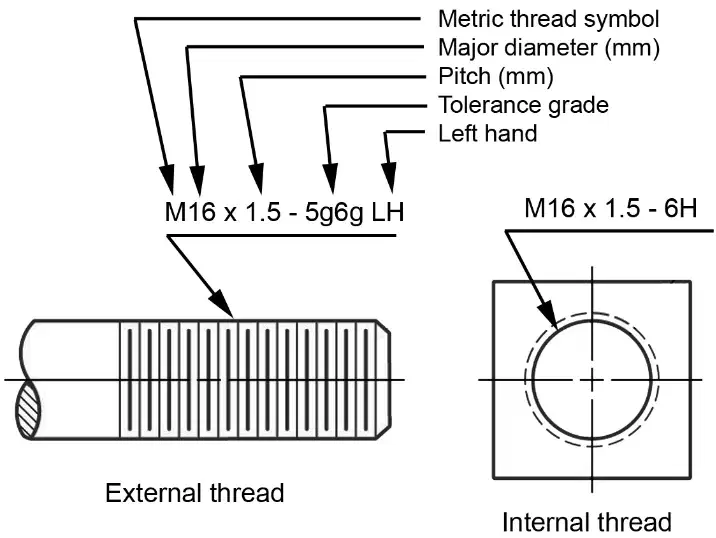
Identify the type of thread shown in the square block in the second image.
Internal thread
External thread
Acme trapezoid
Square multi-start
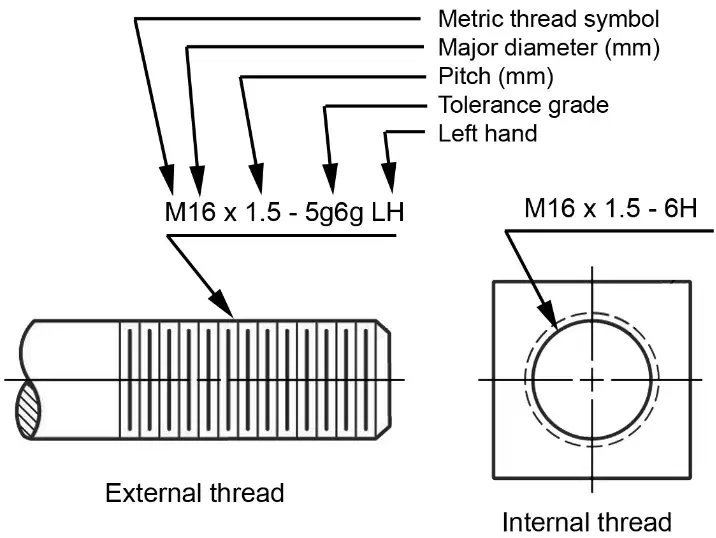
In the notation M16 × 1.5 – 5g6g LH, what does the letter M indicate?
Metric thread symbol
Major diameter unit
Machining method
Material specification
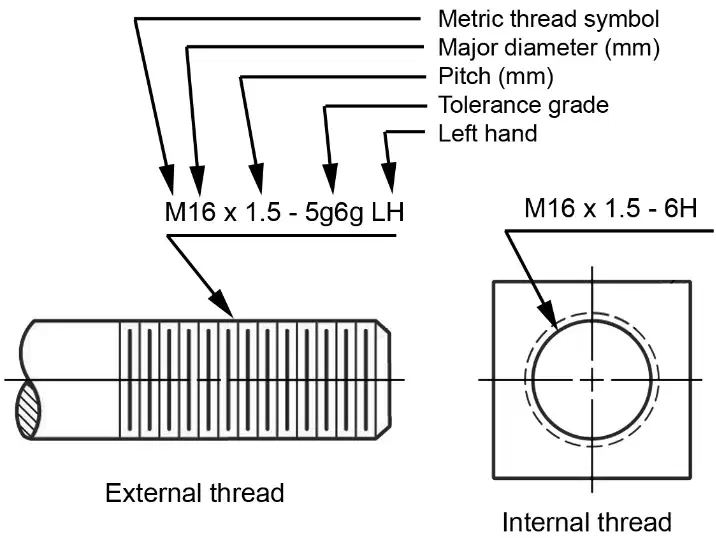
In the thread designation M16 × 1.5 – 6H, what does 16 represent?
Major diameter in millimetres
Minor diameter in inches
Number of starts
Thread angle in degrees
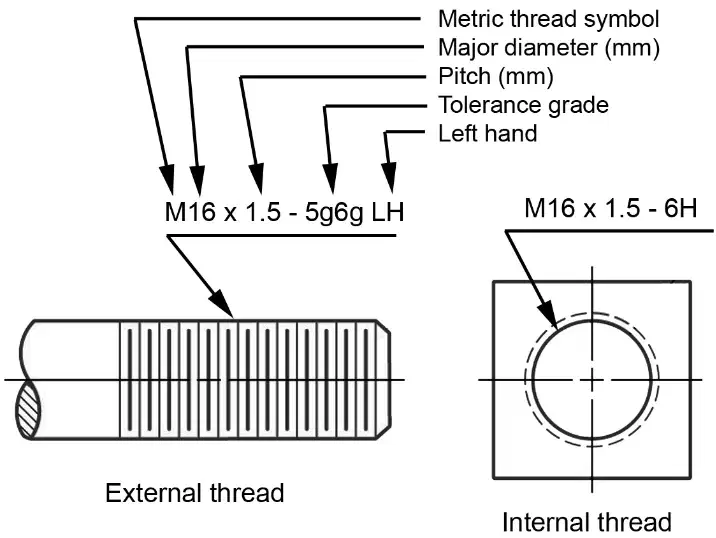
In the notation M16 × 1.5 – 5g6g LH, what does 1.5 specify?
Thread depth per side
Pitch in millimetres
Lead of a multi-start
Tolerance band width
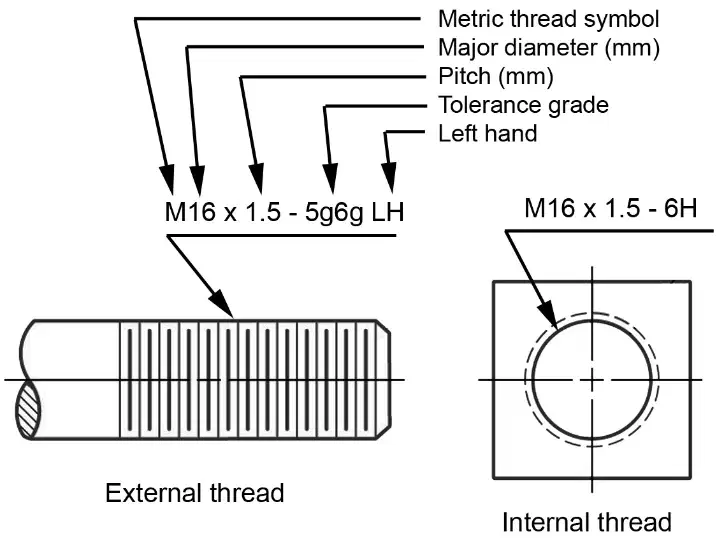
In metric thread designations, what information is carried by 6H or 5g6g?
Heat treatment
Surface finish
Tolerance grade
Head type
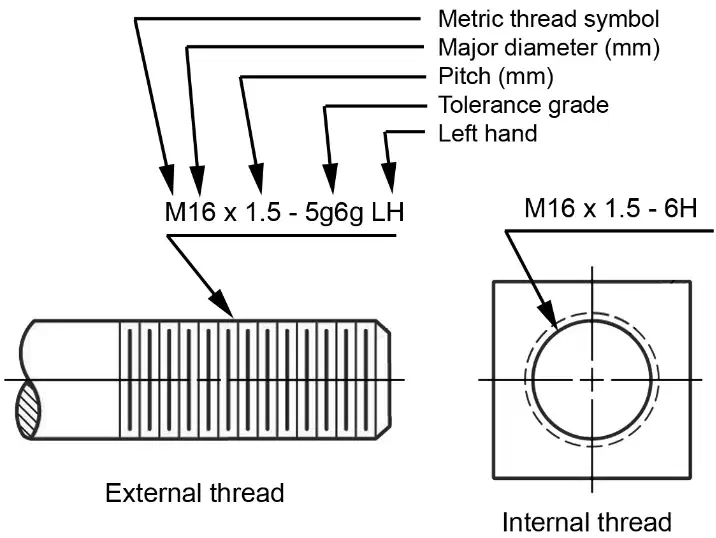
What does the suffix LH indicate in M16 × 1.5 – 5g6g LH?
Low hardness
Left hex head
Left-hand thread
Long hub
Which pitch is the default for a given metric thread diameter and may be omitted in the designation?
Coarse pitch
Fine pitch
Variable pitch
Extra fine
Choose the correct example of a coarse-pitch designation when pitch is omitted.
M8 × 1.25
M8 – 6H
M8 × 0.75
M8
Why might fine pitches be selected instead of the normal coarse pitch?
Left-hand requirement
Low thread engagement
High tooth angle
Thin-walled components
In the metric system, how are the nominal diameter and pitch separated within the thread designation?
By the multiplication sign ×
By a comma separator
By a colon delimiter
By a hyphen symbol
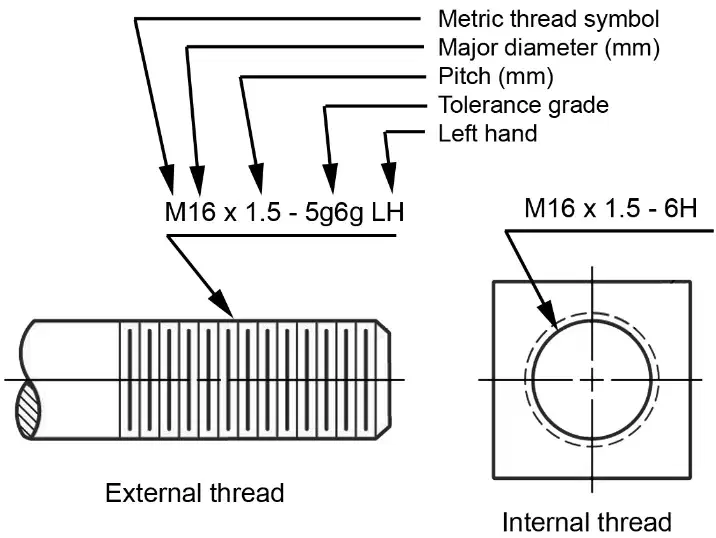
Which pair correctly matches feature to meaning in the notation M16 × 1.5 – 6H?
1.5: pitch millimetres
M: metric thread symbol
LH: left-hand thread
16: major diameter mm
6H: tolerance grade
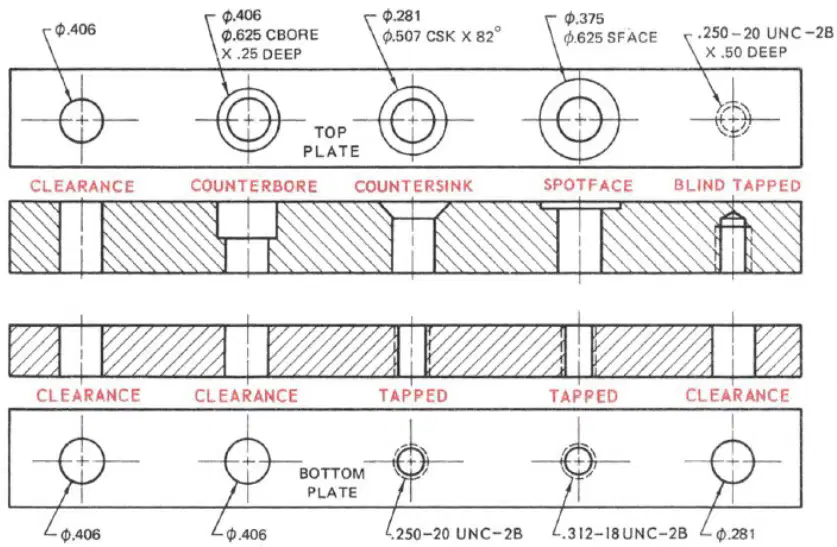
In the top plate diagram, which hole type is shown with a flat-bottom enlarged recess to seat a bolt head?
Countersink with conical recess
Counterbore with cylindrical recess
Blind tapped hole with threads
Spotface with shallow pad
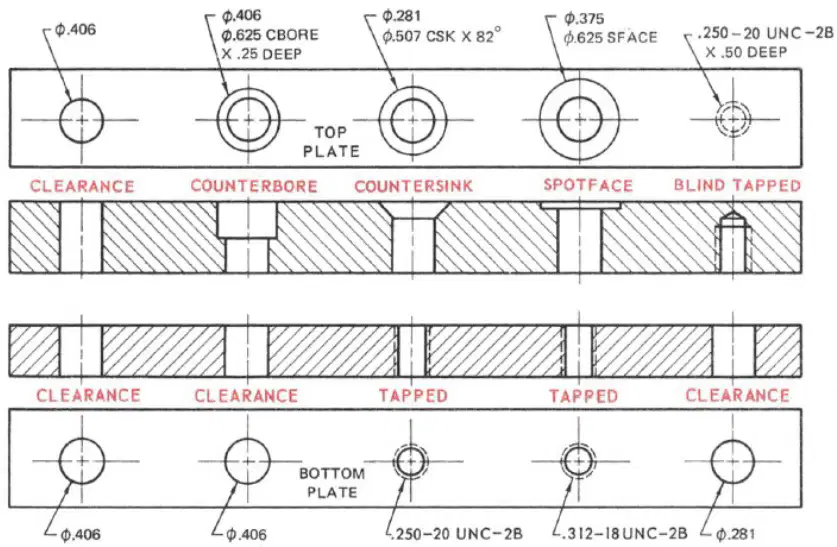
Which symbol indicates a countersink and typically includes an angle such as 82 degrees?
Ø with depth note only
Ø with CSK and angle note
UNC-2B thread callout
CBORE with diameter and depth
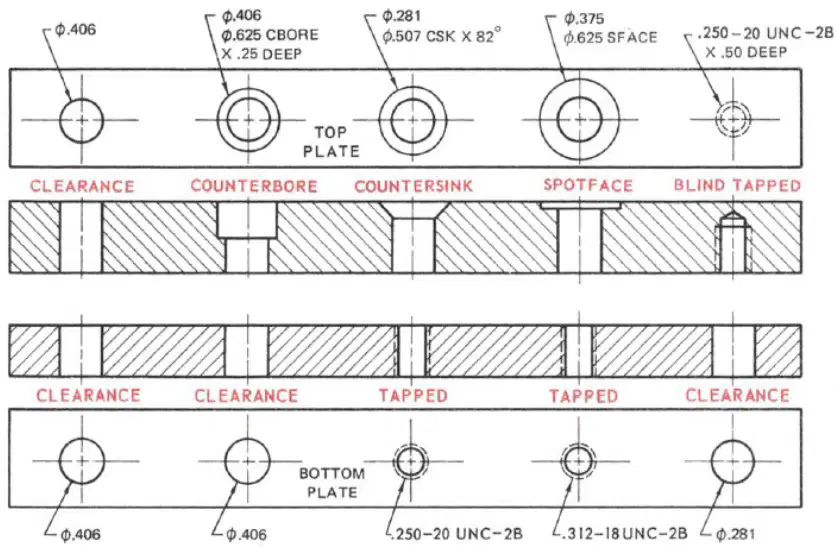
A blind tapped hole in the diagram is best described as:
Conical seat to accept countersunk screw
Shallow recess for bolt head
Threaded hole not breaking through
Through hole without threads
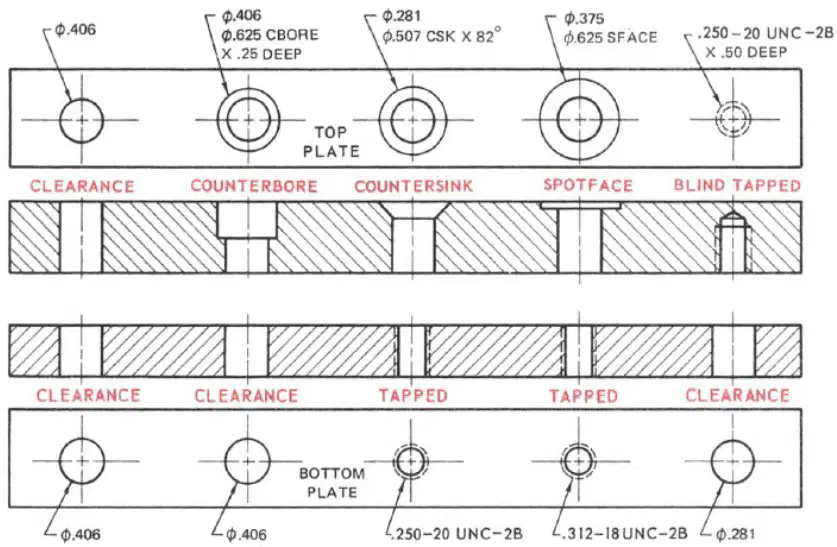
In the lower plate, which holes align with the top plate’s tapped features for assembly?
Clearance holes sized over thread
Spotface pads under head
Countersink recesses with angle
Counterbore recesses for nuts
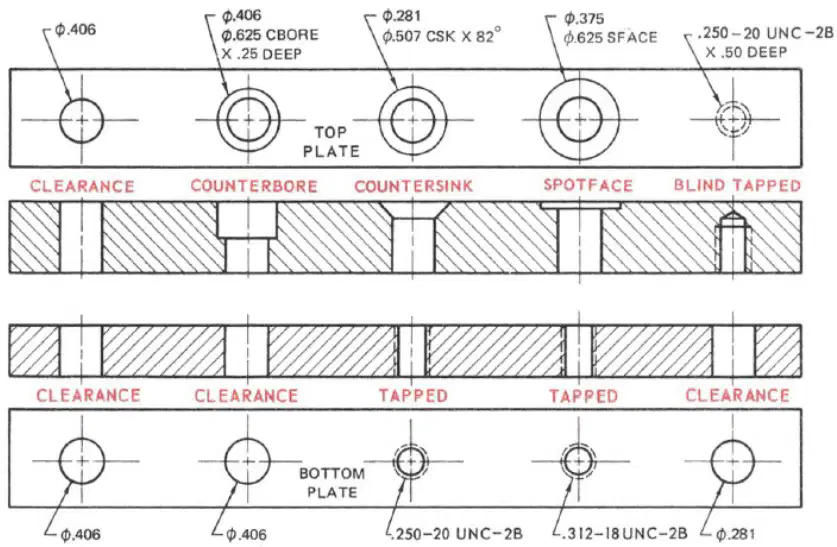
What is the function of a spotface as illustrated?
Create threads in a blind hole
Provide flat seat on rough surface
Form a conical screw recess
Allow bolt shank clearance
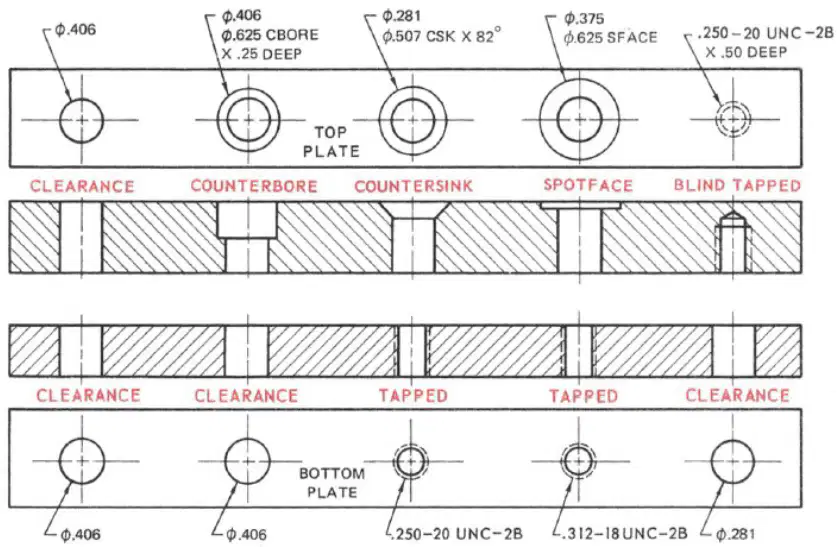
Which combination correctly pairs feature to typical fastener: counterbore with hex socket cap screw, countersink with flat-head screw, clearance with bolt shank?
Clearance with bolt shank
Countersink with flat-head screw
Spotface with wood screw
Counterbore with hex socket cap screw
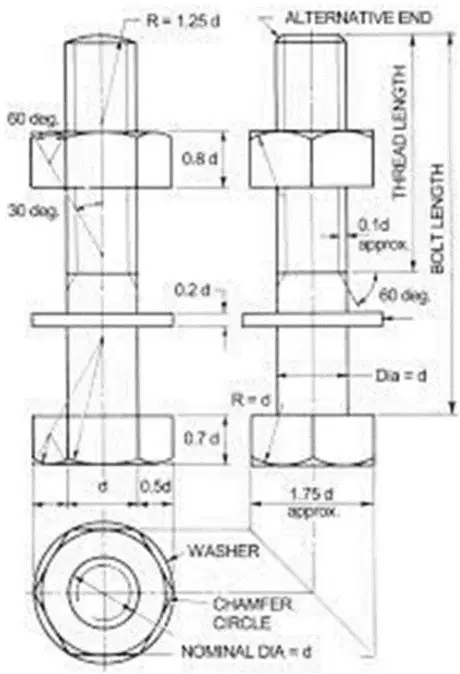
In the nut–bolt–washer representation, what does the chamfer circle on the plan view indicate?
Hex nut across flats
Bevel at bolt head edge
Washer outer diameter
Thread pitch on the bolt
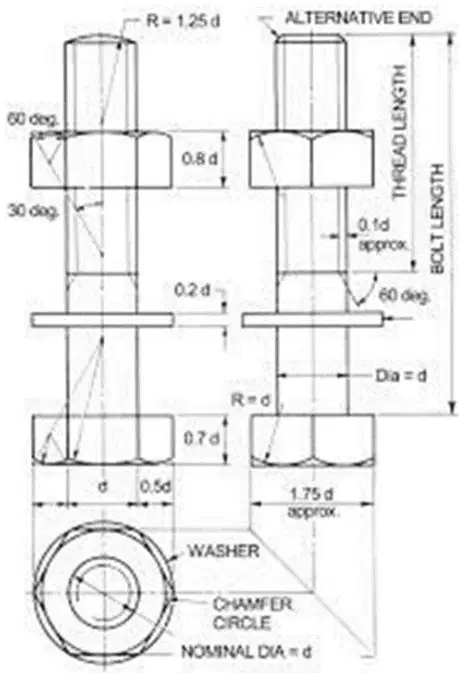
According to the bolt diagram, which dimension pair refers to bolt length versus thread length?
Nominal diameter versus pitch
Head height versus washer thickness
Bolt length versus threaded portion
Across flats versus across corners
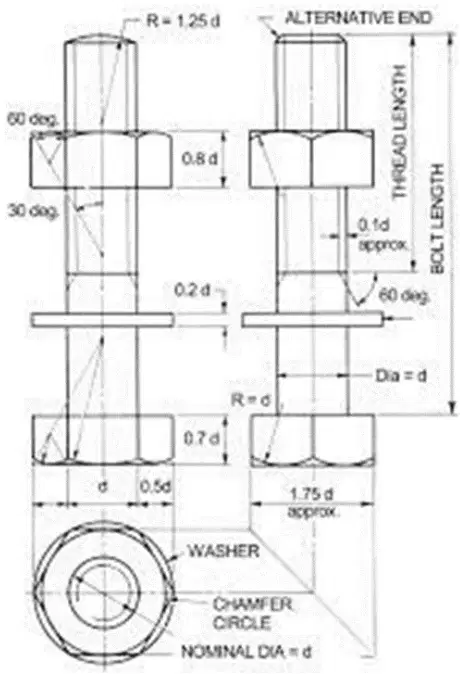
Which assembly order from head to end matches the elevation: bolt head, washer, plate, nut?
Plate, head, washer, nut
Head, washer, plate, nut
Washer, nut, plate, head
Nut, washer, plate, head
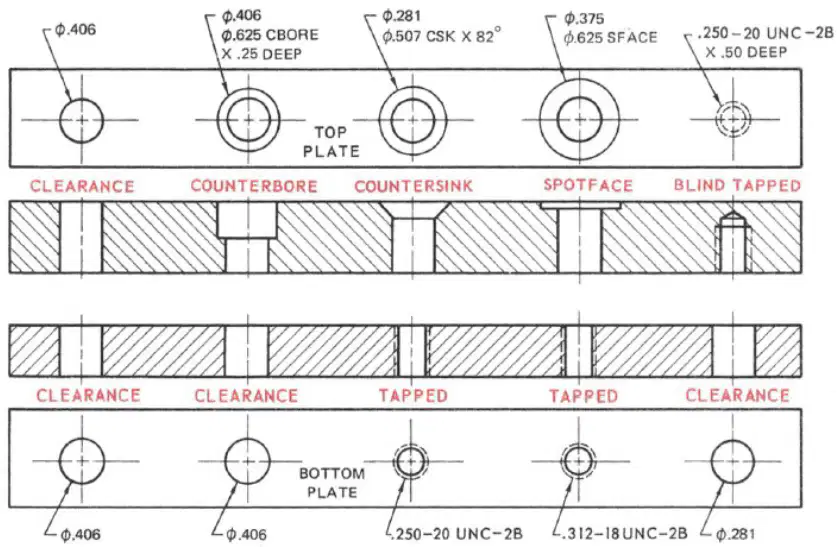
When specifying a clearance hole to pass a .250–20 UNC bolt shank, which value should the hole diameter be relative to nominal?
Equal to nominal thread diameter
Slightly larger than nominal shank
Smaller to ensure tight fit
Equal to major thread crest

