
 Worksheets
Orion 43-59
Total questions: 111
Worksheet time: 56mins
Which of the following physicochemical characteristics of a drug decreases its transdermal penetration?
nonionic from
high melting point
high concentration
molecular weight below 500
Which of the following is the main purpose of levigating a suspension during extemporaneous compounding?
improve flowability
reduce particle size
reduce the zeta potential.
prevent microbial growth
suspension character?
Hydrophobic to prevent aggregation.
Hydrophilic to prevent aggregation.
Hydrophobic to increase gastric empty.
hydrophilic to increase gastric empty
vit c add as
Preservative
coloring agent
flavoring agent
Rate limiting step in oral dosage forms?
diffusion
disintegration
Dissolution
Which of the following is the ratio of mass to the volume of object determined at a specific temp?
Specific Gravity
Density
Absolute Density
Apparent Density
Bentonite is?
Preservative
emulsifying agent
Suspending agent
vehicle
The ratio of the density of the substance or mass to the volume at a specified condition of temperature What is this?
Specific gravity
Relative density
Absolute density
Something density
Vacuum IS? Vacuum Mixer Machine is designed to mix and Blend Materials under Controlled Vaccum Environment
an environment maintained at a pressure below atmospheric
a process that increases ambient pressure above atmospheric
a temperature-controlled environment without pressure control
a method to add air to materials during mixing
Uniformity test applied to determine the content of the ingredient in tablets?
Bioequivalence
Dissolution
Purity
Potency
Expiry of Compounded syrup contain water is?
7 days
9 days
14 days
1 month
Role of boric acid in eye prescription?
Thinking
Stable
route of administration Highest bioavailability?
IM
SC
inhalation
tablets
Which of the following is a component added as a binder?
Lactose
starch
Previn phenyl
Observing evidence of instability during compounding is an important step. Which of the following is happened should have discarded the product and not dispense it?
Color intensity
Weight Changing
Size of the holder
Chemical potency
Which of the following is the ratio of the mass to the volume of object determined at a specified temperature?
specific gravity
relative density
absolute density
apparent density
Which routes of administration result in faster absorption?
oral
Rectal
topical
Which of the following products is an oleaginous ointment base? Oleaginous base consists of oil+fatex:- Soft paraffin (Petroleum) • Polysorb • Aquabase • Anhydrous lanolin
Soft paraffin (Petroleum)
Polysorb
Aquabase
Anhydrous lanolin
Which of the following is the benefit from adding a conjugate of polyethylene glycol (PEG) in some medications like Peg-interferon?
to extend the half-life of medications
to extend the shelf-life of medications
to enhance the effect of the medications
to enhance the elimination of the medications
Which of the following resources is best to use for common compounding techniques and ingredients?
Red book
Drug facts and comparison
Martindale: the complete drug reference
Remington: the science and practice of pharmacy
Which of the following is the most appropriate source for information on compounding medications?
Micromedex
Orange book
A drug information website
United states pharmacopoeia (USP)
Oleaginous base for ointment?
linoline
White petroleum
Which of the following capsules sizes has the largest size suitable for human patient?
no. 0
no. 1
no. 5
no. 000
Which of the following is the term used to describe the pharmaceutical technique of grinding an insoluble substance to fine powder while wet?
trituration
levigation
attrition
milling
Sterile preparation is a very complex manufacturing procedure that requires attention tothe ingredients added in it. Which of the following ingredients can be added when preparing a sterile drug?
Antioxidants
2% Benzyl alcohol
Bactericidal agents
1.9% Sodium Chloride
Special techniques are required during compounding of emulsion. Which of the following techniques is used for compounding of emulsion?
dry gum
fusion mold
compression
heat technique
A drug has a volume of distribution of 35L in a 70 Kg man. Which of the following best describes Its distribution?
it is bound to DNA
it is dissolved in lipids
it has low bioavailability
it is mostly distributed in plasma
Which of the following is the term used to describe the pharmaceutical technique of grinding an insoluble substance to fine powder while wet?
trituration
levigation
attrition
milling
A 5-year-old girl admitted to the Pediatric Intensive Care Unit (PICU) with severe hypotension. The physician prescribed dopamine infusion at a rate of 5 mcg/kilogram/minute. The child weights 15 kilograms. How many milliliters are needed from an 80 mg/ml dopamine vial to prepare the 24-hour infusion?
1 ml
1.4 ml
2 ml
2.5 ml
Which of the following pharmaceutical activities should follow the USP chapter 797 standards?
Compounding ophthalmic preparations
Compounding of sterile preparations
Dispensing of non-hazardous preparation
Compounding of extemporaneous preparations
Boric acid in preparation?
puffer
stabilizes
preservative
What dosage form should store at refrigerated even if it not opened?
eye drops
oral solutions
suppository
tablets
Which of the following is the most practical method for sterilizing ophthalmic solution?
autoclaving for 15 minutes
autoclaving for 30 minutes
membrane filtration through 0.2-um filter
membrane filtration through 5-um filter
Which product enhance powder flow while using automatic filling tablet machine?
Gelatin
Cellulose
Lubricant
prepration oil with water
suspension
emulsion
is a heterogeneous mixture in which the solute particles do not dissolve
suspension
emulsion
The easiest way to take ear drops?
foam
solution
suspension
why is there XL dosage form?
to cover the bitter taste of the tablet
slow release
to make easier to swallow
sustained release or Extended Release
When adding PEG to a composite, which effect is expected?
It increases clearance
It increases the size of distribution
It increases extended half‑life
It acts as a surfactant
What is a mixture of dispersed solid in a liquid called?
Solution
Suspension
Emulsion
A suspended agent is important for preparing an oral suspension. Which of the following is the characteristic of this suspending agent?
Hydrophilic, to inhibit agglomeration
Hydrophobic, to inhibit agglomeration
Hydrophilic, to prolong gastric emptying time
Hydrophobic, to prolong gastric emptying time
What is the usual shelf life for reconstituted and refrigerated antibiotic suspension?
5 days
7 days
14 days
30 days
Which of the following drugs may decrease heart rate?
Hydrochlorothiazide
Isoproterenol
Amlodipine
Metoprolol
Which of the following is an indication for the use of streptokinase?
Tuberculosis
Neoplastic disorders
Myocardial infarction
Impaired fat absorption
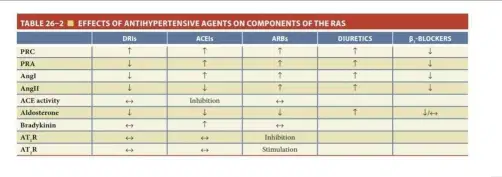
The effects of four anti‑hypertensive drug classes (A–D) on the renin–angiotensin system are shown in the accompanying table. Which class is represented by the drug labeled C?
Diuretics (D)
Direct Renin inhibitors (A)
Angiotensin II receptor blockers (C)
Angiotensin converting enzyme inhibitors (B)
A 69‑year‑old woman presents with severe dry cough for one week. She was recently prescribed hydrochlorothiazide and captopril for hypertension, and salbutamol and fexofenadine for allergic asthma. Which drug is the most likely reason for her complaint?
Captopril
Salbutamol
Fexofenadine
Hydrochlorothiazide
Which of the following best describes the role of colipase in digestion of lipids?
It breaks down triglycerides into absorbable free fatty acids
It hydrolyzes cholesteryl esters into cholesterol and free fatty acids
It acts as co‑enzyme for the action of lipase in the presence of bile acids
It plays an important role in the degradation and excretion of phospholipids
A 37‑year‑old breastfeeding mother has consistent high blood pressure. Which of the following anti‑hypertensives is most hazardous for the child?
Atenolol
Verapamil
Metoprolol
Propranolol
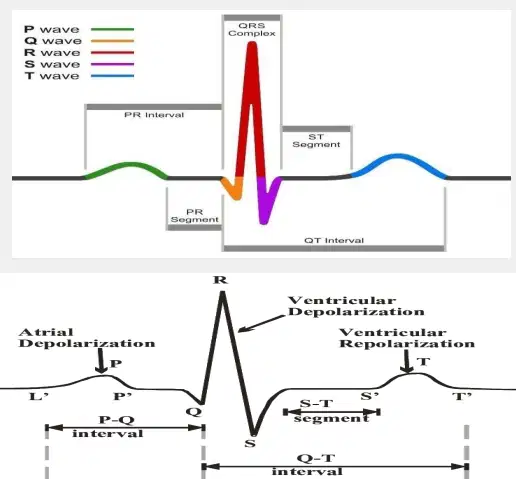
Which component of the electrocardiograph (ECG) represents atrial depolarization?
P wave
QRS complex
T wave
ST segment
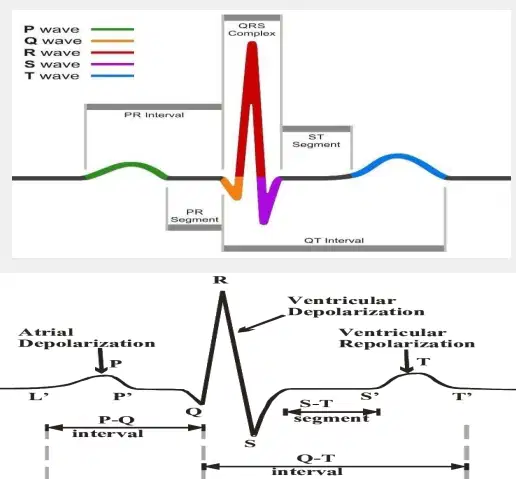
Refer to the electrocardiogram waveform diagram showing labeled P wave, PR interval, ST segment, QRS complex, and QT interval. Which of the following in electrocardiograph (ECG) represents the absolute refractory period?
P wave
PR interval
ST segment
QRS complex
Which of the following medications is a class IA antiarrhythmic agent?
quinidine
flecainide
verapamil
amiodarone
Which one of the following conditions is a contraindication for the use of enalapril?
pregnancy
hypertension
diabetes mellitus
congestive heart failure
Which of the following is the best classification for bisoprolol?
beta 1 adrenergic receptor agonist
beta 1 adrenergic receptor blocker
alpha 1 adrenergic receptor blocker
non-selective beta-adrenergic receptor blocker
Which of the following is the Vaughan Williams classification for the antiarrhythmic drug procainamide?
class IV
class III
class II
class IA
Which medication can cause orthostatic hypotension?
prazosin
donepezil
rivastigmine
spironolactone
Which of the following can the pharmacological property of hydralazine be directly responsible for?
Relaxation of cardiac muscle
Blockade of dopamine receptor
Relaxation of vascular smooth muscle
Contraction of vascular smooth muscle
A 31-year-old hypertensive man was treated for addiction to amphetamine and discharged on an antihypertensive drug. Later, he presented with severe depression. Which of the following medications was most likely prescribed?
losartan
captopril
methyldopa
hydrochlorothiazide
Which of the following is most likely the reason for using amlodipine in the treatment of hypertension?
selective beta 1 blocker
selective alpha 1 blocker
calcium channel blocker
selective serotonin reuptake inhibitor
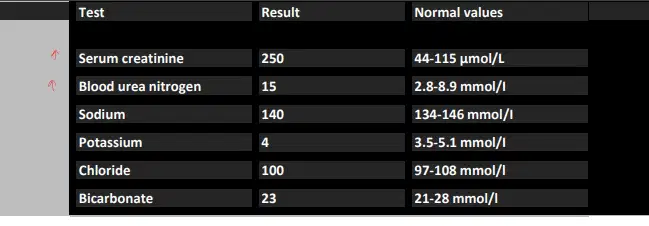
A 90-year-old man with diabetes mellitus, hypertension, and congestive heart failure presents with nausea, anorexia, and visual changes. Current home medications include metformin, aspirin, lisinopril, atorvastatin, and digoxin. Laboratory results show serum creatinine 250 μmol/L (normal 44–115), blood urea nitrogen 15 mmol/L (normal 2.8–8.9), sodium 140 mmol/L (normal 134–146), potassium 4 mmol/L (normal 3.5–5.1), chloride 100 mmol/L (normal 97–108), bicarbonate 23 mmol/L (normal 21–28), calcium 2.5 mmol/L (normal 2.15–2.62), and digoxin (men) 3 ng/L (normal 0.8–2). Which of the following most likely explains the patient’s symptoms?
digoxin–lisinopril interaction
adverse drug reaction of atorvastatin
congestive heart failure exacerbation
high serum digoxin level due to renal impairment
Which of the hypertensive therapies is preferred to be used during the acute phase of ischemic stroke if elevated blood pressure should be treated?
lisinopril
nicardipine
hydrochlorothiazide
metoprolol succinate
Which is the most appropriate time to draw a plasma blood sample for digoxin monitoring?
2 hours post-dose
4 hours post-dose
5 hours post-dose
6 hours post-dose
Which of the following parenteral anticoagulants require routine monitoring of coagulation lab parameters?
UFH intravenously
UFH subcutaneously
enoxaparin subcutaneously
fondaparinux subcutaneously
A 36-year-old woman in her first trimester of pregnancy is recently diagnosed with hypertension. Which of the following is the best and safest therapy?
Aliskiren
Captopril
Valsartan
Labetalol
Which of the following antiarrhythmic drugs is considered a rate control drug?
sotalol
flecainide
amiodarone
propafenone
Which of the following is the most important decision to be taken for this patient before becoming pregnant?
add methyldopa
discontinue lisinopril
continue same treatment in pregnancy
decrease lisinopril dose to 2.5 mg once daily
A 45-year-old male is admitted to the hospital for craniotomy. Phenytoin has been prescribed to him after the surgery. Before initiation of the drug the pharmacist suggested to do pharmacogenetics test and the results revealed that the patient carries the HLA-B*58:01 allele. Which of the following adverse effects is associated with this patient's allele type?
bleeding
high blood pressure
increased risk of jaundice
severe cutaneous reaction
A 4-week infant is diagnosed with patent ductus arteriosus. The doctor wants to avoid performing surgery. Which drug will be administered to avoid a surgical closure?
allopurinol
indomethacin
pseudoephedrine
brompheniramine
Which of the following medications to be used under caution is in patients with ischemic heart disease?
lisinopril
celecoxib
metoprolol
simvastatin
A 45-year-old patient with atrial fibrillation is treated with amiodarone 400 mg/day and rivaroxaban 20 mg/day with the evening meal. He has concern about his drugs routine monitoring. Which of the following would be the best recommended regarding amiodarone monitoring?
Slit-lamp examination at baseline and annually
Renal function tests at baseline and annually
Cardiac enzymes at baseline and annually
Liver function tests at baseline and every 6 months
A 28-year-old woman presents with tachycardia and palpitations (ventricular ectopic beats). History revealed essential hypertension and asthma. Patient wants to conceive (mean become pregnant). BLOOD PRESSURE: 147/98 mmHg. What is the most likely alternative to the β-blocker in terms of efficacy on pressure, heart rate and relative safety?
Prazosin
Enalapril
Diltiazem
Methyldopa
A 68-year-old woman with a history of type-2 diabetes and dyslipidemia is on atenolol and lisinopril. The doctor wants to start statin as her estimated 10-year ASCVD risk is 10%. Which of the following would be the recommended statin in (mg)?
Atorvastatin 10 (moderate intensity statin)
Atorvastatin 40 (HIGH intensity statin)
Simvastatin 10 (low intensity statin)
Simvastatin 80
A 60-year-old man presents with complain of chest pain twice weekly. History revealed chronic stable angina with hypertension and is on atenolol 100 mg daily. BP: 147/93 mmHg; 65/min. What is the best management?
Add lisinopril 20 mg daily
Add amlodipine 5 mg daily
Diltiazem 30 mg every 8 hours
Add isosorbide dinitrate 20 mg twice daily
Which of the following drugs is contraindicated in heart failure?
Captopril
Celecoxib
Furosemide
Amiodarone
A 76-year-old cardiac male patient was transferred to the hospital for palpitation with a heart rate of 177 bpm. He is a heavy smoker and his past medical history includes hypertension, hyperlipidemia and coronary artery disease. His medications include aspirin, clopidogrel, carvedilol, valsartan and atorvastatin. He was diagnosed as having fibrillation. Which of the following is the CHADS2-VASC score for this patient?
1
3
4
6
Which of the following beta-blockers is indicated for use in heart failure patients?
Esmolol
Atenolol
Labetalol
Carvedilol
Which of the following medication should be prescribed to the patients with angina to treat an acute attack?
Ranolazine
Nitroglycerin skin patch
Isosorbide dinitrate SR capsules
Nitroglycerin sublingual tablets
Which of the following antihypertensive agents is most likely to cause peripheral edema?
Atenolol
Perindopril
Amlodipine
Candesartan
Which of the following conditions is a contraindication for the use of celecoxib?
Ischemic heart disease
Renal failure
Diabetes
Asthma
Which of the following medications is a class-IC antiarrhythmic agent?
Quinidine
Flecainide
Verapamil
Amiodarone
Which of the following is an indication for the use of indapamide?
Angina pectoris
Cardiac dysrhythmias
Essential hypertension
Acute myocardial infarction
Which of the following calcium channel blockers is a non-dihydropyridin drug?
Nicardipine
Amlodipine
Nifedipine
Diltiazem
Which of the following drugs when given with verapamil can result in a major drug interaction?
Digoxin
Sulindac
Naproxen
Piroxicam
Which of the following is the pharmacological property of atenolol?
nonselective beta-blocker
cardioselective beta 1-blocker
cardioselective beta 2-blocker
cardioselective beta 1-agonist
What is the pharmacological property of cardiac glycosides?
alpha 1 blocker
potent bronchodilator
positive inotropic effect
negative inotropic effect
Which of the following is the reason of using verapamil as an antiarrhythmic drug?
it suppresses phase four depolarization
it stimulates the breakdown of adrenaline
it inhibits slow inward current of phase two of action potential
it increases the excitability of pyramidal neurons in the amygdala
Which of the following is the best classification for Bisoprolol?
beta 1 adrenergic receptor agonist
beta 1 adrenergic receptor blocker
alpha 1 adrenergic receptor blocker
non-selective beta-adrenergic receptor blocker
Which of the following is a pharmacological action of dopamine?
elevation of blood pressure
paralysis of skeletal muscle
stimulation of gastric secretion
activation of cardiac contraction
Which of the following medications is a class-IV antiarrhythmic agent?
quinidine
flecainide
verapamil
amiodarone
Which of the following mechanisms of actions most appropriately describes nifedipine?
selective beta blocker
calcium channel blocker
non-selective beta blocker
angiotensin converting enzyme inhibitor
Which of the following is the most likely side effect to be monitored when a patient is prescribed amiodarone?
ptosis
tinnitus
pulmonary toxicity
pseudomembranous entercolitis
Which one of the following conditions is a contraindication for the use of angiotensin‑converting enzyme inhibitors?
hypertension
diabetes mellitus
idiopathic angioedema
congestive heart failure
Which of the following is a centrally acting alpha‑2 adrenergic agonist?
enalapril
labetalol
clonidine
nifedipine
Which of the following antihypertensive agents is most likely to cause peripheral edema?
atenolol
perindopril
amlodipine
candesartan
A 47‑year‑old man is admitted to hospital with atrial arrhythmia and is prescribed amiodarone. Which of the following is the most likely side effect to be monitored?
ptosis
tinnitus
pulmonary toxicity
pseudomembranous enter colitis
Which of the following is a benefit of using dopamine in the treatment of cardiogenic shock?
It selectively constricts renal and mesenteric beds
It increases the force of myocardial contraction
It lacks peripheral vasoconstriction effect
It decreases cardiac output
A 75‑year‑old woman with congestive heart failure is prescribed digoxin to improve cardiac muscle contractility. She has a marked improvement in her symptoms. What cellular action of digoxin is responsible for its pharmacological action?
Inhibition of cAMP synthesis
Inhibition of Na+/K+ ATPase enzyme
Inhibition of β‑adrenergic stimulation
Inhibition of mitochondrial calcium release
What is the main advantage of losartan over lisinopril?
Less hyperkalemia
Safe during pregnancy
Less induction of cough
Higher oral bioavailability
Which of the following is a selective α1 blocker?
labetalol
terazosin
clonidine
captopril
Case: A patient has hypertension and benign prostatic hyperplasia, takes lisinopril and prazosin, and remains uncontrolled. He is having orthostatic hypotension. What is the best management change?
Add finstride
Stop prazosin
Discontinue prazosin and change to alfuzosin
Case: A patient has hypertension and benign prostatic hyperplasia, takes lisinopril and prazosin, and remains uncontrolled. He has side effect orthostatic hypotension. What is the best management change?
Add finstride
Stop prazosin
Discontinue prazosin and change to alfuzosin
An elderly patient complaining of urine incontinence uses many drugs for hypertension and diabetes. His doctor prescribed prazosin for his problem, but he had syncope and asked for an alternative. Which option is most appropriate?
beta blocker
diltiazem
alfuzosin
decrease dose of prazosin
How much blood does the heart pump per minute?
0.5 liters
5 liters
50 liters
A common form of supraventricular tachycardia in teenagers is?
atrial ectopic tachycardia
atrial flutter
junctional ectopic tachycardia
AVNRT
Which drugs are used for ventricular arrhythmias (VA) and supraventricular atrial arrhythmias (SVAA)?
procainamide
sotalol
dofetilide
flecainide or propafenone
Responsible for generating the normal cardiac impulse is the:
SA node
AV node
Purkinje fibers
Anti‑arrhythmic patient with testing showing high TSH and low T3. Which drug is most likely responsible?
phenytoin
digoxin
amiodarone
A patient on amlodipine with hypertension has laboratory findings of hyperproteinemia. What should be given?
ACEI
alpha blocker
CCB
A 76‑year‑old male with palpitations has a heart rate of 177 bpm, is a heavy smoker, and has past medical history of hypertension, hyperlipidemia, and coronary artery disease. Medications include aspirin, clopidogrel, carvedilol, valsartan, and atorvastatin. He is diagnosed with atrial fibrillation. What is his CHA2DS2‑VASc score?
1
3
4
6
Case: A patient has difficulty voiding and is already on oxybutynin and lisinopril. What should be added?
prazocin
sildenafil
alfuzosin
doxazosin
Which of the following is an angiotensin‑converting enzyme inhibitor?
enalapril
timolol
doxazosin
albuterol
Aspirin given at inflammatory dose in myocardial infarction is:
anticipated harmful
anticipated beneficial
unanticipated harmful
unanticipated beneficial

