
 Worksheets
HL A.2.2.2 Micronutrients
Total questions: 30
Worksheet time: 15mins
Which statement best distinguishes micronutrients from macronutrients?
Micronutrients primarily build muscle mass directly
Micronutrients supply calories for daily energy needs
Micronutrients are required in large daily quantities
Micronutrients do not provide calories yet support metabolism
A vitamin labeled fat‑soluble would most likely have which characteristic?
Stored in body fat and the liver
Broken down to provide calories
Excreted rapidly in urine
Required only during illness
Which pairing correctly matches category with example?
Major minerals — folate and B12
Fat‑soluble vitamins — vitamin C
Trace minerals — iron and zinc
Water‑soluble vitamins — vitamins A and D
B‑vitamins are described as metabolic “spark plugs.” What role does this metaphor highlight?
Halting oxidative phosphorylation entirely
Providing calories for ATP production
Storing energy within adipose tissue
Initiating energy pathways as coenzymes
During vigorous exercise, which sequence best describes iron’s role in oxygen handling?
Hemoglobin removes oxygen from tissues; myoglobin excretes it in urine
Hemoglobin transports oxygen to tissues; myoglobin stores and releases it
Myoglobin carries oxygen from lungs; hemoglobin stores it in muscles
Iron burns to create oxygen; muscles absorb the by‑product
Which statement best describes iron’s role in hemoglobin during oxygen transport?
It generates oxygen in lungs for tissue delivery
It converts carbon dioxide into usable oxygen
It stores oxygen long term inside bone marrow
It binds oxygen in lungs and releases at tissues
During intense exercise, what is the primary function of myoglobin in muscle cells?
Produces ATP through glycolysis pathways
Provides an oxygen reserve for contractions
Removes lactic acid from muscle fibers
Carries carbon dioxide back to the lungs
A teenager reports fatigue and decreased endurance. Which deficiency-linked condition most directly explains these symptoms?
Anemia from insufficient hemoglobin levels
Hypothyroidism from low thyroid hormone
Hyponatremia from excess water consumption
Osteoporosis from reduced bone mineralization

Which sequence correctly outlines calcium’s role in skeletal muscle contraction?
Open sodium channels, depolarize axon, contract thick filaments
Enter nucleus, activate DNA, trigger sarcomere formation
Release from sarcoplasmic reticulum, bind actin proteins, enable cross-bridge
Release from mitochondria, bind myosin heads, block actin sites
Which statement about calcium in bone is most accurate for maintaining bone density across life?
It is continuously deposited and withdrawn to remodel bones
It primarily softens bones to reduce fracture risk
It only strengthens cartilage without affecting teeth
It is permanently fixed after adolescence without turnover
Which outcome is most directly linked to chronic dietary calcium deficiency?
Increased hemoglobin concentration and oxygen transport
Enhanced cardiac output due to stronger heart contractions
Thicker smooth muscle walls with improved peristalsis
Osteoporosis causing weak brittle bones prone to fractures
Which statement best contrasts sodium and potassium locations in the body?
Sodium is mainly intracellular while potassium is mainly extracellular
Both sodium and potassium are mainly extracellular in resting cells
Sodium is mainly extracellular while potassium is mainly intracellular
Both sodium and potassium are mainly intracellular in resting cells
An athlete develops cramps and dizziness during intense exercise. Which immediate action is most likely to address the underlying cause described?
Consume high-protein foods to rebuild muscle tissue
Hydrate and replenish electrolytes lost in sweat
Increase fiber intake for improved bowel motility
Rest without fluids to avoid stomach upset
Which option explains how potassium supports normal heart rhythm?
It regulates electrical potential across cell membranes
It buffers acids in blood to stabilize overall pH
It increases nutrient absorption across intestinal villi
It draws water into plasma and raises blood pressure
Which pairing correctly matches an electrolyte with one of its primary roles?
Potassium — maintains extracellular osmolarity outside cells
Chloride — stores chemical energy used for ATP synthesis
Sodium — retains water and helps maintain blood pressure
Chloride — drives muscle contraction through actin cross-bridges
Which statement best distinguishes water-soluble from fat-soluble vitamins regarding absorption and storage?
Absorbed by lymph, excreted quickly in urine
Absorbed by stomach, stored in muscle tissue
Absorbed into blood, not stored extensively
Absorbed with fat, stored in liver long term
A patient regularly takes high-dose vitamin supplements. Which vitamin class poses a greater long‑term toxicity risk and why?
Fat‑soluble, because poor intestinal uptake
Water‑soluble, because absorption needs bile
Fat‑soluble, because body stores in tissues
Water‑soluble, because rapid urinary excretion
Which pairing correctly matches a vitamin with a primary function described?
Vitamin C—bone mineralization and clotting
Vitamin K—enhances iron absorption mainly
Vitamin D—collagen synthesis in skin tissues
Vitamin E—antioxidant protecting cell membranes
You plan a meal to enhance absorption of vitamins A, D, E, and K from vegetables. Which strategy is most appropriate?
Increase water and fiber intake
Avoid any added fats at the meal
Choose only citrus fruits for dessert
Add olive oil or nuts to the meal
Which food list is the best source pattern for vitamin C as shown?
Egg yolks, fatty fish, mushrooms, liver
Dairy products, eggs, dark leafy vegetables
Plant oils, nuts, whole grains, leafy greens
Citrus fruits, strawberries, kiwi, broccoli
Which statement best describes Recommended Nutrient Intake (RNI) for different populations?
It is identical for all adults regardless of activity level
It provides fixed vitamin doses without considering gender
It guides how much of each nutrient is needed, varying by factors
It replaces dietary guidelines and removes need for planning
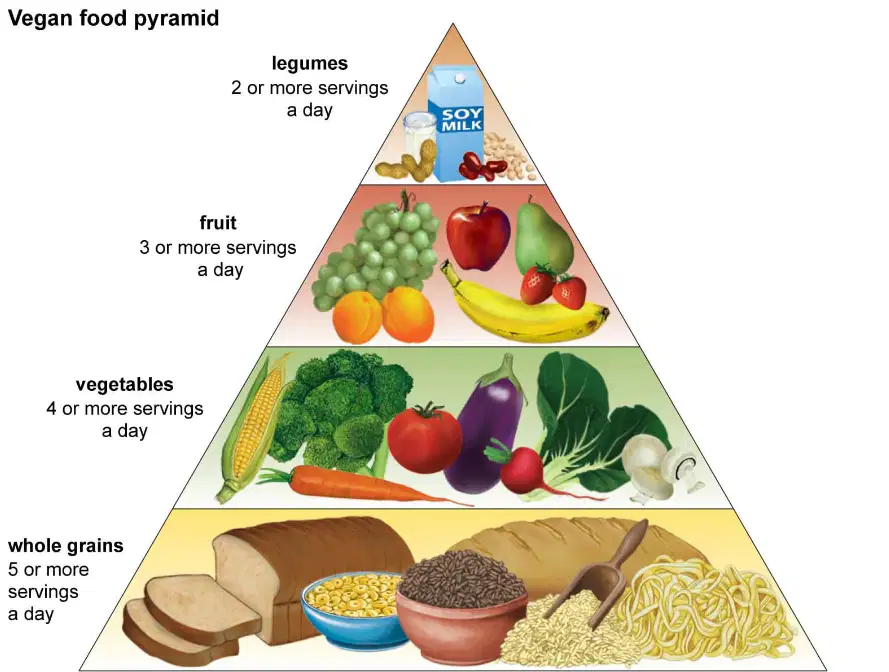
A vegan athlete wants to meet protein needs using the vegan food pyramid shown. Which combination aligns with this guidance for daily intake?
Five servings legumes and one serving fruit
Two or more servings legumes and three or more fruit
Four or more vegetables and zero whole grains
One serving legumes and two servings vegetables
Which nutrient typically needs special attention in vegan diets and may require fortified foods or supplements?
Vitamin B12 due to lack of animal-based sources
Vitamin C due to limited fruit availability
Sodium because plant foods contain none
Vitamin D because grains eliminate it entirely
Which factor would most increase daily carbohydrate needs for a 25-year-old adult?
Living in a colder climate seasonally
Having a sedentary desk-based routine
Following a low-sodium eating pattern
Training for endurance events regularly
Basal Metabolic Rate (BMR) is best defined as the energy needed to:
Maintain basic functions at complete rest
Fuel high-intensity exercise sessions
Digest and absorb mixed meals
Support growth during adolescence
A pregnant woman planning meals should prioritize which change first?
Increase calories, protein, iron, calcium, folate
Cut total fat below five percent energy
Double daily sodium beyond five grams
Eliminate carbohydrates during mornings
Which macronutrient distribution most closely aligns with WHO/FAO guidance?
Carbs 55–75%, protein 10–15%, fat 15–30%
Carbs 30–40%, protein 40–50%, fat 10–20%
Carbs 70–80%, protein 5–10%, fat 10–15%
Carbs 45–55%, protein 25–35%, fat 15–25%
Which dosage aligns with evidence-based use of caffeine for performance enhancement in adults?
2–6 g/kg taken during exercise
10–12 mg/kg taken with breakfast
2–6 mg/kg taken before exercise
0.5–1 mg/kg taken after exercise
An athlete wants better short-duration, high-intensity output across repeated sprints next week. Which supplement plan best fits this goal and timeline?
Low-dose creatine 2 g/day starting on race day
High-dose caffeine 10 mg/kg on rest days
Bicarbonate daily 0.3 g/kg for six weeks
Creatine loading 15–20 g/day for 4–7 days
What benefit–side effect pairing is most accurate for sodium bicarbonate use in intense exercise?
Greater force production with anxiety
Improved endurance with diuretic effects
Increased muscle mass with weight gain
Reduced muscle acidity with GI discomfort

