
 Worksheets
Nationalism Quiz
Total questions: 100
Worksheet time: 50mins
Name
Class
Date
1.
Which of the following factors can contribute to nationalism?
a)
Shared Religion
b)
Shared Language
c)
Shared Ethnicity
d)
All of the above
2.
1. Napoleon seized power in France during:
a)
The Storming of the Bastille
b)
The Reign of Terror
c)
The Tennis Court Oath
d)
Coup de' tat
3.
3. What pivotal event marked the formation of the National Assembly and the resolve of the Third Estate to draft a new constitution?
a)
The execution of King Louis XVI
b)
The Tennis Court Oath
c)
The storming of the Bastille
d)
The March on Versailles
4.
4. What symbolic act on July 14, 1789, is generally considered the start of the French Revolution?
a)
The Declaration of the Rights of Man and of the Citizen
b)
The adoption of the tricolor flag
c)
The Flight to Varennes
d)
The storming of the Bastille
5.
5. Which document, adopted in August 1789, proclaimed that 'Men are born and remain free and equal in rights' and was a key statement of revolutionary ideals?
a)
The Declaration of the Rights of Woman and of the Female Citizen
b)
The Constitution of 1791
c)
The Declaration of the Rights of Man and of the Citizen
d)
The Napoleonic Code
6.
6. The Women's March on Versailles in October 1789 primarily resulted in
a)
The creation of the Committee of Public Safety
b)
The royal family being forced to move from Versailles to Paris
c)
King Louis XVI signing the new Constitution
d)
The complete abolition of the monarchy
7.
7. Which radical political faction dominated the National Convention during the Reign of Terror, drawing much of its support from the Parisian populace?
a)
The Jacobins
b)
The Feuillants
c)
The Royalists
d)
The Girondins
8.
9. Who was the dominant figure in the Committee of Public Safety, whose execution in July 1794 brought the Reign of Terror to an end?
a)
Maximilien Robespierre
b)
Napoleon Bonaparte
c)
Georges Danton
d)
Jean-Paul Marat
9.
14. Who said "Let them eat cake"?
a)
Marie Wollstonecraft
b)
Elenore Roosevelt
c)
Marie Antoinette
d)
Harriet Tubman
10.
15. What is the nickname of the Guillotine during the Reign of Terror?
a)
The national Razer
b)
The Chopping block
c)
Head cutter 67
d)
The Killing machine
11.
16. In the context of the French Revolution, what was an émigré?
a)
A noble, cleric, or royalist who fled France during the Revolution for political reasons.
b)
A foreign spy sent to destabilize the Directory government.
c)
A radical Parisian working-class citizen who supported the Jacobins.
d)
A member of the revolutionary army drafted into service by the *Levée en Masse*.
12.
17. Why did France declare war on Austria?
a)
To restore the Absolute Monarch
b)
To Bring the Nation together
c)
To conqur all of Europe
d)
To kill the king of Austria
13.
18. During the Reign of Terror, what estate was killed the most?
a)
1st
b)
2nd
c)
3rd
14.
19. True or False: It was better to be executed by the Guillotine in the evening
a)
T
b)
F
15.
20. How did the Reign of Terror end?
a)
Death of Napoleon
b)
Death of Robespierre
c)
Death of King Louis
d)
Death of Marat
16.
22. Girondins are defined as....
a)
Radical/extreme revolutionaries
b)
Moderate revolutionaries
c)
A faction against the revolution
d)
A faction that wanted to restore the monarch
17.
23. What is a tithe?
a)
A tax to the church
b)
a tax to the king
c)
a tax to the bourgeoisie
d)
a tax to the National Assembly
18.
What was the main goal of the Reign of Terror?
a)
To protect the revolution by eliminating enemies of the state
b)
To expand France’s empire
c)
To restore the monarchy
d)
To end all wars in Europe
19.
3.Locke believed in all of the following EXCEPT....
a)
Limited government
b)
Right to rebel
c)
Natural rights
d)
Absolute monarchy
20.
4.What did Isaac Newton discover?
a)
Law of Gravity
b)
Law of physics
c)
Theory of relativity
d)
Diamonds
21.
5.What one did Galileo invent/ improve?
a)
Microscope
b)
The printing press
c)
Telescope
d)
Barometer
22.
6.Why was Galileo put on trial by the Catholic Church?
a)
Heresey
b)
Steeling secrets
c)
Hurting others
d)
He believed in Geocentric theory
23.
8.What was the geocentric theory?
a)
The earth is the center of the universe
b)
The sun is the center of the universe
c)
The universe doesn't have a center
d)
The center of the universe depends on the year
24.
9.Who said the following "I think, Therefore I am"
a)
Volitare
b)
Rene Decartes
c)
John Locke
d)
Montesquieu
25.
10.True or false, Isaac Newton was put on trial for heresy
a)
True
b)
False
26.
11.What enlightenment philosopher believed in separation of powers?
a)
Montesquieu
b)
John Locke
c)
Thomas Hobbes
d)
Rene Decartes
27.
12.What book did Thomas Hobbes write?
a)
The Leviathin
b)
The Wealth of Nations
c)
Communist Manifesto
d)
Mein Kampf
28.
13.Hobbes believed that humans are naturally selfish and wicked, therefore they needed what?
a)
Strong government control
b)
More power to the people
c)
A representative government
d)
A strong military
29.
14.What did Mr. Mack name his dog?
a)
Orange
b)
Banana
c)
Penny
d)
Rue
30.
15.Secularism is best defined as...
a)
Government and institutions should be separate from religion
b)
All citizens should abandon religion
c)
Following one specific faith
d)
Government supports one religion
31.
"We hold these truths to be self-evident, that all men are created equal, that they are endowed by their Creator with certain unalienable rights, among these are Life, Liberty, and the pursuit of Happiness"
Use the excerpt from the Declaration of Independence to answer the following question
16.What Enlightenment philosopher influenced the above excerpt from the Declaration?
a)
Thomas Hobbes
b)
Thomas Paine
c)
John Locke
d)
Voltaire
32.
17.What enlightenment philosopher was against cruel and unusual punishment?
a)
Rousseau
b)
Wollstonecraft
c)
Beccaria
d)
Montesquieu
33.
18.Who is the father of capitalism?
a)
Isaac Newton
b)
John Locke
c)
Thomas Hobbes
d)
Adam Smith
34.
19.What does Laissez-Faire mean?
a)
Citezens stay out of government
b)
Government keeps hands off the economy
c)
no cruel or unusual punishment
d)
When being selfish for profits unintentionally benefits society
35.

22.Why did Galileo Make the statement below?
a)
He didn't believe the Heliocentric theory was correct
b)
He lost faith in the Church
c)
He wanted to avoid being seen as weak
d)
He wanted to avoid execution
36.

24.What does the word "TRUTH" represent in the fire?
a)
Geocentric thory
b)
Heliocentric theory
c)
Social contract theory
d)
Theory of relativity
37.
25.What book did Adam Smith write?
a)
Communist Manifesto
b)
Leviathan
c)
Wealth of Nations
d)
Common Sense
38.
27.What are the three rights that John Locke Believed every person was born with?
a)
Life, Liberty, Pursuit of Happiness
b)
Freedom of speech and religion
c)
Life, Liberty, and property
d)
Liberty, Freedom, Prosperity
39.
33.Voltaire believed in these core beliefs that we have in the United States 1st amendment.
a)
Life, Liberty Property
b)
Freedom of Speech, Press, Religion
c)
Prosperity, Innovation, Choice
d)
Freedom of innovation, Progress, Property
40.
34. What is the 8th Amendment?
a)
Right to due process
b)
Freedom of speech
c)
No cruel or unusual punishment
d)
No quartering od Soldiers without consent
41.
4. The country that used the “scorched earth” policy to defeat Napoleon was:
a)
Prussia
b)
Austria
c)
Russia
d)
Spain
42.
10. The Austrian foreign minister who led the Congress of Vienna was:
a)
Louis XVIII
b)
Otto von Bismarck
c)
Prince Klemens von Metternich
d)
Lord Castlereagh
43.
11. What major organization was formed to maintain peace after the Congress?
a)
League of Nations
b)
European Union
c)
Holy Alliance
d)
Congress of Europe
44.
12. What is the scorched earth policy?
a)
Using a flamethrower
b)
Burning villages in Germany
c)
Overthrowing a government
d)
Burning everything to the ground
45.
13. All of the following are things enacted by the Congress of Vienna EXCEPT....
a)
Russia gets the "Congress of Poland"
b)
No Bonaparte rule
c)
Prussia gets Rhine River
d)
Germany gets control of poland
46.
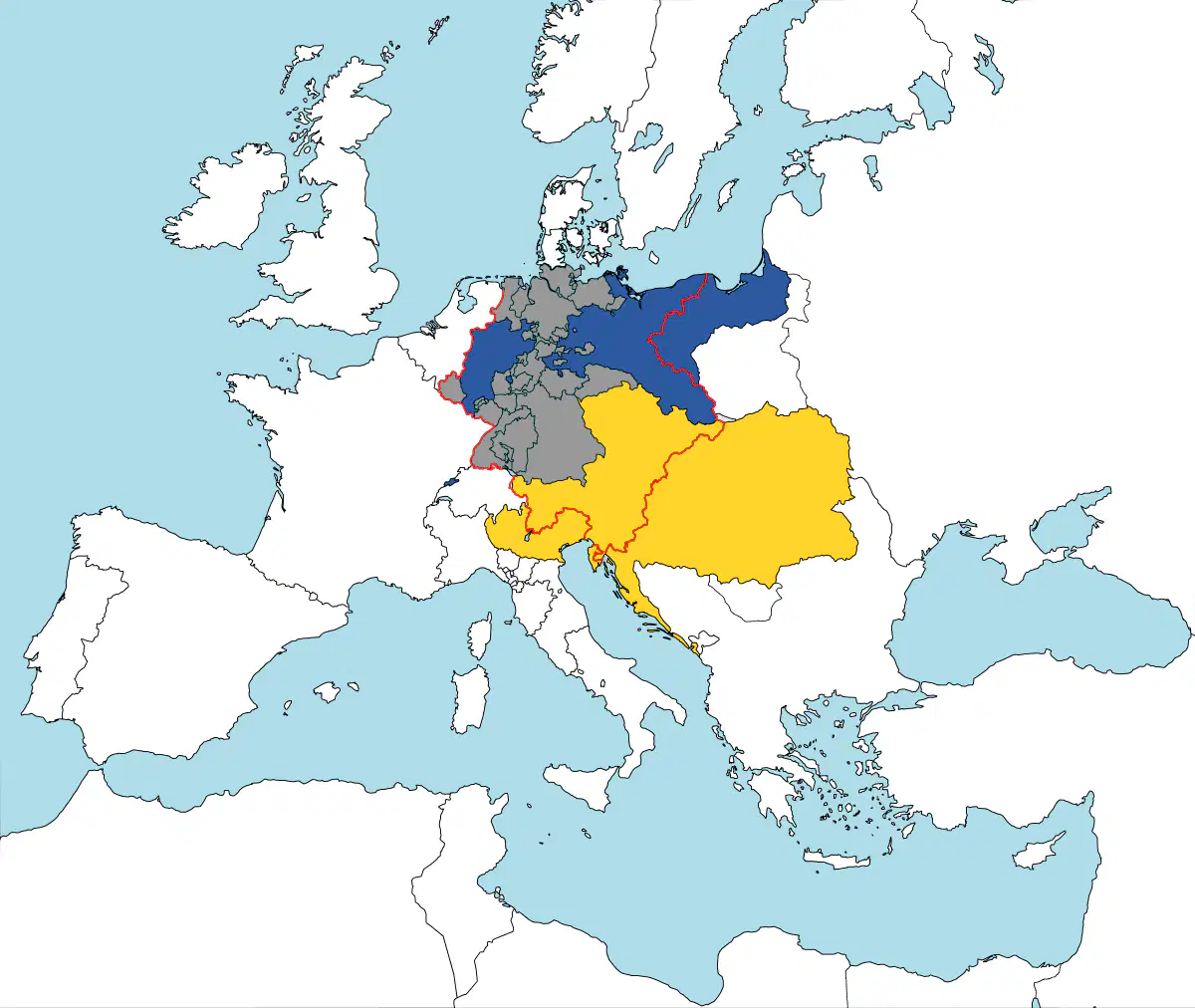
14. What does the red line on the map represent?
a)
The Rhine River
b)
The German Confederation
c)
Napoleons empire
d)
Russia getting access to the Congress of Poland
47.
15. True of False: Guerilla warfare was used by Portugal to defeat Napoleon
a)
True
b)
False
48.
18. Why Napoleon Crown Himself as Emperor?
a)
To show his love and commitment to the French people
b)
He was better than King Louis
c)
He was above the Church
d)
He was above the Congress of Vienna
49.
19. Why did Napoleon lose at the battle of Trafalgar?
a)
GB Naval superiority
b)
Spain's Naval superiority
c)
Napoleon overestimated how far GB was
d)
GB had as harsh winter
50.
22. Nationalism is defined as...
a)
Love for your leader
b)
Appreciation for you family
c)
Appreciation or your allies
d)
Love for your country/ethnic group
51.
23. Who makes up the Quadruple Alliance?
a)
Sweden, Portugal, Spain, France
b)
France, GB, Prussia, Sweden
c)
GB, Russia, Austria, Prussia
d)
Spain, Norway, Germany, Austria
52.
26. What did the Concordat do?
a)
Removed Catholicism from France
b)
Catholicism is the main religion again
c)
Napoleon agreeing to let the Catholic Church have control of part of the government
d)
The pope trying to maintain power over France
53.
All of the following of characteristic of Capitalism EXCEPT....
a)
Private ownership
b)
Social Classes
c)
Govt hands off
d)
Government interverence
54.
Read and answer the following questions
Excerpt (Friedrich Engels, 1844):
"The workers are forced to live in the most wretched and unhealthy dwellings. Whole families are crowded into a single room, while filth and refuse accumulate in the narrow streets. Such conditions inevitably destroy both the health and the morale of the laborers."
Based on the excerpt, what is Engels’ main argument about the living conditions of industrial workers?
a)
Workers chose to live in crowded areas because it strengthened their community ties.
b)
Poor housing conditions harmed both the physical and moral well-being of workers.
c)
Industrial cities provided workers with clean, affordable housing options.
d)
The government had already solved most of the housing problems in working-class districts.
55.
What does arbitration mean?
a)
3rd party that settles a dispute
b)
A person that works for factory owners
c)
A 3rd party that suggests what the company and workers should do.
d)
A person that works for labor unions
56.
True of False: Building Skyscrapers was a solution to overcrowding
a)
True
b)
False
57.
Who defended the free-market system of capitalism in the book, The Wealth of Nations?
a)
Adam Smith
b)
Karl Marx
c)
John Stuart Mill
d)
Robert Owen
58.
What was the Industrial Revolution?
a)
Increased purchases of land by wealthy land owners to cultivate larger fields
b)
Increased populations of urban areas during the 1800's
c)
A widespread use of teenagers as factory laborers who worked 14 hour days
d)
Increased output of machine-made goods that began in GB in the 18th century
59.
What were the three factors of production required to drive Industrialization?
a)
Labor, Oil, Steel
b)
Raw materials, natural resources, man-made goods
c)
Capital, water, Steel
d)
Land, Labor, Capital
60.
The idea that the government should stay out of businesses without any regulation or interference is known as
a)
Utilitarianism
b)
Socialism
c)
Laissez-Faire
d)
The Malthusian Dilemma
61.
What was the name of the voluntary associations of workers seeking labor reforms?
a)
Strikes
b)
Unions
c)
Arbitration
d)
Cooperation
62.
Which of the following was a key idea of Capitalism?
a)
Government should protect the nations industries from foreign competition
b)
Government should establish minimum wages and maximum working hours
c)
Government should have complete control of the means of production
d)
Government should not interfere in economic matters
63.
Read the following paragraph and answer the question:
During the Industrial Revolution in England, many children worked long hours in factories and mines. They often began their shifts before sunrise and worked until late at night, sometimes for only a few pennies a day. The conditions were harsh—machines were dangerous, the air was dusty, and there were few breaks. Factory owners preferred hiring children because they could pay them less and their small size allowed them to fit into tight spaces to fix machinery. Reformers eventually spoke out against these conditions, leading to new laws that limited child labor and improved safety standards.
Question:
Which statement best summarizes the main idea of the passage?
a)
Children enjoyed working in factories because they earned a steady income
b)
Factory owners hired children mainly because they were strong and skilled workers.
c)
Child labor during the Industrial Revolution exposed children to long hours, unsafe conditions, and unfair pay until reforms were made.
d)
Most children worked only a few hours a day and were protected by strict safety laws.
64.
The movement of people from their rural farms into the city is...
a)
Cost of living
b)
Urbanization
c)
Arbitration
d)
Industrialization
65.
During the Industrial Revolution why did the factory owners preferer to hire children and women over men?
a)
They could pay women and children more
b)
The could pay women and children less
c)
The were less likely to form unions
d)
They were more likely to from unions
66.
What was the 16th amendment?
a)
Sales tax
b)
Ended monopolies
c)
Income tax
d)
Created labor unions
67.
True or False. Henry Ford created the assembly line to mass produce the Model T automobile
a)
True
b)
False
68.
What came first, the Industrial Revolution or the Agricultural Revolution?
a)
Industrial Revolution
b)
Agricultural Revolution
69.
One of the benefits of crop rotation was it...
a)
Divided land into small pieces
b)
Kept the soil fertile
c)
Used less land
d)
Caused people to leave their land
70.
In which country did the Industrial Revolution begin?
a)
Germany
b)
United States
c)
England
d)
France
71.
What two men wrote the Communist Manifesto?
a)
Marx and Smith
b)
Engels and Smith
c)
Smith and Locke
d)
Marx and Engels
72.
All of the following were complaints about working conditions during the IR EXCEPT...
a)
Long hours
b)
Crowded tenements
c)
Child labor
d)
Low wages
73.
As a result of the Industrial Revolution, western countries started to dominate the world.
a)
True
b)
False
74.
Which of the following is NOT a problem as a result of Urbanization?
a)
Lack of sanitation
b)
Overcrowding
c)
A shift of world power
d)
Increase in crime
75.
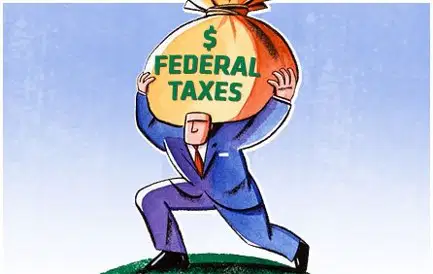
What does the following political cartoon represent?
a)
Flat Tax
b)
Progressive tax
c)
Sales tax
d)
Income tax
76.
Why did the Chinese restrict the European traders?
a)
China was afraid of the Europeans
b)
China already had good trade partners
c)
China had everything they needed in abundance
d)
China wanted to avoid war
77.
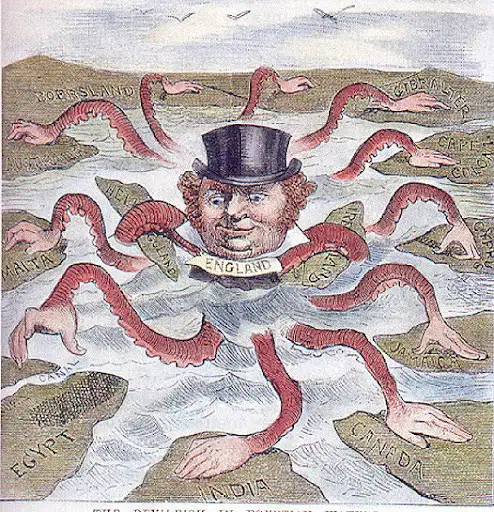
What message is this political cartoon trying to convey about England during the age of imperialism?
a)
A. England depended on other countries for protection and survival.
b)
B. England controlled and dominated many regions of the world through imperialism.
c)
C. England believed imperialism helped colonized peoples gain independence.
d)
D. England was threatened by the expansion of other European empires.
78.
All of the following are motives for European imperialism EXCEPT...
a)
Political
b)
Economic
c)
Religious
d)
Social
79.
What is a Sphere of Influence?
a)
Region governed by a foreign power
b)
A mother country that protects a smaller one
c)
An area where a outside power claims exclusive rights and investments
d)
Less developed nation controlled by a private business
80.
T OR F: Indirect control of a colony is when the imperialist powers uses local people to run the colony.
a)
True
b)
False
81.
What continent is the Middle East located on?
a)
Europe
b)
Asia
c)
Africa
d)
Australia
82.
The meeting at which 14 European countries set rules for the division of Africa (1884-1885)
a)
Berlin Conference
b)
Treaty of Versailles
c)
Treaty of London
d)
Paris Conference
83.
What one of the following is a positive effect of imperialism in Africa?
a)
Improved sanitation, hospitals, would lead to higher life span.
b)
Traditional farming was replaced by cash crop farming
c)
Artificial borders
d)
Increase in taxes.
84.
Why was the Balkan region often described as a “powder keg” in the early 1900s?
a)
It had large stockpiles of weapons ready for war.
b)
It was an industrial center competing with Western Europe.
c)
It contained many ethnic groups, rising nationalism, and ongoing conflicts that could quickly spark war.
d)
It was controlled by a single powerful empire that ruled peacefully.
85.
What was the result of the Boxer Rebellion?
a)
Humiliating defeat for GB
b)
Humiliating defeat for the rebel boxers
c)
The boxers and GB signed a peace deal
d)
The war ended with the withdraw of GB from China
86.
the idea that Europeans had an obligation to spread their culture, values, and religion around the world
a)
Black mans Burden
b)
White mans burden
c)
Religious motive
d)
Economic motive
87.
The adding of a territory to a country; such as the U.S. addition of Hawaii in 1898
a)
Annexation
b)
Colonialism
c)
Imperialism
d)
Siezure
88.
The name for the policy in which China would not be divided amongst imperial powers, but shared equally
a)
Open door policy
b)
Annexation
c)
Monroe Doctrine
d)
Geopolitics
89.
What drug did the British get the Indians addicted to in order to trade?
a)
Cannibis
b)
Herroine
c)
Opium
d)
Alcohol
90.
Name given to the frantic European competition to claim parts of the African Continent
a)
Scramble for Africa
b)
Escape to Africa
c)
Fight for the continent of Africa
d)
Fight to secure Africa
91.
Who was the leading force behind German unification?
a)
Otto von Bismarck
b)
Giuseppe Manzizni
c)
Kaiser Willham
d)
Count Camillo Cavour
92.
A belief in realistic politics is known as what?
a)
Imperialism
b)
Extraterritoriality
c)
Realpolitik
d)
Nationalism
93.
T or F: Like German unification, Italy was unified under the leadership of one person.
a)
True
b)
False
94.
What is the third Reich?
a)
Nazi Germany
b)
German Unification
c)
Reichstag
d)
Holy Roman Empire
95.
What is the second Reich?
a)
Reichstag
b)
German Unification
c)
Holy Roman Empire
d)
Nazi Germany
96.
What type of government was Austria forced into to maintain peace with the Hungarians?
a)
Traditional Monach
b)
Democracy
c)
Constitutional Monarch
d)
Dual Monarch
97.
Otto Von Bismarck said he would Unify Germany through..
a)
Steel and coal
b)
Blood and Iron
c)
Steel and blood
d)
Iron and steel
98.
In what war did Prussia defeat France in 6 weeks?
a)
Austro-Prussian War
b)
Russian-Prussian War
c)
German Civil War
d)
Franco-Prussian War
99.
Nationalism is defined as...
a)
A movement focused only on improving international trade agreements
b)
Love for a country other than your own.
c)
The belief that all countries should merge into one global government
d)
Extreme form of patriotic feeling and superiority
100.
Who created the army called the "Red Shirts" to take control of Sicily and most of southern Italy?
a)
Otto von Bismarck
b)
Manzzini
c)
Giribaldi
d)
Cavour
100 %

