
 Worksheets
Unit 2: Day 3
Total questions: 30
Worksheet time: 15mins

Which statement best defines a physical property of a material?
A feature dependent on the sample’s external shape
A behavior only seen during combustion experiments
A trait requiring a chemical reaction to be detected
A measurable characteristic observed without changing composition
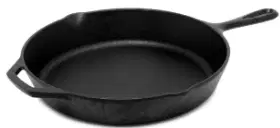
Density is most accurately described as:
Force per unit cross‑sectional area
Volume per unit mass of a material
Weight per surface area of a material
Mass per unit volume of a material

Which SI unit is correct for expressing density?
Kilograms per square metre (kg/m²)
Newtons per square metre (N/m²)
Kilograms per cubic metre (kg/m³)
Grams per litre (g/L)
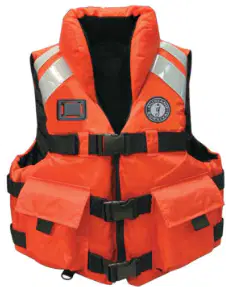
Which statement correctly describes an intrinsic property like density?
Independent of the amount of material present
Varies only with external temperature settings
Changes when the sample size increases
Depends on object geometry and dimensions

A design team must choose material for aircraft wings to improve fuel efficiency. Which choice aligns with the principle described?
Choose dense ceramics to enhance heat retention
Pick heavy steels to increase wing stiffness
Select low‑density aluminum alloys to reduce weight
Use high‑density cast iron to resist deformation
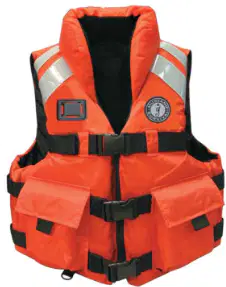
Which scenario best illustrates buoyancy considerations in material selection?
Using dense polymers to increase flotation force
Using materials less dense than water for life vests
Choosing denser metals to sink faster in water
Selecting heavy alloys to stabilize floating docks
Which statement best describes the mechanism of thermal expansion in solids when heated?
Atoms gain energy and vibrate more, increasing separation
Crystals rotate as units, keeping atomic spacing constant
Electrons migrate permanently, changing chemical composition
Atoms lose energy and pack closer, reducing separation
What does the coefficient of linear thermal expansion (α) quantify for a material?
Stress developed per degree of heating
Heat capacity per unit volume
Total mass change per degree Celsius
Change in length per degree per unit length
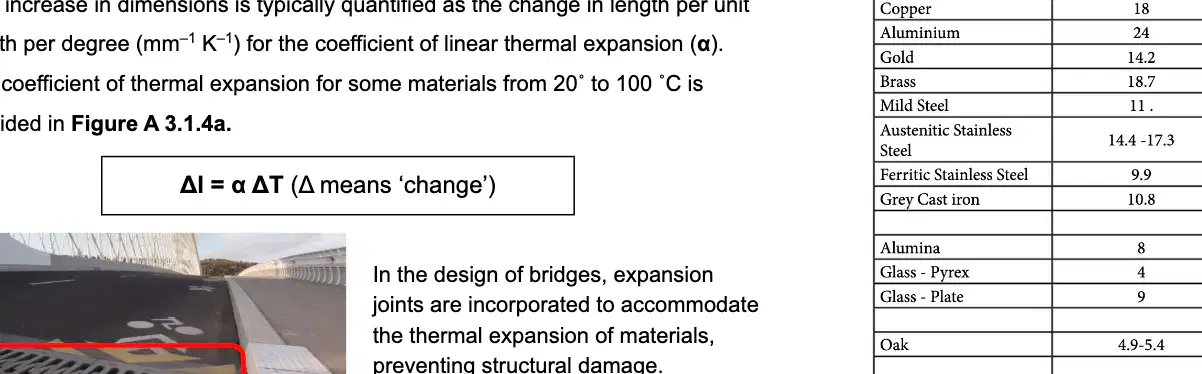
Using Δl = α ΔT, a 2 m long aluminium bar (α = 24×10⁻⁶ K⁻¹) warms by 50 °C. Approximate increase in length Δl is:
0.24 mm
1.2 mm
2.4 mm
4.8 mm
Which material from the table has the lowest mean coefficient of thermal expansion at 20 °C?
Graphite
Ferritic stainless steel
Alumina
Glass - Pyrex

Why are expansion joints incorporated into bridge design?
To prevent corrosion from moisture ingress
To increase stiffness under static loading
To reduce electrical resistance of steel members
To accommodate dimensional change from thermal expansion
From 20 °C to 100 °C, which pair correctly orders materials by increasing α?
Alumina < Gold < Pyrex
Mild steel < Grey cast iron < PVC
Graphite < Brass < Aluminium
Copper < Silver < Nylon 6.6

A 1.5 m steel rail (mild steel α ≈ 11×10⁻⁶ K⁻¹) experiences a 30 °C rise. Which design choice best limits buckling risk?
Use gaps sized for calculated expansion
Increase rail cross-section thickness only
Apply paint with low thermal conductivity
Select higher strength fasteners only
Interpreting property tables, which note is most appropriate when quoting α values for polymers like PVC?
Average α across all materials for simplicity
Ignore units since polymers are non-metallic
Assume constant α independent of temperature
State the temperature range because α varies with phase
A steel rod measured 250 mm at 600 °C. Using α = 11 × 10⁻⁶ K⁻¹, approximately how much does its length change when cooled to 20 °C?
6.38 mm contraction over the cooling range
5.00 mm contraction over the cooling range
6.38 mm expansion over the cooling range
0.63 mm contraction over the cooling range
After cooling from 600 °C to 20 °C, what is the rod’s final length if it was 250 mm at 600 °C?
Approximately 244 mm at room temperature
Approximately 250 mm at room temperature
Approximately 256 mm at room temperature
Approximately 246 mm at room temperature
Which formula correctly relates linear change to temperature change for uniform materials?
Δl = α ΔT
Δl = α ΔT only for linear expansion
Δl = α l ÷ ΔT for linear expansion
Δl = α ÷ l ΔT for linear expansion
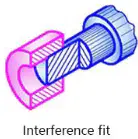
A steel housing must accept a 150 mm pin with 0.15 mm interference. What diameter should the housing be machined to at 20 °C before heating?
150.00 mm at room temperature
150.15 mm at room temperature
149.85 mm at room temperature
149.50 mm at room temperature
If α = 11 × 10⁻⁶ K⁻¹, how much diameter expansionoccurs for a 149.85 mm steel housing?
0.00114835 mm
0.00164835 mm
0.0164835 mm
0.000164835 mm
To insert the 150 mm pin with 1 mm insertion clearance, how much total expansion must the housing gain from heating?
1.00 mm total diameter expansion
0.15 mm total diameter expansion
1.15 mm total diameter expansion
0.30 mm total diameter expansion
Given 0.00164835 mm expansion per degree, what temperature rise is needed to achieve 1.15 mm expansion?
Approximately 698 °C above room temperature
Approximately 115 °C above room temperature
Approximately 698 K absolute temperature
Approximately 350 °C above room temperature
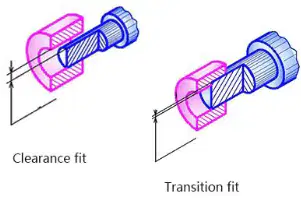
Which statement best distinguishes clearance fit from interference fit in the pin–housing scenario?
Clearance fit allows free insertion with space
Interference fit always needs cooling of both parts
Clearance fit requires heating to force insertion
Interference fit provides sliding movement with space
Which property is defined as the rate at which heat passes through a material slab, expressed in W/m·K?
Thermal conductivity of a material
Thermal emissivity of surfaces
Latent heat of fusion in substances
Specific heat capacity of solids

For a saucepan with a metal body and plastic handle, which material pairing best matches the intended heat behavior?
Plastic body, aluminum handle
Wood body, steel handle
Ceramic body, copper handle
Copper body, plastic handle
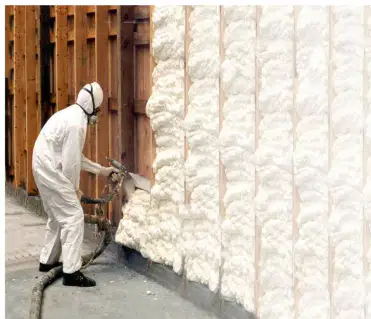
Which material selection best reduces heat transfer in building walls?
Fiberglass or foam insulation
Aluminum sheet interior
Copper mesh lining
Steel plate cladding
What is the melting point of a substance?
Temperature where vapor condenses
Temperature of maximum heat emission
Temperature of highest thermal conductivity
Temperature where solid becomes liquid
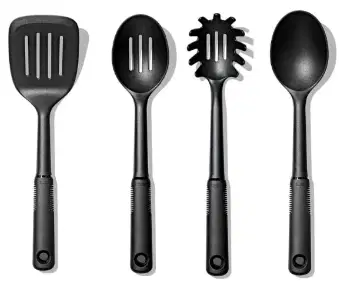
Why are cooking utensils chosen with melting points well above typical stovetop temperatures?
To enhance optical reflectivity
To reduce utensil mass and weight
To improve flavor and aroma
To ensure safety and durability
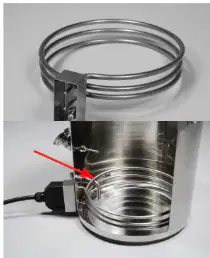
Which statement correctly contrasts electrical resistivity and conductivity?
Resistivity opposes current, conductivity enables it
Resistivity measures heat, conductivity measures light
Resistivity equals conductivity numerically
Resistivity is in S/m, conductivity in Ω·m
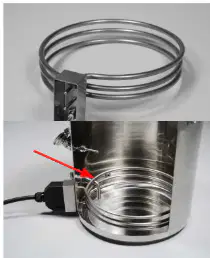
Why is nichrome used for toaster and kettle heating elements?
Low melting point allows shaping
High resistivity generates heat
Very low resistivity prevents heat
High thermal conductivity cools fast
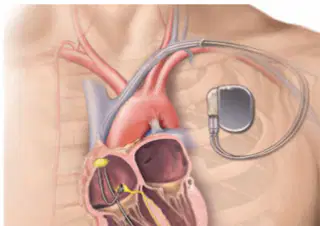
In implantable devices like pacemakers, what material property is prioritized for internal leads and contacts?
Extremely low magnetic permeability
Low thermal conductivity only
High optical transparency
Biocompatible electrical conductivity

