
 Worksheets
Periodic Table and e- configuration
Total questions: 26
Worksheet time: 52mins

Which element has seven valence electrons? (Belongs to the Halogen family)
Chlorine (Cl)
Lead (Pb)
Argon (Ar)
Sulfur (S)
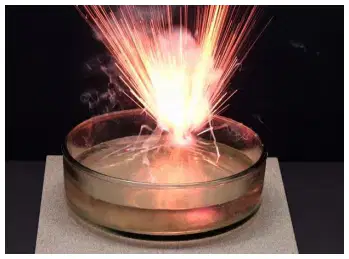
Which of the following react violently with water, producing hydrogen gas?
Alkali metals
Noble gases
Halogens
Transition metals
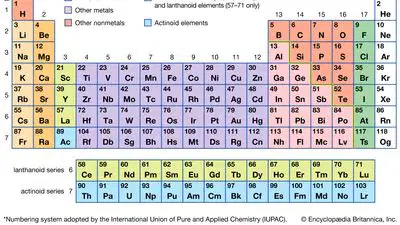
Which of the following properties can be expected for halogens such as fluorine (F) and chlorine (Cl) based on their valence e-? (SELECT TWO CORRECT ANSWERS).
Gain one e- during chemical reaction
React readily with Group 1 metals
Same number of electron shells
Similar reaction rates
The Halogen group has an oxidation number of -1. Why?
The Halogen group will gain one electron, therefore have an oxidation number of -1.
The Halogen group will lose one electron, therefore have an oxidation number of -1.
The Halogen group will lose seven electrons, therefore have an oxidation number of -1.

Dimitri Mendeleev is most famous for-
organizing elements by atomic mass
arranging the Periodic Table by chemical properties
calculating atomic number of many elements
discovering many new elements, such as oxygen


Metals (like Na) typically _____ electrons in the formation of ionic bonds.
Gain
Lose
Keep the same
Which list of elements from Group 2 on the Periodic Table is arranged in order of increasing atomic radius? (Smallest to Largest)
Be, Mg, Ca
Ca, Mg, Be
Ba, Ra, Sr
Which electron configuration belongs to a Sulfur?
1s2 2s2 2p6 3s2 3p4
1s2 2s2 2p6 3s2 3p6
1s2 2s2 2p6 3s2 3p7
1s2 2s2 2p6 3p7
Put the following in order of increasing ionization energy:Neon (Ne), Lithium (Li), Carbon (C)
Put these in increasing order of electronegativity:
C, H, and O
Covalent bonds occur when electrons are _______________________.
Transferred
Shared
Lost
Gained

What is the total electrons that is shown the given orbital diagram?
6
7
8
9
Which element is represented in the given orbital diagram?
Carbon (C)
Hydrogen (H)
Nitrogen (N)
Oxygen (O)
Subshell are represented by
a box
letters s, p, d, and f
a number
none the choices.
states that electrons that is sharing an orbital have opposite spins
electrons will occupy an empty orbital when it is available in that subshell

Elements of the same ______________ have the same number of valence electrons, which determines the elements chemical properties.
Period
Row
Group
Atoms are most stable when their outermost shell is full. If their outermost shell is not full, _______ to have a filled outer shell to become stable.
atoms will gain
atoms will lose
will share
will do nothing

