
 Worksheets
Third Periodical Test in TLE 9 EIM ACCURATENESS
Total questions: 50
Worksheet time: 55mins
What is the main purpose of an electrical circuit?
To create heat
To store energy
To act as a barrier
To allow electricity to flow and perform work
Which component is essential for creating a closed loop in a circuit?
Light bulb
Power source
Switch
Wire
What type of circuit has components arranged in a single path?
Combination Circuit
Open Circuit
Parallel Circuit
Series Circuit
In a parallel circuit, what happens if one component fails?
The entire circuit fails
The circuit becomes open
The power source is damaged
Other components continue to operate
What instrument is used to measure voltage in a circuit?
Ammeter
Kilowatt meter
Ohmmeter
Voltmeter
Which tool is commonly used to connect wires in a circuit?
Multimeter
Pliers
Screwdriver
Wire connector
What does a switch do in an electrical circuit?
It acts as a load
It measures voltage
It generates electricity
It controls the flow of current
What is the purpose of testing electrical circuits?
To decorate the circuits
To reduce energy consumption
To ensure safety and performance
To increase the circuit's complexity
What happens when a switch is open in a circuit?
The circuit is broken
The circuit is complete
Current flows continuously
The load receives full power
Which of the following is NOT a purpose of electrical testing?
Ensuring safety
Increasing resistance
Confirming functionality
Verifying compliance with standards
Which material is typically used as a load in a basic electrical circuit?
Battery
Light bulb
Switch
Wire
What is the primary role of a power supply in a circuit?
To store energy
To measure current
To provide resistance
To supply electrical energy
What is a common safety hazard associated with electrical circuits?
Heat
Light
Noise
Shock
Choose the letter of the correct answer. Which testing method would verify the operational functionality of a light bulb in a circuit?
Checking voltage
Measuring resistance
Observing illumination
All the above
If two switches control two bulbs in a circuit, how can you ensure that both bulbs are turned off?
Remove the bulbs
Close both switches
Open both switches
Only close one switch
Why is it important to follow safety standards in electrical installations?
To avoid legal issues
To increase complexity
To make the installation look good
To ensure proper functionality and prevent hazards
What does an open circuit mean?
Circuit is complete
Current flows normally
Circuit has high voltage
There is a break in the circuit
Why are standard symbols important in electrical diagramming?
To increase power
To reduce wiring cost
To make diagrams colorful
To ensure universal understanding
What happens if a circuit has a short circuit?
Voltage disappears
Resistance increases
Current stops flowing
Excessive current flows
What is the purpose of labeling components in a diagram?
Decoration
Identification and clarity
Increase resistance
Reduce current
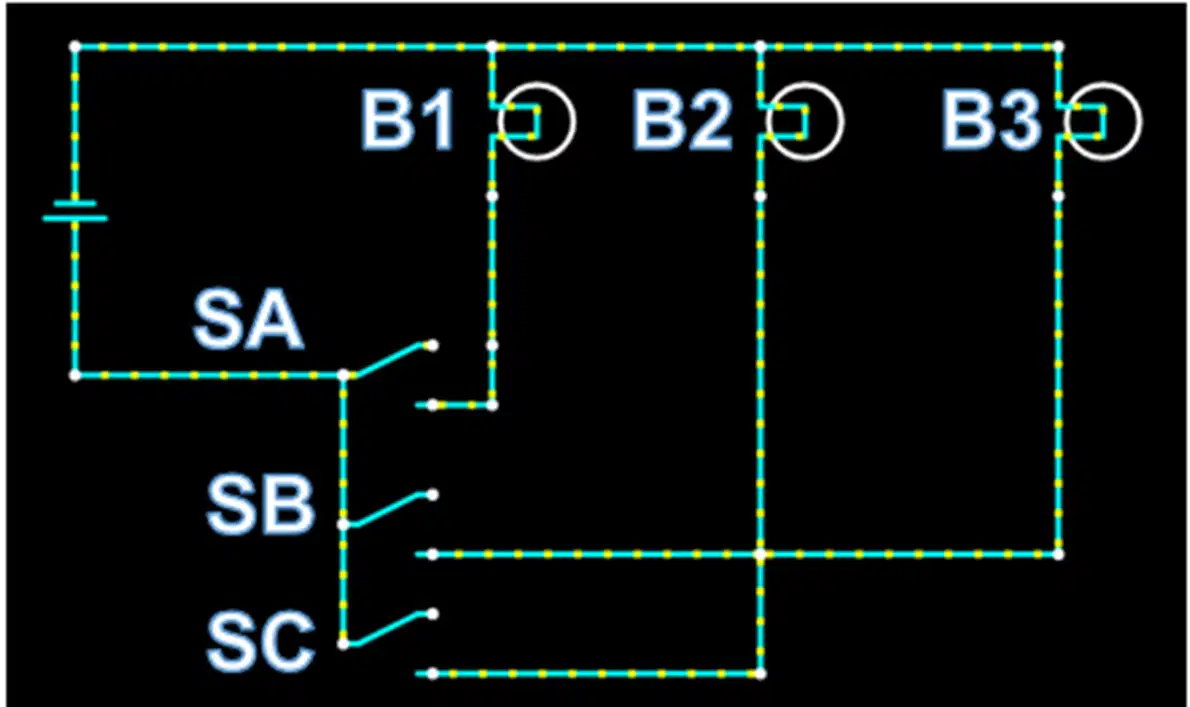
Which of the following describes the given schematic diagram?
The circuit consist of two bulbs and two switches
The circuit consist of two bulbs and three switches
The circuit consist of three bulbs and two switches
The circuit consist of three bulbs and three switches
Which switch controls bulb 1?
Switch A
Switch B
Switch C
Both Switch B and C
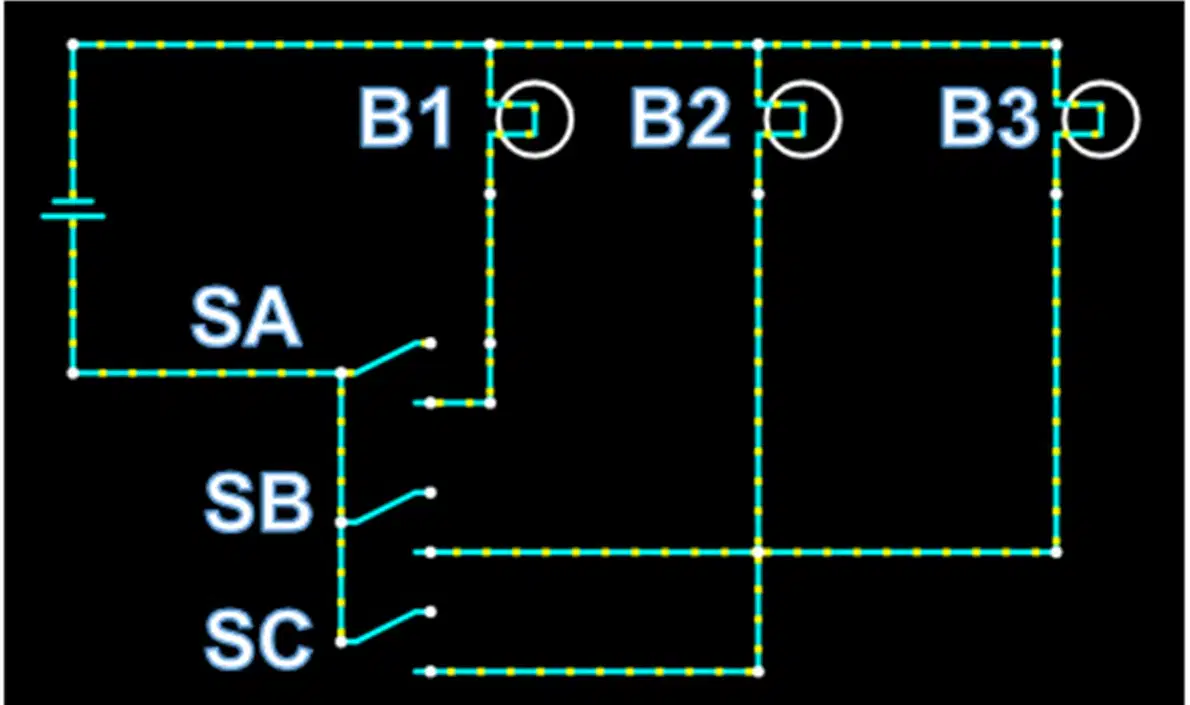
Which switch controls bulb 2?
Switch A
Switch B
Switch C
Both Switch B and C
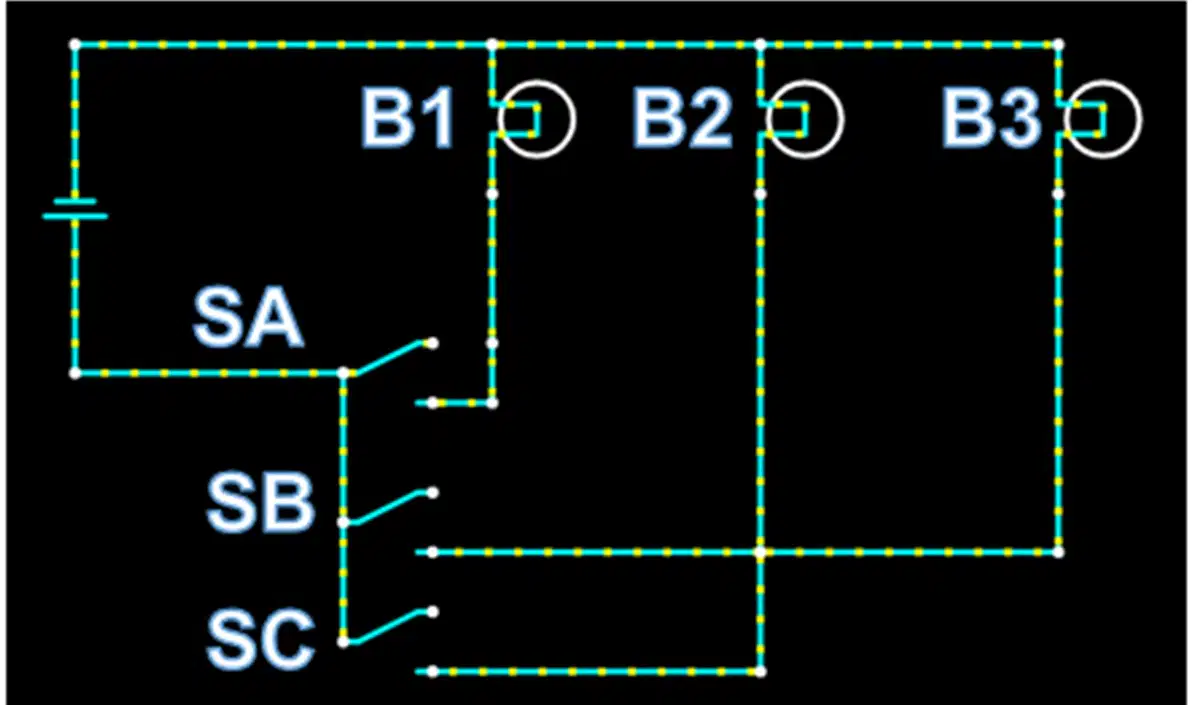
Which switch controls bulb 3?
Switch A
Switch B
Switch C
Both Switch B and C
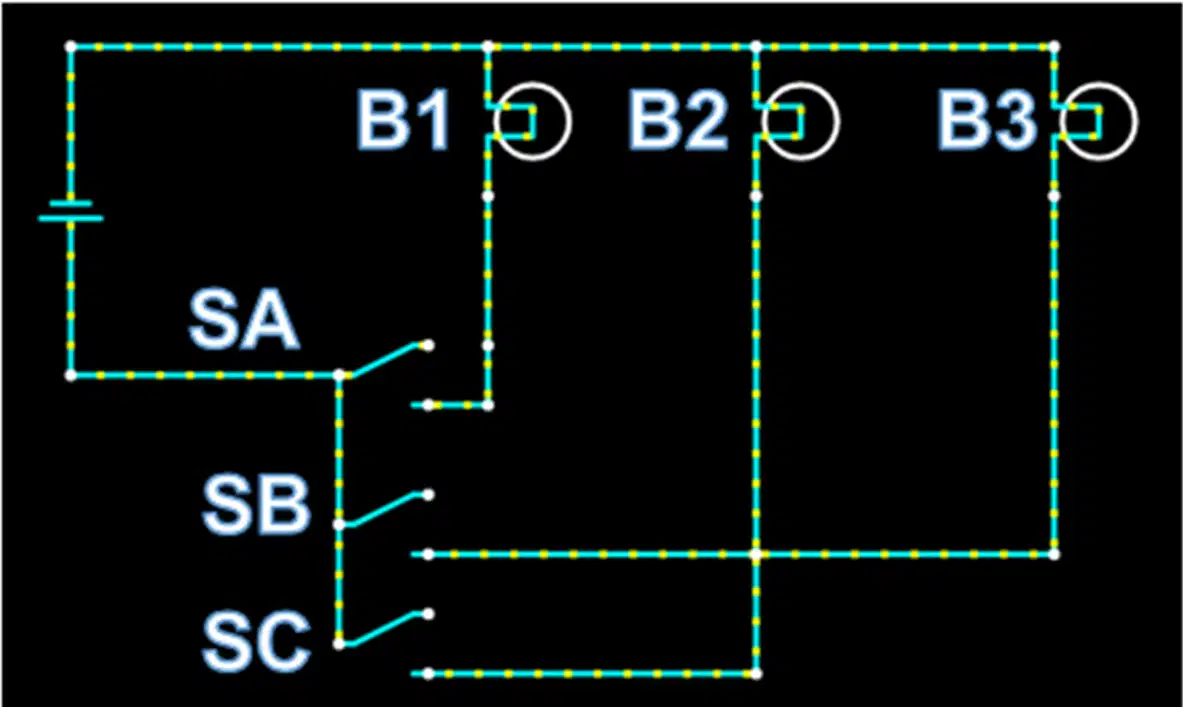
Which of the following statement is TRUE in relation to the given circuit?
When switch B is ON, only bulb 1 is lit.
When switch B is ON, bulb 1 and 2 are lit.
When switch B is ON, bulb 1 and 3 are lit.
When switch B is ON, bulb 2 and 3 are lit.
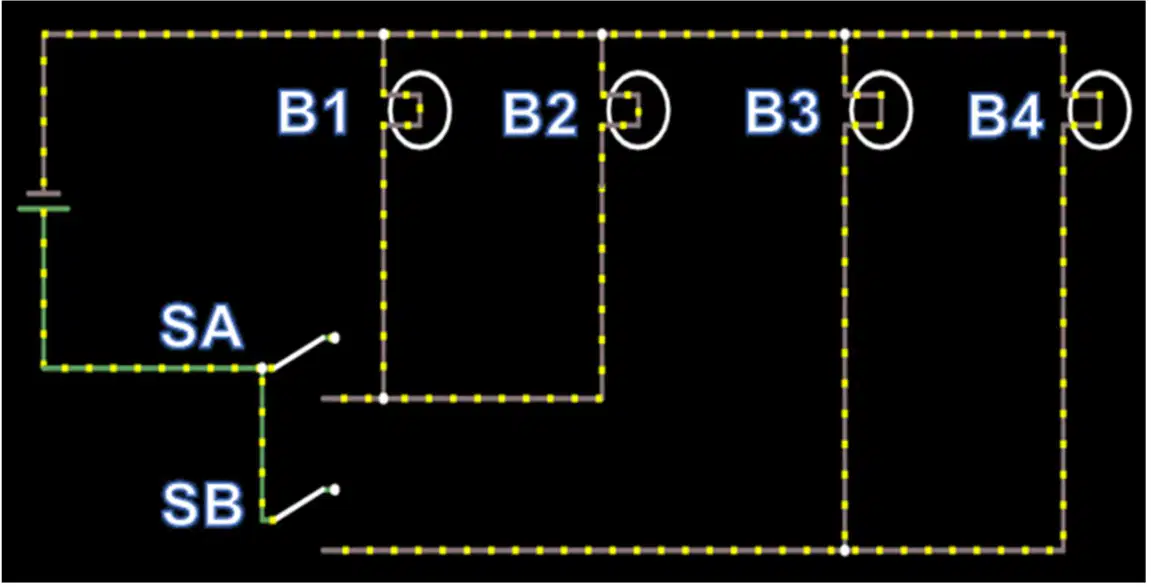
Which of the following describes the given schematic diagram?
The circuit consist of three bulbs
and two switches
The circuit consist of three bulbs
and two switches
The circuit consist of four bulbs and
two switches
The circuit consist of four bulbs and
four switches
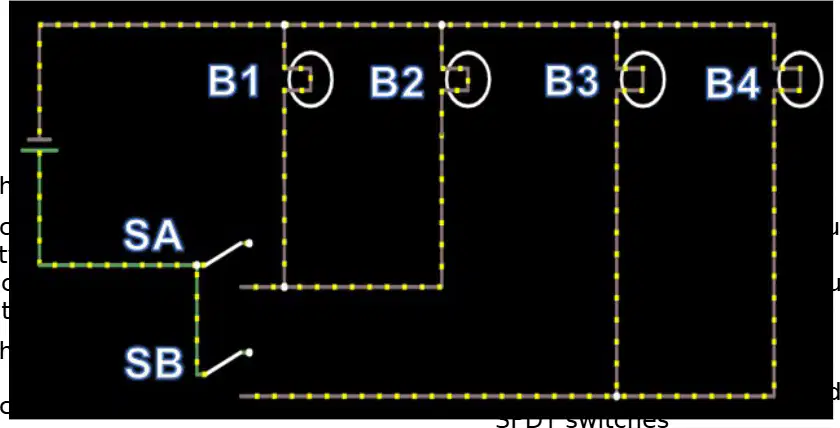
Which of the following is TRUE in the given circuit?
The circuit is using SPST switches
The circuit is using SPDT switches
The circuit is using SPST and
SPDT switches
The circuit is using SPDT and
DPDT switches
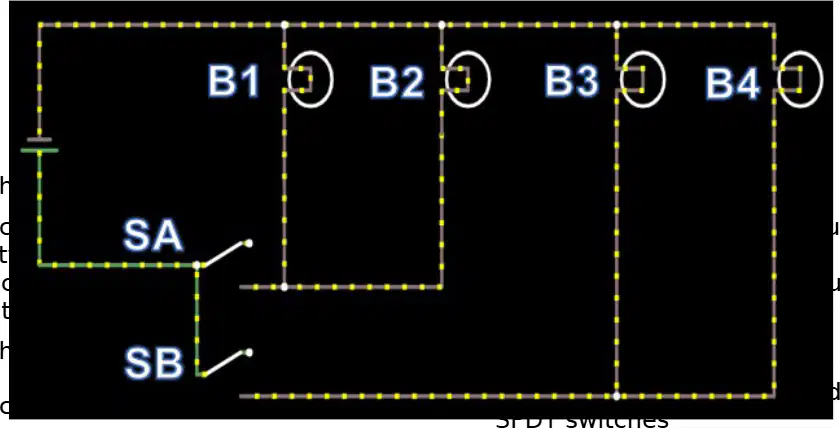
Which switch controls bulb 1?
Switch A
Switch B
Switch A and B
None
Which switch controls bulb 3?
Switch A
Switch B
Switch A and B
None
Which switch controls bulb 4?
Switch A
Switch B
Switch A and B
None
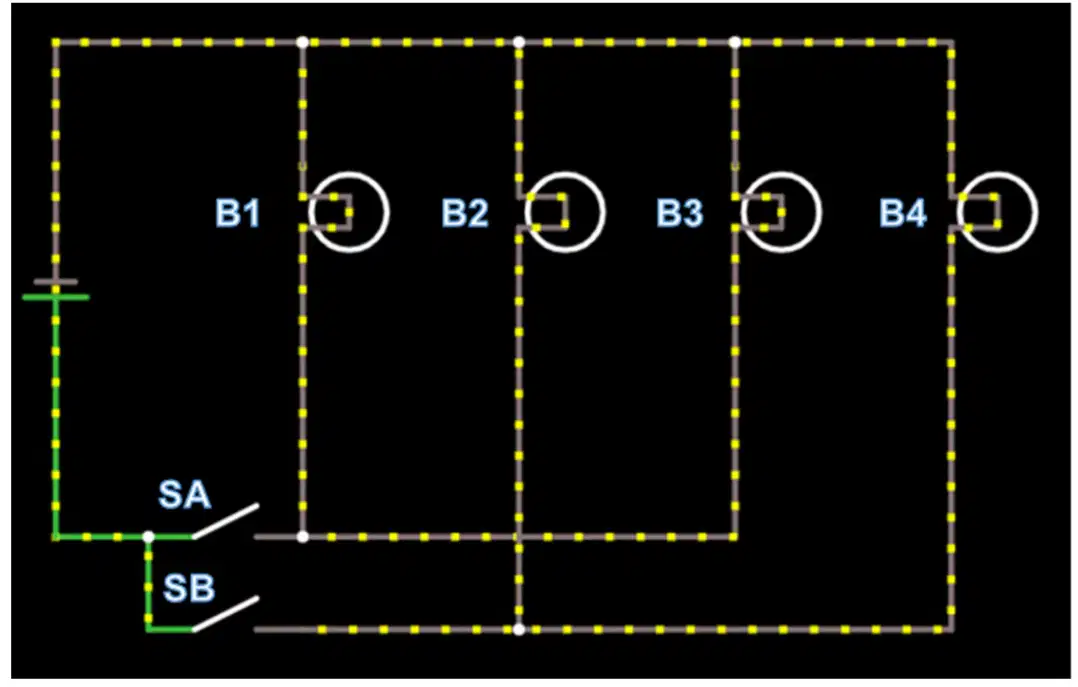
Which of the following describes the given schematic diagram?
The circuit consist of three bulbs
and two switches
The circuit consist of three bulbs
and two switches
The circuit consist of four bulbs and
two switches
The circuit consist of four bulbs and
four switches
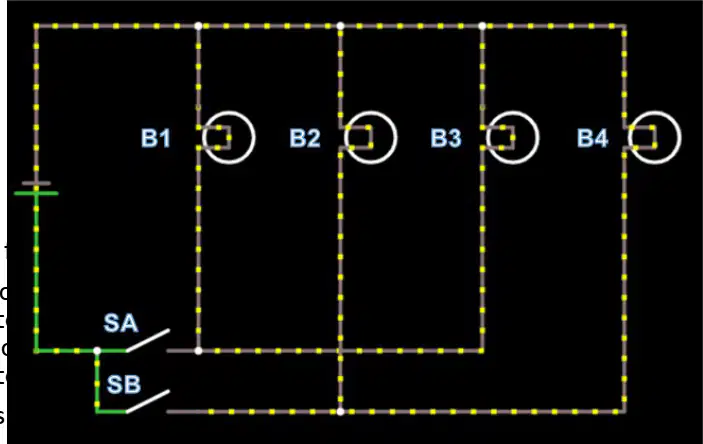
Based on the same schematic diagram with switches SA and SB, which bulb is controlled by switch A?
Bulb 1
Bulb 2
Bulb 1 and 3
Bulb 2 and 4
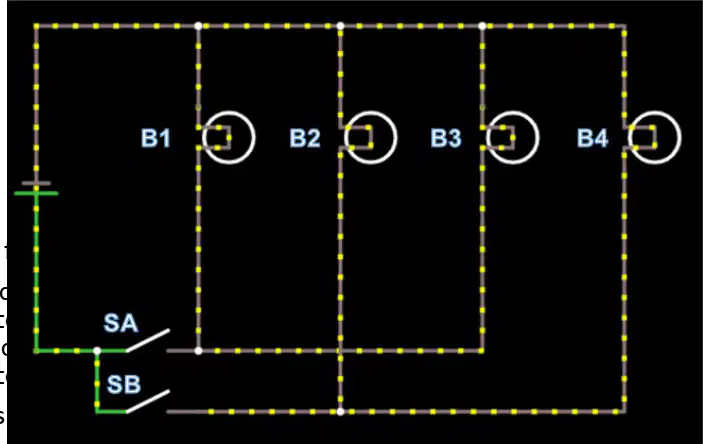
Which bulb is controlled by switch B in the schematic diagram with SA and SB and bulbs B1–B4?
Bulb 3
Bulb 4
Bulb 1 and 3
Bulb 2 and 4
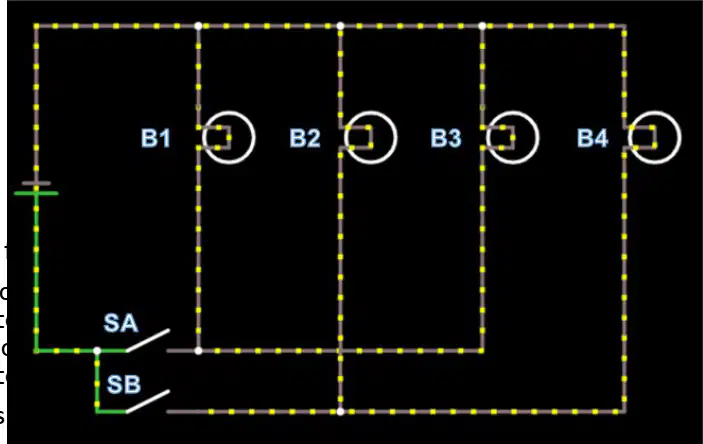
Which of the following is TRUE in the given circuit?
The circuit is using SPST switches
The circuit is using SPDT switches
The circuit is using SPST and SPDT switches
The circuit is using SPDT and DPDT switches
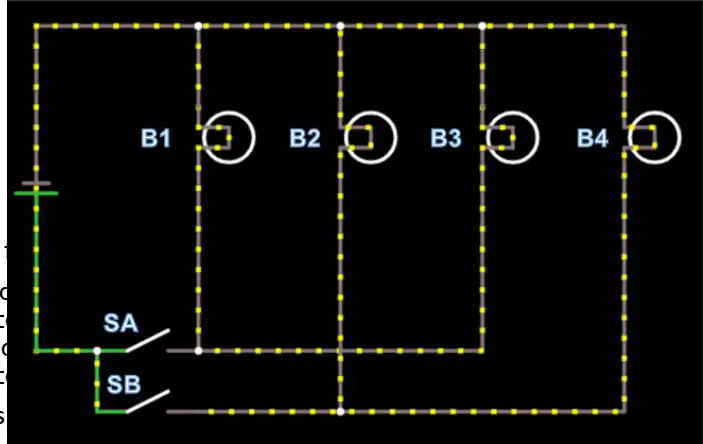
Which of the following is TRUE in the given circuit?
The circuit is using battery as source
The circuit is using 2 terminal 110v source
The circuit is using 2 terminal 220v source
The circuit is using 3 terminal 220v source
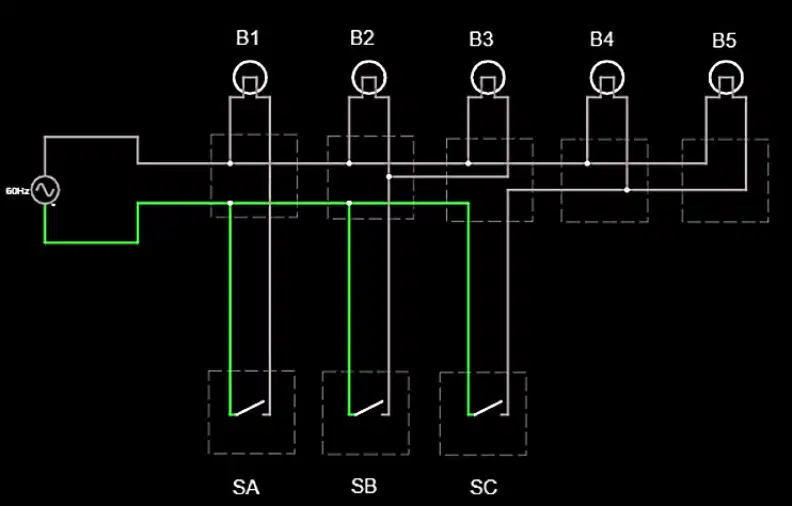
Refer to the schematic diagram showing five bulbs labeled B1–B5 connected to a supply and three switches labeled SA, SB, and SC. Which of the following describes the given schematic diagram?
The circuit consist of four bulbs and two switches
The circuit consist of four bulbs and three switches
The circuit consist of five bulbs and two switches
The circuit consist of five bulbs and three switches
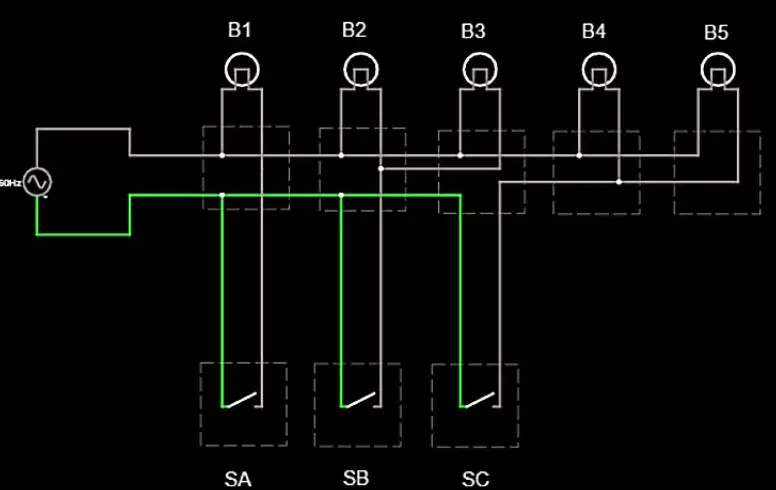
Refer to the same schematic diagram with bulbs B1–B5 and switches SA, SB, and SC. Which bulb is controlled by switch A?
Bulb 1
Bulb 2
Bulb 3
Bulb 4
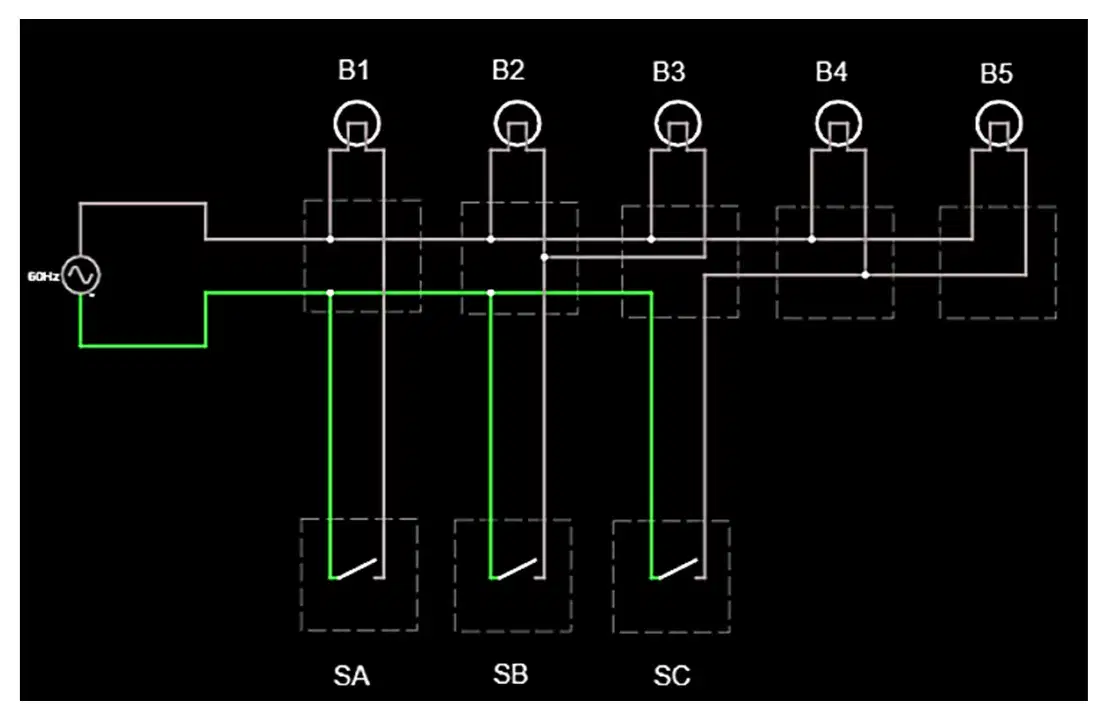
Refer to the same schematic diagram with bulbs B1–B5 and switches SA, SB, and SC. Which pair of bulbs is controlled by switch B?
Bulb 1 and 2
Bulb 2 and 3
Bulb 3 and 4
Bulb 4 and 5
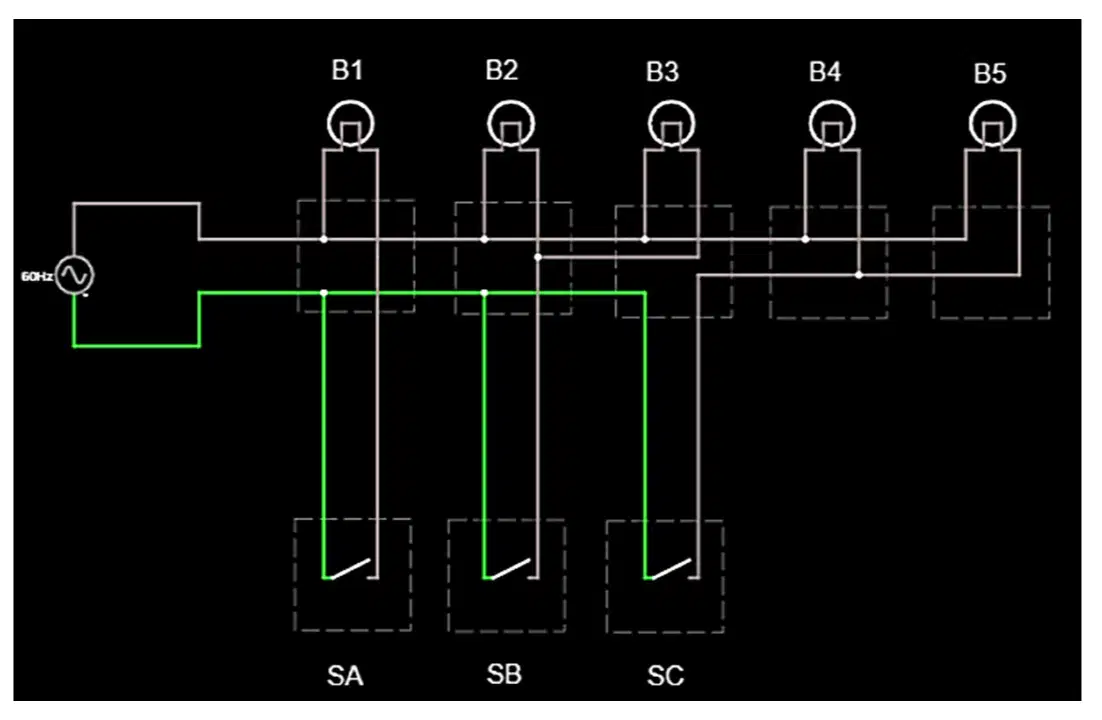
Refer to the same schematic diagram with bulbs B1–B5 and switches SA, SB, and SC. Which pair of bulbs is controlled by switch C?
Bulb 1 and 2
Bulb 2 and 3
Bulb 3 and 4
Bulb 4 and 5

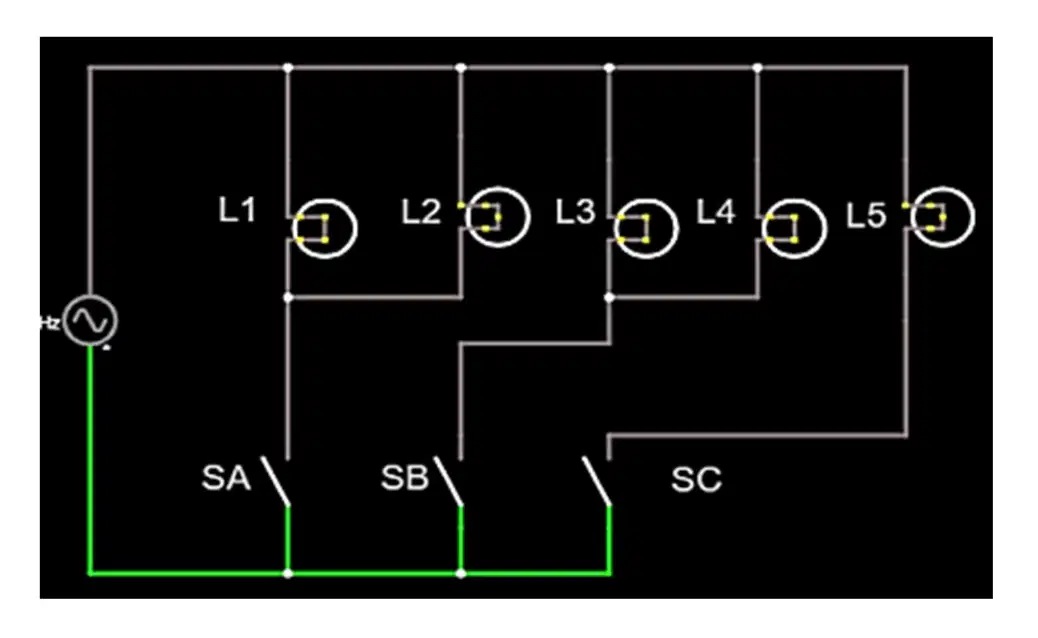
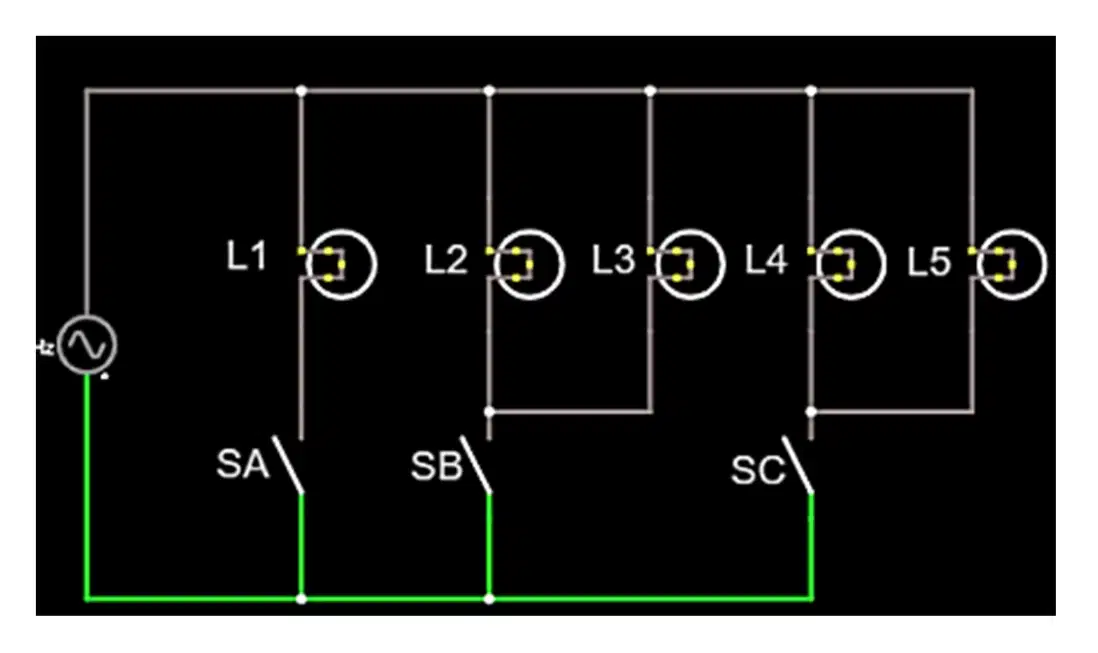
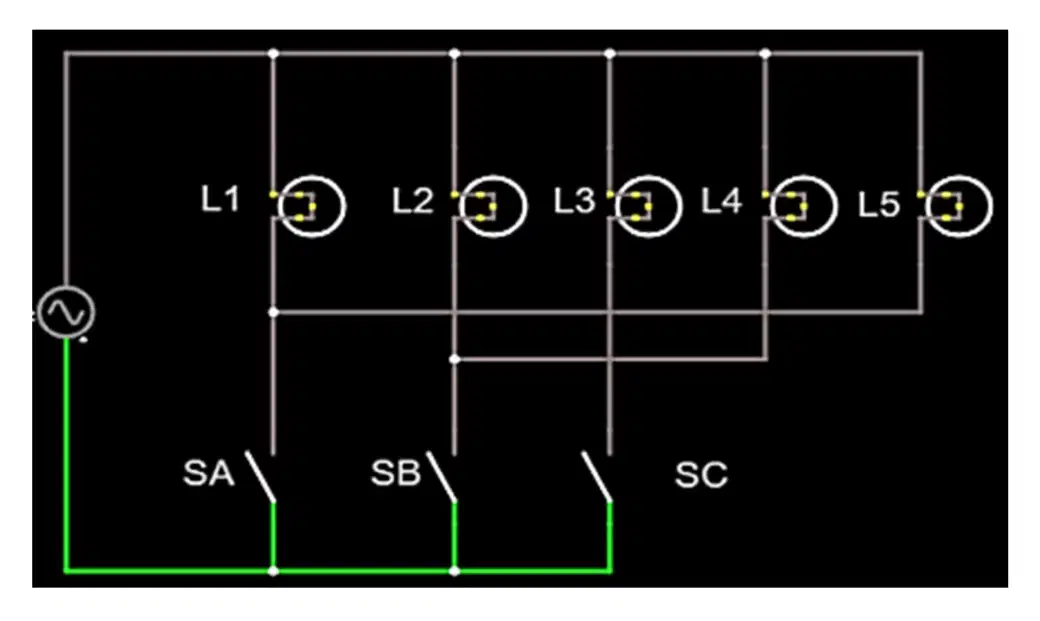
Which of the following circuit below is the equivalent schematic diagram of the given actual wiring diagram above? Options are shown as four labeled circuit images A, B, C, and D.
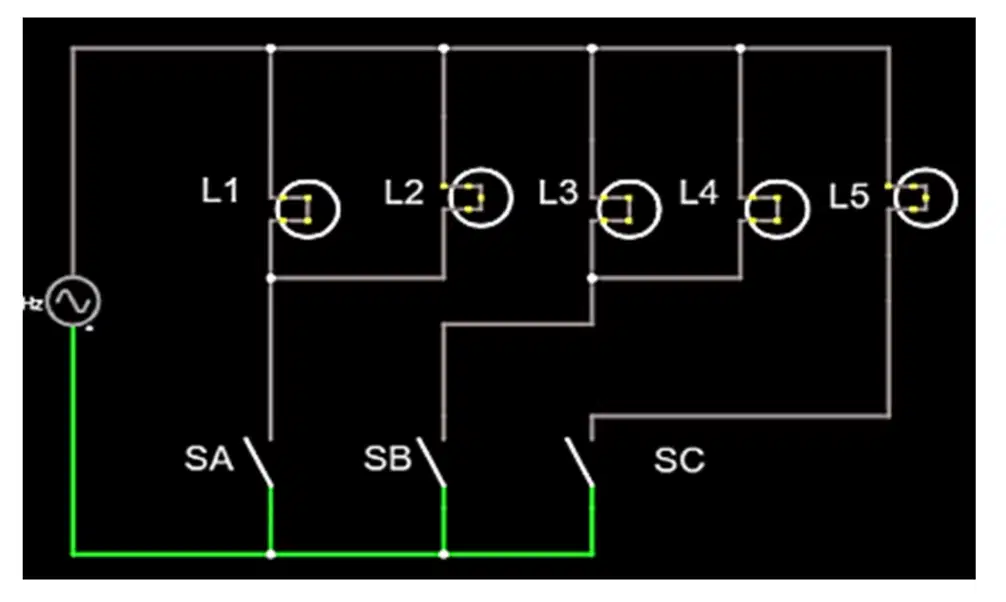
A
A
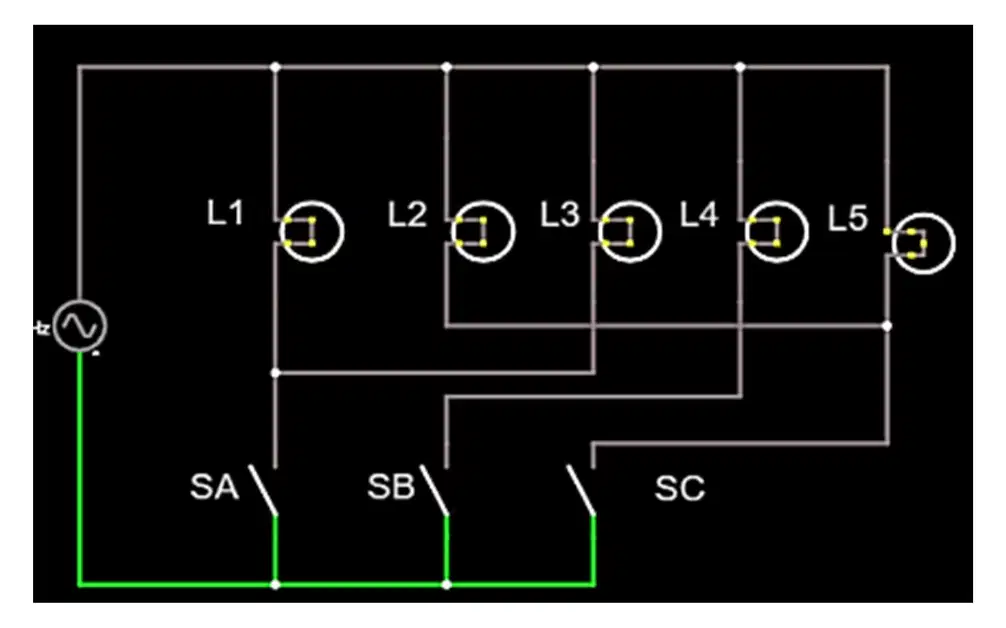
B
B
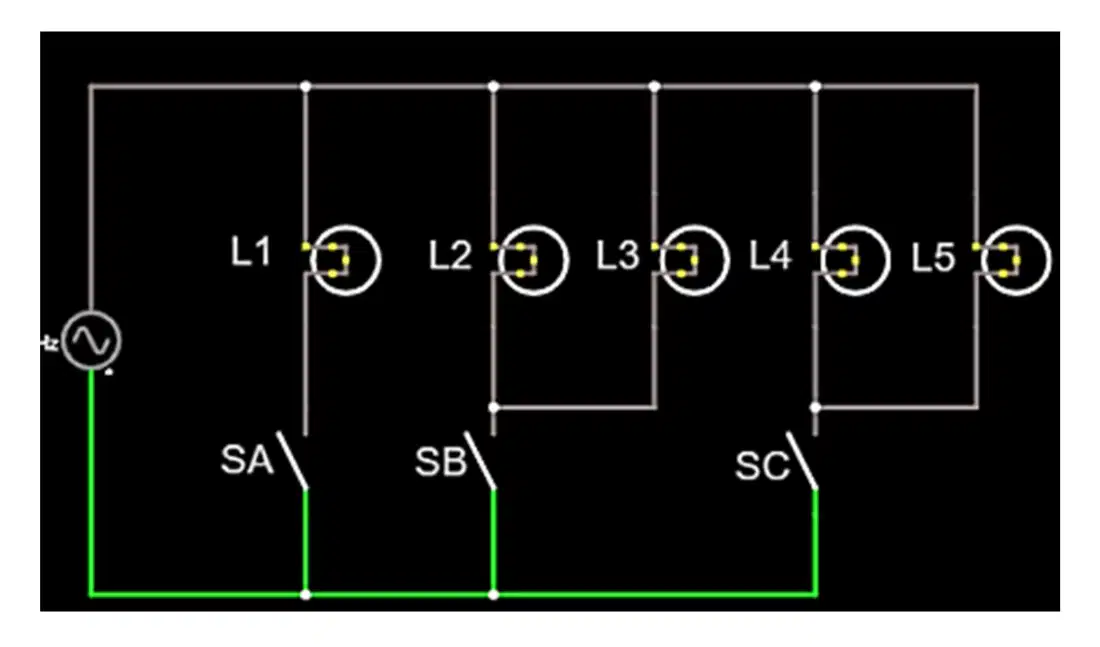
C
C
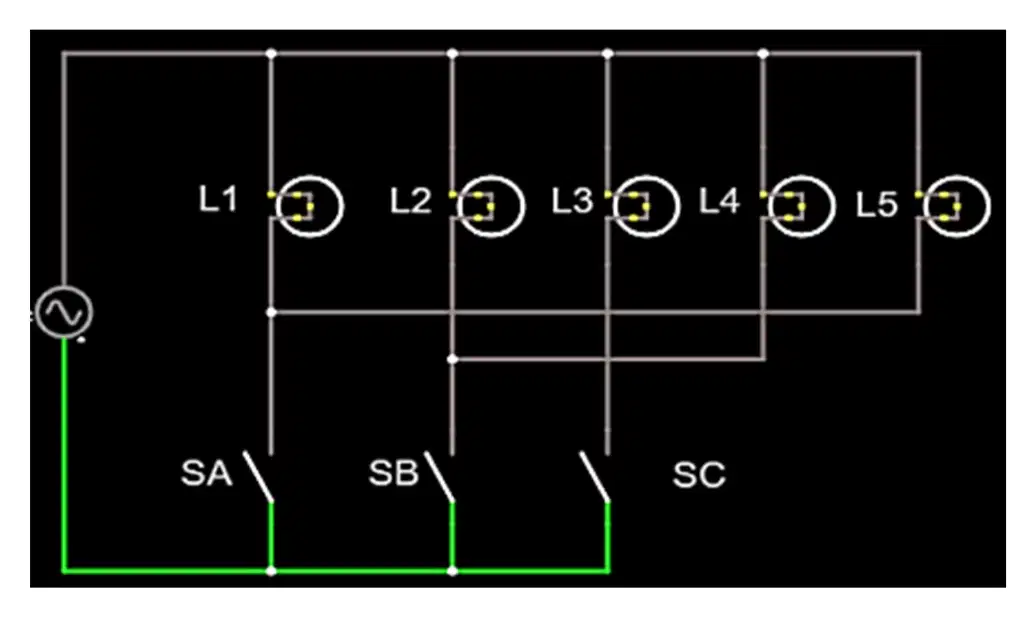
D
D
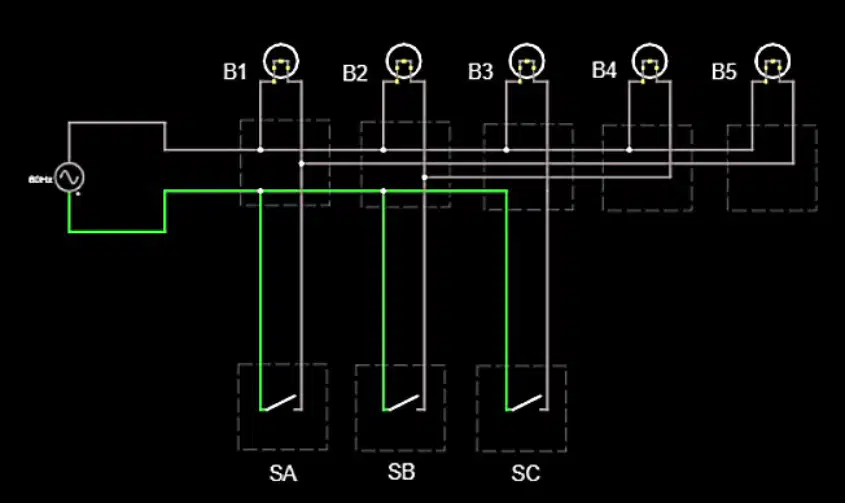
Refer to the actual wiring diagram showing five bulbs labeled B1–B5 connected to a supply and three switches labeled SA, SB, and SC. Which of the following describes the given schematic diagram?
The circuit consist of four bulbs and two switches
The circuit consist of four bulbs and three switches
The circuit consist of five bulbs and two switches
The circuit consist of five bulbs and three switches
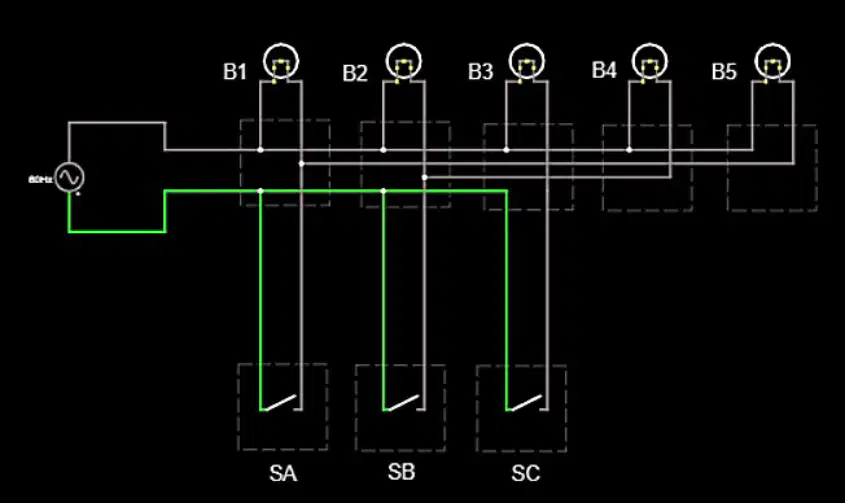
Refer to the same actual wiring diagram with bulbs B1–B5 and switches SA, SB, and SC. Which bulb is controlled by switch A?
Bulb 1
Bulb 2
Bulb 3
Bulb 4

Refer to the same actual wiring diagram with bulbs B1–B5 and switches SA, SB, and SC. Which pair of bulbs is controlled by switch B?
Bulb 1 and 2
Bulb 2 and 3
Bulb 2 and 4
Bulb 2 and 5
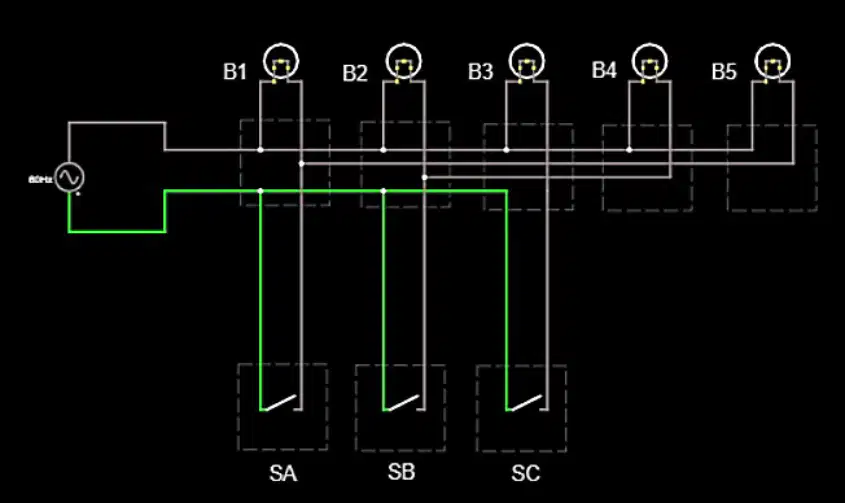
Refer to the same actual wiring diagram with bulbs B1–B5 and switches SA, SB, and SC. Which bulb is controlled by switch C?
Bulb 1
Bulb 2
Bulb 3
Bulb 4
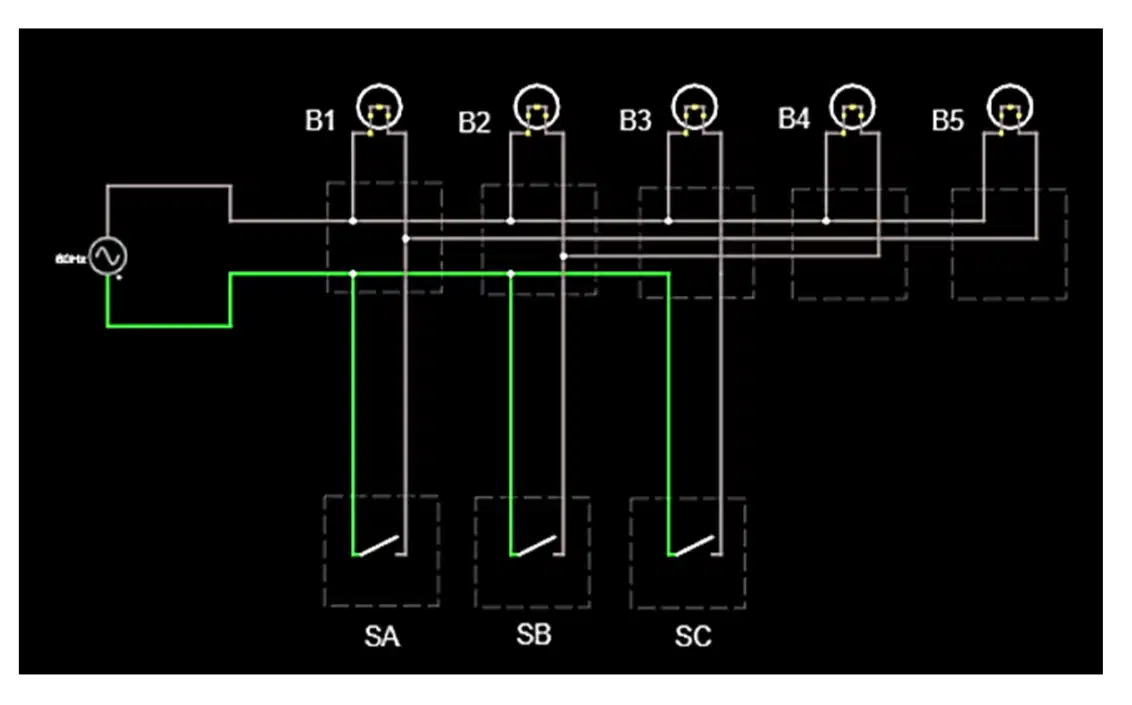
Which of the following circuit below is the equivalent schematic diagram of the given actual wiring diagram? Options are shown as four labeled circuit images A, B, C, and D.
A
A

B
B
C
C
D
D
What is the main purpose of a three-way switch?
To control multiple circuits at once
To control two lights from one Switch
To control one light from one location
To control one light from two different locations
How many terminals does a standard three-way switch have?
Two
Three
Four
Five
What type of wire connects the two three-way switches together?
Ground wire
Hot wire
Neutral wire
Traveler wire
How many three-way switches are required to control one light from two locations?
One
Two
Three
Four
What would happen if traveler wires are incorrectly connected?
The switches will melt
The breaker will always trip
The light will not work properly
The bulb will burn out immediately

