
 Worksheets
Virusuri
Total questions: 140
Worksheet time: 1hrs 10mins
Which field primarily studies bacteria, archaea, viruses, and microscopic eukaryotes?
Histology of tissue sections
Macrobiology of large organisms
Microbiology of microscopic life
Immunology and vaccine science
Which statement best defines general microbiology at an introductory level?
Study of visible plant anatomy
Study of microscopic organisms broadly
Study of human gross pathology only
Study of animal behavior and instincts
Which discipline most directly examines microbial metabolism, growth, and genetics across taxa?
Plant systematics and taxonomy
General microbiology discipline
Environmental geology of rocks
Comparative vertebrate zoology
Which technique is foundational for observing microbes directly?
Acoustic imaging of tissues
Light microscopy with staining
Ultrasound of large organs
Macroscopic visual inspection
Which concept differentiates prokaryotes from eukaryotic microbes?
Requirement for oxygen always
Movement using flagella exclusively
Ability to photosynthesize only
Presence of membrane-bound nucleus
Which domain includes prokaryotic microbes distinct from bacteria?
Animalia domain of metazoa
Archaea domain of prokaryotes
Fungi domain of yeasts
Eukarya domain of protists
Which method is most appropriate to obtain isolated microbial colonies from a mixed sample?
Streak plate on agar surface
Freeze-thaw repeated cycles
Spectrophotometry of culture
Centrifugation at high speed
Which structure is commonly targeted by Gram staining to differentiate bacteria?
Peptidoglycan cell wall layer
Mitochondrial inner membrane
Chloroplast thylakoid stacks
Nuclear envelope pores
Which growth phase shows maximal specific growth rate in batch culture?
Death phase population decline
Lag phase with adaptation
Log phase exponential growth
Stationary phase nutrient limit
Which strategy would you plan to culture an obligate anaerobe successfully?
Use oxygenated shaker flasks
Add strong oxidizing reagents
Employ anaerobic chamber system
Expose culture to bright light
Which microorganism category includes bacteriophages that infect bacteria?
Protozoan classes like Ciliata
Viral agents including bacteriophages
Fungal forms such as Eumycetes
Prions and viroids groups
What is the primary distinction implied between viruses and their host cells in a parasitic relationship?
Viruses rely on host cellular machinery
Viruses carry complete metabolism
Hosts lack genetic information entirely
Hosts depend on viral ribosomes
In prokaryotology, which class refers to wall-less bacteria such as Mycoplasma?
Class Rickettsia organisms
Class Mollicutes mycoplasmas
Class Bacteria cyanobacteria
Class Flagellata protozoa
Which structural focus would best describe the bacterial cell under morphology topics?
Membrane-bound organelles only
Cell wall, shape, and arrangement
Nuclear envelope and chromatin
Mitochondria and chloroplasts
Under bacteriology, what environmental factor influence is typically studied regarding colonies?
Gravity shaping colony genetics
Medium composition affecting growth
Photoperiod controlling meiosis
Altitude determining respiration
Which topic in mycology most directly examines how fungi obtain carbon and energy?
Classification based on spore types
Respiration pathways in hyphae
Nutrition of fungi by absorption
Morphology of Eumycetes forms
Which protozoology class is characterized by movement using hair-like structures?
Class Sporozoa gliding motility
Class Ciliata ciliary locomotion
Class Flagellata whip-like movement
Class Rhizopoda amoeboid motion
Which reproduction mode in protozoa involves gamete fusion?
Asexual division by binary fission
Sexual reproduction through syngamy
Encystment forming resistant cysts
Excretion via contractile vacuoles
Which acellular infectious agent lacks nucleic acid and is composed of misfolded protein?
Typical virions with RNA genomes
Viroids plant circular RNAs
Prions protein-only particles
Bacteriophages with DNA capsids
In studying bacterial systematics, which criterion integrates genotypic data for classification?
Cell size measured by micrometry
Spore color under light microscopy
16S rRNA sequence comparisons
Colony odor on agar plates
Which branch studies bacteria within microbiology?
Protozoology studies bacteria
Mycology studies bacteria
Bacteriology studies bacteria
Virology studies bacteria
Microbiology can be structured into which two main parts?
Animal and plant
Food and soil
General and systematic
Industrial and medical
What does general microbiology primarily investigate?
Morphology and physiology, environment, relations
Taxonomic placement of groups
Industrial production of materials
Clinical protocols for pathogens
Systematic microbiology focuses on what core task?
Measuring growth rates in culture
Testing food contamination levels
Classifying groups by defined criteria
Designing vaccines for viruses
Which field studies microorganisms used by humans in production processes?
Environmental virology research
Protozoology taxonomic studies
Medical pathogenic microbiology
Biotechnology industrial microbiology
Food microbiology primarily examines microorganisms related to what?
Soil nutrient cycles and fixation
Human industry for raw materials
Food use and contamination issues
Taxonomic criteria and grouping
Soil microbiology studies microorganisms in soil and their roles in which cycles?
Pathogenesis in clinical wards
Vitamin synthesis in animals
Wine fermentation in vats
Nitrogen fixation and decomposition
Medical microbiology investigates microorganisms involved in what?
Accidental environmental colonization
Animal diseases and pathogenesis
Symbiosis aiding digestion and vitamins
Industrial processes and materials
Microorganisms that live in symbiosis with animals can contribute to which processes?
Digestion and vitamin production
Airborne transmission of spores
Metal corrosion in pipelines
Photosynthesis in roots
Systematization of microorganisms is divided into which four kingdoms?
Vira, Eukaryota, Plantae, Metazoa
Plants, Animals, Fungi, Viruses
Bacteria, Archaea, Fungi, Protists
Vira, Procaryota, Vegetal (fungi), Animal (protozoa)
Which statement best describes a virion?
Metabolically active virus with its own enzymes
Cell-free infectious particle with full structure
Host ribosome bound viral replication complex
Immature intracellular viral assembly intermediate
Viruses can exist in two alternative states. Which pair correctly names these states?
Extracellular free state and intracellular vegetative state
Dormant spore state and actively motile state
Photosynthetic state and heterotrophic state
Aerobic state and anaerobic fermentative state
Why are viruses classified as obligate intracellular parasites?
Replication requires host cellular machinery and energy
They prefer low oxygen microenvironments
They have rigid cell walls like bacteria
They produce toxins that lyse host cells autonomously
Which nucleic acid types can comprise the viral genome?
Only single-stranded RNA molecules
DNA and protein as co-genomes
Only double-stranded DNA molecules
DNA or RNA as single genome type
What feature makes many viruses ultrafilterable?
Enzymes that degrade filter material during passage
Ability to actively traverse filter pores via motility
Surface charge that repels membrane pores effectively
Dimensions small enough to pass bacteriological filters
Select the best explanation for why viruses lack independent metabolism.
They do not synthesize ATP or macromolecules alone
They store excess glycogen but cannot mobilize it
They respire anaerobically using nitrate as acceptor
They possess mitochondria but lack ribosomes
Which statement about viral growth is accurate?
Incremental enlargement before binary fission
No capacity for growth; fixed number of molecules
Exponential cell division like prokaryotes
Linear growth proportional to nutrient uptake
What term describes the intracellular state capable of multiplication?
Prophage integrated into host genome
Prion aggregated in neural tissue
Vegetative virus within the host cell
Exospore suspended in ambient fluids
Which microscopy methods are most accurate for sizing viruses?
Ultrafiltration, ultracentrifugation, electron microscopy
Light microscopy, Gram staining, phase contrast
Atomic force microscopy, confocal fluorescence, X-ray
Polarized light microscopy, microcalorimetry, TEM
Typical viral dimensions are within which range?
Roughly 0.1–0.5 centimeters across
Between 0.5–5 millimeters in length
About 1–2 micrometers in diameter
Approximately 10–500 nanometers in size
Which size range best characterizes large viruses described in the diagram?
50–150 nm diameter
0.5–1 µm diameter
15–50 nm diameter
150–500 nm diameter
Which group includes viruses measuring about 50–150 nm with notable pathogenic examples?
Medium viruses group
Bacterial group
Small viruses group
Large viruses group
Which statement correctly identifies small viruses in the size classification?
Generally under 50 nm, often around 10–15 nm
Generally over 1 µm, comparable to bacteria
Generally 150–500 nm, enveloped only
Generally 50–150 nm, filamentous only
Which viral shape corresponds to a helical filamentous morphology?
Cartus form, typical of poxvirus
Spermatozoidal form, typical of influenza
Spheroidal form, typical of bacteriophages
Fibrillar form, typical of mosaic virus
Which two primary structural components make up a virion?
Capsid and ribosomes
Genome and envelope membrane
Envelope and peptidoglycan wall
Genome and capsid protein shell
Which nucleic acid types can constitute a viral genome?
Double-stranded DNA only
DNA or RNA, single- or double-stranded
DNA and RNA simultaneously in one virion
Single-stranded RNA only
What unit is commonly used to express viral genome length and how many nucleotides does it represent?
Megabase, about one million bases
Kilobase, about one thousand bases
Nanometer, about one billionth meter
Kilodalton, about one thousand daltons
Which statement about small viral genomes (around 5 kb) is most accurate?
They replicate slower than 20 kb genomes
They reduce replication time compared to larger genomes
They require ribosomes encoded in the genome
They increase mutation frequency compared to bacteria
What is the function of the viral genome relative to replication?
Determines host cell membrane composition
Encodes peptidoglycan for virion wall
Provides energy for capsid assembly
Stores entire information necessary to induce replication
What are capsomeres in the context of viral capsids?
Enzyme complexes forming the nucleoid
Lipid units forming the envelope membrane
Protein subunits forming the capsid shell
RNA segments forming the genome
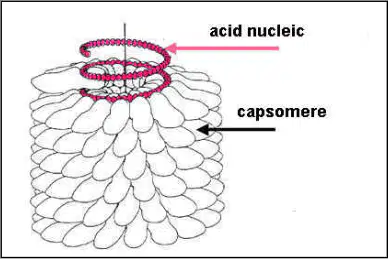
Which capsid symmetry features a cylindrical tube formed by identical, slightly elongated monomers surrounding nucleic acid, as shown in the upper diagram?
Complex symmetry mixing multiple capsid lattices
Icosahedral symmetry with precise oligomer assembly
Helical symmetry forming a cylindrical nucleocapsid
Binary symmetry with distinct head and tail regions
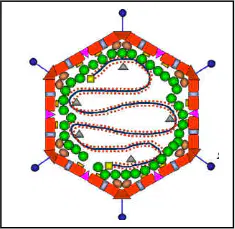
In the middle diagram, which geometric symmetry is built from an extremely precise assembly of a fixed number of oligomers?
Binary symmetry combining head and tail
Spherical symmetry with random subunit packing
Helical symmetry with repeating monomers
Icosahedral symmetry with 20 triangular faces
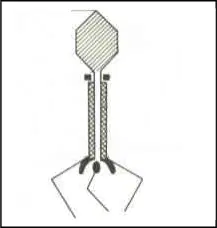
Which statement best characterizes bacteriophage capsids depicted in the lower diagram?
Purely helical tubes without specialized ends
Binary symmetry with an icosahedral head and helical tail
Icosahedral symmetry lacking any tail fibers
Amorphous symmetry with variable subunit number
What term labels the protein subunits that repeat to build viral capsids?
Protomer chains
Capsomeres
Peplomers
Glycoprotein spikes
For a given virus type, how is the number of capsomeres described?
Determined by host cell enzymes
Increasing during maturation
Fixed and highly ordered
Variable across individual particles
Which recognition criterion relies on the final spatial arrangement of the capsid?
Replication cycle duration
Capsid symmetry architecture
Genome polarity identification
Envelope lipid composition
Which feature distinguishes icosahedral capsids from helical capsids?
Precise oligomer count in a polyhedral lattice
Tail-mediated genome injection
Random oligomer placement
Presence of segmented RNA genomes
In a helical nucleocapsid, how are the capsomeres arranged around the genome?
Linear stacks forming a prism
Radial spokes forming a wheel
Concentric rings forming a sphere
Spiral array forming a cylinder
Which composite symmetry combines an icosahedral head with a helical tail typical of bacteriophages?
Complex symmetry
Helical symmetry
Binary symmetry
Cubic symmetry
Why does capsid assembly result in highly ordered repetition of capsomeres?
Random thermal motion dominates
Template-directed host proteins guide placement
Self-assembly governed by subunit geometry
Enzymatic ligation of diverse subunits
Which component directly protects viral genomic material from nucleases?
Capsid surrounding the genome
Spicules embedded in envelope
Pericapsid external lipid coat
Peplos formed after replication
What is the primary role of the peplos (envelope) in enveloped viruses?
Creating glycoprotein spikes for replication
Forming helical symmetry of nucleocapsid
Housing viral polymerases for metabolism
Shielding nucleocapsid and aiding entry
Enveloped viruses are described as having what external features compared to naked viruses?
Rigid icosahedral protein coat
Spherical form with spicules
Complex capsid without lipids
Helical nucleocapsid exposed
Which statement best distinguishes enveloped viruses from naked viruses?
Enveloped viruses possess active metabolism
Enveloped viruses bear a lipid envelope
Naked viruses contain host ribosomes
Naked viruses replicate outside cells
Which phase initiates the viral replication cycle in a host cell?
Attachment and adsorption
Synthesis of components
Eclipse phase
Maturation of virions
During which stage are new viral components produced using host machinery?
Penetration into the cell
Synthesis of components
Maturation of particles
Attachment and adsorption
What does the eclipse phase in viral replication primarily represent?
Loss of infectivity before assembly
Initial binding to cell receptors
Final release of mature virions
Integration into host genome
Which claim about viruses is supported by their replication process?
Viruses replicate by binary fission
Viruses complete metabolism extracellularly
Viruses multiply only in host cells
Viruses synthesize enzymes autonomously
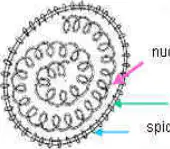
What structural symmetry is shown for helical viruses in the diagram?
Complex multipart symmetry
Icosahedral capsid symmetry
Radial envelope symmetry
Helicoidal nucleocapsid symmetry
Which set correctly lists consecutive stages of a typical viral life cycle?
Maturation, release, penetration, attachment
Synthesis, eclipse, attachment, maturation
Penetration, maturation, attachment, synthesis
Attachment, penetration, synthesis, maturation
Which term describes a host cell that lacks specific viral receptors and therefore cannot be infected?
Productive cell releasing assembled virions
Permissive cell with compatible receptors
Nonpermissive cell without specific receptors
Latent cell with internalized virions
Viral tropism primarily depends on which factor determining the interaction between virus and host cell?
Affinity between viral capsid and host receptors
Rate of host cell mitosis and cytokinesis
Size of viral genome and capsid diameter
Presence of host lysosomes and peroxisomes
Which pairing best exemplifies species-level tropism?
Virus infects only porcine cells specifically
Virus infects both plants and animals broadly
Virus infects any tissue regardless of receptor
Virus infects multiple species without limitation
During the reversible phase of viral attachment, which interaction predominates?
Ionic attraction allowing initial binding
Covalent bonding between spike and receptor
Fusion of viral envelope with membrane
Endocytosis forming clathrin-coated pits
Which statement distinguishes the irreversible phase of viral attachment?
Happens exclusively inside endosomes
Requires established tropism between virus and cell
Begins only after genome replication completes
Occurs when no tropism exists for the cell
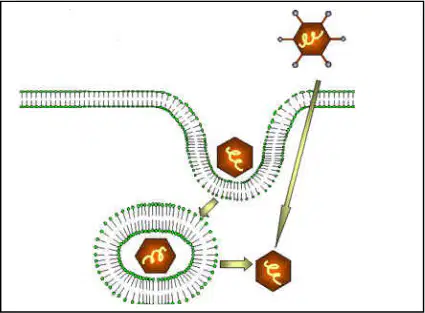
Which mechanism of entry involves membrane invagination and formation of a vesicle enclosing the virion?
Direct penetration through cell wall proteins
Endocytosis with vesicle internalization
Exocytosis releasing viral particles
Fusion creating a transmembrane channel
In endocytosis-mediated entry, what event leads to release of the viral genome?
Transcription of viral mRNA in cytosol
Proteasomal degradation of capsid externally
Envelope fusion with nuclear membrane
Lysis of vesicle by cytoplasmic enzymes
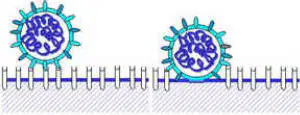
Which feature is specific to enveloped viruses during cell entry by fusion?
Capsid proteins form clathrin-coated pits
Spike glycoproteins facilitate membrane fusion
Genomes pass through nuclear pores directly
Receptors trigger phagocytosis indiscriminately
What role do viral spikes play in fusion-based entry?
Serve as enzymes that lyse host membrane
Bind mitochondria to energize the capsid
Create a channel allowing capsid passage
Detach receptors to prevent immune response
Which statement best differentiates endocytosis from fusion for viral entry?
Fusion traps virions inside clathrin vesicles
Endocytosis requires envelope spikes exclusively
Endocytosis expels the genome out of cell
Fusion forms a continuous membrane channel
Which process describes the loss of capsid structure and exposure of viral nucleic acid shortly after entry into a host cell?
Adsorption to cell receptors
Eclipse or decapsidation
Budding from the membrane
Assembly of new virions
During the eclipse phase, what is the status of the viral genome in many viruses?
Packaged in mature capsids
Masked as provirus
Free in cytoplasm
Bound to nuclear envelope
Which cellular location is primarily used for protein synthesis from viral mRNA?
Cytosolic ribosomes
Lysosomal lumen
Golgi cisternae
Mitochondrial matrix
Which set best represents the three common aspects of viral replication across groups?
Penetration, uncoating, apoptosis
Endocytosis, autophagy, antigen display
Transcription, genome replication, translation
Attachment, latency, exocytosis
What term refers to the formation of new viral particles from components after genome replication and protein synthesis?
Integration
Maturation
Neutralization
Attenuation
Where can assembly of many viruses occur, with a majority of riboviruses assembling in the nucleus?
Only at plasma membrane
Inside lysosomes
In cytoplasm or nucleus
Exclusively in mitochondria
Which release mechanism involves destruction of the host cell and discharge of large amounts of viral material?
Lysis of the host cell
Exocytosis via vesicles
Budding with envelope
Transcytosis through tight junctions
What characterizes the budding release mechanism in enveloped viruses?
Virion acquires membrane-derived envelope
Formation of capsid in lysosome
Genome remains inside nucleus
Complete destruction of host membrane
Why are viruses released by budding often considered less aggressive than those released by lysis?
Budding prevents capsid assembly errors
Budding does not fully destroy the host cell
Budding releases very small amounts of material
Budding avoids host immunity entirely
What is typically reduced in riboviruses, given that their genome is RNA and often monocatenary?
Latency duration
Cell wall synthesis
Capsid symmetry
Multiplication cycle duration
Which viral replication cycle is characterized by immediate cell lysis and release of progeny virions?
Abortive cycle with incomplete particles
Persistent cycle with low virulence
Lysogenic cycle with genome integration
Lytic cycle with acute antagonism
In the lytic cycle, what primarily causes the host cell’s destruction?
Gradual genome integration events
Rapid antagonistic viral replication
Host immune latency establishment
Endosomal persistence mechanisms
Which term denotes viruses that integrate their nucleic acid into the host genome and can remain as a provirus?
Abortive incomplete variants
Temperate viruses establishing latency
Agressive cytolytic virions
Endosymbiotic attenuated forms
During persistent infections, what feature of viral multiplication is typical?
Reduced rate with long duration
Explosive burst with acute lysis
Immediate maturation without capsid
Strict horizontal spread only
Which route of transmission is emphasized for lytic, acute infections?
Horizontal spread through secretions
Vertical inheritance via germline
Vector-mediated latent carriage
Fomite-based chronic colonization
What can persistent infections produce in the host over time?
Complete sterile immunity
Immediate necrotic lysis
Rapid clearance without symptoms
Progressive degenerative changes
In integrated cycles, what cellular process allows the provirus to persist through cell generations?
Endosomal acidification steps
Host DNA replication and mitosis
Extracellular capsid biosynthesis
Rapid virion release bursts
Which example illustrates vertical transmission mentioned for integrated viral cycles?
Leukemia in humans and animals
Gastroenteritis through secretions
Influenza via respiratory droplets
Foot-and-mouth disease outbreaks
What term describes infections producing viral particles that are incomplete and not fully mature?
Abortive viral infections
Acute lytic outbreaks
Endosymbiotic mutualism
Strict lysogenic latency
What factor can trigger a latently integrated provirus to enter active replication and cause severe disease?
Immediate immune clearance events
External stressors disrupting host cells
Continuous horizontal transmission
Persistent endosomal survival alone
Which term describes intracellular accumulations assembled from viral components visible under light microscopy?
Temperate phage lysogeny
Prophage genomic integrations
Interferon-induced antiviral states
Viral inclusions with specific morphology
What is the primary role of viral inclusions in infected cells?
Channels for nutrient transport across membranes
Scaffolds for bacterial cell wall repair
Reservoirs for cellular energy storage
Sites of viral component synthesis and assembly
Interferon released by infected vertebrate cells acts mainly by which mechanism?
Inducing antiviral proteins that block viral replication
Phagocytosing virus via macrophage receptors
Directly lysing enveloped virions in blood
Neutralizing antibodies against viral capsid
What phenomenon occurs when one virus inhibits replication of another virus in a cell previously contacted by the first?
Antigenic drift during chronic infection
Viral interference blocking replication cycles
Superinfection enhancing progeny production
Recombination increasing capsid diversity
Which statement best characterizes interferon’s action scope in tissues?
Diffuses to surrounding cells establishing antiviral state
Targets exclusively bacterial ribosomes in situ
Remains inside producer cell without secretion
Acts only on lymphocytes lacking receptors
Bacteriophages are viruses that infect which cellular targets?
Protozoa altering contractile vacuoles
Fungi forming syncytial hyphae states
Plant chloroplasts disrupting photosystems
Bacteria causing lytic or lysogenic effects
During lytic infection by virulent bacteriophages, which event occurs?
Production of progeny followed by host cell lysis
Integration into host genome forming prophage
Induction of muropeptide synthesis in wall
Transformation without replication of genome
Temperate bacteriophages differ from virulent ones primarily because they can:
Form exclusively enveloped viral particles
Encode ribosomal proteins for bacteria
Only replicate in anaerobic environments
Integrate as prophage and replicate with host
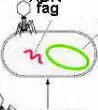
Which structural component of a bacteriophage attaches to the bacterial surface and injects genomic DNA?
Cytoplasmic tail interacting with actin
Capsid spike initiating membrane fusion
Contractile tail sheath driving DNA transfer
Envelope glycoprotein forming pores
What cellular defense mechanism is triggered in non-infected cells exposed to interferon?
Enhanced glycolysis fueling viral assembly
Upregulated peptidoglycan cross-linking
Activation of chlorophyll-binding complexes
Antiviral protein synthesis inhibiting translation
Which statement best describes bacteriophages’ ecological role in bacterial communities?
They convert nonpathogens into autotrophic species
They reduce bacterial numbers through lytic regulation
They increase bacterial diversity by horizontal gene transfer
They form biofilms that protect pathogenic bacteria
What laboratory application uses phage sensitivity to classify bacteria?
Gram staining differentiation by cell wall
Serotyping using specific antibodies
Lysotyping based on phage susceptibility
Hybridization with rRNA probes
In public health monitoring of water, what does detection of phages parasitizing certain bacteria indicate?
Evidence of water source contamination
Presence of viral envelopes in aquatic fauna
Increased oxygenation of the reservoir
Formation of resistant bacterial spores
Viroids are primarily composed of which nucleic acid and structural form?
Double-stranded DNA circular genome
Single-stranded RNA circular molecule
Double-stranded RNA linear genome
Single-stranded DNA linear molecule
What is the typical size range observed for viroids under electron microscopy?
2.5–5 nm strand dimension
25–50 nm capsid diameter
150–300 nm virion length
0.2–0.5 nm particle diameter
Which plant disease impact is commonly linked to viroid infections?
Enhanced fruit pigmentation and yield increase
Induction of nitrogen fixation in root nodules
Progressive bark thickening without symptoms
Disruption of growth with severe economic loss
Why is the replication mechanism of viroids considered enigmatic?
They replicate only inside animal mitochondria
Their small genomes encode no proteins
Their genomes code many metabolic enzymes
They lack any nucleic acid template for synthesis
Which host dependency is characteristic of viroid replication?
Autonomous protein translation in the viroid
Direct coding of a transport protein by viroid RNA
Use of host polymerases with minimal genetic information
Independent synthesis of complete viral capsids
In cultivation, how can viroids be detected despite subtle symptoms?
Observation of phage plaques on bacterial lawns
Serological tests for enveloped virions
Molecular assays targeting circular RNA
Counting acid-fast cells in stained samples
Which biotechnology application exploits phage lysis in aquatic environments?
Increasing bacterial pathogenicity in crops
Producing viroid proteins for vaccine design
Reducing bacterial populations during biosanitation
Transforming bacteria into photosynthetic organisms
Which agent is described as "proteinaeous infectious particles" responsible for subviral infections causing spongiform encephalopathies?
Bacteria producing neurotoxic exotoxins
Viruses with RNA genomes causing neurodegeneration
Prions consisting of infectious proteins only
Viroids composed of short circular RNAs
In animals, scrapie is a spongiform encephalopathy primarily affecting which species?
Cattle with neurodegenerative lesions
Sheep showing pruritus and ataxia
Deer with fatal insomnia
Cats with chronic wasting syndrome
Kuru and familial fatal insomnia are examples of prion diseases affecting which organism?
Domestic cattle in agricultural settings
Wild cervids in forest ecosystems
Felids maintained in captivity
Humans with neurodegenerative disorders
What does ATNC stand for in the context of prion research described on the page?
Agents Transmissible Non-Conventional
Amyloid Trimer Nucleic Complex
Adaptive Transmission Neurogenic Corpus
Antigenic Toxin Neuro Cytoplasmic
Which cellular system is primarily targeted by prion replication and aggression according to the studies mentioned?
Central nervous system neurons
Gastrointestinal epithelial linings
Renal tubular epithelium
Peripheral immune lymphoid tissues
What characteristic cytoplasmic change is noted in prion-affected neurons during ultrastructural studies?
Dense mitochondrial clustering in axons
Loss of ribosomes from rough ER
Vacuolization leading to spongiform appearance
Accumulation of lysosomes in dendrites
Which protein is identified as protease-resistant in prion diseases and denoted as PrP?
Peroxisomal Regulatory Protein beta
Proline-rich Peptide complex
Phosphorylated Receptor Protein alpha
Proteinase Resistant Protein variant
Which fibrillar amyloid structures were identified from brains of animals with spongiform encephalopathy?
Amyloid beta diffuse plaques
Alpha-synuclein Lewy bodies
Scrapie Associated Fibrils (SAF)
Tau paired helical filaments
Which prion disease is noted in cattle and associated with spongiform encephalopathy?
Bovine vacuolar neurodegeneration
Bovine spongiform encephalopathy
Bovine chronic wasting disease
Bovine fatal familial insomnia
Which statement best reflects the unresolved nature of ATNC despite common properties?
They remain enigmatic with shared features
They require DNA-based genetic transcription
They are fully explained by viral RNA replication
They are conclusively bacterial in origin
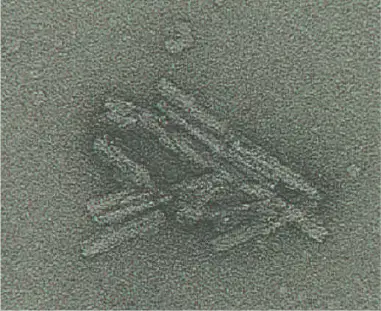
Which statement best describes the structural nature of prions shown in the micrograph?
Fungal conidia carrying chromosomal DNA
Bacterial endospores with thick peptidoglycan walls
Viral particles containing single-stranded RNA genomes
Proteinaceous infectious particles lacking nucleic acids
What key property contributes to prions’ resistance to agents that inactivate nucleic acids?
Efficient DNA repair pathways
Protective polysaccharide capsule
Absence of nucleic acid genomes
Double-membrane encapsulation
Which treatment most effectively inactivates prions compared with typical pathogens?
Prolonged exposure to strong proteases
Standard autoclaving at 121°C
Short bursts of ultraviolet radiation
Low-dose formaldehyde fixation
Which statement about prion thermal resistance is accurate?
They degrade at room temperature
They are sensitive to brief heating
They are killed by mild pasteurization
They survive very high temperatures
Which characteristic of prion infections complicates detection and control?
Long latency that can extend for years
Immediate antibody production after entry
Rapid onset within hours of exposure
Visible cytopathic effects in culture
What is the primary mechanism by which prion protein causes disease in a host?
Producing bacterial toxins in the bloodstream
Triggering autoimmune destruction of myelin
Inserting viral genetic material into neurons
Inducing misfolding of normal host prion protein
Which body tissues are considered to carry the highest prion infectivity during disease progression?
Central nervous system and lymphoid organs
Saliva and milk under normal conditions
Urine and feces in early stages
Skin and hair follicles at onset
Which statement about prion transmission to humans is supported by epidemiologic evidence?
Exposure to infected bovine tissues can transmit disease
Mosquito vectors are required for infection
Airborne droplets are the typical route
Casual contact spreads prions efficiently
Which laboratory reagent is often used to assess prion resistance due to its proteolytic activity?
DNase I during digestion tests
Ribonuclease A in cold conditions
Lysozyme in isotonic buffers
Proteinase K in controlled assays
Why do prions not induce interferon responses like many viruses?
They lack nucleic acids recognized by innate sensors
They replicate via double-stranded RNA intermediates
They block interferon receptors on host cells
They secrete interferon-neutralizing proteins

