
 Worksheets
bio test 3
Total questions: 141
Worksheet time: 3hrs 35mins
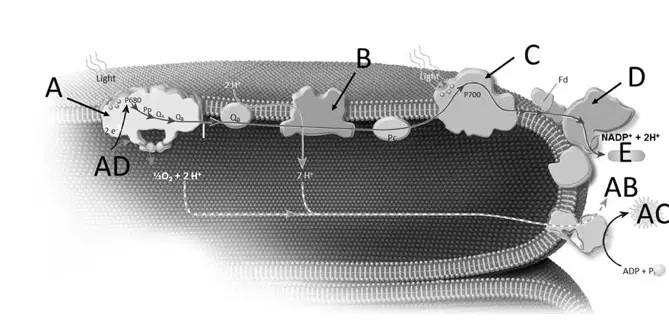
What is the purpose of antennae (i.e collection of pigments) located in the photosystem?
Produces CO2
Eliminates excess O2
Passes the electron out of the photosystem
Absorbs light energy
Produces glucose
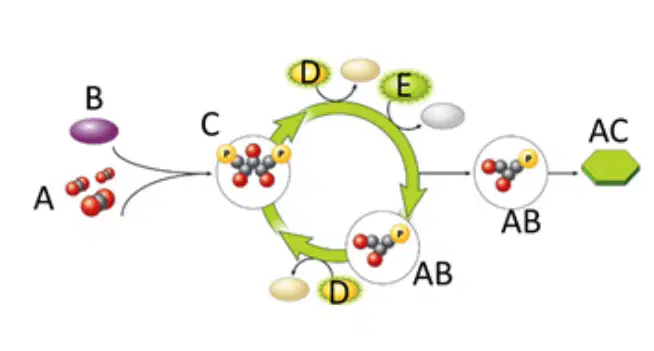
Which of the following is true regarding the first stable molecule produced by this process?
Is called glucose
Has 3 carbons
Is called citrate
Is the same as the last molecule produced
A type of enzyme
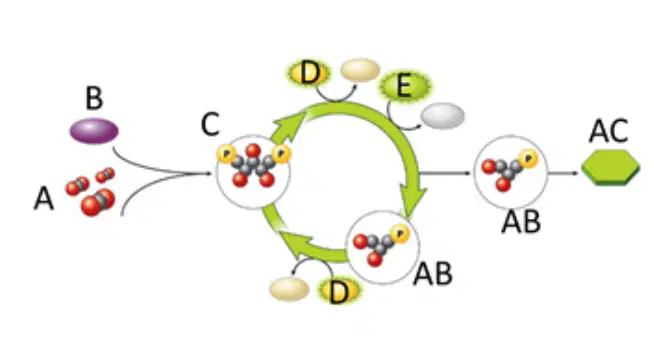
Which of the following is indicating G3P (PGAL)?
B
C
AB
A
AC
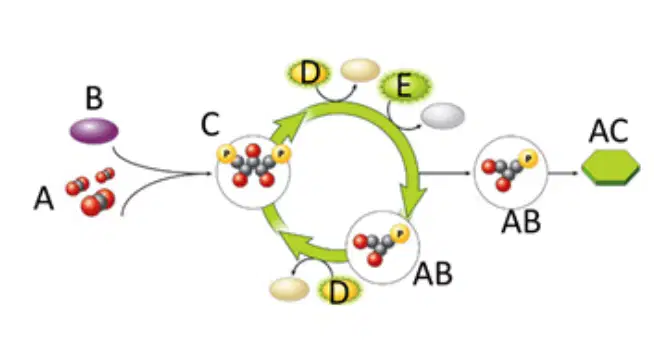
The energy required to perform these reactions is provided by
G3P(PGAL)
Glucose and ATP
NADH and FADH2
ATP and NADPH
ATP
Which of the following is produced during the linear pathway?
1 ATP: 1 NADPH
ATP only
1 NADPH: 5 RuBP
2 ATP : 1 glucose
NADPH only
Under water stress, plants will close their stomata which limits their access to
Light
Glucose
Water
RuBisCo
CO2
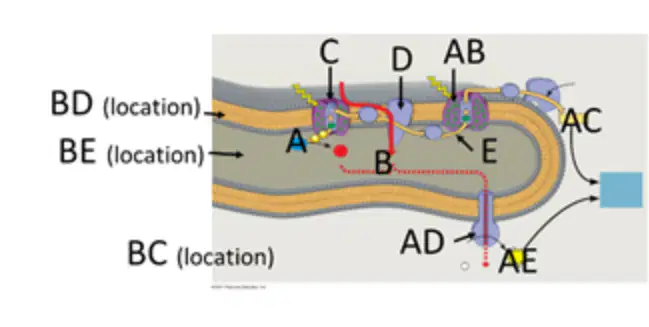
During the cyclic pathway, the electron is passed from the photosystem back to the proton pump. Which of the following is the proton pump?
D
AD
AC
AB
C
Which of the following are the products of photosynthesis?
C6H12O6+O2
CO2+H2O+ Light E
Pyruvate +NADH+ ATP
ATP+ NADH+O2
ATP+NADPH+CO2
CAM plants divide up photosynthesis by
Time of year- light reactions in the spring and summer, Calvin cycle in the fall
Location- many cells for the light reactions, a few specialized cells for the Calvin cycle
Time of day- photosynthesis during the day, gas exchange at night
Location- light reactions in the chloroplast, Calvin cycle in the vacuole
Time of day- light reactions during the day, the Calvin cycle at night
Which of the following is Not true regarding C4 plants?
Light reactions occur in many cells
Calvin cycle only occurs in speacialized cells
Perform photosynthesis during the day
Seen in corn, surgar cane, sorghum
Store CO2 in the vacuole
Which equation best describes what occurs during the Calvin cycle?
H2O+ light “ ATP+NADPH+O2
ATP+NADPH+CO2 “ Glucose
Glucose+O2 “CO2+H20+energy
Glucose+ATP”acetyl CoA+ ATP+NADH
CO2+H2O+light”glucose+O2
Which of the followign plant structures are used to increase surface area needed for light energy capture?
Leaves
Stomata
Stems
Roots
Which of the following is not true of a Z scheme diagram?
Shows the cyclic and linear pathway
The height of the Z indicates the energy level
Shows the linear pathway
The arrows show the path of the electron
Depicts the light reactions
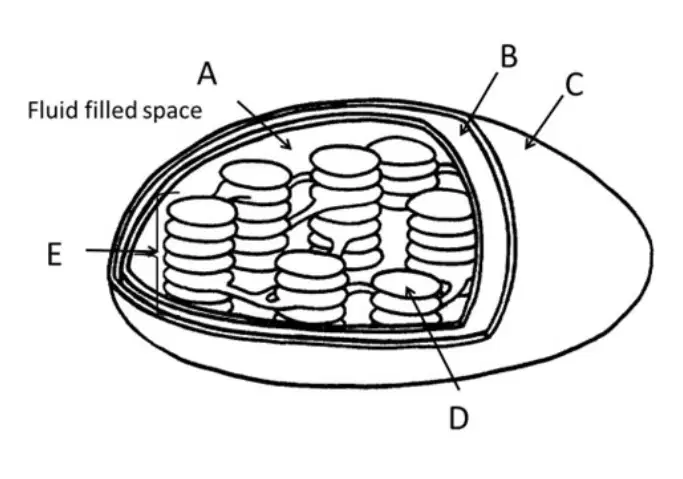
Where does carbon fixation occur?
C
E
B
D
A
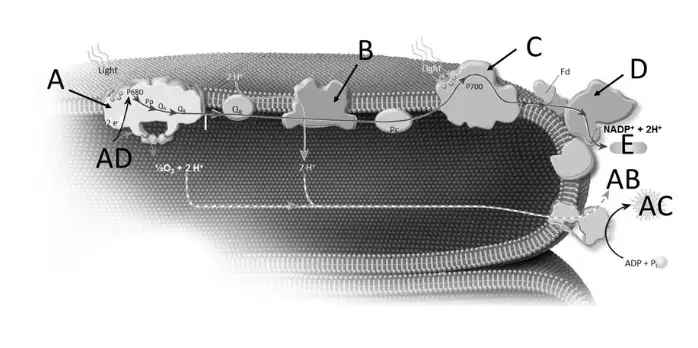
Which of the following gets pumped across the membrane?
H+
Cl-
e-
N2
O2
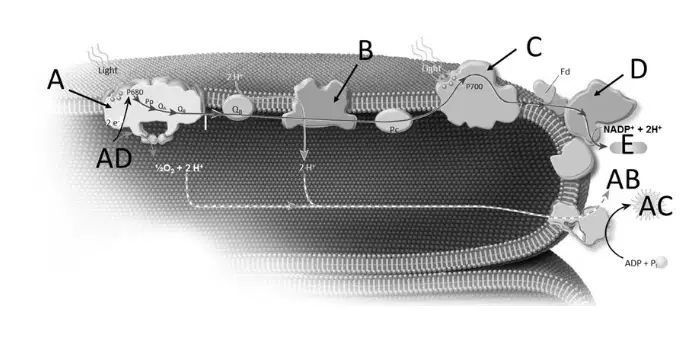
Which of the following is pointing to the cytochrome complex(H+pump)?
AB
C
A
AD
D
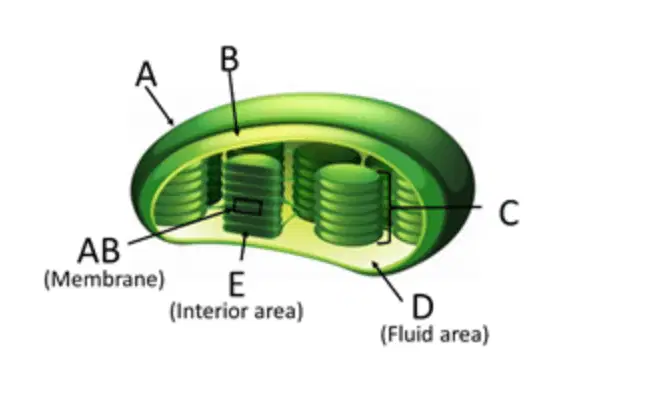
Which of the following is indicating a granum?
B
E
AB
D
C
Which of the following is not true regarding photosystems?
Have a reaction center (specialized chlorophyll a)
They are involved in the Calvin cycle
Have an antenna made up of pigments
There are 2 diffrent types(PSI and PSII)
Located in the thylakoid membrane
What kind of plants would perform photorespiration?
C3 plants (i.e. roses, daisies,tomatoes)
C4 grasses (i.e. corn,sugarcane,bermudagrass)
Cacti
Succulents
Aquatic plants
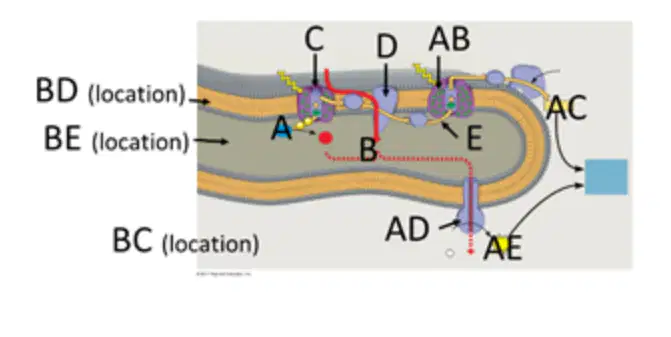
Which of the following is indicating NADPH?
E
AC
B
AE
A
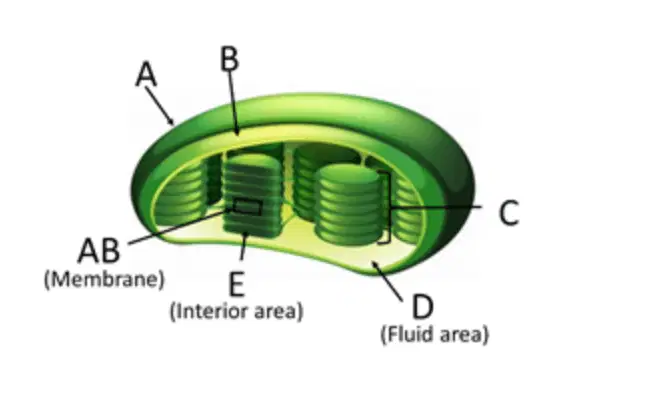
Where would you find RuBP?
B
D
AB
C
E
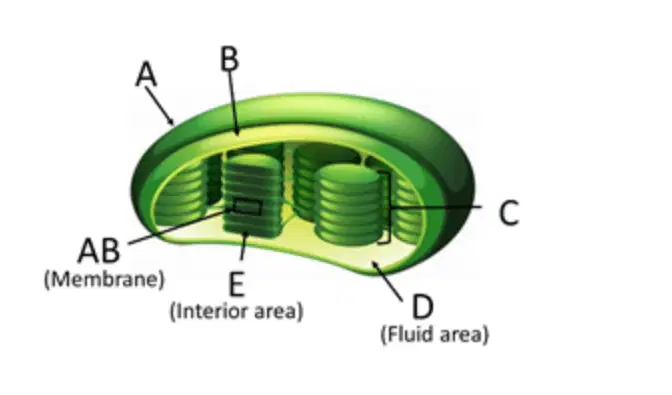
Where does the Calvin cycle occur?
B
AB
D
E
C
The process of converting inorganic carbon into an organic form is called
Cellular respiration
Fermentation
Carboxylation
Carbon fixation
During the light reactions, the electron continues to lose usable energy, this is an example of
Useable energy
Entropy
Kinetic energy
Potential energy
A(n)______ makes reactions more likely by lowering the activation energy.
Isotope
Receptor
Buffer
Enzyme
Isomer
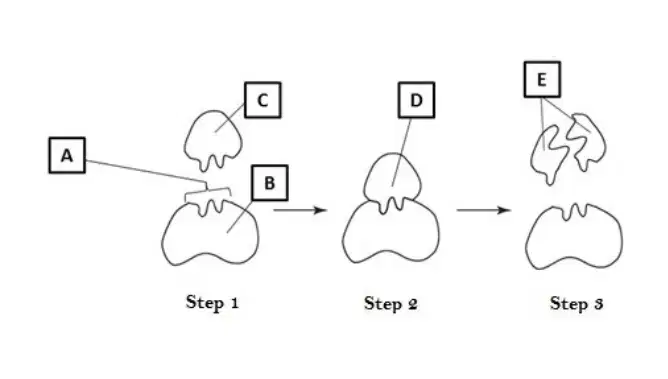
Which of these is the substrate(s)?
A
B
C
D
Which of the following is an organic molecule, usually a vitamin, that helps an enzyme function?
Allosteric site
Active site
Cofactor
Substrate complex
Coenzyme
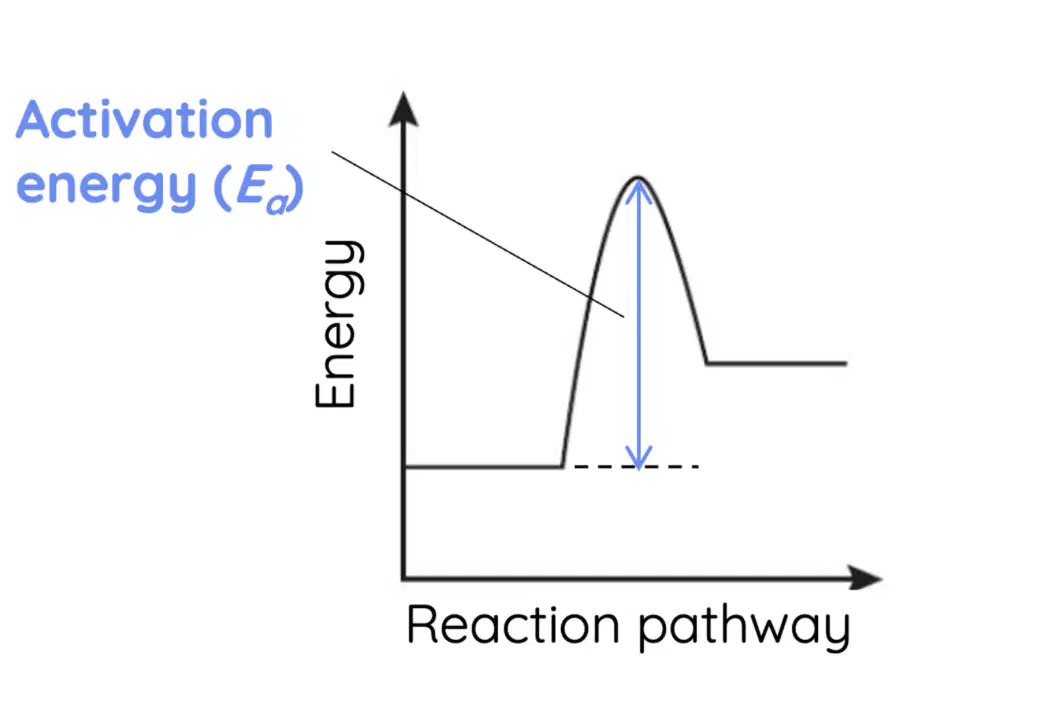
Which of the following best descibes this reaction?
Redox
Anabolic
Exergonic
Catabolic
Hydrolysis
In enzymatic reactions, the substrates are the starting material(s)
False
True
Which of the following would negatively impact an enzyme’s function?
Low temperature
Lowering the pH
Really high temperature
All of the above
Increased salinity(saltiness)
A chemical gradient is an example of
Thermal energy
Radiant energy
Kinetic energy
Entropy
Potential energy
Which type of reaction requires an energy input and results in energy being stored in its product?
Catabolic reaction
Redox reaction
Kinetic reaction
Anabolic reaction
Potential reaction
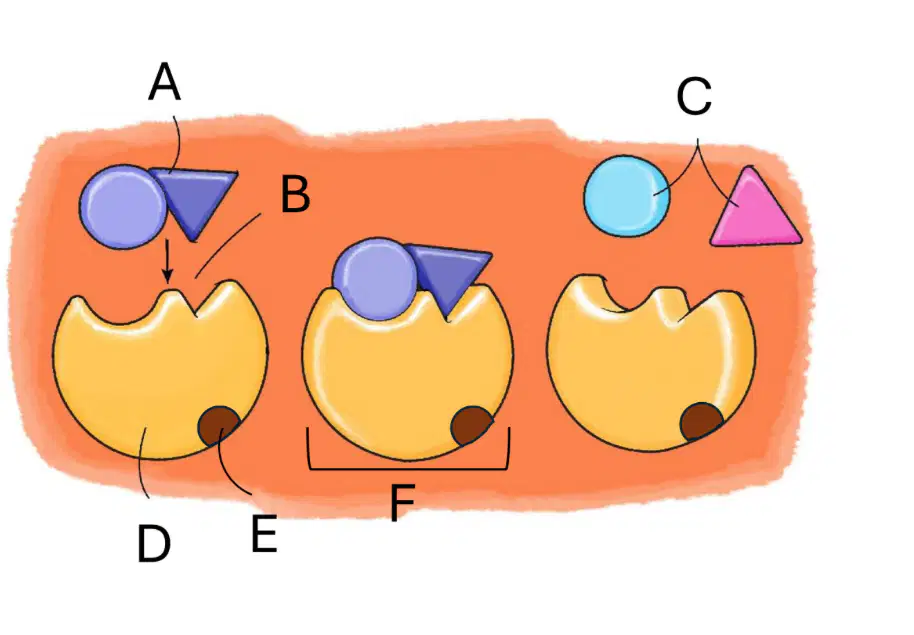
Which of these is the active site?
A
B
C
D
E
Active transport can occur
With carriers only
With channels only
With both channels and carriers
Without a protein
What would happen if you were to drink a large amount of sea water? Your cells would _____ and _____.
Lose water, experience crenation
Gain water, become turgid
Gain water, eventually lyse
Lose water, plasmolysis
Gain water, displace necessary organelles
Which of the following uses light to observe cells,tissues,and some large organelles?
Dissecting microscope
Scanning electron microscope
Transmission electron microscope
Scanning tunneling microscope
Compound microscope
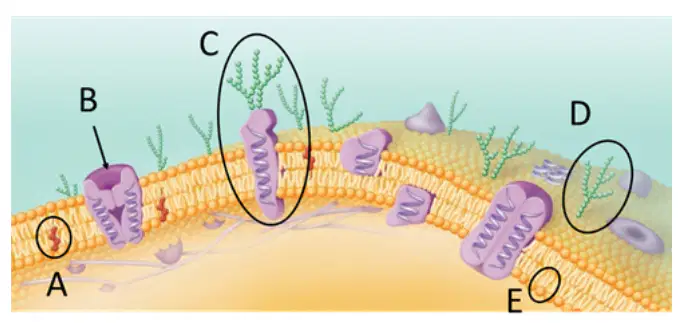
Molecule e is described as
Hydrophilic
Acidic
Amphipathic
Hydrophobic
The earliest known fossils are all ocean dwelling organisms. Which of the following is the best explanation for why this occured?
These was excess amounts of O2 which was toxic to these organisms
They were all anaerobic
There was no ozone layer to deflect UV rays
There was no land
The only animals
Which of the following is not true regarding the endomembrane system?
An organelle in this system can make its own proteins and replicate itslef
Derived from infolding of the plasma membrane
Members of the system are interconnected
Not seen in bacteria
Members of the system are interconnected
Fermentation occurs in the absence of
Glucose
ADP
CO2
O2
Water
How many CO2 molecules are released during the oxidation of pyruvate?
0
1
2
3
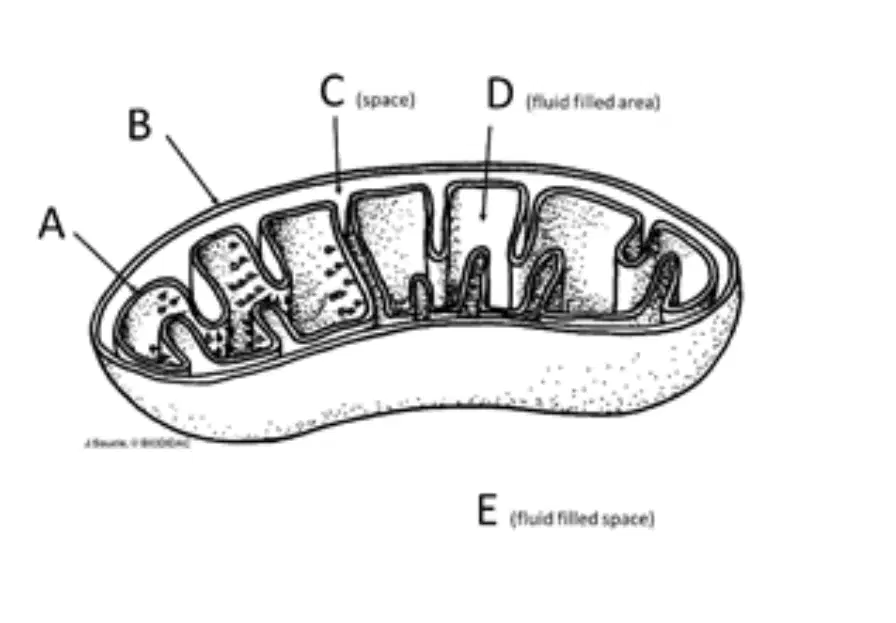
Where does the krebs (citric acid) cycle occur?
A
C
B
D
E
Glycerol backbones enter aerobic respiration during
Calvin cycle
ETC
Krebs(citric acid) cycle
Glycolysis
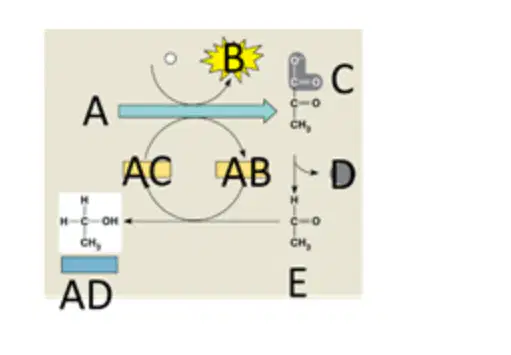
Which of the following is not true regarding the process pictured to the right?
Used for commercial alcohol production
Occurs in yeast cells
Produces CO2 as a byproduct
Breaks down glucose via the krebs cycle
Which of the following statements about cellular respiration is not true?
The goal is to release energy from food and transfer this energy to ATP
Can only use glucose molecules as fuel
Aerobic respiration requires oxygen
The first step of cell respiration occurs in the cytosol and steps 2-4 occur in the mitochondria
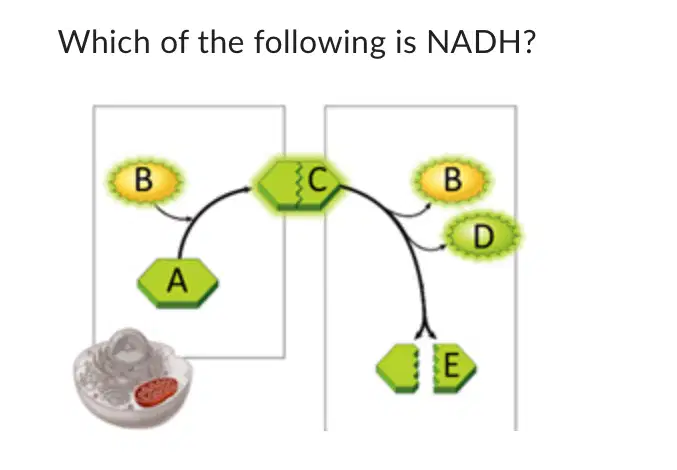
Which of the following is NADH?
E
A
C
B
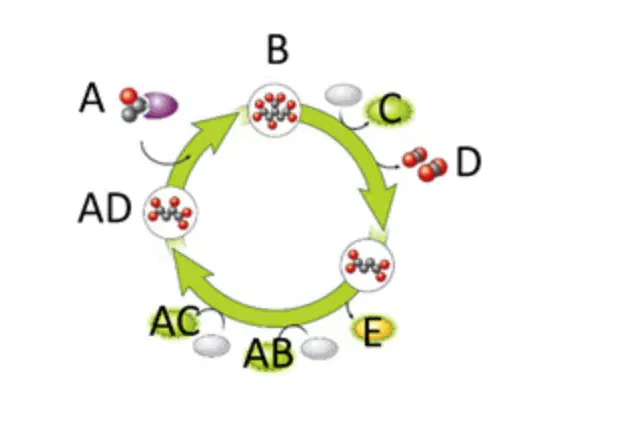
Which of the following is indicating oxaloacetate?
D
AD
B
A
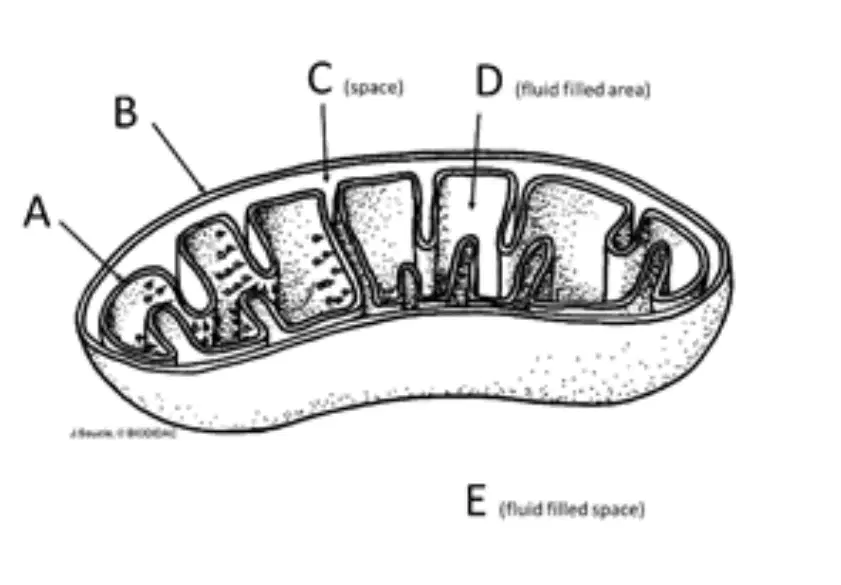
Which of the following is indicating the cytosol?
A
C
B
D
E
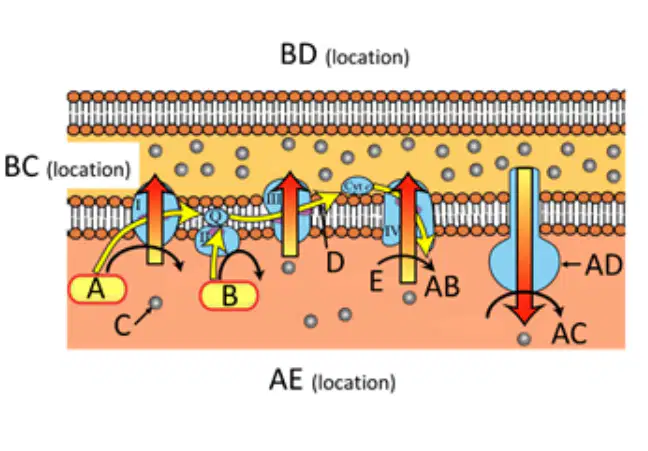
How many ATPs are produced during this process?
4
26-28
0
14-16
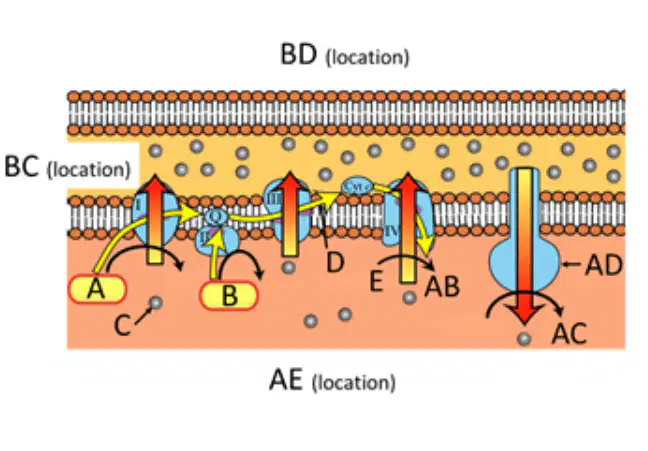
Which of the following is indicating the matrix?
AD
BC
BD
AE
Which of the following best describes cellular (aerobic) respiration?
H2O+Light E——>ATP+ NADPH+O2
CO2+H2O +Light E——-> C6H12O6+ O2
C6H1206—-> pyruvate + NADH+ ATP
C6H1206+O2——> CO2+ H2O + ATP

All of the following oump H+ against the gradient EXCEPT
E
A
C
Ac

The process of chemiosmosis involves the creation of which product?
D
AD
A
E
Indicate the protein where this step (final acceptor) would occur.
AB
E
AD
D

Which of the following is pointing to the protein complex lll?
AD
AC
E
AB
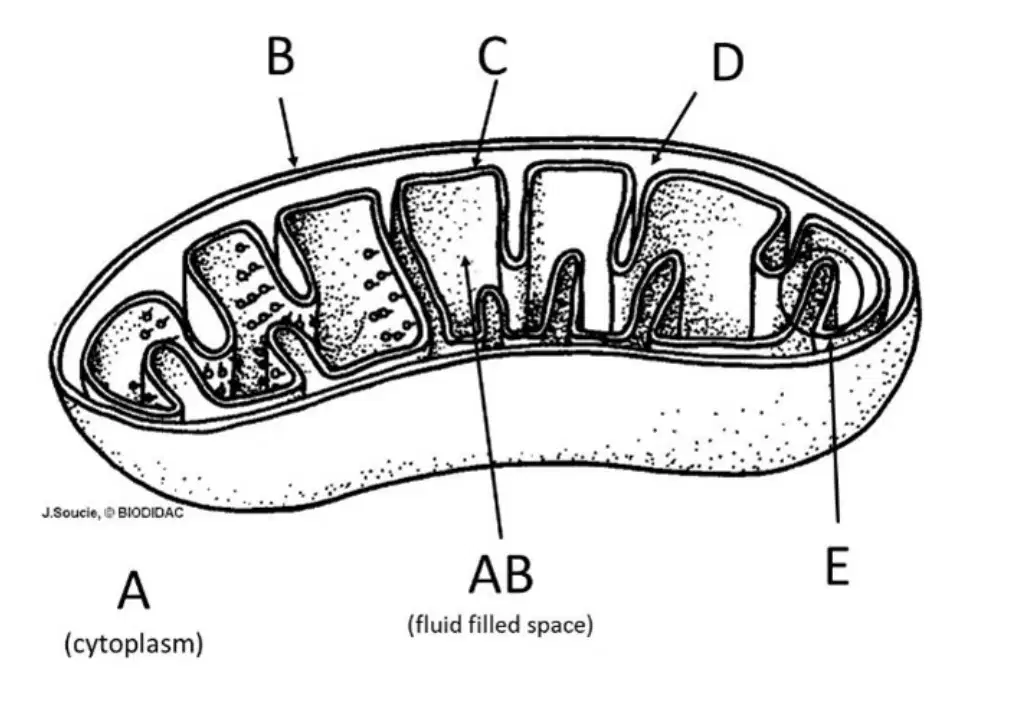
Where would you find the protiens associated with the electron transport chain?
C
B
AB
D
Which of the following is not true regrding the oxidation of pyruvate?
Requires pyruvate dehydrogenase
Pyruvate is the starting material
Oxaloacetate must be regenerated
Produces acetyl CoA,CO2,and NADH
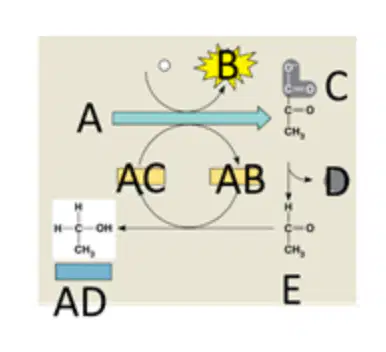
Which of the following is indicating the pryruvate?
AD
A
D
E
C
Polysaccharides enter aerobic repiration during
Calvin cycle
Oxidation of pyruvate
Kerbs ( citric acid ) cycle
ETC
Glycolysis
What is produced during the krebs( citric acid) cycle?
26-28 ATP
1 ATP, 1 NADPH
4 CO2,6 NADH, 2 ATP, 2 FADH2
2 acetyl CoA, 2 CO2, 2 NADH
2 ATP, 2 NADH, 2 pyruvate
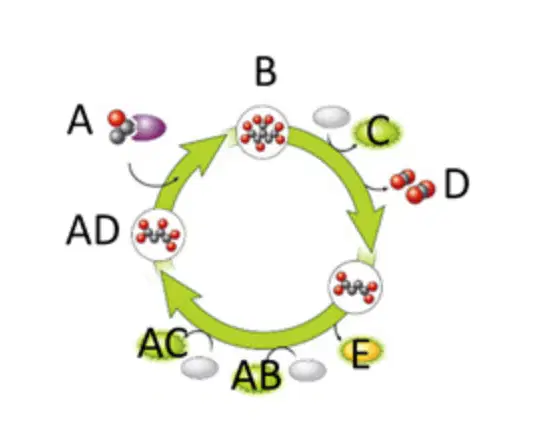
Which of the following is the citrate molecule?
B
AD
AB
D
A
What is produced during the oxidation of pyruvate?
Oxaloacetate
RuBP
Pyruvate
Citrate
Acetyl CoA
The goal of cellular respiration is the producation of
ATP
Protiens
CO2
mRNA
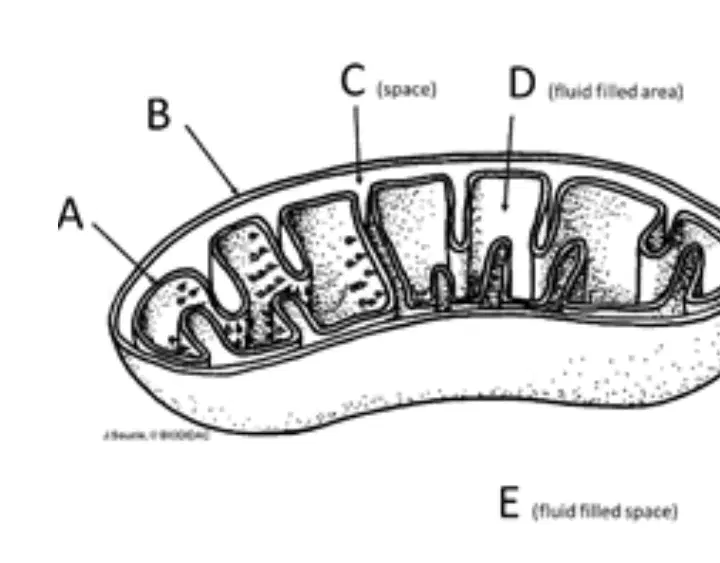
Which of the following is indicating the matrix
A
C
B
D
E
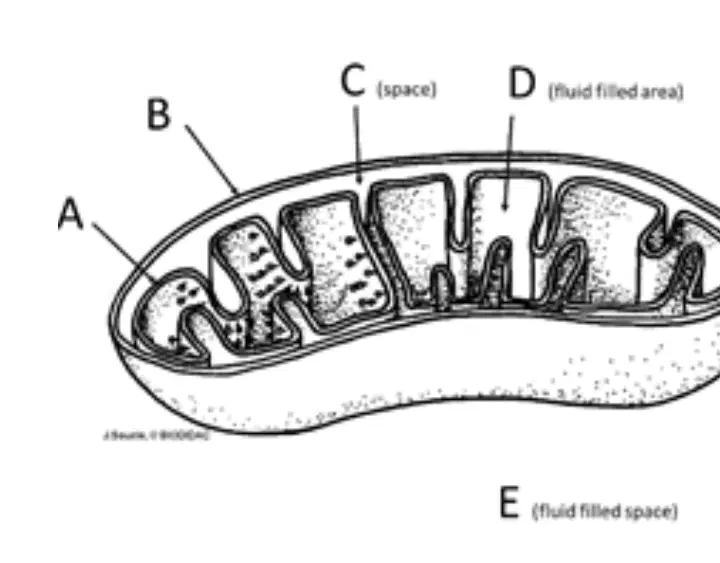
Where does fermentation occur?
A
C
B
E
Particles passively move against a gradient going from an area of lower concentration to an area of higher concentration.
FALSE
TRUE
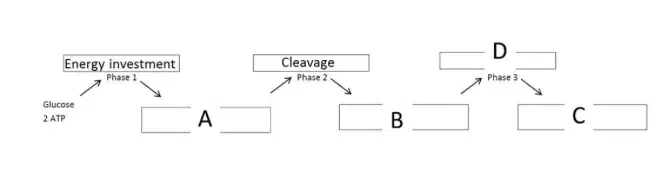
What is the end product produced by this process?
ATP only
2 acetyl CoA, 2 CO2 , 2 NADH
6 NADH,2 FADH2, 2 GTP,4 CO2
1 ATP, 1 NADPH
2 pyruvate, 4 ATP, 2 NADH
The transition from GTP to ATP is the result of
Losing an extra pentose sugar
Swapping of nitrogenous bases
Modification of the nitrogenous base
Transferring a phosphate group to ADP
Which of the following is not true regarding ethanol fermentation?
Undergoes glycolysis prior to
Releases CO2 as a byproduct
Occurs in yeast cells
Uses pyruvate to produce ethanol
Requires O2
Proton pumps create H+ gradients. These gradients act as a form of _______ energy.
Intermediate
Potential
Mitochondiral
Kinetic
Which of the following are produced by the citric acid cycle?
ATP only
6 NADH, 2 FADH2, 2 GTP, 4 CO2
1 ATP, 1 NADPH
2 acetyl CoA, 2 CO2, 2 NADH
What is the likelihood that H+ could cross a membrane without the assistance of a protein(i.e. its permeability)?
Low
High
Moderate
Very low
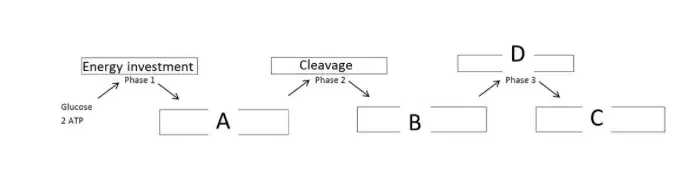
Phase 3 is also known as
Calvin cycle
Glycolysis
Energy liberation
Oxidation of pyruvate
Electron transport chain
The purpose of a fermentation reaction is to recycle
ATP to ADP
Glucose to CO2
Triglycerides to fatty acids
NADH to NAD+
In cellular respiration, what acts as the final electron acceptor?
NO3
CO2
O2
H2O
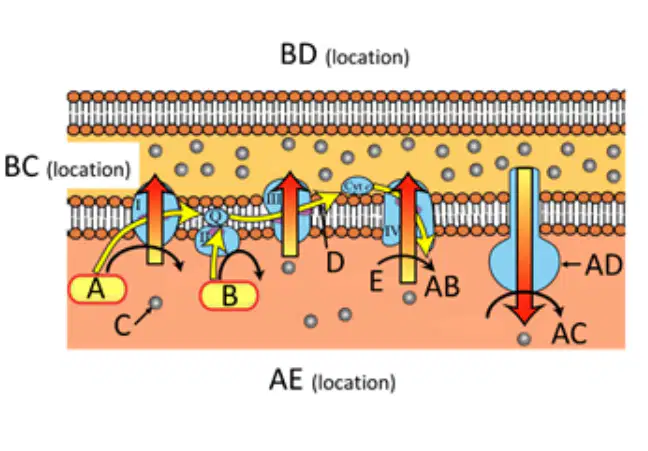
Which of the following is indicating a H+?
E
D
A
B
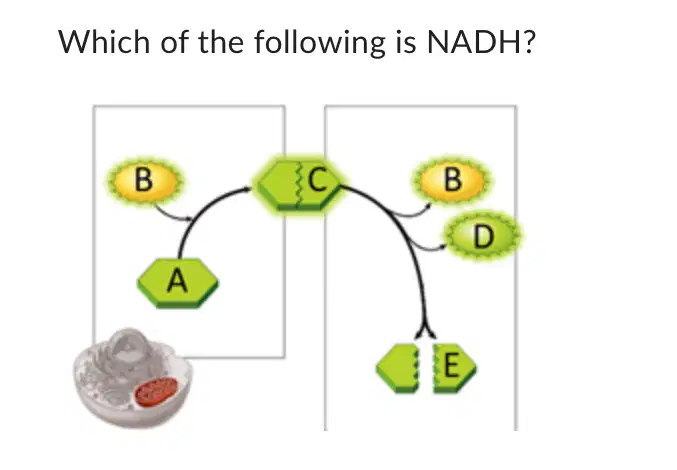
What is the name of this process?
Oxidation of pyruvate
Glycolysis
Cyclic pathway
Krebs cycle
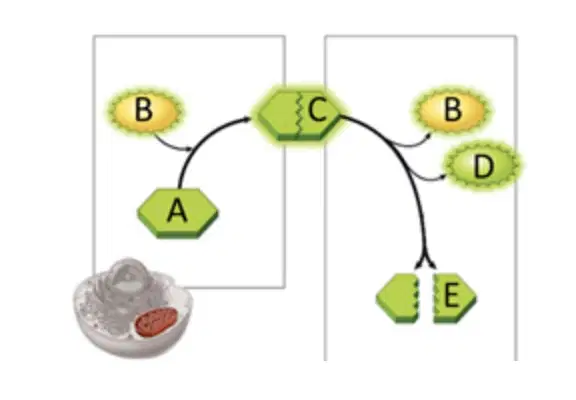
Which of the following is G3P?
B
A
E
D
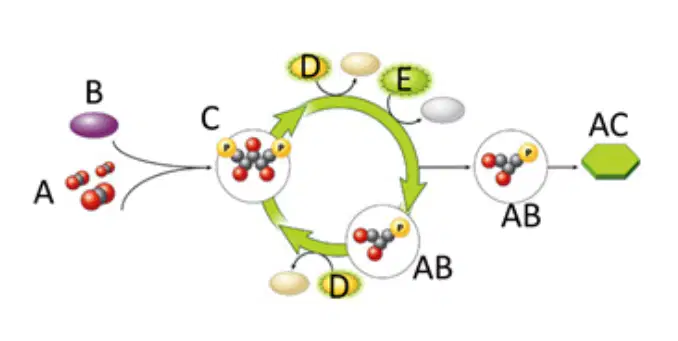
Whats the name of this process?
Krebs cycle
Glycolysis
Calvin cycle
Cyclic pathway
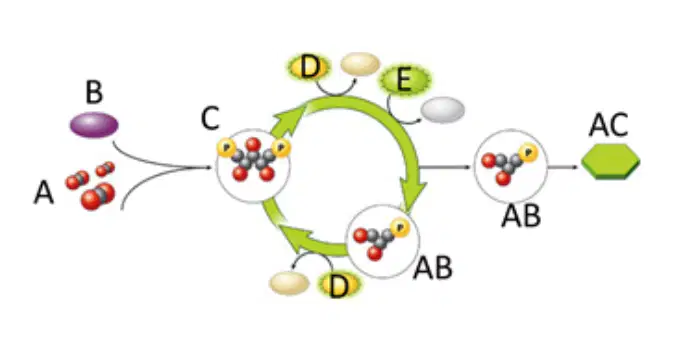
Where does this process occur?
Lumen
Stroma
Inner membrane
Intermembrane space
Which of the following is indicating glucose?
C
AB
AC
A
Photosynthesis is performed by all of the following EXCEPT
Algae
Cyanobacteria
Mushrooms
Plants
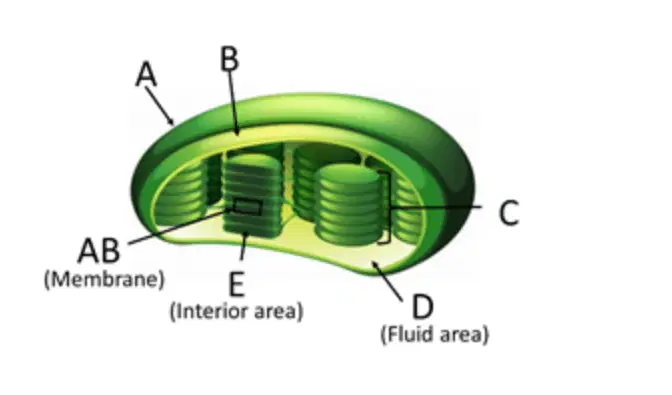
Which of the following is the lumen?
D
B
E
AB
Carob fixation is the transition from inorganic to organic carbon.
FALSE
TRUE
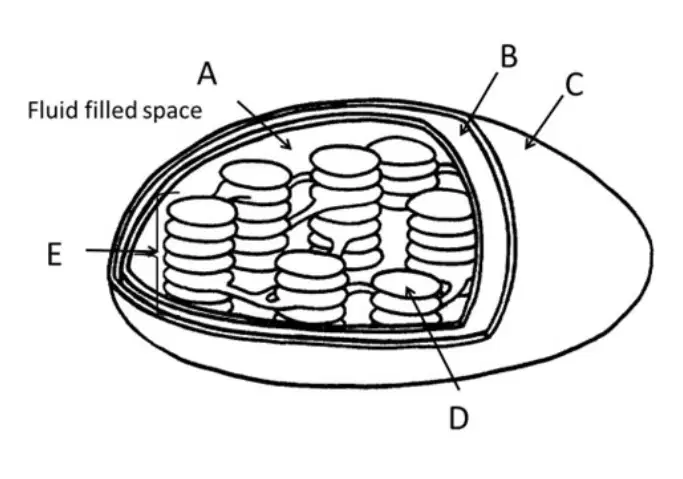
Which of the following is pointing to the thylakoid?
A
D
E
B
Which environmental factor does not lead to modifications of the photosynthetic process?
Abundant water
Water limitation
Light intensity
CO2 limitation
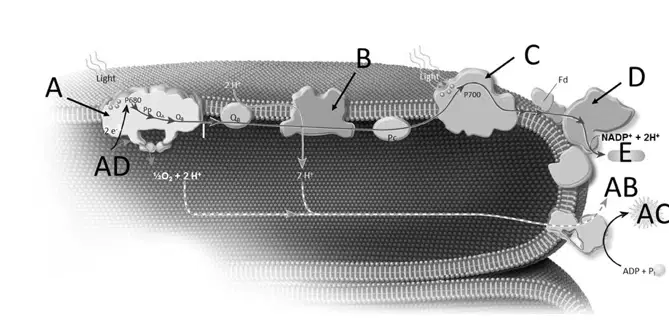
Which of the following is pointing to PSII?
C
AD
E
AC
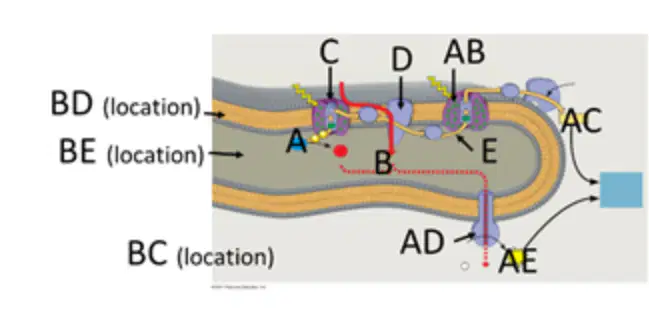
Which phtosystem is used during the cyclic pathway?
AD
AC
AB
C
Where do animals obtain their organic molecules?
Water
By performing photosynthesis
From their food
From sunlight
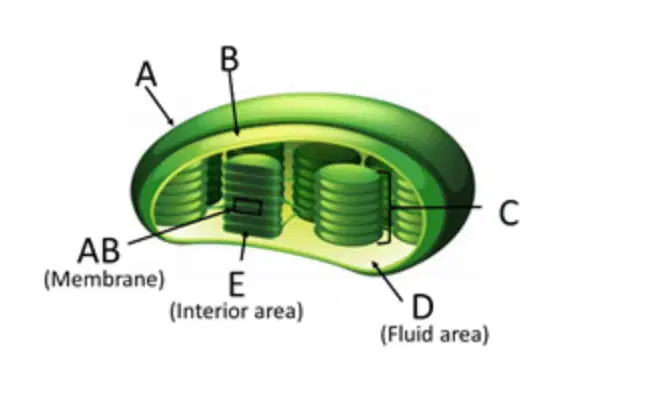
Where would you find the highest concentration of glucose?
B
AB
D
E
Which of the following is not an important product of photosynthesis?
Organic carbon source (=glucose)
Energy stored in a chemical form (=glucose)
O2
NADH and FADH2 (=e-carriers)
A C3 plant is suffering from water loss. It closes its stomata and starts breaking down its own molecules to form CO2. What is this process called?
Photorespiration
Fermentation
CAM
C4
Under what conditions do plants become CO2 limited?
Cold and humid
Cold and wet
Cold and cloudy
Hot and dry
Where are enzymes located in the cell?
They are all housed in the nucleus
They are all housed in the Golgi body
They aren’t inside cells
They are located where they work
Enzymes work by _____ the activation energy.
Extending
Eliminating
Lowering
Delaying
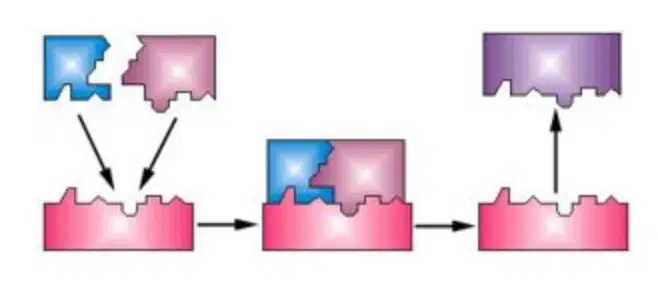
Which of the following best describes this reaction?
Anabolic
Catabolic
Redox
Hydrolysis
Which of the following is an inorganic molecule or atom(i.e zinc) that helps an enzyme function?
Substrate complex
Allosteric siter
Cofactor
Active site
Which type of reaction often releases energy from the bonds of the substrate ?
Kinetic reaction
Potential reaction
Redox reaction
Catabolic reaction
Glucose is an example of
Entropy
Potential energy
Kinetic energy
Radiant energy
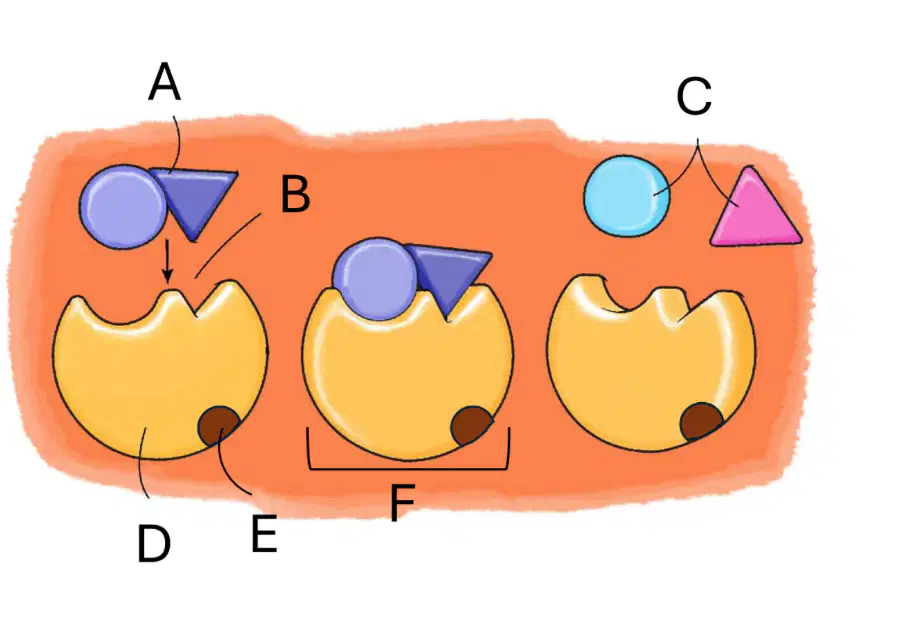
Which of these is the enzyme-substrate complex?
A
B
C
D
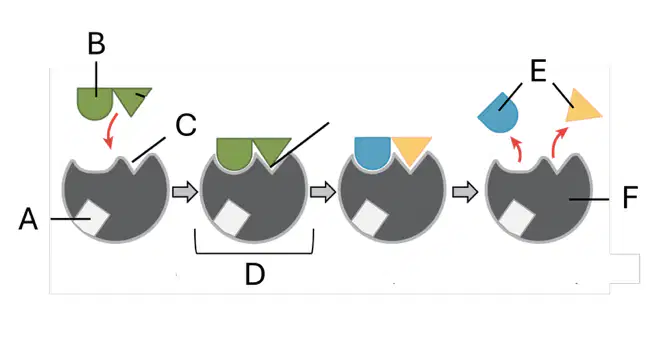
Which of these is the enzyme?
A
B
C
D
In the following equation, H=G+TS,T represents total energy.
True
False
During the light reactions,light energy is transferred to an electron (chemical energy) . This is an example of
1st law of thermodynamics
Entropy
3rd law of thermodynamics
2nd law of thermodynamics
Enzymes are a type of
Nucleic acid
Triglyceride
Protien
Phospholipid
Which of the following is not true regarding redox reactions?
A neutron is moved from one molecule to another
The reducing agent donates an electron
The oxidation atom becomes less negative
The reduced atom becomes more negative

Which of the following is being passed from protien to protien down to the membrane?
N2
e-
H+
Cl-

Which of the following is responsible for the production of ATP?
AC
A
B
E
AD
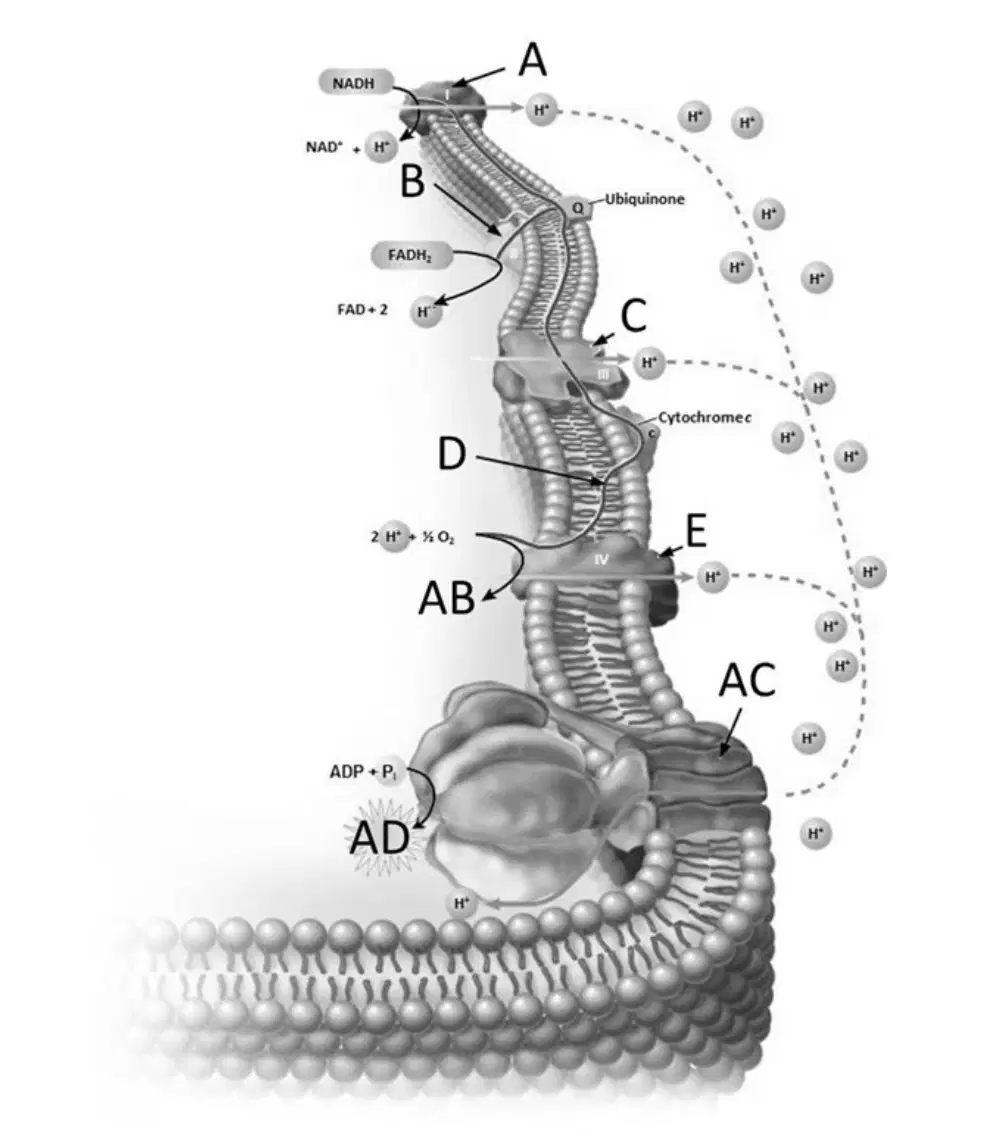
Which of the following is pointing to the protien complex IV?
A
C
B
E
AD

Which enzyme oxidizes NADH?
A
AB
D
C
The six carbons that make up glucose are broken down to_____ during the ______.
CO2,electron transport chain
CO2, oxidation of pyruvate and citric acid cycle
CO2, Calvin cycle and glycolysis
CO, light reactions
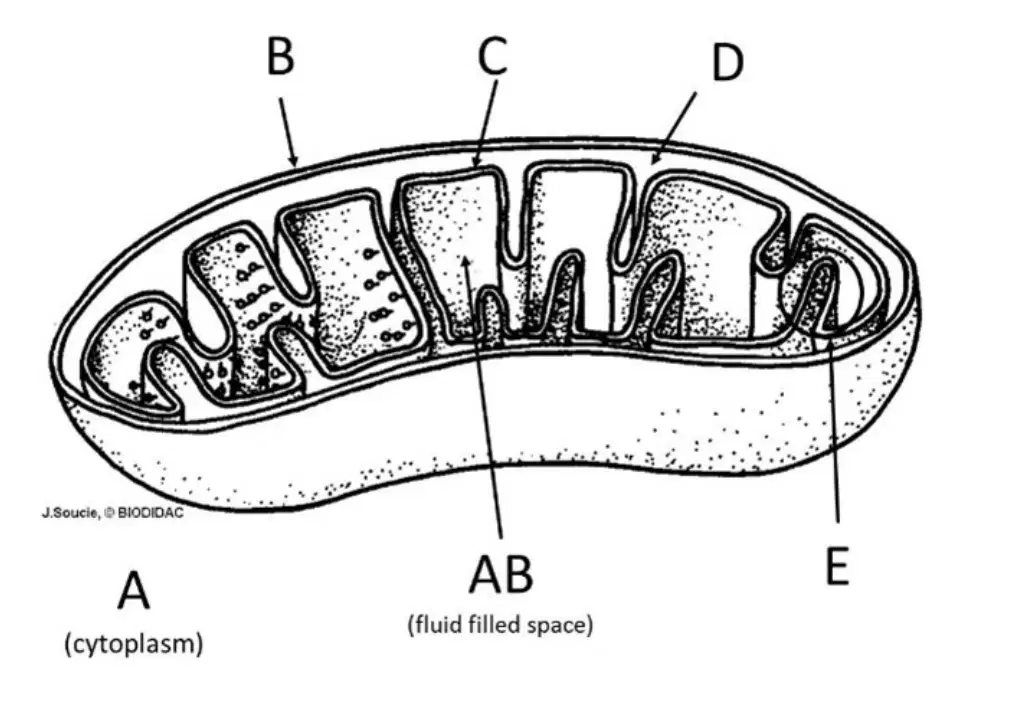
Where does glycolysis occur?
C
E
A
B
AB
What are the products of aerobic respiration?
H2O + Light E
Pyruvate +NADH +ATP
C6H1206+O2
CO2+H20+ATP
ATP+NADPH+CO2
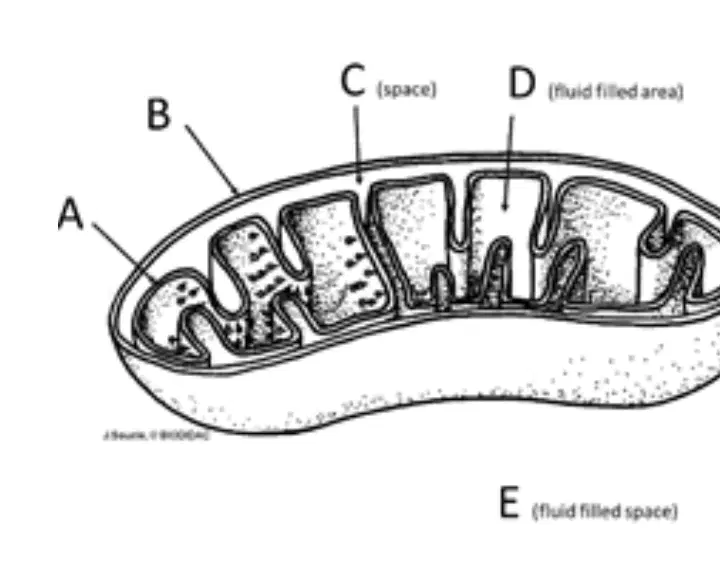
Where does the ETC occur?
A
C
B
D
E
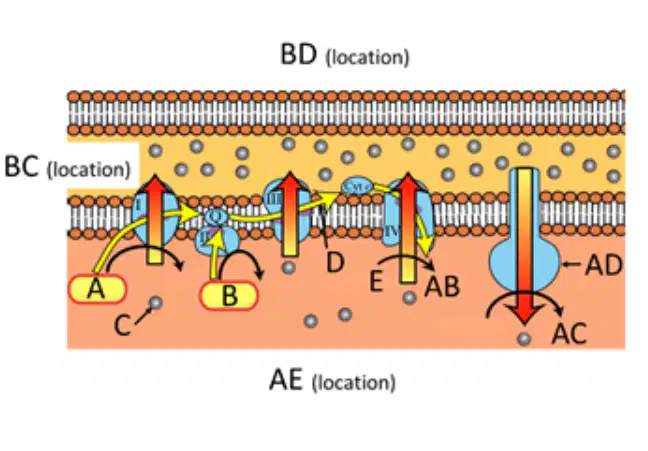
This process is occuring in the
Rough ER
Nucleus
Mitochondria
Chloroplast
Cytosol
Which of the following is the starting point of the light reaction cyclic pathway?
PSI
PSII
ATP synthase
Cytochrome oxidase
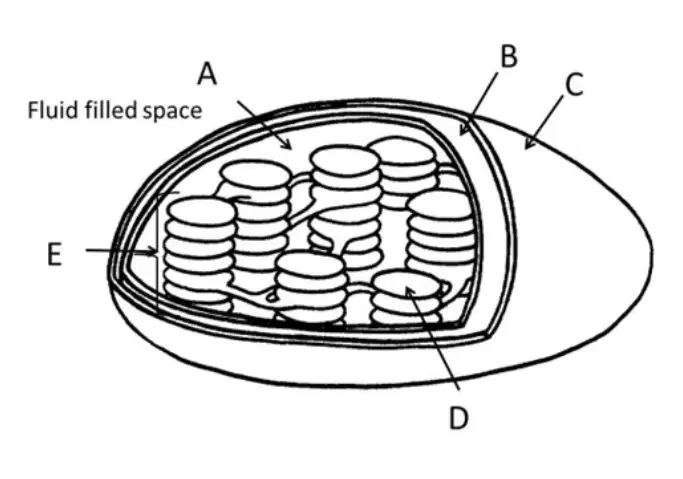
Which of the following is pointing to the stroma?
B
A
D
C
During the light reactions, light energy is used to
Energize electrons
Convert choleterol into vitamin D
Create CO2
Move water across the membrane
What is the purpose of the antennae located in the photosystem?
Absorbs light energy
Produces glucose
Produces CO2
Absorbs light energy
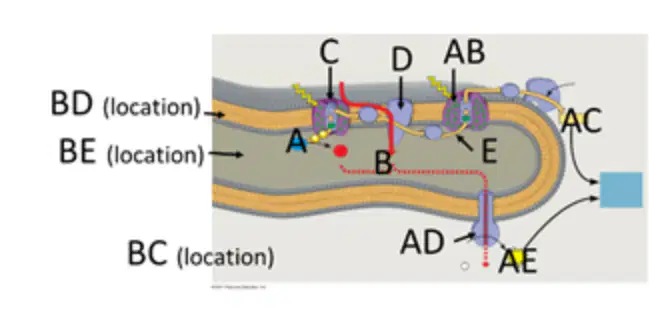
Which of the following is indicating NADPH?
E
AE
AC
A
B
Which of the following are the reactants of photosynthesis?
CO2+H2O+Light E
ATP+NADPH+CO2
ATP+NADPH+O2
Pyruvate+NADH+ATP
Which plant organ is specialized for performing photosynthesis?
Leaves
Roots
Fruits
Flowers
Stems
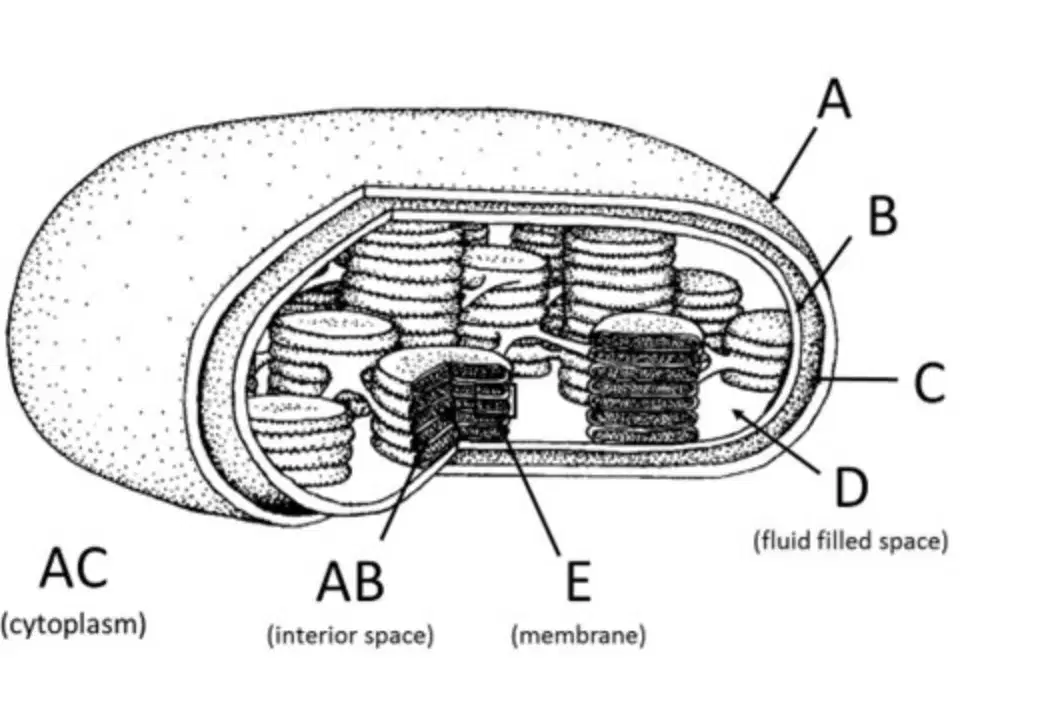
Which of the following is indicating the lumen?
AB
C
B
A
E
What two products are produced during the Calvin cycle
Glucose and ATP
H2O and RuBisCo
H+ and ATP
NADPH and ATP
If a plant lacked the abililty to produces thylakoids,which process would be impacted?
Cellular respiration
Fermentation
Light reactions
Gene expression
What happenes to the enzyme at the end of a chemical reaction?
It acts as a competitive inhibitor for other enzymes
It is broken down and used for amino acids
It is ready to perform the same reaction again
It is broken and used for energy
It becomes part of the product
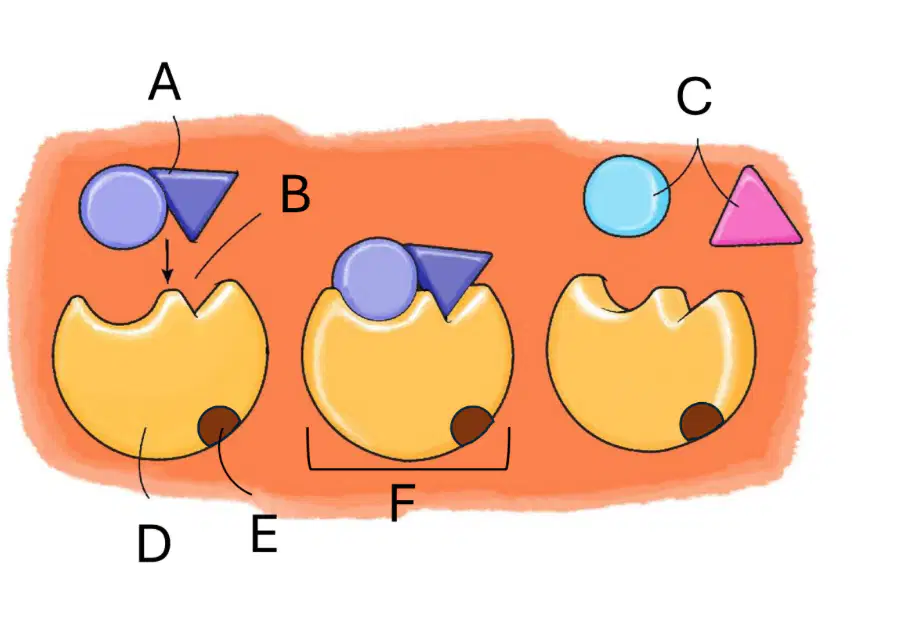
Which of the following best describes this reaction?
Endergonic
Dehydration
Catabolic
Anabolic
Redox
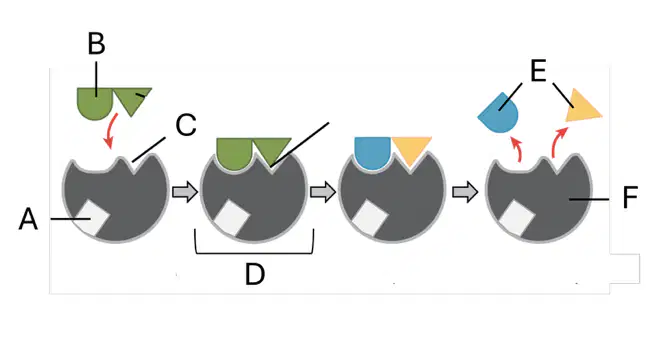
Which of these is the allosteric site?
A
B
C
D
E
During a reaction, an electron is transferred from molecule A to molecule B. This is an example of an
Redox reaction
Potential reaction
Catabolic reaction
Redox reaction
Which of the following are CAM plants?
Aquatic plants
Cacti and succulents
C3 plants (i.e roses, daises, tomatoes)
C4 grasses (i.e corn,sugarcane,bermudgrass)
Carnivorous plants

Where would you find the photosystems?
A
B
C
AC
AB
The molecule that is replenshied at the end of each cycle is a compound called malate
TRUE
FALSE
Which of the following not true regarding photosystems?
PSII spits water and performs linear pathway
Have an antennae made up of pigments
A reaction center that can pass off an electron
PSI that performs the cyclic pathway
Located in the thylakoid
Which equation best describes what occurs during light reactions?
CO2+H2O+light” glucose +O2
Glucose +O2”CO2+H2O+energy
H2O+light”ATP+NADPH+O2
Glucose+ATP”acetyl CoA+ATP+NADH
What is the end product produced by this process?
ATP only
2 acetyl CoA, 2 CO2, 2 NADH
1 ATP , 1 NADPH ,O2
6 NADH,2FADH,2 GTP,4 CO2
2 pyruvate,4 ATP , 2NADH
Which of the following is produced during the cyclic pathway?
1 ATP : 1 NADPH
ATP only
2 ATP : 1 glucose
1 NADPH : 5 RuBP
Which of the following are the reactants of photosynthesis?
C6H1206+O2
Pryuvate +NADH +ATP
ATP + NADPH +CO2
CO2 +H2O +Light E
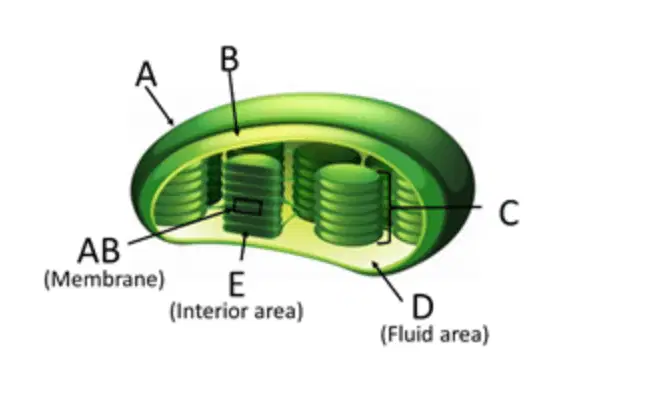
Which of the following is the inner membrane?
AB
C
A
B
E
Fatty acids enter aerobic resperation during
Glycolysis
Krebs (citric acid ) cycle
ETC
oxidation of pyruvate
Calvin cycle
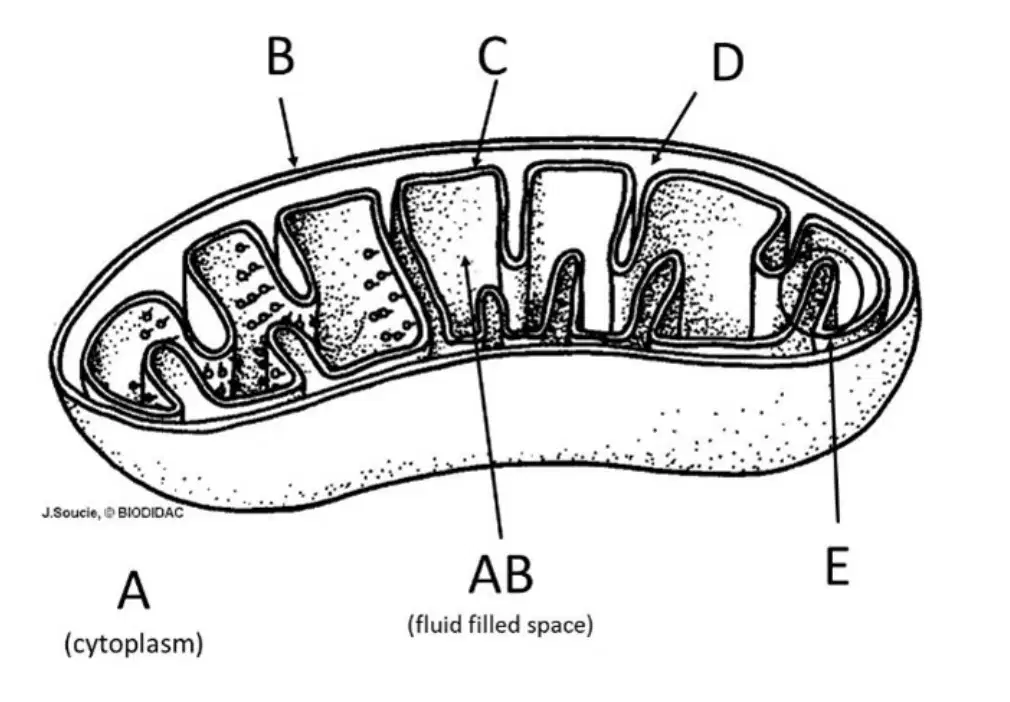
Which of the following is pointing to the cristae?
B
AB
E
A
Oxidation of pyruvate is catabolic reaction.
TRUE
FALSE
Which of the following is not a stage of cellular respiration?
Calvin cycle
Electron transport chain
Oxidation of pyruvate
Krebs (citric acid) cycle

