
 Worksheets
Page 1
Total questions: 100
Worksheet time: 50mins
The hospitality and tourism industry is frequently referred to as an "umbrella industry" because it encompasses a vast array of interconnected sectors. Which of the following best explains this concept?
It only focuses on providing shelter (lodging) during rainy seasons.
It includes diverse services such as lodging, food and beverage, travel, and events management under one service economy.
It refers to the physical umbrellas used at beach resorts and outdoor cafes.
It is an industry that only operates in tropical countries.
According to the formal definition of tourism, a person is considered a "tourist" if they travel to a place outside their usual environment for a specific period. What is the maximum duration for this stay?
No more than six consecutive months.
No more than one consecutive year for leisure or business.
A minimum of two years to establish residency.
Exactly 48 hours to ensure they are transient.
In the hospitality sector, "intangibility" is a core characteristic. Which scenario best illustrates this concept for a potential guest?
A guest can feel the thread count of the sheets before booking the room.
A guest cannot taste the steak or experience the room's ambiance until after they have purchased the service.
A guest can return a bad experience and get a physical replacement.
A guest owns the hotel room forever after they pay the nightly rate.
The Food and Beverage (F&B) sector is described as the most diverse part of the industry. Which of the following selections correctly identifies the range of establishments within this sector?
Only high-end fine dining restaurants and luxury bars.
Solely fast-food chains and cafeterias found in schools.
A variety of operations including cafes, catering, bars, clubs, and specialty restaurants.
Only the kitchens located within 5-star hotels.
Transportation is a vital pillar of the tourism industry. If a group of international travelers needs to get from London to Manila in the shortest time possible, which mode of transport is the most appropriate?
Rail transport via the Trans-Siberian network.
Water transport using a luxury cruise liner.
Air transport via a commercial airline.
Land transport using an international bus line.
The "MICE" sector is a highly profitable niche. If a global pharmaceutical company wants to display its new products to thousands of industry professionals, which category of MICE does this fall under?
Meetings
Incentives
Conventions
Exhibitions
"Perishability" is a major challenge for hotel managers. If a hotel has 50 empty rooms on a Tuesday night, what happens to the potential revenue for those rooms on Wednesday?
The revenue is "stored" and can be added to Wednesday's sales.
The revenue is lost forever because the "time-space" of those rooms cannot be sold retroactively.
The hotel can sell those same Tuesday dates later in the month.
The guests are charged double on Wednesday to make up for Tuesday.
Ecotourism is a growing trend in the industry. What is the primary motivation for a traveler choosing an ecotourism package over a standard city tour?
To find the cheapest possible accommodation in a rural area.
To visit high-tech shopping malls and urban entertainment centers.
To engage in responsible travel to natural areas that conserves the environment and improves the well-being of local people.
To participate in high-speed motor racing in forest environments.
Intermediaries like Travel Agencies and Tour Operators play different roles. Which of the following best describes the role of a "Tour Operator"?
They only sell individual flight tickets to walk-in customers.
They act as "wholesalers" who bundle transport, accommodation, and tours into a single package.
They are only responsible for cleaning the buses used during a trip.
They work exclusively for the government to monitor passport control.
Why is the hospitality industry considered "labor-intensive" despite the rise of modern technology?
Because it requires a lot of manual digging and construction.
Because high-quality service depends heavily on human interaction, empathy, and personal attention which machines cannot fully replicate.
Because hotels are legally required to hire more people than they need.
Because technology is not allowed to be used in luxury hotel lobbies.
The Front Office is often called the "hub" of the hotel. If a guest arrives at 2:00 PM and wants to check in, which specific system does the Front Desk Clerk use to see if a room is ready?
The Accounting Ledger
The Property Management System (PMS)
The Maintenance Log
The Kitchen Display System
Within the Housekeeping department, which of the following duties is most critical for ensuring the health and safety of arriving guests?
Fluffing the decorative pillows on the lobby sofa.
Sanitizing high-touch surfaces and ensuring the room meets hygiene standards.
Arranging flowers in the hotel garden.
Ironing the uniforms for the security team.
A "Night Auditor" performs a unique role that bridges two departments. Which two departments are these?
Kitchen and Housekeeping
Front Office and Accounting
Security and Sales
Human Resources and Maintenance
In Food and Beverage operations, what is the primary difference between "Room Service" and "Banquet Service"?
Room service is for large groups; Banquet is for individuals.
Room service delivers food to guest rooms; Banquet manages large-scale events like weddings in function halls.
Room service only serves breakfast; Banquet only serves dinner.
There is no difference; they are the same department.
The Maintenance and Engineering department is the "backbone" of a hotel. If a guest reports that the air conditioning is making a loud noise but still cooling, what type of maintenance should be performed?
Emergency Maintenance
Preventive Maintenance
Renovation
Reactive Maintenance
Security in a hotel is not just about "guards at the door." Which of the following is a proactive security measure?
Waiting for a theft to happen before calling the police
Regular patrolling, monitoring CCTV, and implementing strict access control for guest floors
Allowing anyone to enter the guest elevators without a key card
Keeping all fire exits locked so guests cannot leave without paying
The Human Resources (HR) department plays a strategic role in hospitality. When a hotel is opening a new wing, what is HR's most immediate responsibility?
Buying the furniture for the new rooms
Recruiting, interviewing, and training new staff to man the new wing
Designing the marketing posters for the grand opening
Fixing the plumbing in the new bathrooms
Which department is responsible for "Revenue Management," which involves adjusting room rates based on demand?
Housekeeping
Sales and Marketing (often working with Front Office)
Maintenance
Security
A guest is very unhappy because their room was not ready at the promised time. Which department is primarily responsible for "Guest Recovery" (making the situation right)?
The Kitchen
The Front Office
The Accounting Department
The Landscaping Team
In the "Back of the House" (BOH), which area is responsible for the heavy cleaning of pots and pans used by the chefs?
The Bar
The Stewarding Department
The Front Desk
The Concierge
Strategic Management is often described as a "long-term" process. How does it differ from "Operational Management"?
Strategic management is about daily tasks; Operational is about 10-year plans.
Strategic management focuses on the overall direction and "winning" in the market; Operational focuses on day-to-day efficiency.
There is no difference; they are the same thing.
Strategic management is only for small businesses; Operational is for large hotels.
A "Black Swan" event is a term used in strategic planning. Which of the following is the best example of a Black Swan event for the tourism industry?
The arrival of the summer season in April.
A local competitor offering a 10% discount.
The global COVID-19 pandemic which halted international travel.
A scheduled renovation of the hotel lobby.
Corporate-level strategy is the highest level of planning. If the "Jollibee Group" decides to buy a coffee chain like "The Coffee Bean & Tea Leaf," what type of strategy are they using?
Functional-level strategy
Business-level strategy
Corporate-level strategy
Operational-level strategy
Business-level strategy focuses on how a specific unit competes. If a hotel like "Sogo" decides to compete primarily by offering the lowest hourly rates in the city, which of Michael Porter's strategies are they using?
Differentiation
Cost Leadership
Focus Niche
Innovation
Conversely, if a "Boutique Hotel" offers a unique "underwater dining experience" that no other hotel has, what strategy are they employing?
Cost Leadership
Differentiation
Mass Marketing
Price Cutting
Functional-level strategies are the "action plans" for departments. Which of the following is a "Marketing Functional Strategy"?
Deciding to sell the hotel to a foreign investor.
Launching a "Buy 1 Take 1" promo on social media to increase restaurant foot traffic.
Changing the hotel's legal name.
Buying a new fleet of airplanes for a parent company.
In the Strategic Management Model, "Environmental Scanning" is Phase 1. What is the primary tool used during this phase?
A Hammer and Nail
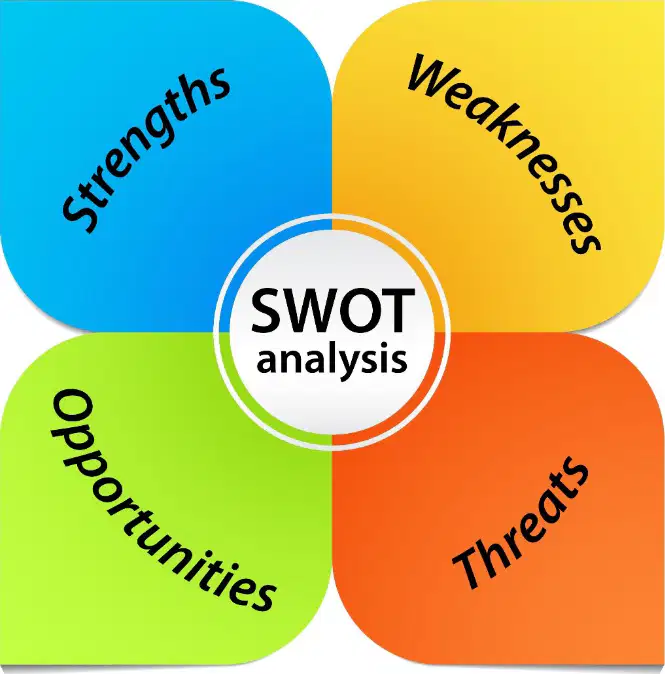
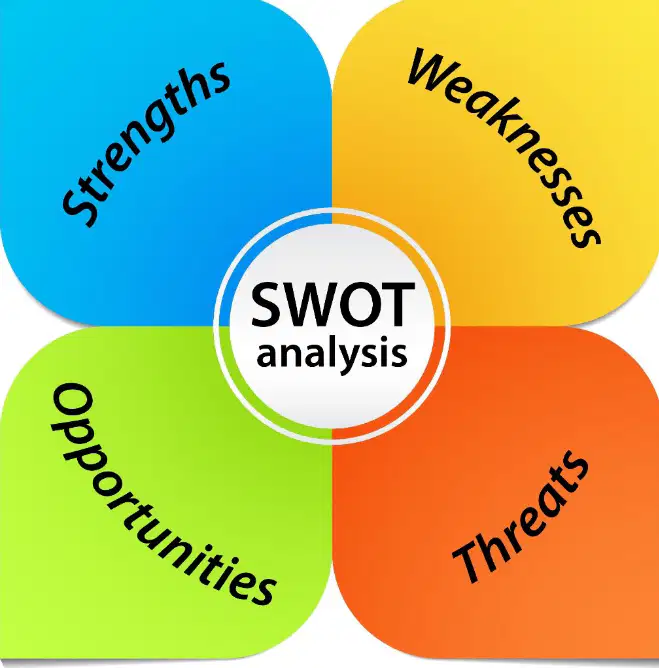
SWOT Analysis (Strengths, Weaknesses, Opportunities, Threats)
A Financial Audit
Employee Payroll
When performing a SWOT analysis, "Strengths" and "Weaknesses" are considered:
External factors that the company cannot control.
Internal factors that exist within the organization.
Only related to the weather.
Only related to the competitors.
Phase 2 of the model is "Strategy Formulation." What is the main output of this phase?
The hiring of new waiters.
The creation of the Vision, Mission, and specific Strategic Plans.
The actual cleaning of the hotel.
The final profit report at the end of the year.
Phase 3 is "Strategy Implementation." Why is this phase often considered the most difficult?
Because it involves writing on paper.
Because it requires putting the plan into action, which involves changing people’s behavior and organizational culture.
Because it is the first step of the process.
Because it doesn't involve any employees.
Evaluation and Control is the final phase. If a hotel's goal was to reach 90% occupancy but they only reached 70%, what should they do in this phase?
Ignore the data and hope for the best.
Fire all the guests.
Analyze why the goal was missed and take "Corrective Actions."
Delete the goal and pretend it never existed.
A company's "Vision Statement" answers which of the following questions?
What do we do every day?
Who are our current customers?
What do we want to become in the future?
How much money did we make yesterday?
Which of the following is an "External Opportunity" for a hotel in a SWOT analysis?
The hotel has a very talented Chef.
The government is building a new international airport 5 minutes away.
The hotel's building is old and needs repair.
The hotel has a large cash reserve.
In a "Focus" or "Niche" strategy, a business:
Tries to sell to everyone in the world.
Targets a specific, narrow segment of the market (e.g., only vegan travelers).
Always has the highest prices.
Only sells one product.
Strategic Management helps a firm achieve "Sustainable Competitive Advantage." What does this mean?
The firm is better than competitors for just one week.
The firm has a unique position that is difficult for competitors to copy over a long period.
The firm has the most expensive logo.
The firm only operates during the day.
In the context of TQM, how is "Quality" primarily defined?
Making the most expensive product possible.
Meeting or exceeding the customer's expectations and requirements.
Adding as many features as possible, even if they aren't useful.
Following the manager's personal preferences.
Philip Crosby, a quality pioneer, famously defined quality as "Conformance to Requirements." What does this mean for a hotel housekeeper?
Cleaning the room however they feel like that day.
Following the exact set of standards (requirements) provided by the hotel for every room.
Only cleaning the parts of the room the guest can see.
Joseph Juran defined quality as "Fitness for Use." If a guest buys a "budget" hotel room, what does "fitness for use" mean in this context?
The room must have gold-plated faucets.
The room must provide a safe, clean, and functional place to sleep as promised.
The room must be as large as a palace.
The room doesn't need to be clean because it is cheap.
Total Quality Management (TQM) is described as a "Management Philosophy." What is its core focus?
Inspecting products at the very end of the line and throwing away the bad ones.
Continuous improvement of all processes and involving every employee in the pursuit of quality.
Making sure the CEO is the only one who makes decisions.
Keeping the quality standards a secret from the staff.
One of the 8 principles of TQM is "Customer Focus." Why is this the most important principle?
Because the customer pays the employees' salaries.
Because quality is defined by the customer; if they aren't happy, the business fails.
Because customers are always right, even when they are wrong.
Because it is the easiest principle to follow.
"Continuous Improvement" (Kaizen) suggests that:
Once a process is good, you never have to change it again.
Small, ongoing changes and improvements lead to significant long-term excellence.
You should only improve things when they break.
Improvement is only the job of the management.
In TQM, "Employee Involvement" means that:
Employees are allowed to do whatever they want.
Employees are empowered to identify quality problems and suggest solutions.
Employees are blamed for every mistake the company makes.
Employees are not allowed to talk to the management.
The "Process-Centered Approach" in TQM means focusing on:
Only the final result.
The steps and activities (the process) that create the result, ensuring they are efficient and error-free.
The personality of the employees.
The amount of money spent on marketing.
"Fact-Based Decision Making" requires managers to:
Make decisions based on their "gut feeling."
Use data, metrics, and evidence to guide their choices.
Follow what other companies are doing without asking why.
Ask the youngest employee for their opinion only.
TQM often leads to "reduced costs" in the long run. How is this possible?
By buying the cheapest possible ingredients.
By reducing "waste"—such as the cost of fixing errors, handling guest complaints, and re-doing work.
By cutting the salaries of the staff.
By turning off the lights and water in the hotel.
Manufacturing Quality refers to physical products. "Performance" is one of its dimensions. If you are buying a car, what is an example of "Performance"?
The color of the paint.
How fast it can accelerate and how well it handles on the road.
The brand of the radio inside.
The free keychain that comes with it.
In Manufacturing Quality, "Durability" is defined as:
How many "extra" features the product has.
The amount of use one gets from a product before it physically deteriorates or needs replacement.
How beautiful the product looks.
How easy it is to find a repairman for the product.
Service Quality is often measured using the "RATER" model. What does the "A" in RATER stand for?
Appearance
Assurance
Accuracy
Action
Under the RATER model, if a hotel lobby is messy, the staff's uniforms are dirty, and the equipment is broken, which dimension is failing?
Reliability
Empathy
Tangibles
Responsiveness
"Responsiveness" in the RATER model is best demonstrated by:
A waiter who ignores a guest for 20 minutes.
A Front Desk agent who immediately addresses a guest's request for extra towels.
A manager who hides in their office.
A brochure that has no contact information.
Reliability (RATER) means:
Being nice to guests.
Performing the service correctly the first time.
Having a lot of money.
Using expensive computers.
Empathy (RATER) means:
Giving guests free food.
Providing individualized, caring attention to guests.
Following the rules strictly.
Knowing how to use the software.
A "Motel" is primarily designed for:
Business conferences.
Motorists traveling along highways.
Long-term residents.
Backpackers.
Which is a "Secondary Attraction"?
The Great Wall of China.
A local souvenir shop near the Great Wall.
Mount Everest.
The Eiffel Tower.
Inseparable (Service Characteristic) means:
You can take the service home.
The service is produced and consumed simultaneously.
The service is always the same.
The service lasts forever.
A "Suite" in a hotel usually has:
Only one bed.
More than one room or a separate living area.
No windows.
Shared bathrooms.
Revenue Management's goal is:
To hire more people.
To sell the right room, to the right person, at the right time, for the right price.
To clean the rooms faster.
To reduce the cost of electricity.
"Internal Customers" in TQM are:
The people who buy the rooms.
The employees who rely on each other's work to provide the final service.
The suppliers of the hotel.
The government inspectors.
"Quality Circles" are:
Shapes drawn on the floor.
Small groups of employees who meet to discuss and solve work-related problems.
The rings of a coffee cup.
The guest elevators.
The "Cost of Poor Quality" includes:
Marketing budgets.
Refunds, lost reputation, and fixing mistakes.
Employee salaries.
Electricity bills.
What is "Heterogeneity" in service?
Services are always identical.
Service quality varies because it depends on the person providing it and the timing.
Services are made in a factory.
Services never change.
Which department handles "Guest Folios" (bills)?
Housekeeping.
Front Office.
Security.
Kitchen.
"Incentive Travel" is:
A cheap bus ticket.
Travel rewarded to employees for reaching business goals.
Traveling for medical surgery.
Traveling to see a concert.
A "Convention" is:
A small board meeting.
A large gathering of people from the same industry or organization.
A type of food.
A hotel room.
"Strategic Fit" means:
Having the right sized uniforms.
Aligning the company's internal resources with external opportunities.
Fitting all the furniture in a room.
The CEO being physically fit.
"Benchmarking" is:
Painting the benches in the park.
Comparing your performance against the best in the industry.
Sitting down during work.
Counting the number of guests.
"Zero Defects" is a concept by:
Juran.
Crosby.
Deming.
Taylor.
The "Plan-Do-Check-Act" (PDCA) cycle is used for:
Hiring staff.
Continuous improvement of processes.
Cooking food.
Cleaning rooms.
A "Hostel" is known for:
High prices and luxury.
Budget-friendly, shared dormitories.
Large casinos.
Airport locations only.
"Maintenance" prevents "Downtime." Downtime is:
When employees go home.
When a room or facility cannot be used because it is broken.
When the sun goes down.
When the hotel is full.
"Cross-training" employees is strategic because:
It makes them tired.
It allows employees to perform different roles, making the team more flexible.
It costs less money.
It is required by law.
The "Front of House" (FOH) refers to:
The backyard of the hotel.
Areas where staff and guests interact directly.
The employee locker rooms.
The basement.
"Valet Parking" is a service where:
Guests park their own cars.
Staff park the guest’s car for them.
Guests take the bus.
The hotel sells cars.
In SWOT, a "Threat" could be:
A friendly competitor.
A new law that increases taxes on hotels.
A clean lobby.
A happy employee.
"Strategic Intent" is:
A mistake in planning.
A high-level ambition that focuses the whole organization on a goal.
A type of contract.
The name of a hotel.
"Service Recovery" is:
Finding a lost suitcase.
The process of fixing a service failure and regaining guest trust.
Replacing a lightbulb.
Painting the walls.
"Sustainability" in tourism means:
Making money today and ignoring tomorrow.
Meeting needs of the present without compromising the future.
Never changing the prices.
Only using plastic.
"Conformity" (Manufacturing) means:
The product looks unique.
The product meets pre-set design specifications.
The product is cheap.
The product is sold globally.
"Serviceability" refers to:
How many servers a restaurant has.
The speed and ease of getting a product repaired.
The taste of the food.
The cleanliness of the floor.
TQM "Leadership Commitment" means:
Leaders tell others what to do but don't follow it themselves.
Leaders actively lead the quality culture and provide resources.
Leaders are never in the office.
Leaders only care about the stock price.
An "Eco-resort" uses:
Only solar power and recycled water.
Large amounts of plastic.
Chemicals in the garden.
Wasteful processes.
"Guest Satisfaction" is measured through:
Looking at the clouds.
Surveys, reviews, and feedback forms.
The number of cars in the lot.
The weight of the guests.
"Strategic Alliances" are:
When two hotels fight each other.
Partnerships between businesses to achieve common goals (e.g., airline and hotel).
Hiring a new manager.
Buying a new TV.
"Total" in TQM means:
The total amount of money.
It involves every department and every person.
The total number of rooms.
The total weight of the building.
"Prevention" in TQM is better than:
Planning.
Inspection (Correction).
Success.
Profit.
A "Boutique Hotel" is usually:
Large and standardized.
Small, stylish, and unique.
Located at airports.
Very cheap.
"Psychographic" segmentation in strategy looks at:
Where guests live.
Guests' lifestyles, values, and personalities.
Guests' age and gender.
How much guests weigh.
"Competitive Intelligence" is:
Being smarter than everyone.
Legally gathering information about competitors to make better plans.
Stealing secrets.
Hiring competitors' staff.
"Standard Operating Procedures" (SOPs) are:
Suggestions.
Step-by-step instructions to ensure consistency in tasks.
A type of music.
The hotel's menu.
"Up-selling" is:
Selling the hotel for a higher price.
Encouraging a guest to buy a more expensive room or service.
Giving a discount.
Selling the hotel's old furniture.
"Direct Competition" for a 5-star hotel is:
A local fast-food stall.
Another 5-star hotel in the same area.
A bus station.
A movie theater.
"Diversification" (Corporate Strategy) means:
Focusing on only one product.
Entering new markets with new products.
Hiring diverse staff.
Painting the rooms different colors.
"Lean Management" in TQM focuses on:
Hiring skinny people
Eliminating waste and unnecessary steps in a process
Increasing the prices
Buying more equipment
"Empowerment" means:
Giving employees the authority to make decisions to help guests
Giving employees more work for no pay
Giving employees electric tools
Giving employees a key to the building
"Core Competency" is:
A basic skill everyone has
A unique capability that gives a firm a competitive edge
The name of the hotel's owner
The hotel's address
"Internal Audit" checks:
If the guests are happy
If the company is following its own rules and standards
The weather
The price of competitors
"Globalization" in tourism means:
Only traveling within your own city
Increased connectivity and travel between countries
Building a giant globe
Closing the borders
"Vision" is the "_______" of the company.
Heart
Dream
Feet
Wallet
"Quality Audit" ensures:
The food is salty
Standards are being consistently met
The staff are young
The lobby is quiet
The ultimate goal of strategic management and TQM is:
To work harder
To create sustainable value for customers and stakeholders
To spend all the money
To have the most awards

