
 Worksheets
The Industrial Revolution
Total questions: 87
Worksheet time: 44mins
Which statement best describes the Industrial Revolution’s basic change in production?
Shift from handcraft cottages to factory power
Shift from steam factories to village work
Shift from mass production to handmade goods
Shift from water wheels back to animal labor
Where did the Industrial Revolution begin around 1760?
Northern Italy states
The American colonies
Qing China regions
Great Britain in Europe
Which industry first used modern production methods during early industrialization?
Coal mining shafts
Textiles with cotton yarn
Shipbuilding yards
Railway construction
What was a key difference between cottage industries and the factory system?
Home-based handwork versus centralized machines
Luxury goods versus basic food items
Skilled guilds versus unskilled farmers
Government ownership versus private investors
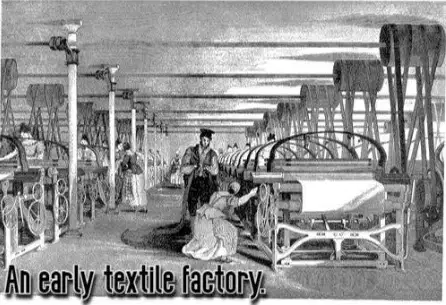
What did James Hargreaves’s spinning jenny allow a worker to do?
Dye yarn with chemical colors
Card cotton into cleaner fiber
Weave wider cloth bolts
Spin multiple spools at once
Which invention used water power to produce stronger yarn than the spinning jenny?
Newcomen’s beam pump
Watt’s rotary engine
Crompton’s mule frame
Arkwright’s water frame
Samuel Crompton’s spinning mule combined features of which earlier devices?
Spinning jenny and water frame
Power loom and carding drum
Steam engine and fly shuttle
Lathe tool and blast furnace
Why was James Watt’s 1776 steam engine significant?
It made power efficient for factories and transport
It replaced iron with cheaper wood fuel
It ended the need for rivers entirely
It primarily improved farm plows and reapers
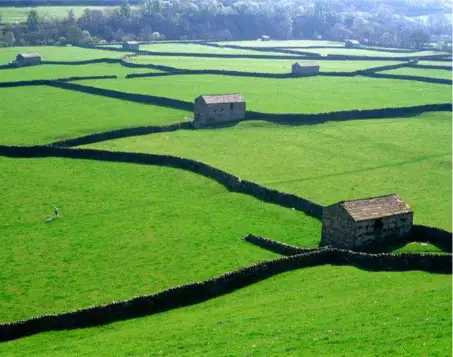
Which change in farming increased urban migration during the 1700s?
Banning fences around village commons
Return to three-field medieval system
Switch from sheep raising to vineyards
Enclosure of land by wealthy owners
Improved crop rotation and selective breeding mainly led to what result?
Less need for farmers to plant fields
Mechanized harvesting before 1700
Immediate fall in grain prices everywhere
Higher food outputs and healthier livestock
Which set correctly lists the three factors of production that supported British industry?
Gold, guns, and glory
Banks, bales, and barges
Land, labor, and capital
Soil, seeds, and seasons
Which natural resources were especially important for Britain’s early industry?
Precious silver veins and tin
Vast oil fields and natural gas
Abundant coal deposits and iron ore
Hardwood forests and rubber
How did Britain’s banking and legal systems help industrial growth?
They limited joint-stock company charters
They nationalized all private factories
They fixed prices and banned competition
They enabled loans and protected patents
Why did political conditions in Britain around 1700–1800 favor industrialization?
Foreign occupations directly managed factories
Relative stability and peace encouraged enterprise
Prolonged civil wars forced rapid mechanization
Abolition of Parliament centralized decisions
A factory owner in 1800 needs steady power away from rivers. Which technology best solves this problem?
Windmill-driven gear press
Watt’s improved steam engine
Hand-turned spinning wheel
Simple water-powered treadle
Which change best defines the factory system during the Industrial Revolution?
Return to handmade cottage production
Use of machinery and division of labor
Small workshops powered by hand tools
Expansion of rural home spinning only
Richard Arkwright’s water frame was significant because it could
transport coal to large cities
pump water from deep mines
smelt iron more efficiently
spin many threads at once
Cromford Mill in England is associated with
early mechanized cotton spinning
the first steam locomotive line
a model farming collective
government-financed canals project
In early factories, working hours were typically
short shifts, four days weekly
flexible hours, five days weekly
long days, six days weekly
seasonal work, three days weekly
Division of labor in factories meant that
managers rotated through machines
owners avoided hiring unskilled labor
each worker crafted whole products
workers performed specialized tasks
A major pull factor drawing people from rural areas into cities was
mandatory urban residency
expansion of cottage weaving
access to free farmland
jobs near new factories
Which statement best describes tenement housing in early industrial cities?
planned neighborhoods with clean roads
spacious apartments with gardens
crowded buildings with poor sanitation
single-family homes with safe water
One key reason factory owners hired young children was that children
demanded stronger unions
were protected by strict laws
had advanced machine skills
could be paid less wages
Compared with pre-industrial times, early factory workers were often
regulated by strict safety rules
independent and highly paid
lower-skilled and expendable
seasonal craft specialists
Which health problem commonly spread in overcrowded industrial neighborhoods?
measles and smallpox
malaria and river blindness
scurvy and heatstroke
cholera and tuberculosis
By the early 1900s in England and America, most people lived in
urban cities instead of rural areas
isolated farms instead of towns
company villages near mines
suburban garden communities
Which statement about working conditions during the early Industrial Revolution is most accurate?
short hours with generous benefits
paid vacations and health coverage
long hours with frequent accidents
strict laws ensured machine guards
How did mechanization initially affect skilled craftsmen like weavers?
decreased demand and lower income
increased pay for hand weaving
more time for custom production
greater control over factory policy
Which long-term social change emerged by the late 19th century in industrial cities?
growth of a middle class
end of urbanization trend
return to two-class society
elimination of factory labor
Which invention by Alexander Graham Bell most directly improved long-distance communication in the late 1800s?
Wireless telegraph system
Kodak portable camera
Phonograph for sound recording
Telephone for voice transmission
Thomas Edison’s improved lightbulb most directly affected daily life by
speeding up railroad travel times
increasing ship-to-shore messages
extending safe nighttime activities
curing infectious diseases quickly
Which pairing correctly matches inventor and innovation?
George Eastman — Kodak camera
Guglielmo Marconi — airplane
Edward Jenner — assembly line
Louis Pasteur — telephone
What was a major public health impact of Edward Jenner’s work in 1796?
Germ theory eliminated all illnesses
Smallpox vaccination reduced outbreaks
Sewage systems removed urban waste
Antibiotics cured bacterial infections
Louis Pasteur is best known for demonstrating that
telegraph wires carry messages
steel production powers factories
electricity can light city streets
germs cause disease and spoilage
Marconi’s early 1900s achievement allowed ships to communicate with land by
underwater telephone cables
long-distance wireless telegraph
voice radio with microphones
coded flags and signal lamps
Which statement best explains why the Wright brothers’ airplane changed life?
It immediately replaced all railroads
It transformed travel and military technology
It standardized parts for car making
It mainly improved factory ventilation
Henry Ford’s assembly line primarily
prevented the spread of urban factories
increased car prices for most buyers
reduced costs through efficient production
eliminated the need for skilled laborers
During the Gilded Age, the United States became a leader in technology partly because
inventions were produced at rapid rates
colonial laws limited new patents
farmers stopped using any machines
cities banned factory construction
A key effect of new travel and communication methods of this era was that people
depended less on photographs
moved entirely away from cities
connected in ways not possible before
stopped writing letters and books
What was the main purpose of tenement buildings in growing cities?
Provide cheap high-rise housing
House wealthy business owners
Offer luxury apartments downtown
Serve as factories for immigrants
A typical tenement apartment most likely featured
spacious kitchens with ventilation
multiple bedrooms with porches
small crowded rooms for families
private plumbing for each unit
Which problem was common in tenement buildings around 1900?
Fireproof steel construction
Ample fresh air circulation
Overabundance of green space
Poor light and ventilation
By 1900, about two-thirds of one major city’s residents lived in tenements. Which city was this?
Paris in Western Europe
New York City in the United States
Boston in New England
San Francisco on the Pacific
Most people living in tenements at the time were
European immigrants and laborers
rural farmers and landowners
wealthy factory managers
railroad executives’ families
The Tenement House Act of 1901 required buildings to include
elevators and central heating systems
private bathrooms for every resident
fireproof concrete and steel frames
out-facing windows and indoor plumbing
Which was a common reason families sent children to work around 1900?
Low wages meant households needed income
Public schools required tuition payments
Factories banned adult male workers
Unions only allowed youth apprentices
Why did some employers prefer hiring children in factories and mines?
They had advanced technical training
They could be paid less and fit into spaces
They were legally required for night shifts
They insisted on fewer work hours
Which scenario best shows a DoK 2 application of assembly line principles?
Naming the cities where tenements were built
Listing the names of famous Gilded Age inventors
Rearranging tasks so identical parts move station to station
Memorizing the year the Model T was introduced
A city official in 1901 wants to reduce fires in crowded apartments. Based on new laws and problems then, which policy would help most?
Ban immigrant families from upper floors
Require telephone lines in every tenement
Subsidize larger parlor rooms for all residents
Mandate outward-facing windows and proper ventilation
Which law first set national rules in the United States for child labor, minimum wage, and overtime pay?
Fair Labor Standards Act of 1938
Homestead Act of 1862
Interstate Commerce Act of 1887
Sherman Antitrust Act of 1890
What work risk did many child factory laborers commonly face in the early 1900s?
Exposure to space radiation daily
Injury from automobile assembly lines
Losing a limb to unsafe machinery
Drowning from flooding offices
Which organization formed in 1904 to campaign for ending child labor in the United States?
National Child Labor Committee
American Federation of Labor
Industrial Workers of the World
Knights of Labor
Who hosted the first White House Conference on Children, supporting child welfare reforms?
President William Howard Taft
President Theodore Roosevelt
President Woodrow Wilson
President Franklin D. Roosevelt
What did the Fair Labor Standards Act forbid for children under 16?
Manufacturing or mining work during school hours
Selling newspapers before sunrise only
Any work after 6 p.m. on weekdays
All work including farm chores at home
Which idea is most associated with laissez-faire in economic policy?
Strict regulation of product prices
Minimal government interference in markets
Government control of all railroads
Worker ownership of every factory
Which author argued that markets work best when left alone by government in The Wealth of Nations?
John Locke from England
Adam Smith from Scotland
Karl Marx from Germany
Robert Owen from Wales
Early socialists like Fourier believed society would improve primarily through what?
Private monopolies and tariffs
Military rule and conquest
Religious charity and tithing
Cooperation and protective laws
According to socialist thinkers, who should own the factors of production in key industries?
Foreign corporations leasing assets
Private investors seeking profit
Military juntas managing factories
The public operating for welfare
Karl Marx referred to the working class by which term?
Yeomanry
Proletariat
Bourgeoisie
Serfdom
Which statement reflects a core belief of Marx about capitalism and the working class?
Religious faith determined wages
Charity would end poverty quickly
A workers’ revolution was inevitable
Competition would enrich all equally
Marx and Engels presented their ideas about overthrowing capitalism in which work?
The Road to Serfdom
The General Theory
Das Kapital Volume IV
The Communist Manifesto
Which was one of the earliest large unions for skilled workers in the United States?
Industrial Workers of the World
Congress of Industrial Organizations
American Federation of Labor (AFL)
United Farm Workers of America
Why did unskilled or semiskilled workers have a harder time organizing than skilled workers?
They had government charters protecting unions
They owned the factory equipment jointly
They were paid far more than managers
They were seen as more replaceable by employers
The Knights of Labor organized a major 1886 strike by railroad workers across five states to protest what conditions?
Lack of parking, uniforms, and holidays
Overtime bans, shorter shifts, and pensions
Tax increases, union dues, and tariffs
Unsafe conditions, long hours, and low pay
What event during an 1886 rally in Chicago turned public opinion against labor activists?
A flood destroyed a factory near the river
A bomb was thrown at police at Haymarket Square
The mayor ordered mandatory twelve-hour shifts
A telegraph line spread a false strike rumor
Which strike’s failure in 1886 weakened the Knights of Labor?
Lowell Mill Girls Strike
Pullman Palace Car Strike
Homestead Steel Strike
Great Southwest Railroad Strike
What common health risk did coal-mining child workers face due to poor ventilation and toxins?
Lung diseases from toxic fumes
Scurvy from vitamin shortages
Frostbite from freezing tunnels
Blindness from bright lighting
Which policy goal would a socialist most likely support in the early Industrial era?
Government ownership of key industries
Eliminating all factory inspections
Dismantling every labor union
Privatizing public transportation
Which statement best contrasts capitalism and communism as described by the thinkers in the material?
Capitalism requires revolutions; communism avoids any social change
Capitalism ends inequality; communism increases class divisions
Capitalism favors private ownership; communism seeks common ownership
Capitalism rejects markets entirely; communism promotes free trade
Which leader founded the Tokugawa shogunate and began the Edo Period in 1603?
Tokugawa Ieyasu
Emperor Meiji
Oda Nobunaga
Toyotomi Hideyoshi
What best describes the Tokugawa political system?
City-state confederacy
Absolute theocracy
Direct democracy
Centralized feudalism
Which group held land from the shogun and governed domains in exchange for loyalty?
Imperial monks
Urban merchants
Peasant farmers
Daimyo lords
What was the sankin kotai policy designed to ensure?
Samurai pacifism
Merchant monopolies
Peasant literacy
Daimyo loyalty
Under sankin kotai, daimyo were required to do which of the following?
Sponsor Buddhist missions
Rotate samurai taxes
Recruit foreign soldiers
Maintain two residences
In the four-class social structure, which group made up about 80% of the population?
Merchants traders
Craftspeople artisans
Samurai warriors
Peasant farmers
Which statement about social mobility in Tokugawa Japan is accurate?
Samurai became merchants
Upward mobility was common
Peasants could buy titles
Changing class was prohibited
What was the shogun’s primary source of income, encouraging agricultural emphasis?
Fixed stipend tied to production
Tribute from colonies
Mining royalties from silver
Tariffs on foreign trade
Which economic development expanded alongside agriculture during the Edo Period?
Manufacturing and commerce
Oceanic exploration fleets
Oil extraction projects
Transcontinental railways
Which art form became popular with the rise of a wealthy merchant class?
Byzantine mosaics
Opera seria
Gothic cathedrals
Kabuki theater
What best characterizes the policy of sakoku instituted by the 1630s?
National seclusion
Religious pluralism
Open immigration
Global colonization
Which foreign groups were largely restricted to limited trade at Nagasaki under isolation?
Portuguese and Arabs
Chinese and Dutch
Spanish and Aztecs
British and Russians
Which outcome resulted from the isolationist policies by the mid-17th century?
Colonies across Asia
Rapid naval expansion
Slower advances in science
Immediate economic collapse
Why did the shogun hold daimyo family members in Edo as hostages?
To deter rebellion
To collect census data
To teach Confucianism
To train administrators
How were farmers affected in poor crop years when rice yields fell?
Farmers received subsidies
Tax demands stayed constant
Taxes were forgiven entirely
Rice quotas doubled quickly
Which pair correctly matches class with typical role?
Craftspeople—tax collectors
Peasants—silk officials
Merchants—grain cultivators
Samurai—warriors administrators
Which city grew as the shogun’s capital and center of sankin kotai?
Nagasaki bay
Osaka port
Kyoto ward
Edo city
Which statement best explains a cultural effect of peace under Tokugawa rule?
Literacy rates collapsed
Samurai pursued arts
Peasants led armies
Kabuki declined sharply

