
 Worksheets
Page 1
Total questions: 70
Worksheet time: 35mins
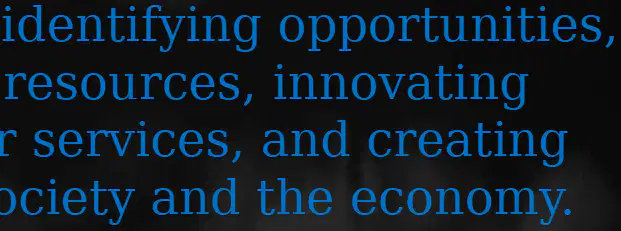
According to the passage: "Entrepreneurship refers to the process of starting, organizing, and managing a new business venture with the goal of earning profit while taking on financial risks. It involves identifying opportunities, mobilizing resources, innovating products or services, and creating value for society and the economy." Which statements are included in this definition? Select all that apply.
Identifying opportunities
Mobilizing resources
Innovating products or services
Creating value for society and the economy
Avoiding financial risks
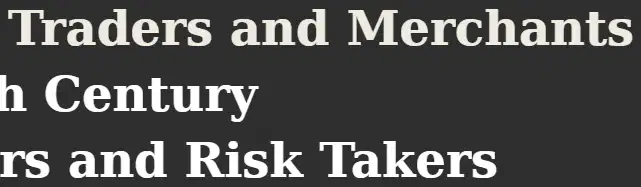
Based on the timeline of entrepreneurship across historical periods, which group characterizes the Early Period (Before 17th Century)?
Traders and Merchants
Adventurers and Risk Takers
Industrial Entrepreneurs
Tech and Social Entrepreneurs

According to the timeline shown, which centuries are associated with Adventurers and Risk Takers?
17th–18th Century
19th Century
20th Century
21st Century (Modern Era)

During the 19th Century (Industrial Revolution), entrepreneurs are primarily described as what on the timeline?
Industrial Entrepreneurs
Innovators and Managers
Traders and Merchants
Tech and Social Entrepreneurs

Which era on the timeline is associated with Innovators and Managers?
20th Century
Early Period (Before 17th Century)
17th–18th Century
21st Century (Modern Era)
In the 21st Century (Modern Era), how are entrepreneurs described on the timeline?
Tech and Social Entrepreneurs
Industrial Entrepreneurs
Adventurers and Risk Takers
Traders and Merchants

Based on the definition: "Entrepreneurship is the process of identifying opportunities, organizing resources, and creating a business venture to produce goods or services for profit while taking financial risks," which sequence best represents what entrepreneurship involves?
Identifying opportunities, organizing resources, creating a business venture
Avoiding risk, downsizing resources, maintaining the status quo
Following government directives, complying with procedures, minimizing initiative
Outsourcing idea generation, delegating all planning, licensing to others

According to the definition of entrepreneurship provided, which element is explicitly emphasized as part of the process of producing goods or services for profit?
Taking financial risks
Guaranteeing a fixed return
Eliminating uncertainty
Relying exclusively on external funding

According to the definition, what is the stated purpose of creating a business venture in entrepreneurship?
To produce goods or services for profit
To produce goods only for public welfare without revenue
To provide services solely to reduce costs for competitors
To develop intellectual property primarily for academic recognition

The slide states that entrepreneurship involves certain personal and organizational qualities. Which combination aligns with that statement?
Innovation, creativity, leadership, and risk-taking
Routine compliance, predictability, and strict risk aversion
Replication without modification and process freezing
Solitary work without leadership or collaboration

Which action does not align with the definition of entrepreneurship provided on the slide?
Creating a business venture
Identifying opportunities
Taking financial risks
Avoiding innovation

According to the slide titled Key Features, which of the following is identified as a feature of entrepreneurship?
Innovation and creativity
Routine administration
Avoidance of uncertainty
Passive ownership

Which items are listed under resource organization on the Key Features slide? Select all that apply.
Men
Money
Materials
Markets

Which item is explicitly listed as a key contribution of entrepreneurship on the slide?
Creation of employment and value
Reduction of government spending
Elimination of competition
Privatization of public utilities

Which entrepreneur–company pairing appears as an example on the Key Features slide?
Elon Musk — Tesla
Jeff Bezos — SpaceX
Sundar Pichai — Infosys
Bill Gates — Alphabet

According to the examples on the slide, who is credited with founding Infosys to promote IT services in India?
Narayana Murthy
Satya Nadella
Ratan Tata
Mukesh Ambani

In simple terms on the slide, entrepreneurship is described as which of the following?
Starting something new and making it grow successfully through ideas, effort, and risk-taking
Maintaining existing processes with minimal change to reduce risk
Following established procedures to ensure absolute certainty
Relying solely on external funding to expand operations

Which of the following is NOT listed as a key feature on the slide?
Risk-taking and decision-making
Contribution to economic development
Regulatory compliance and taxation
Innovation and creativity

Based on the slide titled Key Features, intrapreneurship is described as occurring within what context?
Within an existing company
As an independent startup outside any firm
Only in nonprofit organizations
Between multiple firms in a joint venture

According to the Key Features slide, who bears the personal financial risk in intrapreneurship?
The individual employee
An external investor
The organization
A government grant program

What employee behavior does intrapreneurship encourage, according to the slide?
Strict adherence to existing procedures
Creativity among employees
Reducing collaboration across teams
Prioritizing short-term cost cutting

Which outcome of intrapreneurship is explicitly listed on the slide?
Leads to new products or improved processes
Expands the company through mergers and acquisitions
Eliminates the need for research and development
Replaces managers with self-managed teams

What strategic benefit does the slide say intrapreneurship builds for the firm?
Brand nostalgia
Competitive advantage
Regulatory compliance
Supply chain consolidation

In the Google example on the slide, what portion of employee time is allowed for personal innovation projects that led to Gmail and Google News?
10%
15%
20%
30%

Which product is cited as having been developed by Sony from an employee’s innovative idea?
Walkman
PlayStation
Vaio laptop
Xperia smartphone

In simple terms from the slide, which statement best summarizes intrapreneurship?
Being an entrepreneur inside a company to help the organization grow
Starting a separate company to compete with your employer
Freelancing on personal projects unrelated to company goals
Cutting costs by outsourcing creative work

According to the passage, entrepreneurs play a vital role in what activities?
Creating, developing, and managing new ventures
Maintaining established corporations without change
Regulating markets and setting public policy
Providing financial audits for non-profits

According to the passage, what must entrepreneurs possess to succeed?
Personal characteristics and professional skills that help them face challenges and achieve business goals
Large amounts of initial capital and strict adherence to hierarchy
Government appointments and regulatory authority
Patents and trademarks for every product idea

Based on the slide titled “Myths and Realities of Entrepreneurs” under the heading Myths, which statement is listed as a myth about entrepreneurs?
Entrepreneurs are born, not made
Entrepreneurs always build teams from day one
Entrepreneurs avoid risk entirely
Entrepreneurs succeed only through public funding

According to the Myths list on the slide, which statement reflects a claimed motivation for entrepreneurs?
Entrepreneurs are motivated only by money
Entrepreneurs are motivated by community impact first
Entrepreneurs are motivated by artistic recognition alone
Entrepreneurs are motivated only by government grants

Which item from the Myths list asserts what entrepreneurs supposedly need in order to start?
Entrepreneurs need a lot of money to start
Entrepreneurs need only an idea and no capital
Entrepreneurs need government approval to start
Entrepreneurs need a patent before starting

From the Myths shown on the slide, which statement describes the expected timeline of entrepreneurial outcomes?
Entrepreneurs have quick success
Entrepreneurs require decades before any results
Entrepreneurs never reach profitability
Entrepreneurs succeed only after a second venture

According to the slide titled Reality, which statement best describes entrepreneurship?
It is purely a natural talent that cannot be developed
It is a skill that can be learned and improved
It is only a hobby pursued after work
It is mainly a way to avoid structured learning

Based on the Reality slide, what primarily drives most entrepreneurs?
Desire for immediate profit
Pressure from employers
Passion for their work
Guaranteed market dominance

What kind of risks do entrepreneurs take, as noted on the Reality slide?
Blind risks without analysis
Calculated risks based on evaluation
No risks at all
Risks only when guaranteed by investors

According to the Reality slide, how do successful entrepreneurs typically operate with others?
They work entirely alone to maintain control
They work with teams, investors, mentors, and networks
They rely only on family members for support
They outsource all collaboration to third-party agencies

What does the Reality slide suggest about how many successful businesses begin?
They start as large corporations with major funding
They start small and grow over time
They start by franchising internationally
They start only after completing an MBA

What timeline for success is emphasized on the Reality slide?
Instant success within weeks
Rapid success within a quarter
Years of hard work, patience, and persistence
Success only after a viral marketing campaign

What does the Reality slide state about formal education for entrepreneurs?
It is mandatory for starting a business
It helps but is not a requirement
It is irrelevant and should be avoided
It guarantees investor funding

Which pathway to entrepreneurial success is highlighted on the Reality slide?
Inventing entirely new industries every time
Improving existing products or offering better services
Copying competitors without changes
Focusing only on cutting costs

What balance of work conditions is described for entrepreneurs on the Reality slide?
Total flexibility with no pressure
No flexibility and constant oversight
Flexibility along with high pressure
Minimal pressure due to small teams

According to the Reality slide, what combination leads to success?
Luck and perfect timing
Preparation, hard work, and perseverance
Networking alone
Aggressive advertising budgets

Read the description: “The Startup Revolution in India refers to the rapid rise of innovative, technology-driven new businesses across various sectors such as e-commerce, fintech, edtech, healthtech, and more.” What is the central idea conveyed here?
A gradual increase in traditional small shops
A rapid rise of innovative, technology-driven new businesses
Government takeover of private companies
A decline in technology use across industries
Based on the examples provided, which sector is explicitly mentioned as part of India’s startup growth?
Tourism
Fintech
Heavy manufacturing
Real estate brokerage
Which item is identified among the key features of India’s startup revolution?
Cultural heritage preservation
Innovation-Driven
Rural subsistence farming
Armed forces expansion
Which feature from the list specifically highlights the financial enablers of startups?
Digital Transformation
Youth Participation
Funding and Investment
Global Recognition
Select the features that indicate outcomes related to jobs and international status in India’s startup revolution.
Job Creation
Global Recognition
Youth Participation
Digital Transformation
According to the listed features, which elements emphasize technology as a driver in India’s startup revolution?
Innovation-Driven
Digital Transformation
Government Support
Job Creation
Based on the slide listing sectors and example companies, which company is listed under E-commerce?
Flipkart
PhonePe
Practo
Zoho
From the slide of sectors and example companies, which companies are listed under Fintech? Select all that apply.
Paytm
PhonePe
Zerodha
Zomato
According to the slide, Practo and PharmEasy are examples in which sector?
Healthtech
Foodtech
Edtech
SaaS & IT
Which pair of companies on the slide belongs to Foodtech?
Swiggy and Zomato
Byju’s and Unacademy
Zoho and Freshworks
Flipkart and Nykaa
On the slide, Zoho and Freshworks are listed under which sector?
SaaS & IT
E-commerce
Fintech
Healthtech
Which companies are listed as examples of Edtech on the slide? Select all that apply.
Byju’s
Unacademy
Meesho
Zerodha
Based on the slide titled Impact of the Startup Revolution, which of the following is explicitly listed as an impact?
Employment
Urbanization
Currency stabilization
Heritage preservation
Which item is not listed under Impact of the Startup Revolution on the slide?
Global recognition
Innovation
Economic growth
Population control
According to the slide section The Future of India’s Startup Revolution, expansion is expected into which locations?
Tier-II and Tier-III cities
Only Tier-I cities
Overseas megacities only
Rural villages exclusively
Which areas are highlighted as future focus sectors in India’s startup revolution? Select all that apply.
AI
Green energy
AgriTech
DeepTech
Fast fashion
Who is mentioned as entering the startup field in greater numbers?
Women and social entrepreneurs
Retired athletes
Primary school teachers
Foreign diplomats
What kind of partnerships are cited as a means to strengthen the startup ecosystem?
Government and private partnerships
Sole proprietors acting independently
Military–commercial alliances only
University-only committees

Benefits of Entrepreneurship: According to the list shown in the slide, which of the following is a stated benefit of entrepreneurship?
Economic Growth
Price Control by Government
Elimination of Market Risk
Centralization of Production

Benefits of Entrepreneurship: Which item from the slide explicitly highlights job creation as a benefit?
Employment Generation
Fiscal Deficit Reduction
Cartel Formation
Trade Protectionism

Benefits of Entrepreneurship: Which listed benefit emphasizes advances in new methods and tools?
Innovation and Technological Development
Price Stabilization by Regulation
Resource Nationalization
Monopoly Power Expansion

Benefits of Entrepreneurship: Which benefit from the slide focuses on reducing regional disparities within an economy?
Regional Development
Urban Congestion
Currency Devaluation
Import Substitution Barriers

Benefits of Entrepreneurship: Which listed benefit relates to higher quality of life for people?
Improvement in Living Standards
Increased Tax Rates
Market Entry Barriers
Public Debt Accumulation

Benefits of Entrepreneurship: Which benefit on the slide connects entrepreneurship to international trade and integration?
Export Promotion and Globalization
Domestic Subsidy Expansion
Autarky in Production
Protectionist Tariffs

Benefits of Entrepreneurship: Which listed benefit indicates changes in societal attitudes and structures?
Social Change
Price Discrimination
Exchange Rate Pegging
Supply Rationing

Benefits of Entrepreneurship: Which item from the slide underscores personal autonomy and capability?
Self-Reliance and Independence
State Ownership of Firms
Collective Bargaining Control
Fixed Wage Policies

Benefits of Entrepreneurship: Which listed benefit stresses making use of materials and capabilities available in the area?
Utilization of Local Resources
Exhaustion of Natural Reserves
Offshoring of Raw Materials
Import Dependence

Benefits of Entrepreneurship: Which item on the slide highlights nurturing new ideas and guiding others?
Encouragement of Creativity and Leadership
Price Ceiling Enforcement
Rigid Standardization of Tasks
Limitation of R&D Activities

