
Font size
 Worksheets
Southwest Asia Quiz
Total questions: 31
Worksheet time: 16mins
Saudi Arabia is to an absolute monarchy as Iran is to a ________.
presidential republic
theocratic republic
parliamentary democracy
constitutional monarchy
The most important connectivity technology in the Arab Spring was:
Television
Newspapers
Word of mouth
Social media
The radio
In many Muslim countries of Southwestern Asia, decisions about political issues are based on:
Sharia Law
The United Nations
A Constitution
Ancient Roman Law
Countries on the Arabian Peninsula, with their substantial energy resources and wealth, have enabled settlement and development by:
their dependency on agriculture
constructing coastal desalination plants
conserving groundwater
burning coal
All the following were benefits of the construction of the Aswan High Dam and other dams on the Nile River except:
produced a lack of silt deposit on the banks of the river and the need for more artificial fertilizers
reduced flooding by controlling the flow of water
provides a year-round water supply for irrigation
generates hydroelectric power
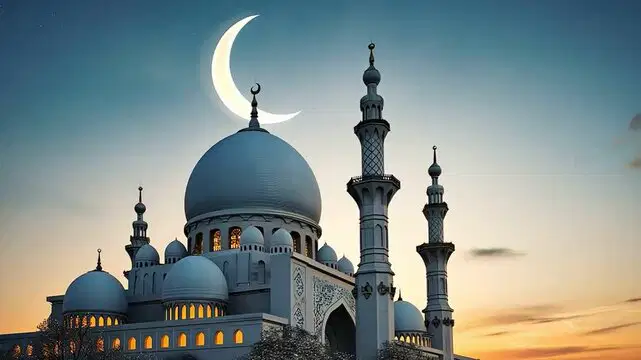
This picture demonstrates architecture associated with which major religion?
Sikhism
Judaism
Christianity
Islam
Which of the following contributed to uprisings in North Africa in 2011 which evolved into the Arab Spring?
I. Increasing awareness of the world through the internet II. Increasing political corruption III. High unemployment rate IV. The desire to institute Islamic-based government
I and II only
I and IV only
II, III, and IV only
I, II, and III only
Which of the following is not a cultural difference between North Africa and Sub-Saharan Africa?
North Africa mainly speaks Arabic languages
Sub-Saharan Africa has more Christians than North Africa
North Africa has a desert climate
North Africa's population is mostly Muslim
A major source of the dispute between the Israelis and the Palestinians is that each side:
has nuclear weapons
believes in different interpretations of the same religion
has close military alliances with neighboring countries
has historic and religious ties to the same land
The Strait of Hormuz is important because:
It is crucial for the shipment of oil from the Persian Gulf to consumer countries
It connects the Mediterranean Sea and the Red Sea
It leads to the Suez Canal
Control of this area is crucial for the military defense of Jordan and Syria
The potential power of the member nations in OPEC lies in their:
Political influence in tropical regions
Military control over strategic waterways
Economic influence over industrialized nations
Control of access to important religious sites
Which of the following statements about the Taliban is false?
The Taliban imposed strict rules on the people's behavior
The Taliban is suspected of supporting terrorists, such as Al Qaeda
The Taliban is responsible for the 9/11 terrorist attacks
The Taliban still has influence in many parts of Afghanistan
The deserts of the Middle East and North Africa are characterized by populations that:
move to find resources that are thinly dispersed across a vast area
work primarily in small cottage industries
are nonviolent and practice ancient polytheistic religions
organize their society around a matriarch
Why was the state of Israel created?
as an international community to promote peace between Arabs and Christians
to promote peace between Jews, Christians, and Muslims
as a homeland for the Jewish survivors of the Holocaust
as a homeland for Palestinian refugees
Iraq's goals in its 1990 invasion of Kuwait included which of the following?
Increase its share of the world's oil reserves
To oppose western imperialism
Reclaim land seized by the Kurds
Gain greater access to the Red Sea
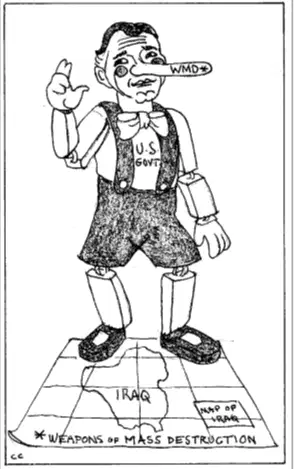
What is the main idea of the cartoon regarding the U.S. government?
The U.S. government was responsible for removing and destroying the weapons out of Iraq.
The U.S. government was only a puppet of the United Nations in the hunt for weapons in Iraq.
The U.S. government looked for weapons in the wrong place in Iraq.
The U.S. government was untruthful about Iraq having weapons of mass destruction.
The major difference between Shi'ites and Sunnis is that:
they disagree on who is qualified to be a religious leader
one group supports Israel while the other supports the Palestinians
one is from North Africa and the other in the Middle East
Sunnis are mostly found in Iran and Shi'ites are mostly found in Saudi Arabia
Read the statement and decide which religion it is describing. It may have one answer, or more than one answer. Holy book is the Quran.
Judaism
Islam
Christianity
Read the statement and decide which religion it is describing. It may have one answer, or more than one answer. Jesus is the founder of this faith.
Judaism
Islam
Christianity
What is one major concern caused by almost the entire population living around the Nile River?
Lack of access to clean water
Overcrowding
Frequent flooding
Limited agricultural land
What problem do schools, hospitals, and other public entities face in Egypt due to overcrowding?
Lack of funding
Struggling to serve the citizens because the need is too great
Poor infrastructure
Limited access to technology
What physical feature has divided the continent of Africa into two distinct regions?
The Nile River
The Sahara Desert
The Congo Basin
The Great Rift Valley
Culturally, the northern part of Africa is most closely associated with which region?
Europe
Southwest Asia
Sub-Saharan Africa
Central Asia
The majority of Egypt's population is clustered around what geographical feature?
The Gulf of Suez
The Suez Canal
The Western Desert
The Nile River
Which historical event changed the economic situation of the Middle East in the last century?
Nomads became settlers.
Subsistence farming began to thrive.
The urban population exploded.
Oil was discovered.
What was life like in Iran after the Iranian Revolution?
Equality was established between the sexes
Women gained rights that they did not have before the revolution
More modern and free
More traditional and patriarchal
Which of the following resulted from the U.S.-led military coalition’s engagement in the Persian Gulf War?
The Shah of Iran was overthrown.
Saddam Hussein was forced from power.
The nation of Kuwait was liberated.
Iraqi Kurds were granted equal rights.

Which TWO powerful countries have occupied Afghanistan and failed to defeat rebels?
The United States
The Soviet Union
France
China

The source of a major conflict in the Middle East is the 1947 U.N. decision to give an area known as Palestine to Jews leaving Europe after the...
Treaty of Versailles
Holocaust
pogroms targeting them

Which best describes the region of Southwest Asia?
dry
mountainous
moist
flat
The belief that Israel should be a national home for Jewish people is known as...
Christianity
Zionism
Palestine
Judaism

