
 Worksheets
electrolytes practice quiz
Total questions: 15
Worksheet time: 8mins
Which statement best describes sodium’s role in excitable tissues at rest and during signaling?
Sets action potential peak and drives repolarization
Blocks resting membrane potential and prevents depolarization
Sets resting membrane potential and drives depolarization
Raises resting membrane potential and drives hyperpolarization

Which factor pair primarily regulates how much filtered sodium is reabsorbed by the kidneys?
GFR and dietary potassium
Aldosterone and urine pH
Blood pressure and osmolarity
Plasma glucose and bicarbonate
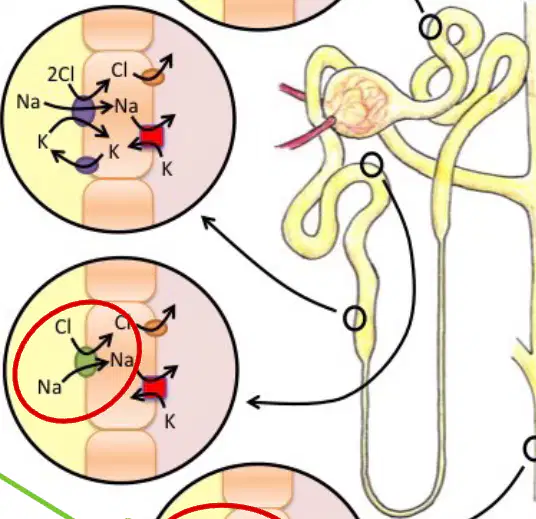
In the nephron, which segment reabsorbs the largest fraction of filtered sodium under normal conditions?
Proximal tubule
Distal convoluted tubule
Thin descending limb
Collecting duct
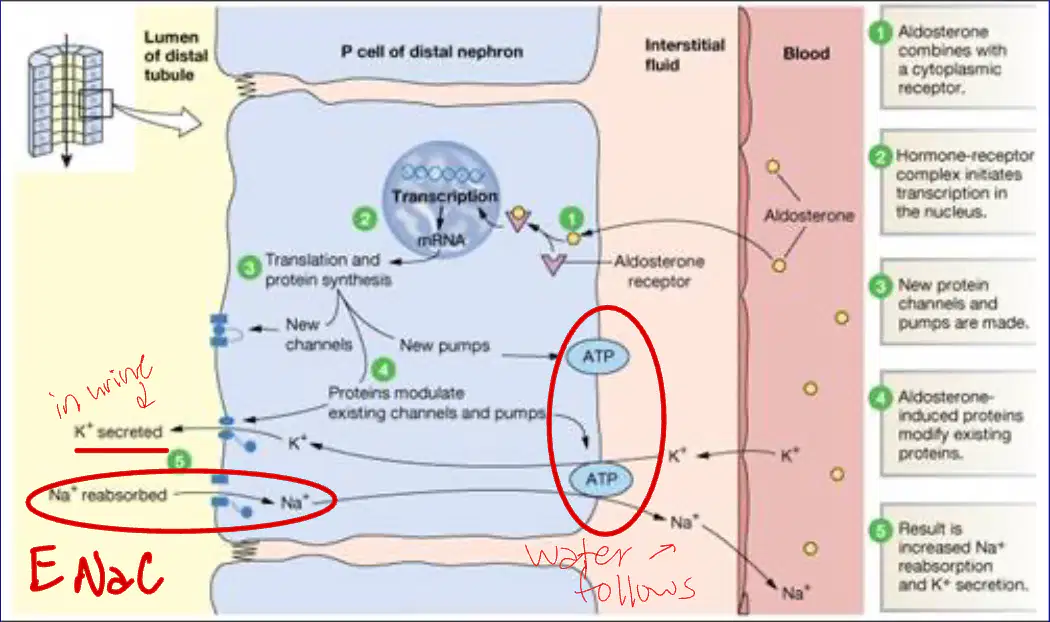
According to the aldosterone mechanism shown, what is the primary cellular effect in principal cells that increases sodium reabsorption?
Upregulating ENaC channels and Na⁺/K⁺ pumps
Blocking aquaporins in collecting ducts
Reducing transcription of ion transport proteins
Inhibiting Na⁺/K⁺/2Cl⁻ cotransporters
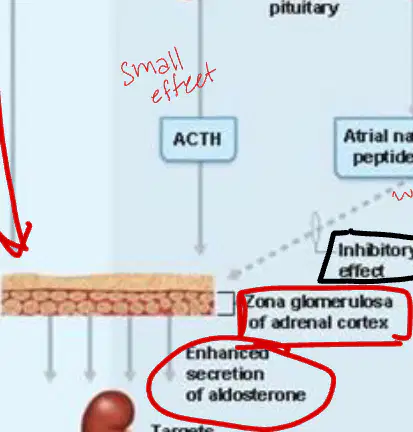
Based on the RAAS diagram, which stimulus most directly increases aldosterone secretion from the adrenal zona glomerulosa?
Elevated atrial natriuretic peptide
Reduced angiotensin II signaling
Increased blood volume and pressure
Elevated plasma potassium concentration
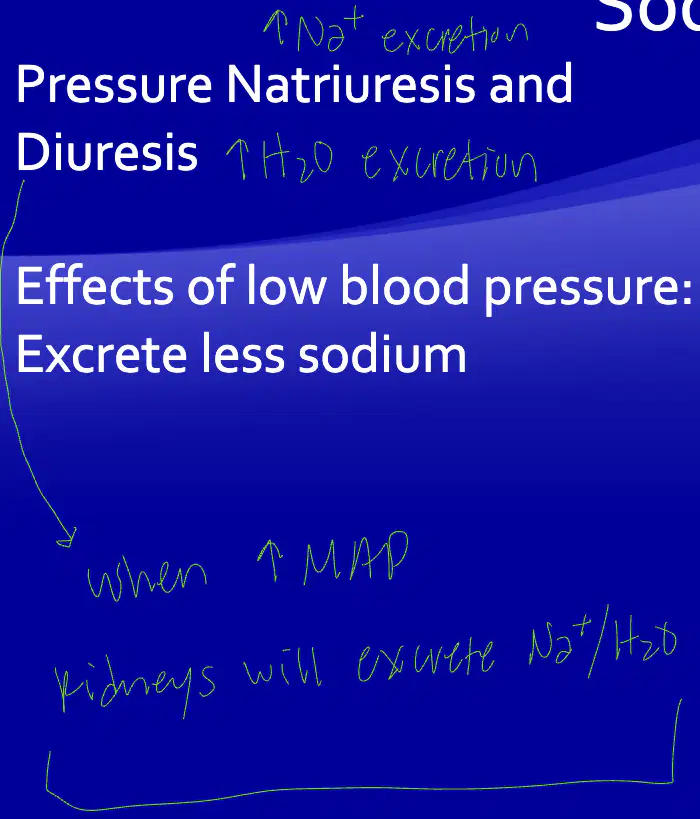
When mean arterial pressure increases, what renal response most directly promotes pressure natriuresis?
Increased Na+ reabsorption distally
Increased aldosterone secretion
Increased renin and angiotensin II
Increased Na+ and water excretion
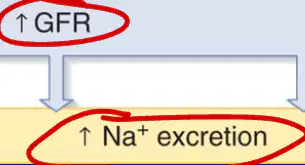
A patient with excess plasma volume has atrial stretch. Which change is most consistent with ANP action on the kidney?
Efferent dilation and reduced filtrate
Increased aldosterone and Na+ reabsorption
Increased GFR and Na+ excretion
Decreased GFR and water retention

Which finding best distinguishes hypernatremia from hyponatremia in terms of likely symptoms?
Bradycardia and dry mucous membranes
Pulmonary edema with pink froth
Confusion from cerebral edema
Hypertension and peripheral edema
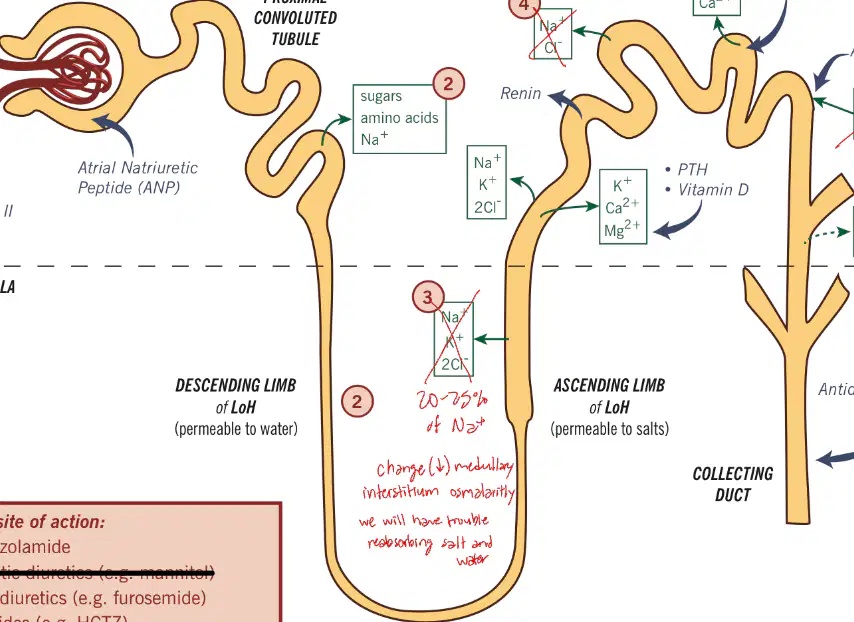
Which nephron segment is the primary site of action for loop diuretics, and what transporter do they inhibit there?
Distal convoluted tubule; ENaC channel
Thick ascending limb; Na+-K+-2Cl− cotransporter
Proximal tubule; Na+/glucose symporter
Collecting duct; aquaporin-2 water channel
Descending limb; passive Na+ channel
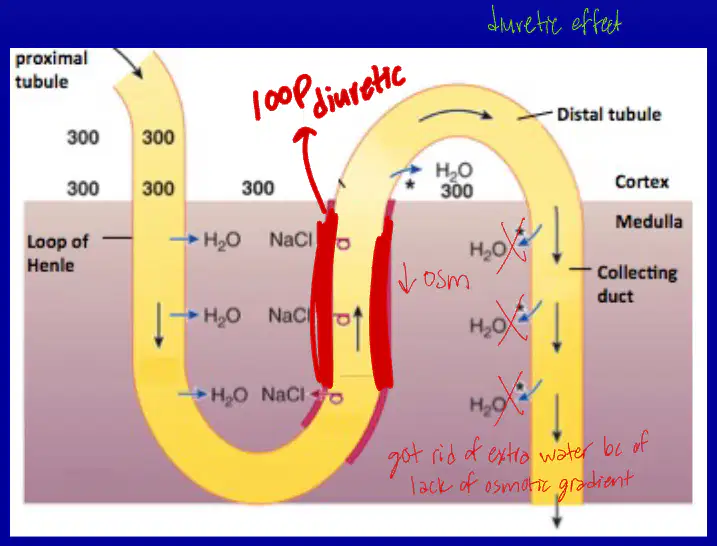
A loop diuretic reduces the medullary osmotic gradient. What is the most direct consequence for water handling in the collecting duct?
Decreased water reabsorption because gradient collapses
Unchanged water handling across all segments
Enhanced ADH-independent insertion of aquaporins
Compensatory increase in proximal water secretion
Increased water reabsorption due to stronger gradient
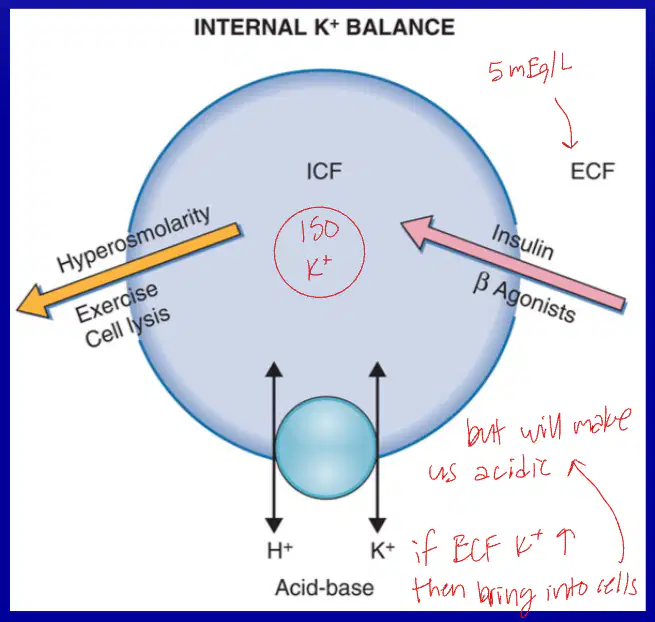
Which factor most directly promotes potassium movement from extracellular fluid into cells after a meal?
Hyperosmolality drawing water out
Cell lysis releasing cytosolic ions
Acidosis exchanging H⁺ for K⁺
Insulin activation of Na⁺/K⁺-ATPase
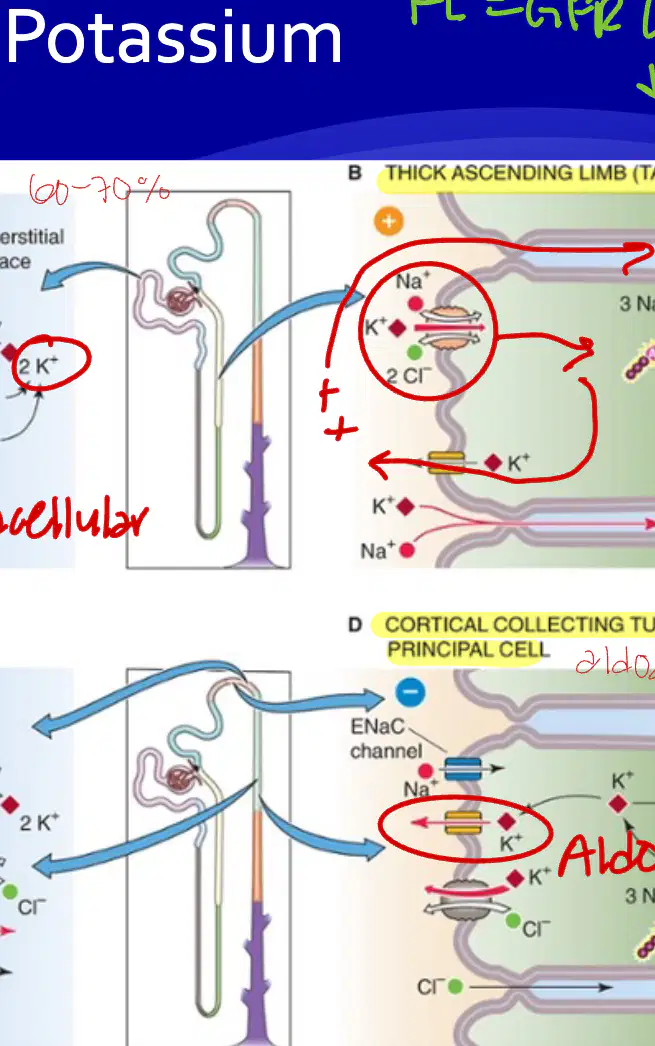
In the cortical collecting duct principal cell, which mechanism increases potassium secretion into the tubular lumen?
Reduced distal sodium delivery rate
Inhibition of Na⁺/K⁺-ATPase pump
Aldosterone upregulating ENaC and ROMK
Activation of α-intercalated H⁺ pump
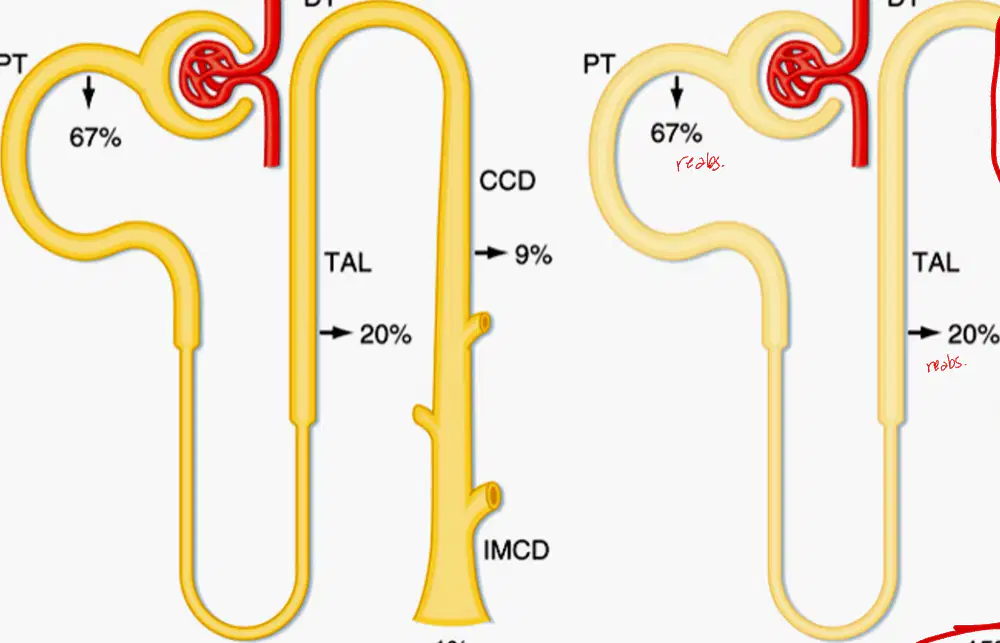
Which nephron segment primarily adjusts potassium excretion in response to dietary intake through aldosterone-sensitive secretion?
Proximal tubule reabsorptive segment
Thick ascending limb transporter region
Distal tubule and collecting duct
Inner medullary loop thin segment
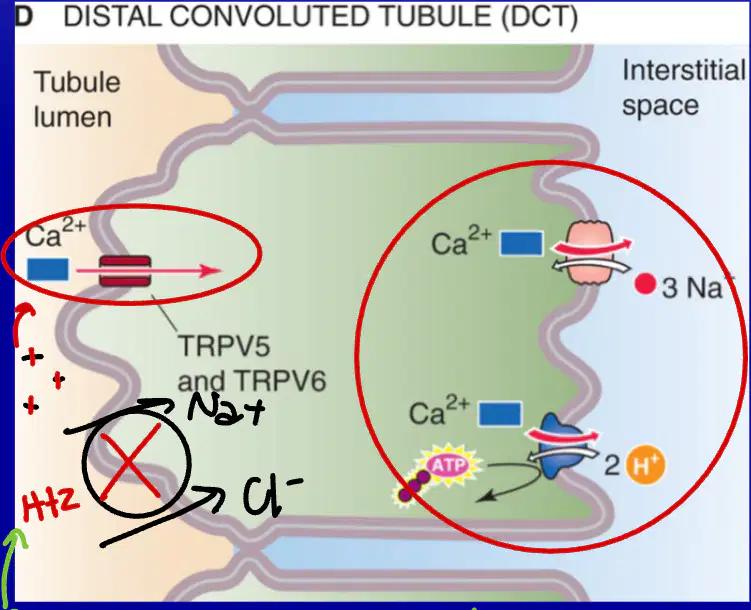
Which renal effect of parathyroid hormone (PTH) most directly increases blood calcium levels?
Upregulation of Ca2+ channels in distal tubule
Inhibition of aquaporins in collecting duct
Activation of NKCC2 in thick ascending limb
Stimulation of urea transport in inner medulla
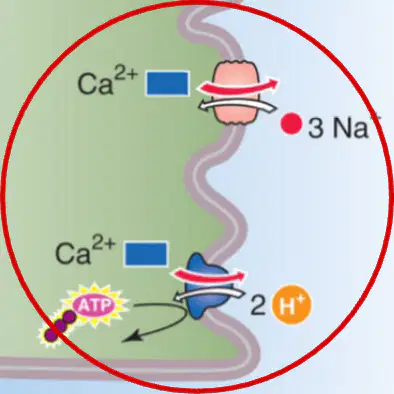
A patient on a thiazide develops mild hypercalcemia. Which mechanism best explains this effect in the distal convoluted tubule?
Direct inhibition of ATP-driven H+ secretion by intercalated cells
Increased NKCC2 activity creating lumen-negative gradient
Reduced CaSR activation with decreased cAMP formation
Enhanced TRPV5-mediated Ca2+ entry with Na+/Ca2+ exchange

