
 Worksheets
Troubled Times Review
Total questions: 60
Worksheet time: 43mins
What was the purpose for US involvement in Vietnam?
To eventually invade China
To attempt to contain the spread of communism
To create a new Asian colony
To promote the effects of the domino theory
What event resulted in the escalation of the Vietnam War?
The Fall of Saigon
The My Lai Massacre
The Gulf of Tonkin Incident
The Bay of Pigs Invasion
This resolution allowed the president to use force WITHOUT a declaration of war.
Paris Peace Accords
The Gulf of Tonkin Resolution
Ho Chi Minh Resolution
United Nations Security Council Resolution
What was the purpose of the War Powers Resolution?
To prevent the Supreme Court from censoring newspapers
To limit the President’s ability to send troops into combat
To empower Congress to appoint Supreme Court Justices
To establish the order of presidential succession
Who was awarded the Medal of Honor for his bravery in the Vietnam War?
Audie Murphy
Vernon Baker
Roy Benavidez
Alvin York
Which of the following events during Nixon’s presidency resulted in the public losing trust in government officials?
Watergate Scandal
Detente with the Soviet Union
Camp David Accords
Teapot Dome Scandal
Which of the following policies relaxed tensions between the US and Soviet Union?
Warsaw Pact
Détente
Cuban Missile Crisis
Paris Peace Accords
What did the media coverage of Vietnam cause between the American people and the federal government?
A system of accountability
Credibility gap
Trust with the president
Responsibility of the people
Which amendment lowered the voting age from 21 to 18?
26th amendment
25th amendment
24th amendment
14th amendment
Primary reason US government justified involvement in Vietnam
To practice containment
We wanted to take over Vietnam
War is fun
Everyone in the US supported it
What is the domino theory?
Once a country falls to communism the countries surrounding will
Playing games
One of the reasons the US got involved in Vietnam
Containing democracy
What was the credibility gap?
Flexible response
The government and news reporters telling different stories
No longer trusting the government during the war
The Tet Offensive
What is the 26th Amendment
Allowed to vote at 18
Allowed to vote at 16
Couldn't vote until you were 21
Allowed everyone to vote
What is Vietnamization?

Which idea reflected in these remarks formed the basis for U.S. involvement in Vietnam?
Nuclear deterrence
Flexible response
Domino theory
Iron Curtain

How did the events in this cause-and-effect diagram affect the relationship between the executive and legislative branches of government?
By reducing the ability of the House of Representatives to approve military funding requested by the president
By giving the president the power to fight a war without getting a formal declaration from Congress
By allowing Congress to supersede the president’s role as commander in chief
By reducing the power of the president to bypass the Senate’s treaty-making powers

Which article would most likely quote this excerpt?
“Embedding Journalists in Combat during the Korean War”
“The Role of the Office of War Information during World War II”
“Improvements in Media Production during the Persian Gulf War”
“The Role of the Media during the Vietnam War”

Which of the following is true of the Immigration and Nationality Act of 1965 ?
It banned immigration from communist-controlled countries into the United States.
It eliminated the quotas based on national origins adopted in the 1920s.
It contributed to a rise in the percent of immigrants from Western European countries.
It lowered the quotas for citizens of Asian and African countries who could immigrate into the United States.
Which of the following was a major effect of the passage of the Immigration Act of 1965 ?
Immigration from the Soviet Union, Poland, and Italy decreased significantly.
Immigration from Asia increased significantly.
Immigrants from within the Western Hemisphere were given preference over other immigrants
The total number of immigrants admitted to the United States was significantly reduced.
What was the impact of the Civil Rights Act?
It eliminated racial discrimination in public accommodations
It provided healthcare for people over the age of 65
It reduced the poverty rate in the United States
It created work-study programs for college students
What did Medicare provide for people over the age of 65?
Improved urban mass transit
Work-study programs
College scholarships and grants
Guaranteed health insurance

Lyndon Johnson's plan for improving America was called the
New Frontier
Fair Deal
Great Society
New Deal

What was one result of the Great Society?
Poverty was eliminated in the United States.
the lives of many underprivileged Americans improved.
President Johnson's popularity plummeted.
The federal government shrank considerably.

gave the rich too many tax breaks
gave the federal government too much power
paid too little attention to health care
favored rural over urban citizens

The Civil Rights Act of 1964 was signed into law by President ________.
John F. Kennedy
Lyndon B. Johnson
Richard Nixon
Gerald Ford

The Great Society programs aimed to eliminate poverty and ______.
wealth
racial prejudice
education
healthcare

LBJ's 'war on poverty' was aimed at ______.
increasing wealth
ending poverty
promoting education
reducing taxes

The Job Corps was established to provide ______ for young people.
healthcare
job training
education
housing
A 1969 music festival symbolizing the counterculture movement, peace, and anti-war sentiment.
Coachella
Woodstock
Austin City Limits
Lollapalooza
Members of the 1960s counterculture who rejected traditional values, embraced peace, love, and music, and often opposed the Vietnam War.
Beat Generation
Hippies
Flappers
Baby Boomers
A social and political movement opposing U.S. involvement in Vietnam, consisting of protests, demonstrations, and activism.
Anti-War Movement
Civil Rights Movement
Social Movement
Counterculture
The reality of the Vietnam War did not match the Johnson administration’s positive portrayal of it
Credibility Gap
Anti-War Movement
Generation Gap
Counterculture
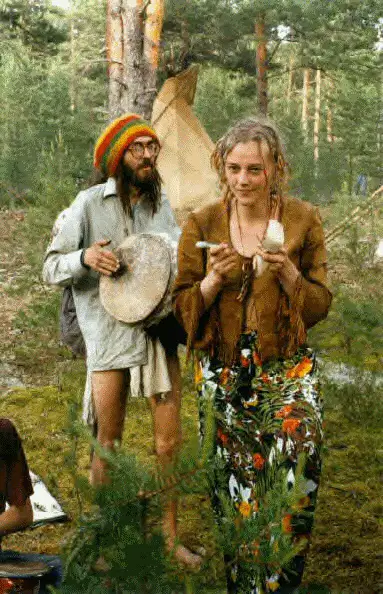
Name given to those in the counterculture who lived a life opposite of the established norm
Hippies
Flappers
Jazzes
Coffee Guru's
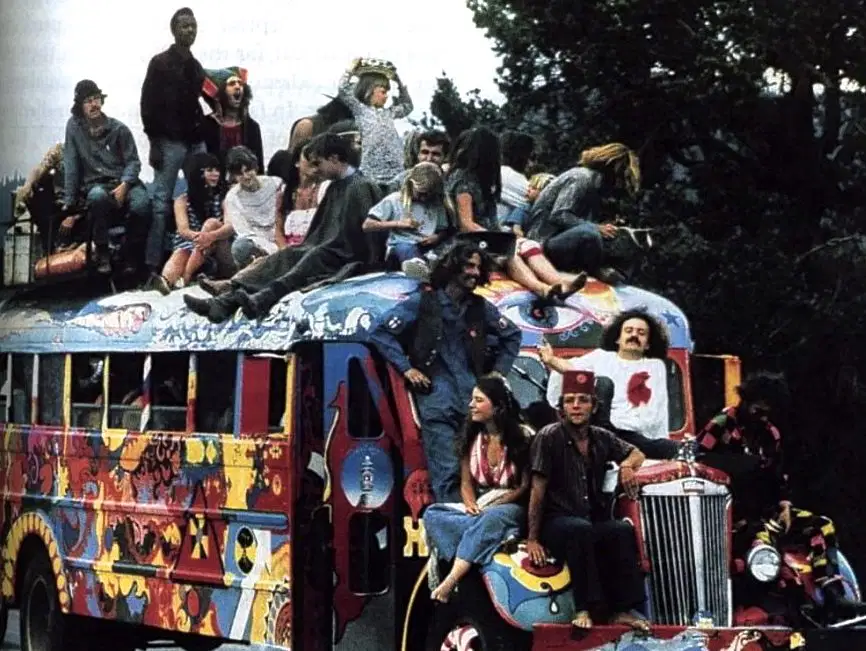
A culture whose values differ significantly from the values of the majority; Examples--Hippies in the 60s
New Age People
counter-culture
Generation Z
Hipsters
Which iconic symbol represents peace and love for hippies?

Smiley face

Peace sign/Peace symbol

Flower symbol

Heart symbol

What was the main message behind the counterculture movement of the 1960s?
To support the government's policies
To promote consumerism and materialism
To challenge traditional values and advocate for peace, love, equality, and social justice.
To encourage conformity and obedience

In recognition of the actions described above, Master Sergeant Roy Benavidez was —
given an early honorable discharge from U.S. military service
awarded the Congressional Medal of Honor
made an honorary member of the United Nations
awarded the Legion of Honor ribbon
Why did the government implement a draft during the Vietnam War?
To monitor ethnic groups for espionage activities
To fund the war by authorizing the sale of government bonds
To regulate freedom of expression at antiwar demonstrations
To provide the military with additional manpower

Which term completes this text box?
Hawk mentality
Credibility gap
Living-room war
Flexible response

Which of the following is the best title for this list?
Protests Against the Vietnam War
Opposition to the Arms Race
Support for Gender Equality
Demands to Stop Dumping Chemical Waste

The event described in this headline resulted in —
decreased federal funding of student loans
increased support for the antiwar movement
the reinstatement of the draft
an end to federal investigations of student organizations

This excerpt describes changes in student fashion toward the end of —
the Jazz Age
the Cold War
the counterculture movement
the conservative movement
Nixon's visits to China and the USSR during 1971 and 72 improved relations. This led to a series of treaty discussions called
SALT
Strategic
Arms
Limitation
Talks
Pepper:
Prevention Exploration
Prepare
Preserve
Extend
Reverse
SUGAR
Strategic
Underwater
Geographic
Arms
Reduction
SPICE
Space
Prepare
Invaders
Cucumbers
Emergency
The 26th Amendment extended the Voting Age
21+
16+
18+
35+
Which of the following is the proper division of Vietnam
North/Communist
South/Democratic
North/Democratic
South/Communist
East/Socialist
West/Capitalist
East/Democratic
West/Communist

Based on this letter, what action did President Nixon take on August 8, 1974
He resigned as President.
He ran as President for a 2nd Term
He invited the Russians and Chinese to Peace Talks
He pardoned the Thanksgiving Turkey.
How many students were killed in the Kent State incident?
Two
Three
Five
Four
Which university campus did the Kent State incident take place at?
Kent State University
Yale University
Harvard University
Stanford University
The attempt to ease hostility between countries is known as -
Dictatorship
De-Escalation
Diplomacy
Detente


What is the main idea of this cartoon from the Watergate era?
The Supreme Court presides over a presidential impeachment trial.
Congress has to obey the Constitution.
The president has the final word involving constitutional issues.
No person or group is above the law.
To accuse a government official and/or charge with a crime is known as
perjury
political espionage
impeachment
subpoena
Who became President immediately after Nixon left office?
Jimmy Carter
Lyndon Johnson
Gerald Ford
Ronald Reagan
What did a U.S. District Court judge subpoena, but Nixon claimed executive privilege and refused to turn over?
surveillance of the break-in at the Watergate building
transcripts of conversations between Nixon and the directors of the FBI and CIA
recorded conversations from inside the White House

