
 Worksheets
AP GRUDGE BALL REVIEW
Total questions: 58
Worksheet time: 29mins
Name
Class
Date
1.
When sugar planters, missionaries, and Marines drove Queen Liliuokalani from power, the U.S. gained a permanent foothold in -
a)
Hawaii
b)
Guam
c)
Samoa
d)
Panama
2.
In 1898, the mysterious and controversial destruction of the battleship USS Maine was viewed by many in the United States as -
a)
an accident with nobody to blame
b)
an act of sabotage by unhappy Americans
c)
cause for war with Spain
d)
the beginning of yellow journalism
3.
Which best describes the practice of Yellow Journalism?
a)
Exaggerating and sensationalizing events to sell papers.
b)
Accurately reporting just the facts of a news story.
c)
Opinion-based stories meant to support 1-side of an issue.
d)
A balanced approach to news that is fair to all sides.
4.
Muckraker Upton Sinclair’s book “The Jungle” exposed the practices of what industry?
a)
Farming
b)
Logging
c)
Meat Packing
d)
Mining
5.
Why did American industrialists in the late 19th century generally support expansion into overseas colonies?
a)
They believed that these regions would benefit from democratic government.
b)
These areas would provide new sources of raw materials and customers.
c)
Antitrust laws did not apply to American territories overseas.
d)
American colonies would increase tariff revenues.
6.
In the 1890s, when an overabundance of wheat on the world market caused prices to drop, some farmers tried to survive by -
a)
planting corn and other crops
b)
forming cooperatives
c)
mortgaging the land
d)
buying more land on credit
7.
President Woodrow Wilson's progressive platform was nicknamed the -
a)
New Freedom
b)
League of Nations
c)
Square Deal
d)
Dollar Diplomacy
8.
The Open Door Policy proposed by Secretary of State John Hay -
a)
encouraged foreigners to immigrate to the United States
b)
established tariff-free policies for imports from England
c)
eliminated immigration restrictions against the Chinese
d)
proposed equal trading rights in China
9.
President Taft's Dollar Diplomacy -
a)
proposed giving money to Asia to promote trade
b)
provided money to purchase Panama from France
c)
urged American banks to invest in Latin America
d)
provided incentives to encourage immigration from Europe
10.
The Spanish-American War expanded the power of the United States by -
a)
assisting the Philippines in gaining their independence
b)
gaining Haiti as a colonial territory
c)
obtaining Puerto Rico as a American territory
d)
encouraging Panama to seek independence from Colombia
11.
Why did the US formulate the Open-Door Policy toward China?
a)
to prevent a European and Japanese monopoly of Chinese trade
b)
To bring democracy to China
c)
to support Japanese efforts to industrialize China
d)
to establish a military presence on the Chinese mainland
12.
What amendment started Prohibition?
a)
16th
b)
17th
c)
18th
d)
19th
13.
With the increasing demand for steel, which adverse working condition became a common complaint of the labor movement?
a)
Extremely high temperatures in the workplace
b)
The lack of on-site medical personnel to handle injuries
c)
Long work shifts of twelve-hour days, six days a week
d)
The use of cancer-causing asbestos face masks
14.
The Progressive Movement had all of the following goals except -
a)
protecting social welfare
b)
promoting business monopolies
c)
creating economic reform
d)
fostering efficiency in the workplace
15.
Which statement describes a referendum?
a)
A petition that indicates the public’s support for a vote on a bill.
b)
The removal of a public official from office at the hands of the electorate.
c)
An opportunity for the public to accept or reject a proposed bill.
d)
The casting of votes in a confidential manner.
16.
“Be it enacted by . . . Congress . . . (t)hat no producer, manufacturer, or dealer shall ship or deliver for shipment in interstate or foreign commerce, any article or . . . product of any mine or quarry situated in the United States, in which . . . children under the age of sixteen years have been employed or permitted to work . . .” This quote reflects the public’s support for the -
a)
Control the mining industry
b)
abolition of child labor
c)
regulation of product transportation
d)
limitation of foreign trade
17.
The Progressive Movement wanted to -
a)
give more political power to the public
b)
protect big business interests
c)
expand America’s landholdings overseas
d)
promote civil rights for African Americans
18.
Individuals who attempted to expose corruption and inequality during the Progressive Era were known as -
a)
Muckrakers
b)
Populists
c)
Suffragist
d)
Fundamentalist
19.
• Published How the Other Half Lives (1890) • Photographer, exposed poverty in NYC immigrant neighborhoods. • Who fits the description above the best?
a)
Upton Sinclair
b)
Jacob Riis
c)
Ida Tarbell
d)
W.E.B. DuBois
20.
Who were a group of athletes, college students, cowboys, miners, and law men? They became famous for their charge up San Juan Hill, a strategically important hill surrounding Santiago. Led and organized by Theodore Roosevelt.
a)
Muckrakers
b)
Progressives
c)
Isolationists
d)
Rough Riders
21.
What was known as “a splendid little war” and lasted for 4 months. The locations of the battles were Cuba and The Philippines?
a)
World War I
b)
Cuban Civil War
c)
Mexican American War
d)
Spanish American War
22.
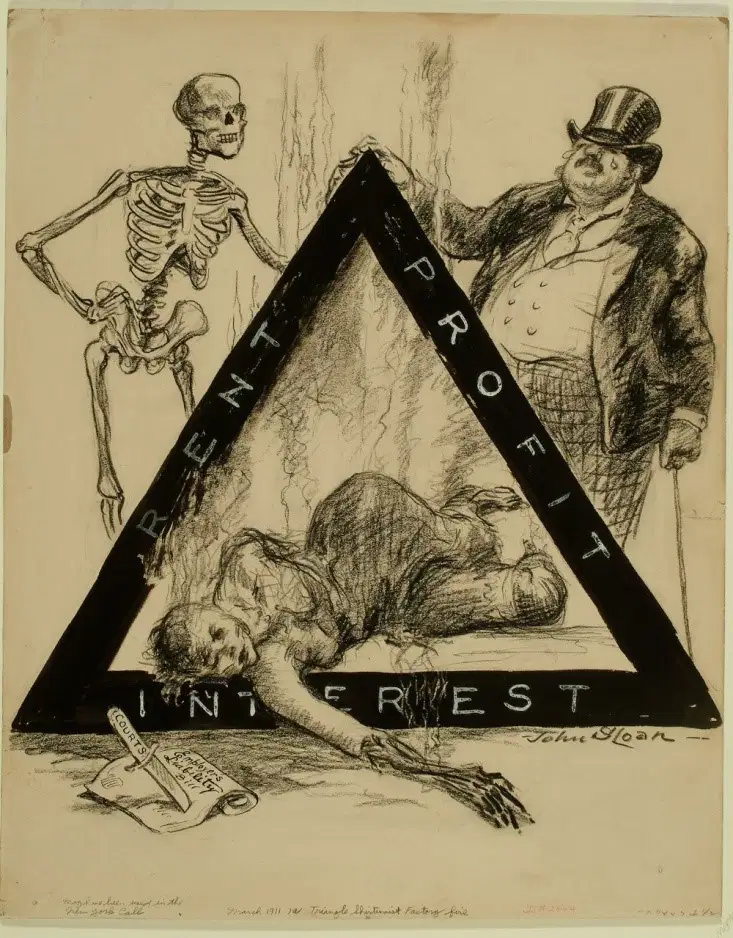
a)
Spanish American War Crimes
b)
Lusitania deaths
c)
Triangle Shirtwaist Fire that claimed 146 women and could have been prevented.
d)
Results of Poison Gas used during World War I
23.
Which of the following is the best answer for eliminating alcohol from society?
a)
Women's Movement
b)
Temperance Movement
c)
Muckrakers
d)
Progressive
24.
The Zimmerman Telegram _________________________.
a)
pledged that Germany would sink no more merchant ships.
b)
proposed an alliance between Germany and Mexico to conquer the U.S.
c)
proof that the Germans were committing such atrocities as killing babies.
d)
revealed Germany's designs to conquer and colonize much of Central and South America.
25.
Which amendment to the U.S. Constitution addressed women's suffrage?
a)
16th
b)
17th
c)
18th
d)
19th
26.
Which of the following statements about the effect of World War I on the home front is correct?
a)
For the first time in U.S. history, women and African Americans were included in the draft.
b)
President Wilson had to abandon all Progressive ideas of government in order to successfully fight the war.
c)
As opposed to other wars, World War I had little effect on the way U.S. civilians used resources at home.
d)
Large numbers of African Americans and Mexican Americans filled job opportunities created by the draft. created by the draft filled job opportunities created by the draft.
27.
What authorized a draft of young for military service in World War I?
a)
Selective Service Act
b)
17th Amendment
c)
Platt Amendment
d)
Moral Diplomacy
28.
Ida Tarbell is best described as a
a)
Social Worker
b)
Muckraker
c)
Progressive Politican
d)
Founding Member of the NAACP
29.
Which of the following would an isolationist support?
a)
staying out of WWI
b)
sending troops to fight in Europe
c)
Zimmerman telegram
d)
League of Nations
30.
What was The Jungle?
a)
A nickname given to the Philippines by the US soldiers who fought there.
b)
The title of a book that described the horrible living counditions of immigrants.
c)
The title of a secret telegram sent from Germany to Mexico.
d)
A novel by Upton Sinclair that exposed conditions in the meatpacking industry.
31.
· unrestricted submarine warfare
· Zimmermann telegram
· sinking of US ships
· the Lusitania
What would be the best heading for the above list?
a)
Reasons Congress Passed the Chinese Exclusion Act
b)
Reasons for the Spanish American War
c)
Reasons the United States Entered World War I
d)
Reasons Europe Went to War
32.
An important political aim of the Progressive Movement was to
a)
guarantee government jobs for the unemployed
b)
stimulate demorcractic reforms such as the initiative and the referendum
c)
create a unicameral national legislature
d)
increase the participation of African Americans in the Federal Government
33.
Speaker A: "The business of America is business, and we would be wise to remember that."
Speaker B:"Government ownership of business is superior to private enterprise."
Speaker C:"Strict government regulation of business practices is a means to insure the public good."
Speaker D:"Only through personal effort can wealth and success be achieved."
Which speaker would most likely have supported the ideas of the Progressive movement?
a)
Speaker A
b)
Speaker B
c)
Speaker C
d)
Speaker D
34.
Which of the following statements would be most supported by a nativist?
a)
“Since the United States is suppose to be the land of the free and the country of opportunity, then let all those who desire freedom and a better life come to the United States.”
b)
“Immigration is bad for this country. Immigrants take jobs that otherwise would go to those born here.”
c)
“Cultural diversity is a good thing. It is our differences and the way foreigners hold on to their traditional ways that make our nation great.”
d)
“God bless the Irish, the Germans, and the Italian immigrant. Give‘em a home here, I say. But blast the Chinese. Keep’em out by all means.”
35.
Railroads had which of the following impacts on Native Americans?
a)
They helped Native Americans thrive because they opened new markets.
b)
The made Native Americans wealthy because railroad companies paid then for their land.
c)
They hurt Native Americans by altering their way of life and disrupting their culture.
d)
They had little effect on Native Americans because Native Americans did not ride trains.
36.
Laissez-faire relies on ____ to regulate prices and wages.
a)
Businesses
b)
Government
c)
The GDP
d)
Ministers
37.
Which of the following statements would be most supported by a nativist?
a)
“Since the United States is suppose to be the land of the free and the country of opportunity, then let all those who desire freedom and a better life come to the United States.”
b)
“Immigration is bad for this country. Immigrants take jobs that otherwise would go to those born here.”
c)
“Cultural diversity is a good thing. It is our differences and the way foreigners hold on to their traditional ways that make our nation great.”
d)
“God bless the Irish, the Germans, and the Italian immigrant. Give‘em a home here, I say. But blast the Chinese. Keep’em out by all means.”
38.
Vertical integration, a business strategy used by steel mogul Andrew Carnegie, involves
a)
buying out raw material producers and distributors in before or after them in the business chain.
b)
merging with companies producing similar products.
c)
forming trusts.
d)
using new methods to increase production.
39.
What kind of people worked on building the railroads?
a)
pioneers.
b)
immigrants.
c)
homesteaders.
d)
Native Americans.
40.
Cities in the late 19th century expanded with the development of all of the following except -
a)
trains
b)
skyscrapers.
c)
airplanes.
d)
suspension bridges.
41.
What was the original purpose of tenements?
a)
to alleviate slum conditions
b)
to integrate lower-class neighborhoods
c)
to provide inner-city housing for wealthy families
d)
to provide single-family homes for working-class families
42.
Skyscrapers were made possible by the invention of
a)
sewing machine and light bulb
b)
assembly line and barbed wire
c)
Bessemer process and elevator
d)
railroads and printing press
43.

What is the setting of this cartoon?
a)
he boardroom of a large corporation
b)
the United States Senate
c)
a railway station in a major city
d)
a theater with a sold-out show
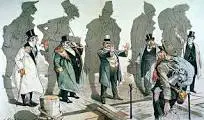
44.
The men standing on the dock facing the man coming onshore represent
a)
nativists.
b)
immigrants.
c)
business interests.
d)
immigration officials.
45.
Vertical integration, a business strategy used by steel mogul Andrew Carnegie, involves
a)
buying out raw material producers and distributors in before or after them in the business chain.
b)
merging with companies producing similar products.
c)
forming trusts.
d)
using new methods to increase production.
46.
Which of the following would be an example of a push factor?
a)
Better Employment
b)
Flooding
c)
Marriage
d)
Great Weather
47.
When sugar planters, missionaries, and Marines drove Queen Liliuokalani from power, the U.S. gained a permanent foothold in -
a)
Hawaii
b)
Guam
c)
Samoa
d)
Panama
48.
Which of the following would be considered a flapper?
a)
a fundamental criticizing evolution
b)
a woman of the '20s challenging traditional gender roles
c)
a writer rebelling against the materialism of the decade
d)
an urban male enjoying the city's nightlife
49.
The Harlem Renaissance was
a)
an African American cultural awakening in New York City during the 1920s.
b)
dependence on white patronage and financial support.
c)
had little contact with the black masses
d)
all of the above
50.
After the Stock Market Crash in October 1929, there was
a)
A decrease in demand for consumer goods
b)
An increase in loans for building and factories
c)
A decrease in business failures
d)
An increase in industrial production
51.
____________ is the way FDR spoke directly to the nation during the Great Depression. It instilled confidence and even succeeded in getting many people to redeposit their money in banks.
a)
Mass Media
b)
Federal Reserve Act
c)
TVA
d)
Fireside Chats
52.
What agency established retirement income for all workers when they reached the age of sixty-five?
a)
Social Security
b)
Federal Reserve Act
c)
Federal Deposit Insurance Corporation
d)
National Labor Relations Act
53.
What best describes a way in which the Great Depression affected the lives of Americans?
a)
Many people moved from shantytowns to the suburbs.
b)
Many children quit school to help their families earn money.
c)
More people got married immediately after finishing school.
d)
Farmers and businessmen were hurt by the rising crop prices
54.
In the 1920s, religious fundamentalists focused especially on which of the following issues?
a)
Eradicating slum conditions in the city
b)
The sexual revolution
c)
The theory of evolution
d)
Restricting the immigration of Catholics and Jews
55.
Which characteristic of the 1920s is illustrated by the trial of Sacco and Vanzetti?
a)
Hostility toward woman’s suffrage
b)
Support for segregation
c)
Opposition to separation of church and state
d)
Intolerance toward immigrants
56.
In 1898, the mysterious and controversial destruction of the battleship USS Maine was viewed by many in the United States as -
a)
an accident with nobody to blame
b)
an act of sabotage by unhappy Americans
c)
cause for war with Spain
d)
the beginning of yellow journalism
57.
Muckraker Upton Sinclair’s book “The Jungle” exposed the practices of what industry?
a)
Farming
b)
Logging
c)
Meat Packing
d)
Mining
58.
Why did American industrialists in the late 19th century generally support expansion into overseas colonies?
a)
They believed that these regions would benefit from democratic government.
b)
These areas would provide new sources of raw materials and customers.
c)
Antitrust laws did not apply to American territories overseas.
d)
American colonies would increase tariff revenues.
100 %

