
 Worksheets
8202 PP PP1
Total questions: 76
Worksheet time: 38mins
Which task best matches a claw hammer’s primary use?
Cutting metal sheet with fine control
Breaking masonry with heavy blows
Punching holes in soft plastics
Driving and extracting nails from wood
A club (lump) hammer is most appropriately paired with which tool for its typical use?
Screwdriver for tightening screws
Hand saw for trimming timber
Cold chisel for heavy cutting work
Spirit level for setting floors
Which statement distinguishes a cold chisel from a wood chisel?
Wood chisel is struck with a sledge
Wood chisel has a round cutting tip
Cold chisel pares softwoods cleanly
Cold chisel cuts masonry and concrete
When lifting floorboards and removing the tongue, which chisel is typically used?
Gouge chisel with curved edge
Mortise chisel with thick sides
Bolster chisel with a wide blade
Beading chisel with narrow tip
Which tool is a general-purpose option for cutting masonry?
V-tool chisel with V-shaped tip
Skew chisel with angled corner
Paring chisel with long thin blade
Flat chisel with straight cutting edge
For notching joists in carpentry tasks, which chisel type is mainly used by plumbers?
Wood chisel with flat or bevelled edge
Cold chisel with hardened tip
Stone chisel with toothed edge
Lathe chisel with round profile
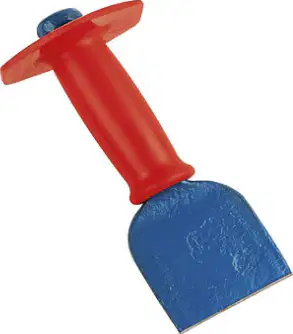
Which risk is increased if a chisel head becomes mushroomed from repeated striking?
Chips can break off and fly
Handle may absorb vibrations
Cutting edge may cool slowly
Blade will self-lubricate
Which PPE is most essential when striking a cold chisel with a club hammer?
Safety glasses and gloves
Hearing protection only
Dust mask only
Hard hat without eyewear
Which action is safest before using a claw hammer to pull a nail from wood?
Secure footing and clear work area
Oil the claw to reduce friction
Hold the nail directly with fingers
Strike the handle on a hard surface
You must cut a neat notch in a joist without crushing fibers. Which tool pairing is most appropriate?
Wood chisel with a wooden mallet
Bolster chisel with a lump hammer
Cold chisel with a club hammer
Flat chisel with a sledgehammer
A student uses a cold chisel on concrete while wearing no eye protection. What is the most likely hazard?
Vapors causing dizziness
Electrical shock from the tool
Overheating and blade warping
Flying fragments striking the eyes
Which statement correctly pairs hammer type and typical task?
Club hammer for light demolition work
Claw hammer for cutting masonry edges
Ball-peen hammer for pulling long nails
Dead blow hammer for striking cold chisels
Which control best protects against debris when striking a cold chisel?
Wear impact‑rated eye protection at all times
Hold the chisel at a steeper angle
Stand farther away from the workpiece
Use a larger hammer for fewer blows
What is the primary reason to keep a chisel blade sharp and well ground?
Increase the number of sparks produced
Make the tool look professionally maintained
Avoid the need to use any hand protection
Reduce glancing blows and improve control
A chisel head shows edges folding outward after repeated hammering. What should you do first?
Switch to a softer face hammer immediately
Sharpen only the cutting edge and proceed
Continue using it until the head is flat again
Remove mushrooming by grinding the head safely
When using cold chisels, why are gloves recommended?
Increase grip so blows are stronger
Keep hands warm in cold workshops
Protect hands from cuts and abrasions
Prevent vibration from reaching wrists
Which tool is a general-purpose spanner used for tightening compression joints and radiator valve unions?
Ring spanner
Basin wrench
Adjustable spanner
Open-jawed spanner
Box spanner
Which spanner type is mostly used for boiler and appliance servicing and is recommended as a small set?
Ring spanners
Basin wrenches
Adjustable spanners
Open-jawed spanners
Box spanners
What is the main tool for fixing taps to sanitary ware?
Box spanner
Ring spanner
Mole grip
Stillson wrench
Basin wrench
Which tool is designed for tightening and loosening tap connections in hard-to-reach areas behind basins and sinks?
Water pump pliers
Basin wrench
Footprint wrench
Ring spanner
Open-jawed spanner
Which specialist tool is used for installing and removing an immersion heater?
Water pump pliers
Mole grip
Stillson wrench
Adjustable spanner
Immersion heater spanner
Ring spanners are mostly used for which task?
Soldering capillary joints
Boiler and appliance servicing
Cutting copper pipe square
Crimping compression olives
Measuring pipe diameters
Which wrench is commonly used when installing low carbon steel pipe and is available in sizes from 10 in to 36 in?
Water pump pliers
Mole grip
Footprint wrench
Stillson wrench
Box spanner
What is another name for the Footprint tool used for tightening fittings and unions?
Chain pipe tong
Adjustable pipe wrench
Socket breaker bar
Slip-joint pliers
Parallel jaw spanner
Which tool provides locking pliers that deliver high clamping force and allow hands-free gripping?
Ring spanner
Mole grip
Basin wrench
Water pump pliers
Open-jawed spanner
Although known as pliers, which tool serves as a plumber’s general-purpose grips?
Crimping pliers
Side cutters
Slip-joint pliers
Needle-nose pliers
Water pump pliers
You need to undo a nut securing a tap deep behind a kitchen sink where access is limited. Which tool is most suitable?
Ring spanner
Basin wrench
Open-jawed spanner
Adjustable spanner
Water pump pliers
A union on a galvanized pipe needs tightening without a specific fixed spanner size. Which tool is most appropriate?
Immersion heater spanner
Ring spanner
Box spanner
Footprint wrench
Mole grip
For tightening radiator valve unions where sizes vary, which general-purpose spanner would you select?
Stillson wrench
Box spanner
Open-jawed spanner
Mole grip
Adjustable spanner
Which tool pair is best matched to their primary plumbing use?
Ring spanner – bending tube
Mole grip – cutting pipe
Box spanner – fixing taps
Stillson – shaping copper
Basin wrench – flaring ends
A stubborn pipe fitting requires a secure hands-free hold while you align another component. Which gripping tool should you lock in place?
Mole grip
Water pump pliers
Footprint wrench
Adjustable spanner
Ring spanner
Which task best matches the primary use of circlip pliers in plumbing maintenance?
Tightening large hexagon head set screws
Removing circlips from tap spindles and valves
Crimping terminals onto flexible conductors
Cutting armoured electrical cable sheathing
General‑purpose pliers are MOST suitable for which combined function?
Gripping small fasteners and cutting thin flex
Pressing bearings and broaching keyways
Crimping lugs and stripping heavy insulation
Flaring tubing and expanding copper pipe
Wire cutters in a plumber’s toolkit are intended primarily for what job?
Cutting electrical cables and flexible leads
Removing spring clips from shower valves
Holding small nuts while soldering
Driving Pozidriv and Phillips screws
Which screwdriver head pairs correctly with slotted screws?
Pozidriv driver for slotted screws
Hexagon driver for slotted screws
Flat blade driver for slotted screws
Phillips driver for slotted screws
Which statement about Pozidriv and Phillips screw heads is accurate?
Pozidriv and Phillips are not compatible designs
Pozidriv and Phillips are interchangeable types
Pozidriv fits only shallow slotted screws
Phillips is a hexagon recess profile
Allen keys are associated with which screw head type commonly used in appliance servicing?
Phillips countersunk wood screws
Pozidriv cross‑slotted recess screws
Hexagon internal socket head fasteners
Flat slotted machine screws
You must remove a circlip from a non‑rising tap spindle without damage. Which tool selection shows best planning?
Use a flat blade screwdriver to pry outward
Use wire cutters to snip and peel clip
Use general‑purpose pliers with extra force
Use circlip pliers with the correct tip size
A screw head shows a cross with extra smaller ribs between the main slots. Which driver choice minimizes cam‑out risk?
Select a flat blade driver carefully centered
Select a Pozidriv driver of correct size
Select a hex key with close tolerance
Select a Phillips driver of same size
Which tool is best for cutting copper tube in confined spaces where a junior hacksaw cannot reach?
Plastic ratchet-style pipe cutter
Adjustable cutter for various sizes
Pipe slice designed for tight spaces
Tripod bending machine stand
What is the main advantage of adjustable pipe cutters when working with copper tube?
They adjust to many tube sizes
They cut plastic pipe cleanly
They thread steel pipe ends
They bend tube to precise angles
Why are plastic pipe cutters preferred for push-fit pressure plastic pipe?
They give a clean square cut
They grind a beveled chamfer
They leave a rough serrated edge
They create flared pipe ends
Scissor bending machines are also commonly called what?
Spring-assisted jigs
Hydraulic ram benders
Tripod stand benders
Hand benders for copper
Which tube sizes are typical for scissor bending machines used on copper?
15 mm and 22 mm sizes
42 mm and 54 mm sizes
28 mm and 35 mm sizes
6 mm and 8 mm sizes
Tripod bending machines are best described as what type of equipment?
Oil-powered steel benders
Internal support springs
Portable manual cutters
Static machines for copper
What size range is commonly handled by tripod bending machines for copper tube?
15 mm to 42 mm range
32 mm to 63 mm range
6 mm to 10 mm range
10 mm to 28 mm range
What is a key safety consideration when using bending springs on copper tube?
Avoid bending over the knee
Always heat to cherry red
Flood with hydraulic oil
Clamp in a pipe vice
Bending springs are suitable for which copper grade mentioned?
Work-hardened copper
Fully annealed copper
High phosphorus bronze
Half-hard copper R250
A microbore scissor bender is intended for which tubing sizes?
12 mm, 15 mm, 22 mm
6 mm, 8 mm, 10 mm
1⁄2 in, 3⁄4 in, 1 in
28 mm, 35 mm, 42 mm
Hydraulic low carbon steel bending machines use what to generate bending force?
Pressure from hydraulic oil
Compressed shop air
Counterweighted levers
Electric servo motors
Which maintenance task is essential for hydraulic steel benders during routine use?
Replace the bending spring
Heat-treat the former die
Sharpen the cutting wheel
Check and top up oil level
You must bend a 22 mm copper tube accurately on site with a lightweight portable tool. Which is the best choice?
Hydraulic steel bender
Scissor bending machine
Tripod bending machine
Internal bending spring
You are cutting multiple plastic pipes for push-fit joints. Which tool choice minimizes burrs and ensures a square end?
Plastic pipe cutters
Adjustable pipe cutter
Pipe slice for copper
Junior hacksaw blade
Which saw is primarily used for cutting copper tubes, plastic waste pipes, gutters, soil pipes, and low carbon steel pipes?
Hacksaw with forward-facing teeth
Universal hard point saw for wood
Junior hacksaw for small tasks
Padsaw with tapered narrow blade
When fitting a hacksaw blade, what two conditions must be ensured before use?
Blade reversed and tension left slack
Teeth face backward and frame loose
Teeth face forward and blade tension correct
Teeth alternate and frame underloaded
What is the typical application of a junior hacksaw in plumbing work?
Cutting small copper tubes and plastic pipes
Cutting gutters made from hardwood
Shaping awkward holes in plasterboard
Ripping floorboards and timber platforms
Which description best matches a padsaw, also known as a keyhole saw?
Fine, double-edged blade for tile scoring
Wide, flexible blade for sheet metal curves
Short, coarse blade for heavy timber ripping
Long, narrow blade for small, awkward holes
A universal hard point saw is mainly intended for which material and tasks?
Soft plastics requiring heated cutters
Wood tasks like floorboards and platforms
Thin metals like low carbon steel pipes
Ceramic tiles and brittle masonry work
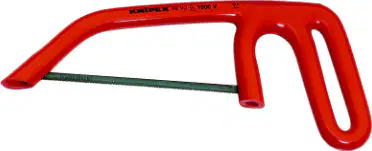
You must cut a short length from a 10 mm copper tube in a tight space. Which tool is the most suitable?
Padsaw with extended narrow blade
Full-size hacksaw with coarse pitch
Universal hard point saw with coarse set
Junior hacksaw with forward-facing teeth
During blade replacement on a junior hacksaw, what is the correct tooth orientation and why?
Teeth face forward to cut on the push
Teeth face backward to cut on pull
Teeth alternate to reduce chatter
Teeth neutral to prevent binding
You need to create an access hole through plasterboard to route a pipe around an obstruction. Which hand saw choice is most appropriate?
Universal hard point saw for general wood
Hacksaw for straight long pipe cuts
Padsaw for cutting small awkward holes
Junior hacksaw for delicate plastics
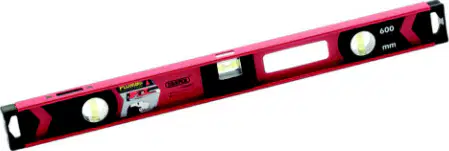
Which two common lengths are standard for full-size spirit levels used by plumbers?
1,000mm and 1,500mm
450mm and 900mm
300mm and 600mm
600mm and 1,200mm
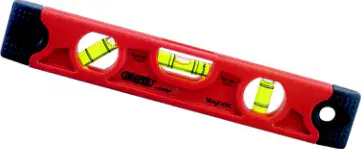
What feature distinguishes a boat level from a standard full-size spirit level?
It measures angles electronically
It is foldable for compact storage
It is 300mm long and magnetic
It is battery powered for illumination
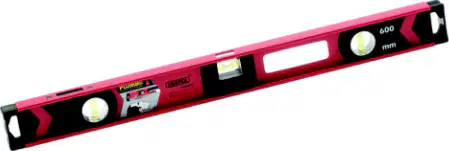
You must check a row of wall cabinets is straight during installation. Which tool is most appropriate for this task?
Pipe cutter with guide rollers
Spirit level for levelling runs
Torque wrench for fixings
Feeler gauges for gaps
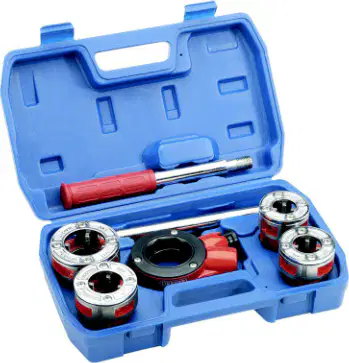
Ratchet stocks and dies are primarily used to perform which operation on low carbon steel pipes?
On-site threading of BSP pipes
Flaring ends for compression joints
Cutting square pipe ends accurately
Beading edges for hose clamps
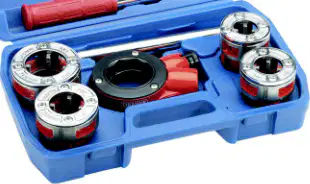
When preparing to thread a pipe using a ratchet stock and die, which planning step best reduces the risk of cross-threading and poor finish?
Use maximum ratchet speed immediately
Chamfer the pipe end and apply oil
Start dry to avoid oil contamination
Tighten the vice as hard as possible
Which practice best helps employers track tool usage and location?
Random spot checks by supervisors
End-of-week verbal check-ins only
Personal memory and informal notes
Tool requisition and booking out systems
Which is an example of an unsafe tool practice?
Completing manufacturer training first
Wearing appropriate PPE at all times
Following approved guidelines consistently
Using the wrong tool for the job
What is the primary risk when tools are not properly maintained?
They become dangerous to users
They are harder to store neatly
They become more expensive to replace
They void the store’s warranty
Which action addresses poor maintenance directly?
Oiling moving parts regularly
Storing tools in deep pockets
Throwing tools between coworkers
Ignoring minor surface rust
Which check should be completed before using any cutting tool?
The handle is newly painted
The tool color matches others
Cutting edges are sharp and intact
The toolbox is completely full
A worker plans to use a power tool at height. What is the safest preparation?
Carry extra sharp points in pockets
Turn off fall protection to move
Rely on coworkers to catch drops
Secure the tool to prevent drops
Which pre-use inspection item focuses on structural integrity?
Check for splits, cracks, burrs, loose parts
Confirm tool brand and model name
Verify the tool is the newest version
Count how many tools are in stock
Which statement best describes correct PPE practice with tools?
Use PPE appropriate to the task
Skip PPE for quick adjustments
Share a single visor for speed
Only wear PPE during training
You observe a coworker throwing tools to save time. What is the correct response?
Throw lighter tools only underhand
Stop the behavior and hand tools safely
Stand farther away and watch
Join in to maintain efficiency
Which step should occur before any tool operation by a new employee?
They sign out spare PPE items
They choose the most powerful tool
A coworker gives a quick demo
Adequate training has taken place

