
 Worksheets
Chemistry II Multiple Choice Practice Test
Total questions: 62
Worksheet time: 1hrs 2mins
The number in front of a chemical formula that tells how many molecules or atoms of each reactant take part in a reaction is called a(n)?
Subscript
Superscript
Fraction
Coefficient
Magnesium bromide is an ionic compound with the chemical formula MgBr2. What does the “2” indicate?
Bromide has a 2- charge.
There are two magnesium ions to every bromide ion.
There are two bromide ions for every magnesium ion.
Bromide has a 2+ charge.
CaCO3 represents a chemical
Symbol
Formula
Subscript
Reaction
How many electrons are needed in the outer energy level of most atoms for the atom to be chemically stable?
2
4
6
8
Electrons involved in bonding between atoms are:
Valence electrons.
Inside the nucleus.
Closest to the nucleus.
Positively charged.
Why do the noble gases NOT form compounds readily?
They have no electrons.
They have empty outer electron levels.
They have seven electrons in their outer energy levels.
Their outer energy levels are completely filled with electrons.
When an atom loses an electron, it becomes a
Cation.
Anion.
Neutral ion.
Neutral atom.
An ionic bond is the attraction between
Similarly charged ions.
Neutral ions.
Oppositely charged ions.
Neutral atoms.
A property of ionic compounds is:
Conducts electricity when dissolved in water
High melting points
Ionic crystals
All of the above
A log burned and became a pile of ashes. The mass of the ashes was less than the mass of the log before it burned. What can you conclude based on the law of conservation of mass?
The chemical reaction created matter.
The chemical reaction destroyed matter.
Not all of the products and reactants could be measured because the chemical reaction took place in an open system.
The chemical reaction did not work as expected because it took place in a closed system.
Water is an example of a covalent bond that does not share electrons evenly. It is called a
Covalent bond.
Metallic bond.
Non polar bond.
Polar bond.
An ice cube (solid H2O) and a scoop of table salt (NaCl) are left outside on a warm, sunny day. Which best explains why the ice cube melts and the salt does not?
The attractive forces between molecules of H2O are much weaker than those between ions in NaCl.
NaCl can dissolve in H2O.
The mass of the H2O was less than the mass of NaCl.
NaCl is white and H2O is colorless.
Which is the correct chemical equation for the following statement? Sodium reacts with oxygen in a 2:1 ratio to produce sodium oxide.
4Na + O2 → 2Na2O
2Na + O2 → 2NaO
Na2O + O2 → 2NaO
Na + O2 → Na2O2
The principle of conservation of mass is true
Only for reactions that take place in open systems.
Only for reactions that take place in closed systems.
For reactions in both open and closed systems.
For no reactions at all.
According to the law of conservation of mass, if two atoms of hydrogen are used as reactants, how many atoms of hydrogen must be part of the product?
2
0
1
4
When a chemical reaction takes place in an open system,
Matter can enter from or escape to the surroundings.
Matter is not allowed to enter from or escape to the surroundings.
Matter can enter from the surroundings, but cannot escape to the surroundings.
Matter cannot move at all.
A change in matter that produces new substances is called a:
Chemical reaction
Physical change
Mixture
Solution
Each substance to the right of the arrow in a chemical reaction is called a:
Catalyst
Precipitate
Reactant
Product
A bottle of hydrogen peroxide that eventually turns into a bottle of water and oxygen gas is an example of a:
Synthesis reaction.
Decomposition reaction.
Replacement reaction.
Precipitate reaction.
When one element replaces another element in a compound, the reaction is called a:
Synthesis reaction
single-replacement reaction
Decomposition reaction
double-replacement reaction
A(n) ______ chemical equation has the same number of atoms of each element on both sides of the equation.
Simple
Balanced
Unbalanced
Complex
In a double bond, ______ electrons are shared.
2
4
6
8
The minimum amount of energy needed to start a reaction is
Exothermic energy
Endothermic energy
Activation energy
Chemical energy
Which statement is true about exothermic reactions?
It releases energy
It absorbs energy
It requires no activation energy
The energy of the products is greater than the energy of the reactants
Which of the following can change the rate of a reaction?
Surface area
Temperature
Catalyst
All of the above
A small beaker contains 50 mL of water at 20°C. If three sugar cubes are placed in the beaker, they will eventually dissolve. Which action would speed up the rate at which the sugar cubes dissolve?
Use less water initially
Transfer the contents to a larger beaker
Cool the water and sugar cubes to 5°C
Heat the contents of the beaker
Atoms of the element nitrogen can share three pairs of electrons, forming a:
A triple bond
A single bond
A double bond
No bond
Which compound is composed of atoms joined by covalent bonds?
CaF2
NaCl
H2O
MgO
How can a scientist safely determine whether an unknown solution is salt in water or sugar in water?
by filtering the solution
by smelling the solution
by testing the electrical conductivity of the solution
by tasting the solution

In a covalent bond, one or more electrons are:
shared
lost
gained
transferred

Is this ionic bond drawn correctly?
Yes
No

Which of these is covalent?
NaCl
Pb(NO3)2
CO2
AlCl3

What is this molecule?
CO
CO2
C2O
C2O2

This image shows the bonding between lithium and fluorine. What does the red arrow indicate?
electrons being shared
electrons being transferred to fluorine
electrons being transferred to lithium
electrons being destroyed
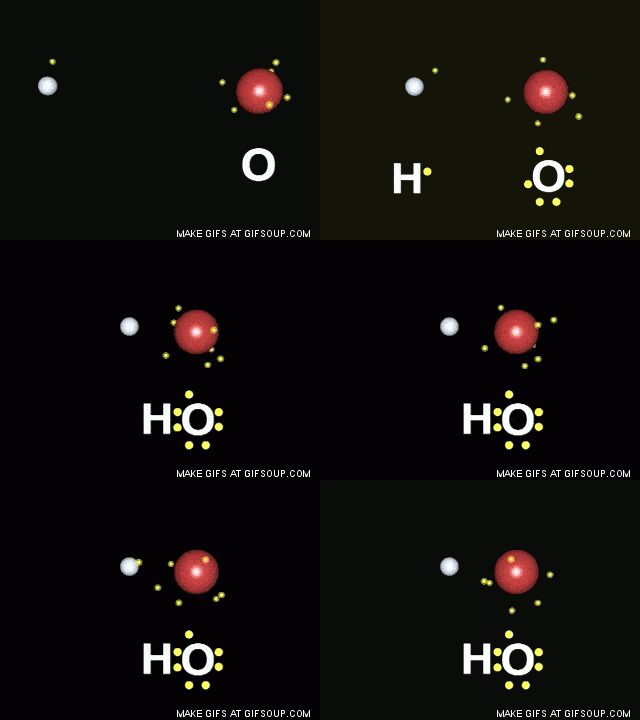
What type of bond forms between oxygen and hydrogen?
Ionic
Covalent
In an endothermic reaction, energy is _________.
absorbed
released
Which instrument would you use to detect an endothermic or exothermic reaction?
triple beam balance
ruler
thermometer
The surrounding temperature gets warmer.
endothermic
exothermic
The surrounding temperature becomes cold.
Endothermic
Exothermic
The initial temperature was measured to be 20oC and the final temperature was 45oC. The reaction was:
exothermic
endothermic
The initial temperature was measured to be 20oC and the final temperature was 10oC. The reaction was
exothermic
endothermic
The Law of Conservation of Mass states:
Matter can be destroyed, but it can't be created.
Matter can be created with any density as long as the volume remains constant.
Matter cannot be created nor destroyed.
Matter can change phases and still be the same substance.
If I have 100 grams of reactants, how many grams of products will I have?
0g
100g
50g
75g
H3PO4 + KOH → K3PO4 + H2O
Is this equation balanced?
yes
no
impossible to determine
The _______ are on the left side of the equation and the _______ are on the right.
products; reactants
reactants; solutions
solvents; products
reactants; products
HCl + NaOH → NaCl + H2O
Is this equation balanced?
yes
no
Cannot determine
The reaction represented by the equation 2Mg(s) + O2(g) → 2MgO(s) is a
synthesis reaction
decomposition reaction
double replacement reaction
single replacement reaction
When a solid produced by a chemical reaction separates from the solution, it is called
a precipitate
a molecule
a reactant
the mass of the product
In what type of reaction does a single compound produce two or more simpler substances?
decomposition reaction
single replacement reaction
synthesis reaction
ionic reaction
Which type of reaction is the following?
PbSO4 → PbSO3 + O2
Decomposition
Combustion
Synthesis
Single Replacement
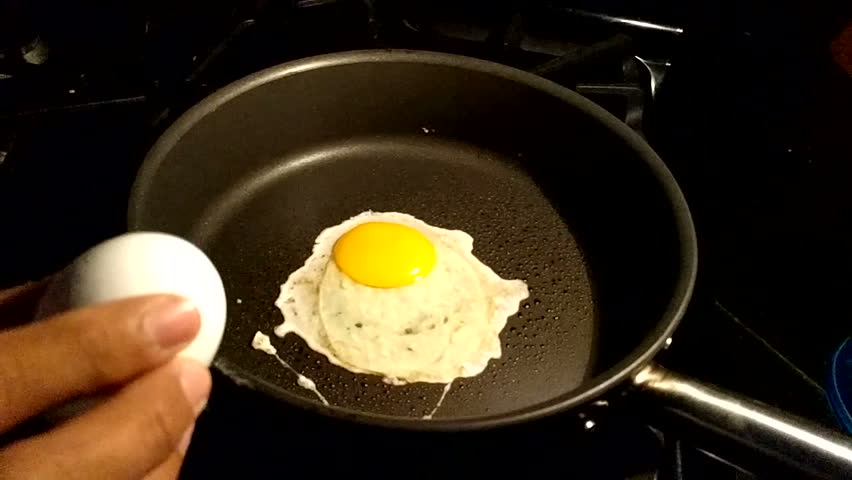
Baking bread and cooking an egg are examples of...?
Endothermic processes
Exothermic processes
None of these

The diagram represents which type of reaction?
endothermic
exothermic

In the figure, the reactants have _____ energy than the products.
more
less

In the figure, the reactants have _____ energy than the products.
more
less

Is this diagram showing an endothermic or exothermic reaction?
Endothermic
Exothermic

This could be the dot diagram of:
Mg
Cl
C
O
How many electrons should sodium, with atomic number 11, have in its Lewis dot model?
1
2
3
4
Which of these is correct?


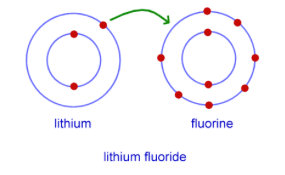
What type of bond is shown here?
ionic
covalent
A nitrogen molecule (N2) has one triple bond. How many electrons do the nitrogen atoms share?
1
3
4
6
In an electron dot diagram, two pairs of shared electrons represent a ...
single bond
double bond
triple bond
quadruple bond
An atom with 3 valence electrons "wants" a full shell, so it can either gain 5 electrons or lose 3 electrons. Which is more likely to occur?
Gain 5
Lose 3
Nothing

