wayground logo

Free Printable Worksheets

NEW

Font size

S
M
L
XL
Worksheets

7th grade Chemistry Test Review

Total questions: 65

Worksheet time: 35mins

Name
Class
Date
1.

Which subatomic particle tells the identity of an element?

a)

Electron

b)

Proton

c)

Neutron

d)

Nucleus

2.

Which 3 things are always equal for an atom?

a)

Electrons, protons, and neutrons

b)

Atomic number, protons, electrons

c)

Mass number, atomic number, protons

d)

Atomic number, neutrons, electrons

3.

How many protons are in this element?

a)

12

b)

8

c)

7

d)

6

4.

What is the mass number for this element?

a)

12

b)

8

c)

7

d)

6

5.

How many electrons are in this element?

a)

39

b)

19

c)

20

d)

21

6.

How many neutrons are in this element?

a)

39

b)

19

c)

20

d)

40

7.

How many neutrons does Sodium (Na) have?

a)

11

b)

23

c)

34

d)

12

8.
These particles orbit around the nucleus of an atom.  What are they called?
a)
electrons
b)
protons
c)
neutrons
d)
photons
9.
What does the nucleus consist of?
a)
Protons + Electrons
b)
Neutrons + Electrons
c)
Atoms
d)
Protons + Neutrons
10.
A pure substance...
a)
is an element or a compound
b)
is an element or a mixture
c)
is a compound or a mixture
d)
is a mixture
11.
1 A substance made up of two or more chemically combinedelements is —
a)
an element
b)
mixture
c)
compound
d)
solution
12.
Two or more physically combined substances form —
a)
a compoud
b)
an acid
c)
an element
d)
a mixture
13.
NaHCO3 is an example of —
a)
an abbreviation
b)
a compound
c)
a mixture
d)
an element
14.
A substance made of only one type of atom is called —
a)
an element
b)
a mixture
c)
a compound
d)
a salt
15.
Two or more substances in the same place but NOT chemically combined or in a specific ratio is called —
a)
a compound 
b)
a pure substance
c)
an element
d)
a mixture
16.
What is an example of an element?
a)
Oxygen
b)
Pure water
c)
Air
d)
Table salt
17.

Carbon

a)

CA

b)

C

c)

Ca

d)

Cn

18.

Sn

a)

tin

b)

sulfur

c)

iron

d)

sodium

19.

Zinc

a)

Z

b)

Zi

c)

ZN

d)

Zn

20.

Sulfur

a)

Sf

b)

Su

c)

Sr

d)

S

21.

Neon

a)

N

b)

No

c)

Ne

d)

Nn

22.

Calcium

a)

Cl

b)

Ca

c)

C

d)

Cm

23.

Copper

a)

CU

b)

Cp

c)

Cu

d)

Cr

24.

Helium

a)

He

b)

Hl

c)

HE

d)

Hm

25.

N

a)

Sodium

b)

Nitrogon

c)

Nonium

d)

Nitrogen

26.

Gold

a)

Go

b)

Gl

c)

AU

d)

Au

27.

Pb

a)

Gold

b)

Lead

c)

peanut butter

d)

Paribium

28.

Iron

a)

Ir

b)

In

c)

Fe

d)

FE

29.

Nickel

a)

Ni

b)

N

c)

Nl

d)

Nc

30.

Mercury

a)

Me

b)

Hg

c)

HG

d)

ME

31.

Iodine

a)

Ie

b)

I

c)

Id

d)

Io

32.

Potassium

a)

P

b)

K

c)

Pt

d)

k

33.

Aluminum

a)

A

b)

Al

c)

Am

d)

Au

34.

Mg

a)

Manganese

b)

Mangium

c)

Magnesium

d)

Manzanium

35.

Xenon

a)

Xe

b)

X

c)

Xn

d)

Xo

36.

The atomic mass is:

a)

number of protons in the nucleus

b)

number of neutrons in the nucleus

c)

number of both protons and neutrons

d)

number of electrons

37.

Element, Compound, or Mixture?

Salt (NaCl)

a)

Element

b)

Compound

c)

Mixture

38.
Which of the following is not a compound?
a)
HCl
b)
Cl
c)
NaCl
d)
CO2
39.

Carbon is considered an element while carbon dioxide is considered a compound. This is because carbon dioxide is –

a)

a gas at room temperature.

b)

made of two different elements.

c)

made of the same elements.

d)

a molecule of two carbon atoms

40.

What is the name of a single type of atom?

a)

compound

b)

proton

c)

element

d)

mixture

41.

The innermost energy level has a maximum of how many electrons?

a)

1

b)

2

c)

6

d)

8

42.

What determines an elements reactivity.

a)

Number of protons

b)

number of valence electrons

c)

number of neutrons

d)

number of energy levels

43.

Which of the following is a chemical change?

a)

Cutting bread

b)

Slicing carrots

c)

Melting butter

d)

Soured milk

44.

Which of the following is a physical change?

a)

Ice melting

b)

Baking potatoes

c)

Rusty nail

d)

Rotting wood

45.

Which change creates a NEW substance?

a)

Physical change

b)

Chemical Change

46.
Flammability (burns)
a)
Physical Property
b)
Chemical Property
47.
Solubility (dissolves)
a)
Physical Proeprty
b)
Chemical Property
48.
Baking soda and vinegar combine to make carbon dioxide
a)
Chemical Change
b)
Physical Change
49.
Cake batter baked in an oven
a)
Chemical Change
b)
Physical Change
50.
Evaporation
a)
Chemical Change
b)
Physical Change
51.
Sugar dissolves in water
a)
Chemical Change
b)
Physical Change
52.
Pancakes cooking on a griddle
a)
Chemical Change
b)
Physical Change
53.
A tire is inflated with air.
a)
Chemical Change
b)
Physical Change
54.
Food is digested in the stomach
a)
Chemical Change
b)
Physical Change
55.

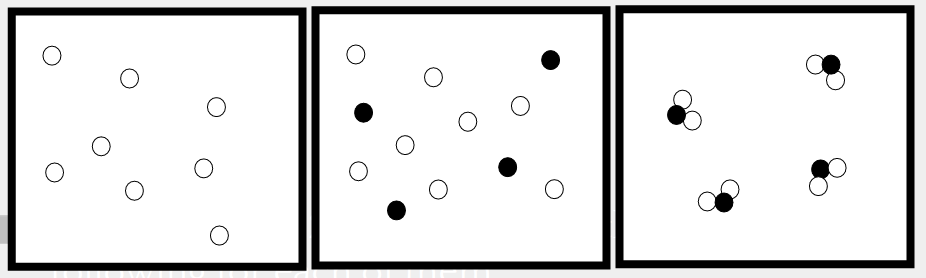
Which of the diagrams below represent a mixture?

a)

A

b)

B

c)

C

d)

D

56.

How many different types of atoms are there in the following molecule?

a)

7

b)

6

c)

3

d)

8

57.
This picture represents which of the following?
a)
element
b)
compound
c)
mixture of elements
d)
mixture of compounds
58.

The diagram shows

a)

element

b)

mixture

c)

compound

59.
Classify the picture with the correct label.
a)
Element
b)
Compound
c)
Mixture of Elements
d)
Mixture of Compounds
60.
a)
Element
b)
Compound
c)
Mixture
61.

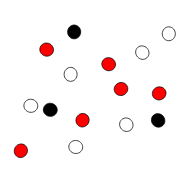
Provided is a list of five different substances.

NaOH     Cu    H2O     N2    H2

How many of these substances are elements?

a)

2

b)

3

c)

4

d)

5

62.

How many elements are in the compound Fe2O3?

a)

0

b)

1

c)

2

d)

3

63.
This picture represents: 
a)
Element
b)
Compound
c)
Mixture of Elements
d)
Mixture of Compounds
64.
This picture represents: 
a)
Element
b)
Compound
c)
Mixture of Elements
d)
Mixture of Compounds
65.

Which one of these pictures represents a pure substance?

a)
1
b)
2
c)

1 & 2

d)

1 & 3