
 Worksheets
Unit 7: 7.3 -7.4
Total questions: 121
Worksheet time: 1hrs 1mins
Which term describes compulsory enlistment of citizens into the military during World War I?
Militarization
Mobilization
Conscription
Nationalization
What were 'Pals Battalions' in the British Army during World War I?
Foreign volunteers from colonies
Drafted men sorted by age
Elite commandos trained abroad
Units of friends enlisting together
Which experience most defined daily life for soldiers on the Western Front?
Rapid cavalry maneuvers
Continuous city street fighting
Frequent seaside landings
Months living in trenches
Which condition commonly plagued trench systems and caused disease among soldiers?
High-altitude frostbite
Dusty desert sandstorms
Tropical jungle parasites
Cold muddy rat infestations
Which weapon released chlorine, phosgene, and mustard agents during World War I?
Incendiary bomb
Artillery shell
Poison gas
Flamethrower
What battlefield effect did machine guns primarily create on the Western Front?
High defensive firepower
Safe open maneuvering
Reliable mobile offense
Effective cavalry charges
Why were early tanks developed by the British during World War I?
To protect troops crossing trenches
To escort naval convoys at sea
To deliver poison gas over cities
To replace infantry with robots
What outcome best characterizes the Western Front by 1916–1917?
A Central Powers collapse
A negotiated early truce
A prolonged stalemate
A swift Allied breakthrough
Which factor contributed to U.S. entry into World War I in 1917?
British bombing of Mexico City
Allied invasion of Canada
Zimmermann Telegram proposal
French blockade of U.S. ports
What does the term 'total war' mean in the context of World War I?
Entire societies mobilized for war
Battles limited to colonies
Only soldiers fought at fronts
War fought solely at sea
How did governments use propaganda during World War I?
To shape public opinion with biased messages
To reduce emotions and de-escalate tensions
To prohibit all recruiting campaigns
To guarantee strictly neutral reporting
Which phrase best captures the meaning of total war in World War I?
Fighting short, decisive battles with few losses
Limiting combat to professional soldiers only
Mobilizing entire societies and economies for war
Keeping civilians insulated from wartime effects
What was a key Allied objective for Japan when it entered the war?
Annex Korea to expand industrial output
Seize German-held Pacific islands and ports
Retake Manchuria from Russian control
Occupy French Indochina for resources
Which campaign most directly involved the ANZAC forces during World War I?
Gallipoli peninsula operations in Turkey
Somme River offensives in France
East African marches to Lake Tanganyika
Arabian Desert raids toward Damascus
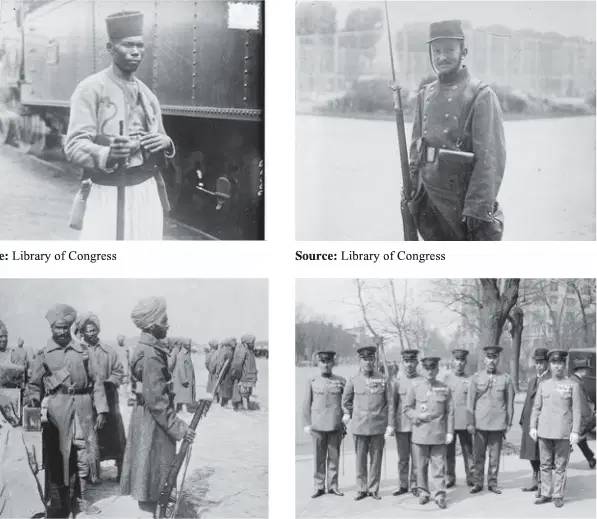
Which statement best explains a common motive for colonial soldiers joining the Allies?
Expectation of immediate independence before the armistice
Hopes that military service would earn political recognition
Desire to avoid compulsory labor in home colonies
Access to land grants in conquered European territories
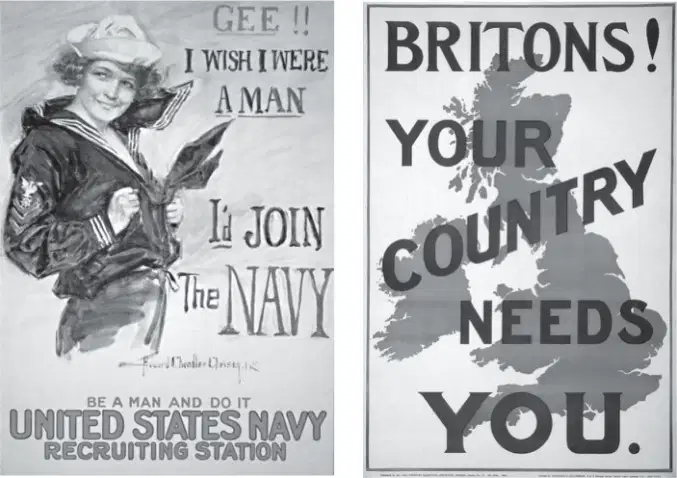
How did propaganda posters like the two shown function within total war mobilization?
They appealed to national identity to spur recruitment
They provided tactical maps for battlefield maneuvers
They replaced military training with motivational slogans
They distributed ration coupons to civilian households
Which development best illustrates the war’s reach across continents and seas?
A rapid war concluded before colonial forces arrived
Exclusive trench warfare on the Western Front only
Battles over the Suez Canal and in the Pacific islands
Navies avoiding blockades to protect neutral shipping
Which leaders made up the Big Four at the Paris Peace Conference?
Roosevelt, Churchill, Clemenceau, Orlando
Wilson, Lloyd George, Clemenceau, Orlando
Wilson, Lenin, Clemenceau, Orlando
Hoover, Lloyd George, Clemenceau, Mussolini
What did Woodrow Wilson mean by the phrase peace without victory?
No nation should be harshly punished or rewarded
Colonial empires should be expanded by Allies
Victorious powers deserve territorial compensation
Germany must pay severe penalties for aggression
Which proposal aimed to create an organization for open diplomacy to prevent future wars?
League of Nations within Fourteen Points
Kellogg-Briand Pact for peace renunciation
United Nations charter after World War II
Locarno Treaties guaranteeing borders
Why did Italy’s delegation leave the Paris Peace Conference in anger?
It demanded German disarmament without reparations
It failed to receive promised territories like Dalmatia
It was excluded for undergoing a communist revolution
It opposed creating the League of Nations entirely
Which best defines self-determination in the postwar European context?
Colonies remaining under imperial administration
Allies annexing territories from defeated empires
Victors imposing governments on Central Powers
Conquered peoples deciding their political futures
Which new or revived states emerged after the Austro-Hungarian and Ottoman collapses?
Finland, Poland, Czechoslovakia, Yugoslavia
Norway, Belgium, Netherlands, Switzerland
Bulgaria, Greece, Spain, Portugal
Denmark, Ireland, Albania, Luxembourg
Which was a major economic requirement imposed on Germany by the Treaty of Versailles?
Payment of reparations for war damages
Barter exchange with Allied economies
Immediate adoption of a gold-backed mark
Mandatory nationalization of key industries
How did David Lloyd George generally position himself between Wilson and Clemenceau?
He strictly backed Wilson’s idealistic program
He demanded annexations without negotiations
He fully rejected both and supported Orlando
He often mediated between their opposing views
Which outcome illustrates the U.S. response to Wilson’s internationalist agenda?
Supreme Court mandated participation by treaty law
Congress approved League membership with reservations
Senate refused to join the League or ratify Versailles
Voters installed a government favoring collective security
Which term refers to civilians being required by the state to join the military during World War I?
Conscription mandated compulsory service
Stalemate resulted in no advance
Propaganda influenced public opinion
Reparations paid for wartime damage
What best describes a battlefield situation in WWI where neither side could gain ground for long periods?
Global war spanning continents
Total war mobilizing societies
Stalemate with entrenched fronts
Trench warfare defensive systems
What is the term for information used to shape opinion and maintain support for the war effort?
Armistice for ceasing hostilities
Conscription for drafting soldiers
Propaganda for persuasive messaging
Reparations for financial penalties
Which concept advocates that peoples have the right to decide their own political fate?
Self-determination of national groups
Total war across civilian life
Imperial mandate over territories
Collective security through alliances
Payments demanded from a defeated nation to compensate for war damages are called what?
Reparations imposed after conflict
Subsidies for military industries
Tariffs on imported goods
Indemnities on neutral shipping
Which phrase describes a conflict that engages entire societies—economies, civilians, and militaries alike?
Limited war with restricted aims
Total war mobilizing populations
Civil war within one country
Proxy war through client states
Which intercepted message pushed the United States closer to entering WWI by proposing a German-Mexican alliance?
Lusitania passenger liner sinking
Fourteen Points peace blueprint
Zimmermann Telegram diplomatic proposal
Gallipoli campaign amphibious assault
The passenger ship sunk by a German U-boat in 1915, escalating tensions with the United States, was the what?
Titanic luxury steamship
Sussex Channel ferry
Emden commerce raider
Lusitania transatlantic liner
Which multinational force of Australia and New Zealand fought notably at Gallipoli?
CEF Canadian contingent
AEF American forces
ANZAC expeditionary corps
BEF professional army
Which WWI campaign aimed to open a sea route to Russia through the Dardanelles?
Ypres salient engagements
Somme offensive campaign
Verdun attrition battle
Gallipoli peninsula operation
Which 1919 gathering sought to set postwar terms and redraw borders after WWI?
Berlin Economic Summit talks
Geneva Disarmament Conference
Vienna Congress restoration
Paris Peace Conference negotiations
Which group of leaders—Wilson, Lloyd George, Clemenceau, and Orlando—were collectively known as the what?
Triple Entente chiefs
Supreme War Council
Big Four principal statesmen
Central Council leadership
Which American president promoted a postwar vision summarized in the Fourteen Points?
Woodrow Wilson progressive idealist
Theodore Roosevelt naval strategist
Franklin Roosevelt New Deal author
Warren Harding normalcy advocate
Which British prime minister attended the Paris Peace Conference and negotiated the postwar settlement?
David Lloyd George coalition leader
Herbert Asququith liberal premier
Winston Churchill wartime orator
Neville Chamberlain appeasement PM
Which French premier pressed for harsh terms on Germany at the 1919 peace negotiations?
Aristide Briand conciliatory diplomat
Philippe Pétain defensive commander
Raymond Poincaré legal conservative
Georges Clemenceau security hawk
Which Italian statesman represented Italy among the principal Allied leaders in 1919?
Benito Mussolini fascist leader
Giovanni Giolitti reform politician
Vittorio Orlando liberal negotiator
Gabriele D’Annunzio nationalist poet
What plan articulated principles like open diplomacy, free trade, and self-determination after WWI?
Zimmermann Note secret offer
Locarno Treaties security pact
Treaty of Brest-Litovsk terms
Fourteen Points reform blueprint
Which international organization was created to promote collective security after WWI?
United Nations post-1945 successor
League of Nations intergovernmental body
NATO transatlantic alliance
Holy Alliance nineteenth-century pact
Which treaty formally ended the war with Germany and imposed reparations and military limits?
Treaty of Versailles punitive settlement
Treaty of Sèvres Ottoman arrangement
Treaty of Trianon Hungarian terms
Armistice of Compiègne truce
Which German state established after WWI faced economic crisis and political extremism?
Weimar Republic parliamentary democracy
German Empire authoritarian monarchy
Federal Republic Cold War state
North German Confederation union
Which battlefield method involved soldiers fighting from fortified ditches along the front?
Trench warfare entrenched lines
Guerrilla warfare irregular tactics
Mobile warfare fluid movement
Naval warfare sea engagements
Which chemical weapon caused severe burns and respiratory damage during WWI?
Nerve agents post-1930s
Tear gas limited irritant
Phosphorus smoke screening
Poison gas chlorine and mustard
Which rapid-fire armament contributed heavily to the defensive deadlock of the Western Front?
Field guns light artillery
Mortars short-range bombs
Machine guns sustained fire
Rifles bolt-action arms
Which underwater vessel targeted shipping to cut supply lines during WWI?
Q-ship decoy cruiser
Destroyer escort vessel
Dreadnought capital ship
U-boat German submarine
Which innovation evolved from reconnaissance to bombing and aerial combat during WWI?
Biplanes sport aviation
Zeppelins strategic airships
Airplanes used in warfare
Autogyros rotary aircraft
Which armored vehicle was introduced to cross trenches and support infantry assaults?
Half-tracks hybrid transports
Self-propelled guns artillery
Armored cars wheeled scouts
Tanks tracked armored vehicles
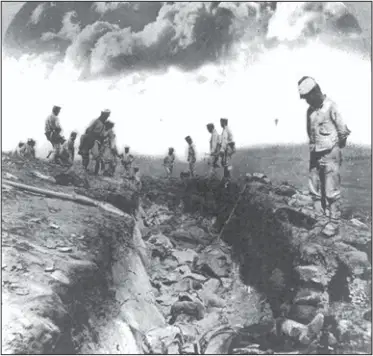
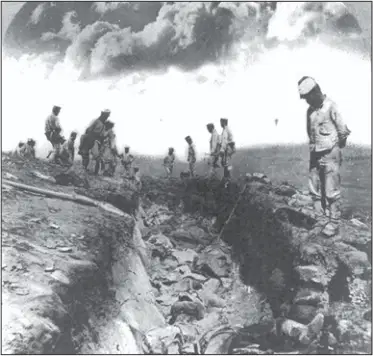
The photograph titled “Removing the Dead from the Trenches” most directly illustrates which feature of World War I combat?
Mobile warfare marked by rapid breakthroughs
Limited casualties due to protective armor
Clean battlefields with few wounded
Static trench lines causing massive losses
Cavalry charges deciding most engagements
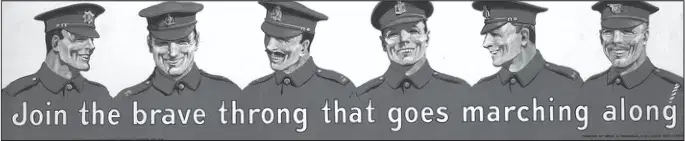
Comparing the recruiting poster to the trench photograph, what inference best explains the differing messages?
Soldiers romanticized war more than civilians did
Posters critiqued leadership while photos praised generals
Photographers staged scenes to boost morale
Propaganda emphasized glory while photos revealed costs
The state censored images to hide defeats
Which statement best captures a trend suggested by both images?
Battle tactics relied primarily on naval blockades
Women immediately gained full suffrage rights
Civilian industries declined due to demobilization
European empires expanded peacefully overseas
Public awareness of war’s human cost increased
Which reason best explains why British authorities might object to Owen’s viewpoint during wartime?
It undermined morale and recruitment efforts
It affirmed traditional ideals of bravery
It supported total war mobilization policies
It praised commanders for honest reporting
It encouraged citizens to buy more war bonds
Which historical context helps explain why many soldiers fought for empires they did not culturally identify with?
Conscription within multiethnic imperial states
Universal objection to imperial authority
Voluntary militias without state pressure
Direct democracy in all front-line units
Decolonization creating small nation-states
Which development in war technology most increased the lethality of trench warfare?
Hot air balloons for sightseeing tours
Improved horse saddles for cavalry charges
Wooden shields and chain mail armor
Machine guns and high-explosive artillery
Solar-powered communication devices
Which postwar problem did the Paris Peace Conference leave for Europe to confront?
Economic recovery without reparations burdens
Stable borders accepted by all minorities
Immediate end to nationalist movements
Permanent military disarmament across empires
Resentment and revisionism in defeated states
Which leadership figure headed the British investigation into alleged German atrocities in Belgium in 1914?
Arthur Conan Doyle, noted author and pamphleteer
David Lloyd George, British prime minister in wartime
Viscount James Bryce, respected scholar and ambassador
H.H. Asquith, Liberal Party political leader
What procedural choice did the committee make to enhance the credibility of its report?
Conducted all interviews personally under oath
Excluded the most sensational and lurid accounts
Accepted only testimonies from military officers
Relied exclusively on anonymous newspaper clippings
Which conclusion did the committee assert about civilian treatment during the invasion of Belgium?
Innocent civilians were murdered and women violated
Civilians negotiated truces that limited urban violence
Civilians rarely suffered because targets were military
Most civilians were safely evacuated by neutral powers
Which practice did the report condemn as a violation of the rules and usages of war?
Using civilians as shields for advancing forces
Rationing supplies for frontline battalions
Exchanging prisoners through Red Cross channels
Issuing propaganda to maintain domestic morale
How might the final paragraph affect the reader’s evaluation of the report’s credibility?
Its neutral tone eliminates any potential bias
Its legal citations guarantee verified accuracy
Its moral appeal could suggest propagandistic intent
Its statistical rigor proves objective impartiality
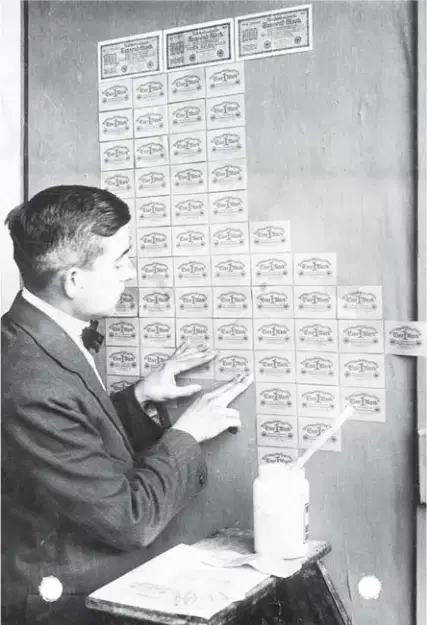
Which condition best describes hyperinflation in Germany during the early 1920s?
Rapid price rises eroding currency purchasing power
Sustained wage growth outpacing productivity trends
Falling prices increasing money’s real purchasing power
Stable prices with minor seasonal cost variations
What immediate global effect followed the 1929 U.S. stock market crash?
Capital outflows from Germany by American investors
Expansion of consumer credit across world markets
Increased Soviet repayments of prerevolutionary debts
Rapid recovery of European agricultural prices
According to John Maynard Keynes, which policy should governments use during a depression?
Raise interest rates to attract foreign capital
Cut public works to limit inflationary pressure
Increase spending even if it creates budget deficits
Balance budgets to restore investor confidence
Which trio correctly lists the New Deal’s overarching aims?
Production, tariffs, savings
Privatization, stability, trade
Growth, austerity, deregulation
Relief, recovery, reform
Which was a structural cause of the global downturn in the early 1930s?
Energy shortages limiting industrial output
Agricultural overproduction depressing world prices
Gold discoveries disrupting exchange rates
Labor unions restricting wage flexibility
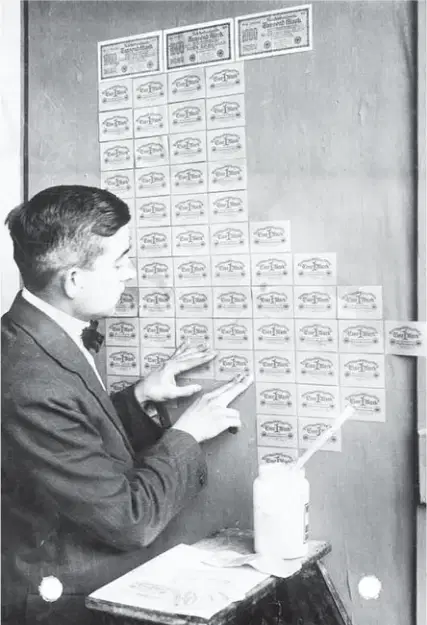
What was one consequence of Germany printing money to pay reparations in the 1920s?
Rapid growth in industrial productivity
Immediate elimination of foreign debts
Sustained budget surpluses and savings
A drastic fall in the currency’s value
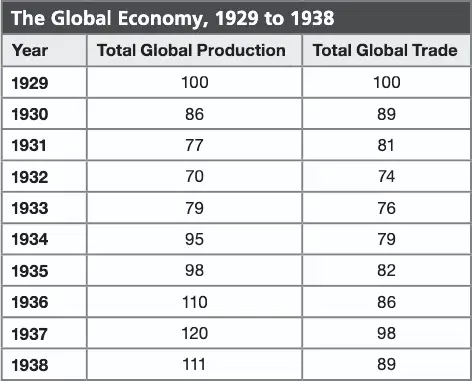
Which statement best describes the trade pattern shown for 1929–1933 in the chart ‘The Global Economy, 1929 to 1938’?
Both production and global trade declined sharply from 1929 levels
Production rose steadily while trade remained unchanged overall
Trade increased markedly despite falling production indicators
Production and trade both remained near constant year to year
Which policy shift did many governments adopt in response to the Depression?
Increased state intervention in economic life
Complete abolition of central banking systems
Return to strict laissez-faire principles
Rapid privatization of public infrastructure
Why did Japan’s economy contract sharply between 1929 and 1931?
Shortages of raw materials within home islands
Devastation from domestic civil conflict and strikes
Dependence on foreign trade amid global demand collapse
Exposure to reparations obligations after World War I
Which outcome in 1937 followed Roosevelt’s decision to scale back deficit spending?
Trade balances immediately improved
Private investment fully replaced public works
Inflation spiked to new record levels
Unemployment rose again in the United States
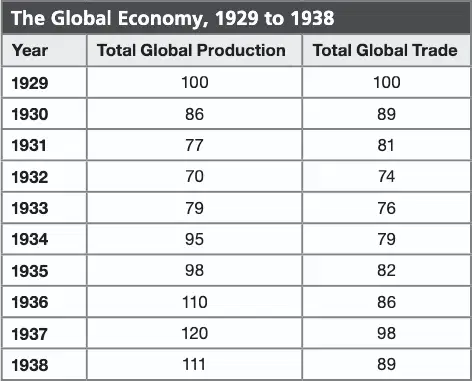
Using the chart, which year first surpasses 1929 in total global production index values?
1938 is the earliest year above baseline
1934 exceeds the 1929 production index
1932 surpasses the baseline production level
1936 shows production above the 1929 baseline
Which inference about tariffs and trade is most consistent with the data and narrative?
Tariff increases stimulated exports across industrial nations
Trade policy had negligible effects on global commerce trends
Lower tariffs were the primary cause of Depression-era job loss
Protectionist policies compounded trade contraction in the early 1930s
Which policy under Vladimir Lenin temporarily reintroduced limited private trade to revive the collapsing Soviet economy?
Collectivization forming state-run kolkhozes
War Communism with grain requisitioning
The New Economic Plan allowing small-scale markets
Five-Year Plans emphasizing heavy industry
What was the primary economic goal of Joseph Stalin’s first Five-Year Plan in the USSR?
Expand consumer goods at low prices
Increase agricultural exports to Europe
Privatize factories to boost competition
Transform the USSR into an industrial power
In Soviet agriculture, what did collectivization involve during Stalin’s rule?
Leasing land to foreign agribusinesses
Farmers freely trading grain on open markets
Peasants forming kolkhozes under state directives
Returning estates to noble landlords
Which consequence best characterizes the agricultural results of Stalin’s collectivization in the early 1930s?
Export booms that funded rearmament
Stable harvests with minor shortages
Widespread famine causing millions of deaths
Rapid increases in rural wages and diets
How did Stalin maintain political control while implementing industrialization?
Decentralizing power to local soviets
Using purges, executions, and gulag sentences
Relaxing censorship of critical newspapers
Allowing multiparty elections nationwide
Which statement best contrasts Lenin’s NEP with Stalin’s later approach?
NEP built heavy industry first; Stalin delayed it
NEP allowed small private trade; Stalin reversed it
Both prioritized consumer goods over defense
Both expanded peasant land ownership broadly
After the Mexican Revolution, which party dominated national politics for much of the 20th century?
Popular Socialist Party (PPS)
Party of the Democratic Revolution (PRD)
Institutional Revolutionary Party (PRI)
National Action Party (PAN)
Under President Lázaro Cárdenas in 1938, what major economic action reshaped Mexico’s oil sector?
Liberalization of drilling concessions
Privatization to foreign investors
Creation of PEMEX through nationalization
Formation of a North American oil cartel
Which description best fits Mexico’s political economy under the PRI during the interwar years?
Corporatist rule trading favors for support
Anarchist communes replacing state power
Classical liberalism with minimal state role
Military junta controlling all ministries
Which comparison is most accurate regarding Soviet and Mexican interwar transformations?
USSR expanded private farms; Mexico banned unions
USSR pursued rapid industrialization; Mexico nationalized oil
USSR emphasized consumer goods; Mexico cut land reform
USSR reduced state control; Mexico increased it
Which concept described the fascist organization of Italy’s economy under Mussolini?
Corporatism linking economic sectors as organs
Syndicalism prioritizing worker-led unions
Mercantilism controlling colonial trade flows
Liberalism promoting free market autonomy
What feature best characterizes a totalitarian state under fascism?
Judicial independence restrains executive power
Local councils run regional economies
Elections guarantee party competition
Government controls all aspects of society
Which grievance helped Mussolini gain support in the 1920s?
Dissatisfaction with Treaty of Versailles gains
Opposition to universal male suffrage expansion
Hostility to Italy’s colonial withdrawals
Resentment of rising land redistribution
What title did Italians commonly use for Mussolini?
Il Duce meaning the leader
El Caudillo meaning the chief
Der Führer meaning the guide
El Generalísimo meaning the general
Which African region did Italy invade in 1935 despite sanctions?
Abyssinia in the Horn of Africa
Congo in Central Africa
Sudan along the Nile Valley
Algeria on the Maghreb coast
A key promise of Spain’s Popular Front in 1936 was primarily aimed at which group?
Clergy through enhanced church roles
Industrialists through tariff reductions
Monarchists through royal restoration
Peasants through proposed land reform
Which coalition supported the Nationalists in Spain’s Civil War?
Germany, Italy, and Portugal leadership
Soviet Union, France, and Britain,
United States, Mexico, and Canada
Sweden, Norway, and Denmark
Which label identified supporters of Spain’s elected government during the war?
Unionists or Whigs in Spain
Carlists or Bourbons in Spain
Moderates or Centrists in Spain
Republicans or Loyalists in Spain
Why is the bombing of Guernica historically significant?
One of the first aerial bombings of civilians
Decisive naval battle ending the conflict
First deployment of paratrooper divisions
Largest tank clash on European soil
What military force used Guernica as a testing ground?
Germany’s Luftwaffe air force
Italy’s Regia Marina fleet
Britain’s BEF expeditionary
France’s Armée de l’Air
Who emerged victorious in the Spanish Civil War and how did he rule?
Manuel Azaña ruled as president
Juan Carlos ruled as regent
José Díaz ruled as premier
Francisco Franco ruled as dictator
What political-economic program did Getulio Vargas institute in Brazil?
Alliance Liberal restoring monarchy
Estado Novo centralizing power
Plano Real stabilizing currency
Tenente revolt decentralizing rule
Which policy trend under Vargas mirrored European fascism?
Censorship and abolition of parties
Extensive worker control of factories
Full protection of civil liberties
Pacifist foreign policy commitments
Despite similarities to fascism, which distinction applied to Brazil under Vargas in the late 1930s?
Joined Axis pact with Germany
Aligned with Allies in World War II
Established racial laws like Nuremberg
Invaded neighbors for lebensraum
In the table of approaches, how does fascism view the relationship between business and the state?
Worker control with syndicate councils
Free markets with minimal regulation
State ownership with central planning
Private ownership with restricted competition
Which term describes government spending that exceeds revenue during downturns to stimulate demand?
Protective tariffs on foreign imports
Deficit spending to boost aggregate demand
Balanced budgeting in recessionary times
Currency devaluation to spur exports
What was John Maynard Keynes best known for advocating during the interwar period?
Classical laissez-faire in depressions
Monetarist control of money supply
Countercyclical fiscal stimulus
Fixed exchange rate adherence
Which policy name refers to Roosevelt’s domestic program responding to the Great Depression?
NEP adjustments
Popular Front agenda
New Deal reforms
Five-Year Plan initiatives
The Soviet agricultural unit combining peasants’ lands under state direction was called a:
Soviet kolkhoz cooperative farm
PRI party apparatus
Gulag penal labor camp
Soviet politburo committee
Which term identifies a semi-corporate arrangement linking interest groups to the state?
Collectivization of rural plots
Corporatism coordinating sectors
Totalitarian party monopoly
Hypernationalism in propaganda
Which interwar event refers to a prolonged worldwide economic collapse beginning in 1929?
Great Depression global downturn
Guernica bombing episode
Spanish Civil War conflict
Russian Civil War turmoil
Which Soviet policy under Lenin mixed limited markets with state control?
Popular Front coalition
New Deal public works
Five-Year Plan acceleration
New Economic Plan compromise
Which Spanish Civil War faction name corresponded to supporters of the Republic?
Luftwaffe expeditionary
Loyalists to monarchy
Republicans resisting coup
Nationalists led by Franco
Which leader is associated with Mexican oil nationalization in 1938?
Lázaro Cárdenas of Mexico
John Maynard Keynes
Francisco Franco of Spain
Franklin Delano Roosevelt
Which institution was created to manage Mexico’s nationalized oil industry?
PRI party secretariat
Luftwaffe air command
Politburo executive body
PEMEX state petroleum firm
In his 1938 address, Cárdenas characterizes foreign oil firms’ privileges primarily as:
Necessary incentives for development
Just rewards for efficiency
Temporary measures during crisis
Exaggerated claims of contribution
Cárdenas lists which factor as contributing to oil industry profits at the expense of workers?
Full union recognition nationwide
Miserably underpaid native labor
Strict enforcement of safety codes
Generous wages for native labor
What remedy does Cárdenas propose to end foreign control over Mexican oil?
Gradual voluntary compliance
Private arbitration panels
A definite and legal measure
Negotiated tax reductions
According to Cárdenas, what civic attitude is necessary after nationalization?
Passive acceptance of austerity
Full optimism and greater activity
Cautious retrenchment by citizens
Reliance on foreign managers
Which best captures the speech’s broader claim about national capacity?
Our people can save the economy
Only foreign capital can modernize
Trade isolation ensures prosperity
Oil revenue should fund emigration
Which interwar government form features one-party rule and pervasive control over society?
Liberal parliamentary cabinet
Constitutional monarchy model
Totalitarian state dominance
Confederal league structure
Which bombing became a symbol of civilian targeting during the Spanish Civil War?
Luftwaffe Battle of Britain
Guernica aerial bombardment
Basque region encirclement
Libya desert campaign
The Five-Year Plan in the Soviet Union primarily aimed to:
Restore free trade unions
Privatize heavy industry trusts
Reduce collectivization efforts
Accelerate industrial output quotas
Which term denotes extreme nationalist fervor surpassing traditional patriotism?
Hypernationalism mass mobilization
Popular Front cross-class
Loyalists constitutionalism
Corporatism interest mediation
Which party dominated Mexican politics after the revolution and into the interwar?
Nationalists military junta
Republican Party of Spain
Popular Front coalition
Institutional Revolutionary Party

