
 Worksheets
Course Introduction and Objectives
Total questions: 31
Worksheet time: 16mins
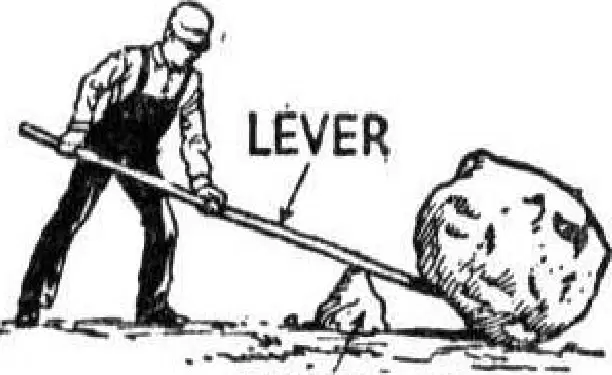
While helping her friend James move some heavy rocks in the backyard, Abigail uses a long bar resting on a pivot labeled fulcrum to lift a particularly heavy stone. Which simple machine is Abigail using in this scenario?
Double pulley with two sheaves
Single pulley changing rope direction
Wheel rotating on fixed axle
Lever with a fulcrum pivot point

Ethan is trying to lift a heavy box using a single pulley system. He notices that while he can change the direction of his effort, he doesn't seem to gain any force advantage. What mechanical advantage is illustrated in this scenario?
No movement regardless of effort
No force gain, only direction change
Force halved, distance doubled
Force doubled, distance halved

While helping his friend Samuel move furniture, Benjamin uses a double pulley system to lift a heavy load. What outcome does the double pulley achieve?
Maintains effort, increases speed
Doubles effort, doubles rope length
Removes friction, increases torque
Halves effort, halves load distance
During a school project, Luna and her friends are discussing various inventions that have shaped modern engineering. They come across a slide that highlights some fundamental inventions. Which set lists these inventions consistent with the modern definition of engineering?
Bridge, dome, arch
Engine, battery, transistor
Gear, spring, magnet
Pulley, lever, wheel
In ancient Mesopotamia, a merchant named David was looking for ways to improve the efficiency of transporting goods and people across the region. He considered various innovations that could help him achieve this goal. Which Mesopotamian innovation most directly improved transport efficiency for goods and people?
Stone ziggurat terraces for climbing
Wheeled cart pulled by draft animals
Clay tablets used for record keeping
Tall obelisks marking city boundaries
In the ancient city of Sumer, Avery visited a grand structure that towered over the other buildings. Curious about its purpose, she learned that it served a significant role in the community. What primary purpose did this ziggurat serve within Sumerian cities?
Residential housing for artisans
Stepped temple platform for ritual worship
Administrative court for legal trials
Market plaza for trading commodities
In ancient Babylon, a group of engineers was tasked with constructing a grand ziggurat. They referred to a set of laws that governed their work and ensured fairness in their dealings. Which statement best describes the Code of Hammurabi in relation to their engineering works?
A mythic poem guiding moral virtues
A legal code regulating social conduct
An architectural manual for stone cutting
A farming almanac with seasonal tips
In ancient Mesopotamia, farmers like Aria relied on intricate irrigation systems to cultivate their crops. These systems were essential in addressing which environmental challenge of the Tigris–Euphrates plains?
Salty ocean tides invading canals
Unpredictable river flooding and drought
High mountain snowfall shortages
Volcanic ash covering croplands
A city plans canals, levees, and gates to manage water for crops. Which Mesopotamian concept best informs this design?
Hydraulic engineering for irrigation control
Cuneiform literacy for worker training
Hammurabi’s statutes on property rights
Ziggurat tiered construction principles
Imagine Aria and Arjun are transporting goods in ancient Sumer using two different methods: sledges dragged on soil and carts with wheels. Which choice reduces the required pulling force on firm ground, and why?
Sledge, because friction is lower on soil
Cart, because rolling reduces sliding friction
Sledge, because mass is distributed evenly
Cart, because wheels increase normal force
In ancient Mesopotamia, near the Tigris and Euphrates rivers, a group of farmers discovered a new tool that revolutionized their agricultural practices. What was this innovation that first appeared in their region?
Iron plow for deep tillage
Stone arch for large bridges
Wheeled cart used for transport
Suspension system for roads
In the ancient city of Ur, which infrastructure were built by Sumerian people to manage water and protect their settlements?
Reservoirs and aqueducts
Dams and levees only
Lighthouses and breakwaters
Canals and city walls
Elijah, an ancient navigator, was tasked with finding the best routes for traders crossing the vast deserts. To aid in his journey, he relied on a special instrument known as the astrolabe. What was the primary purpose of the astrolabe mentioned?
Calculating taxes from harvest yields
Predicting river floods every season
Mapping trade routes across deserts
Measuring angles for astronomical observation
While exploring ancient civilizations, Ava came across a structure described as a terraced pyramid made of brick.
The Mastaba tomb structure
The Great Pyramid of Giza
The Step Pyramid of Saqqara
The Ziggurat of Mesopotamia
Why would Sumerians construct canals alongside city walls?
Irrigation and defense coordination
Ceremonial processions only
Metalworking and pottery cooling
Entertainment and amphitheater events
During a construction project, Oliver uses an astrolabe to measure angles for aligning the new building. Which engineering concept connects the astrolabe’s angular measurements to surveying practices?
Predicting wind by star brightness
Counting bricks per worker shift
Estimating soil fertility by color
Using angles to align structures
While planning a new water supply tunnel on the island of Samos, engineers studied ancient Greek construction techniques, particularly the Tunnel of Eupalinos. Which statement best describes these techniques?
Joined multiple shafts by spiral digging
Cut vertically using wooden scaffolds
Excavated from both ends using surveying
Flooded deliberately to float stones
In a history class, Michael is learning about ancient civilizations. His teacher shows a diagram of a city layout and asks the class:
Which urban planning feature was characteristic of classical Athens?
Fortified concentric ring boulevards
Organic maze of lanes without plazas
Radial streets from a central citadel
Grid-based street layout with agora
In the ancient city of Athenia, the leaders are looking for ways to enhance their trade routes and strengthen their naval defenses. Which ancient Greek solution aligns with this objective?
Build ceremonial temples on acropolis
Expand hillside terraced housing only
Dig small irrigation channels inland
Construct a protected harbor with moles
During a maritime expedition, Benjamin and his crew rely on the ancient Pharos of Alexandria to guide their ship safely through treacherous waters. Which engineering domain connects the Pharos of Alexandria most directly to maritime operations?
Navigation and coastal signaling systems
Urban sanitation and sewer networks
Agricultural irrigation distribution
Mountain road switchback design
During a visit to an ancient Roman harbor, Mia marveled at the impressive structures that have withstood the test of time. She learned about a specific material innovation that allowed the Romans to construct durable harbors and bridges, often setting them underwater. What was this remarkable innovation?
Timber piles with iron clamps
Cut stone joints with lead seals
Hydraulic cement using pozzolana
Fired clay bricks with lime mortar
Emma is planning to build a new road in her town and wants to ensure it is constructed properly. She needs to know the correct sequence of layers that should be used in the construction of a Roman-style road. Which sequence correctly orders typical Roman road layers from bottom to surface?
Rudus, statumen, nucleus, summum dorsum
Nucleus, rudus, statumen, summum dorsum
Statumen, rudus, nucleus, summum dorsum
Statumen, nucleus, rudus, summum dorsum
Elijah, a Roman engineer, designed the Appian Way to enhance the capabilities of Rome. What was the primary improvement it brought?
Rapid military movement and trade
Flood control in urban districts
Long-distance aqueduct water supply
Agricultural irrigation across plains
During the construction of a grand temple in ancient Rome, the engineers faced the challenge of lifting heavy stone blocks to create the towering columns. They needed to select the most effective construction machine for this task.
Screw press for compressing materials
Capstan for horizontal hauling
Hand winch without pulleys
Treadwheel crane with compound pulleys
During a construction project, Luna is tasked with choosing the right material for building a bridge over a river. She learns about different types of cement and mortars. Which property distinguishes hydraulic cement from ordinary lime mortar in Roman works?
Adheres only to timber surfaces
Requires heating above 800 degrees
Sets and hardens under water
Hardens only in dry air environments
Given a swampy site marked for a new Roman road, which design choice best maintains long-term stability?
Replace paving with compacted clay
Skip the nucleus to cut curing time
Reduce base stones to lighten the road
Add thicker rudus and drainage ditches
In ancient Rome, Daniel was fascinated by the engineering marvels of his city. He often wondered about the structure that primarily transported water to cities using gravity-fed channels. What was this remarkable Roman structure?
Aqua Appia aqueduct carrying fresh water
The Pantheon temple for ceremonial worship
Alcantara Bridge for river crossing traffic
The Colosseum amphitheatre hosting public events
During a visit to ancient Rome, Zoe learns about the engineering marvels of the time. She comes across the Alcantara Bridge and wonders about its purpose in Roman infrastructure.
Channel stormwater through city drains
Ventilate enclosed temple interiors
Amplify sound for theatre performances
Span a river with durable stone arches

Avery was studying ancient Roman engineering techniques and learned that builders began using hydraulic cement around 450 BC. What advantage did this material provide?
Melt and reform like soft metals
Set under water for durable masonry
Glow in darkness for safety signs
Flex like timber to absorb shocks
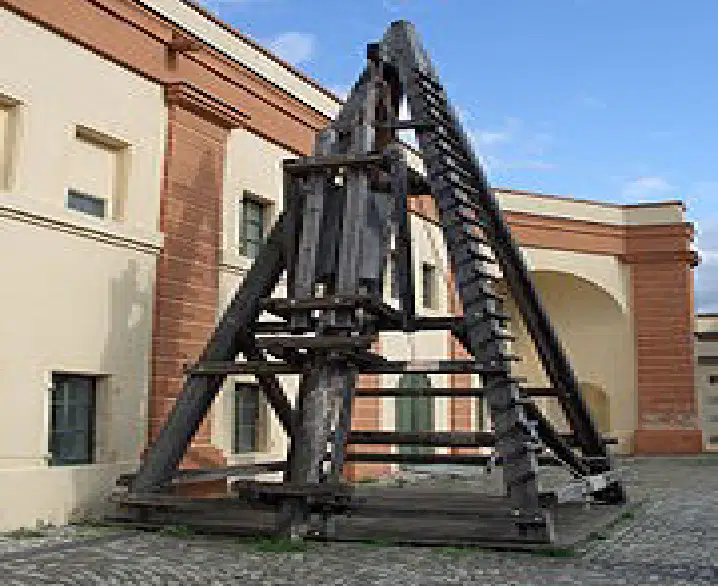
While exploring an ancient Roman construction site, Daniel noticed various machines being used for building. He wondered, which construction machines were typical on Roman sites?
3D printers and robotic welders
Hydraulic excavators and dumpers
Laser levels and tower cranes
Pile drivers and treadmill hoists

While working on a historical restoration project, Evelyn examines the cross-section of the Appian Way, which shows layered road construction. Which sequence best matches top to bottom?
Coarse concrete, rubble base, fine stone‑lime, lime‑grouted slabs
Rubble base, coarse concrete, fine stone‑lime, lime‑grouted slabs
Lime‑grouted slabs, fine stone‑lime, coarse concrete, rubble base
Fine stone‑lime, lime‑grouted slabs, rubble base, coarse concrete

