
Font size
 Worksheets
Motions in Action: Agonists and Flexion
Total questions: 25
Worksheet time: 13mins
Which statement best defines an agonist muscle during movement?
Muscle that lengthens passively during motion
Muscle that counteracts the prime mover
Muscle that stabilizes bones without moving
Muscle that initiates joint movement directly
When performing biceps flexion, what happens to the angle between the forearm and upper arm?
It alternates increasing and decreasing
It decreases as segments move closer
It increases as segments separate
It stays constant throughout
In elbow flexion, such as raising a fork to your mouth, which role does the biceps typically play?
Agonist initiating the movement
Antagonist resisting the motion
Fixator preventing motion
Synergist neutralizing rotation
Which description correctly characterizes flexion in the sagittal plane?
Bending at a joint decreasing relative angle
Rotation around a vertical body axis
Movement separating segments without angle change
Side bending increasing lateral distance
Select all segments where flexion generally occurs in an anterior (forward) direction.
Elbow and wrist
Knee and toes
Shoulder and hip
Neck and trunk
For which segments does flexion occur in a posterior direction rather than anterior?
Neck and trunk segments
Shoulder and fingers segments
Hip and wrist segments
Knee and toes segments
What term specifically describes ankle flexion moving the toes back toward the body?
Posterior inversion movement
Dorsiflexion of the ankle
Anterior toe extension
Plantar rotation of foot
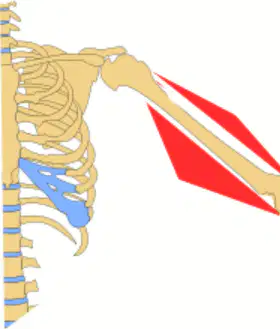
Which scenario illustrates shoulder flexion from anatomical position?
Rotating arms around the torso axis
Moving arms sideways out to the body
Raising arms forward up over the head
Lowering arms backward behind the body
Match each role or term to its correct description.
Agonist
Prime mover generating action
Antagonist
Muscle opposing specified movement
Flexion
Decreasing joint angle between segments
Sagittal plane
Plane dividing body into left and right
When a body segment moves out and away from the 0-degree starting position into a positive direction, which movement at the shoulder is described?
Shoulder flexion raising arms forward
Shoulder extension returning arms down
Shoulder abduction moving arms lateral
Shoulder rotation turning arms inward
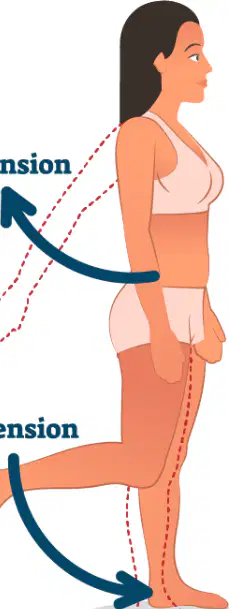
Which statement best defines extension at a joint?
Movement that slides bones without rotation
Movement that decreases the joint angle
Movement that rotates the joint laterally
Movement that increases the joint angle
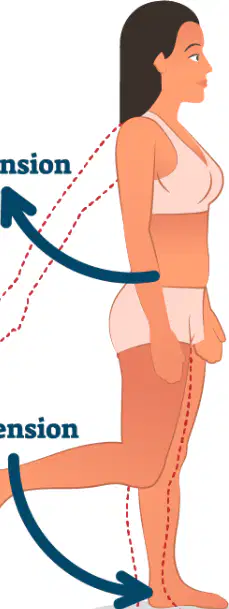
When standing up from a chair, which joint action primarily occurs at the hip?
Extension of the hip joint
Flexion of the hip joint
Circumduction of the hip joint
Abduction of the hip joint
Lowering your arms from overhead back to your sides represents which motion at the shoulders?
External rotation toward 45 degrees
Flexion returning to 90 degrees
Extension returning to 0 degrees
Abduction increasing beyond neutral
For the neck, trunk, shoulder, elbow, wrist, fingers, and hip, extension typically occurs in which direction?
Inferior direction downward
Lateral direction outward
Posterior direction backward
Anterior direction forward
Which joints primarily extend in an anterior direction?
Knee and ankle
Elbow and wrist
Hip and shoulder
Neck and trunk
What is the specific term for ankle extension when pointing the toes?
Plantarflexion
Supination
Dorsiflexion
Eversion
Hyperextension is best described as which condition?
Movement limited by soft tissue swelling
Movement that decreases bone separation
Excessive movement beyond normal range
Movement within normal range
Match each movement with its description.
Extension
Increases angle between segments
Flexion
Decreases angle between segments
Plantarflexion
Ankle pointing toes downward
Hyperextension
Opens joint beyond normal range
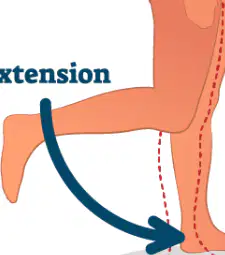
Which example illustrates knee extension?
Lunging sideways into abduction
Rotating the leg outward
Kicking a soccer ball forward
Squatting deeper toward the floor
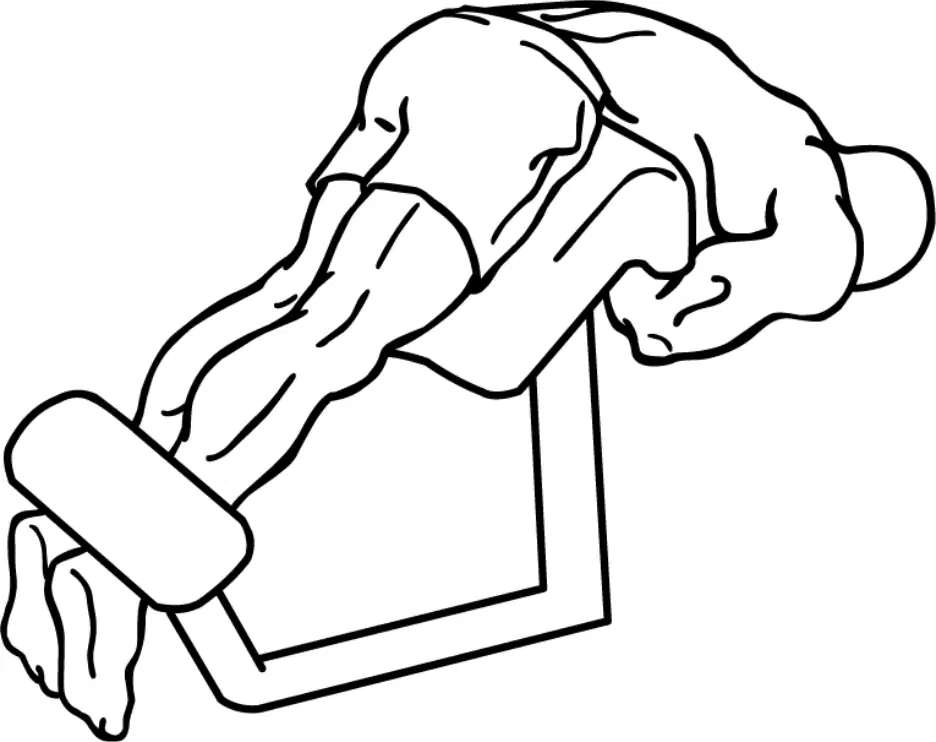
Which scenario shows lumbar hyperextension risk most clearly?
Standing upright with pelvis neutral
Neutral spine while planking
Rounding forward in a curl
Arching excessively on a Roman chair
Select all statements that correctly describe extension.
It is generally a straightening motion
It decreases the angle at a joint
It can occur when returning to 0 degrees from flexion
It is the opposite of flexion
Which action best describes abduction at the shoulder?
Lifting arm straight forward anteriorly
Moving arm closer to body midline
Moving arm away from body midline
Rotating arm inward toward torso
Which action best describes adduction at the hip?
Moving thigh away from body midline
Moving thigh toward body midline
Rotating thigh outward laterally
Flexing thigh straight forward anteriorly
Choose the movements that occur in the frontal plane.
Side lunge to the right
Elbow flexion to 45 degrees
Lateral leg raise outward
Forward shoulder flexion
Lateral flexion of the spine primarily involves bending the trunk in which directions?
Hyperextension exclusively
Right or left sideward
Forward and backward only
Rotation clockwise only

