
 Worksheets
Drainage - Unit 235 (Slides 1–5)
Total questions: 33
Worksheet time: 17mins
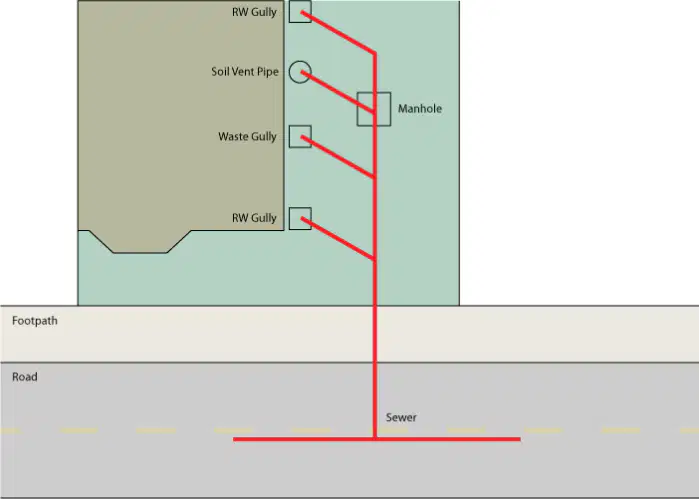
Look at the diagram of a house and road labeled Combined system. Which kind of sewer does this system use under the road?
One sewer for all flows
Two separate sewers

Look at the diagram labeled Separate system. How many different sewers run under the road in this system?
One sewer
Two sewers
Which item is shown as a type of drainage system?
Septic tanks
Rain umbrellas
Garden hoses
Which item is shown as a type of drainage system?
Cesspits
Bicycles
School bags
Which item is shown as a type of drainage system?
Soakaways
Lunch boxes
Window blinds
According to the list, pipes of size 100 mm should be laid to a fall of
1:40
1:60
1:90
According to the list, pipes of size 150 mm should be laid to a fall of
1:40
1:60
1:90
According to the list, pipes of size 225 mm should be laid to a fall of
1:40
1:60
1:90
The falls shown will give a velocity of approximately
1.5 m per second
15 m per second
0.15 m per second
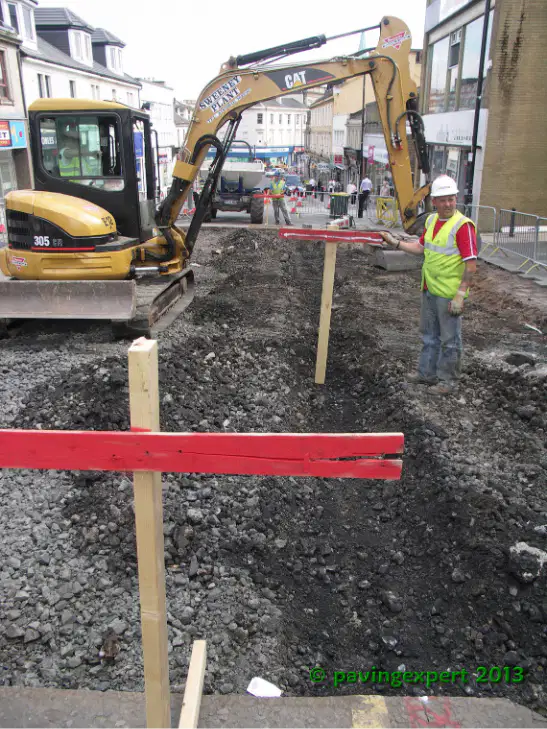
In the picture and text, what tool is used to quickly create a fall for pipe work or drainage?
Boning rods
Paint brushes
Garden rakes
How many boning rods are used together to set the fall, as described?
Three boning rods
Two boning rods
Five boning rods
What shape are the boning rods made into?
A ‘T’ shape
A circle
A triangle
What material are the boning rods made from?
Timber
Metal
Plastic
Who holds one boning rod at the other end of the trench, as described?
A spotter
A driver
A painter
Testing drains: When the work is finished, what must any drain or private sewer be able to do during a test for water tightness?
Withstand the test and stay watertight
Be painted a bright color
Make a loud noise
Grow plants inside
Testing drains: From where to where should the water tightness test be carried out?
From inspection chamber to inspection chamber
From the kitchen to the garden
From the roof to the street
From a tap to a sink
Testing drains: How should long branches be tested?
Tested separately
Included with short branches
Not tested at all
Only looked at
Testing drains: What should be installed close to the sewer to test the last length of drain, and sealed off before backfilling?
A testing junction
A window
A light switch
A fence
Water test: Which test is most widely used and generally considered the most reliable?
Water test
Air test
Sound test
Heat test
Water test: When rigid joints are used, how long should you wait before testing to let the cement/sand joints fully harden?
24 hours
5 minutes
1 hour
2 days
Water test: When can flexibly jointed pipes be tested?
Immediately
After 24 hours
After 1 week
Never
Carrying out a water test: What is used to plug the lower end of the drain before filling from the upper end?
An expanding stopper or an air bag
Tape and paper
A wooden stick
A metal grill
Carrying out a water test: What is the maximum head the lower end of the drain should be subject to at this stage?
6 m of head
1 m of head
10 m of head
No head at all
Carrying out a water test: After the drain is filled, how long should it stand before topping up?
Two hours
Five minutes
One day
Ten minutes
Carrying out a water test: Over what period is any leakage measured?
30 minutes
3 minutes
1 hour
10 minutes
Carrying out a water test: What is the maximum leakage rate allowed for a 100 mm drain?
0.05 L per metre run
0.5 L per metre run
0.08 L per metre run
0.01 L per metre run
Carrying out a water test: What is the maximum leakage rate allowed for a 150 mm drain?
0.08 L per metre run
0.05 L per metre run
0.5 L per metre run
0.01 L per metre run
Carrying out an air test: When water is not readily available or its disposal is not convenient, which test is a good alternative?
Air test
Water test
Heat test
Sound test
Carrying out an air test: To what pressure is air pumped into the drain, as shown on a manometer?
100 mm
50 mm
200 mm
25 mm
Carrying out an air test: During a 5-minute period, the pressure should not fall from 100 mm to below what level?
75 mm
50 mm
25 mm
10 mm
Carrying out an air test: What instrument shows the pressure level during the air test?
A manometer
A thermometer
A ruler
A stopwatch
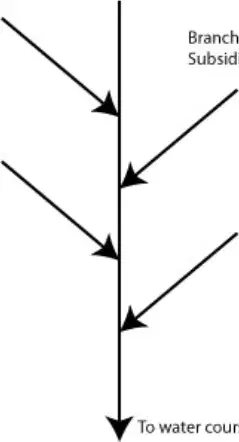
Types of sub-soil drainage: Look at the diagram showing two layouts labeled Herringbone and Grid with arrows pointing to a water course. Which type has diagonal branch drains joining the main line?
Herringbone
Grid
Circle
Spiral
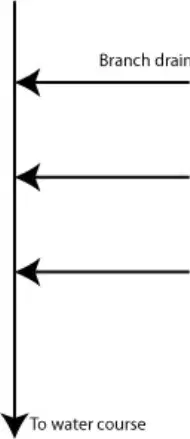
Types of sub-soil drainage: In the diagram showing layouts labeled Herringbone and Grid with arrows pointing to a water course, which type has straight side branches joining the main line at right angles?
Grid
Herringbone
Circle
Spiral

