
Font size
 Worksheets
Nervous System: Anatomy and Physiology
Total questions: 70
Worksheet time: 35mins
Which statement best captures the nervous system’s overarching role in the body?
Stores nutrients for long-term energy balance
Coordinates body functions as command center
Filters wastes as main excretory apparatus
Produces hormones as primary endocrine organ
Which pair correctly matches a division of the nervous system with its principal components?
Central Nervous System
Brain and spinal cord
Peripheral Nervous System
Cranial and spinal nerves
Ganglia
Clusters of nerve cells
Which processes are managed by the nervous system to maintain stability while adapting to change?
Deliberate voluntary actions
Long-term mineral storage
Automatic reflexive responses
Internal homeostasis regulation
Electrical impulses traveling along nerves primarily accomplish which function?
Inform CNS and PNS of stimuli to elicit responses
Increase blood glucose for rapid energy release
Dilate blood vessels to cool peripheral tissues
Generate hormones to amplify endocrine signaling
Which statement distinguishes the CNS from the PNS most accurately?
CNS contains brain and spinal cord structures
CNS consists mainly of cranial and spinal nerves
PNS is limited to brain and spinal cord regions
PNS excludes ganglia from its organization
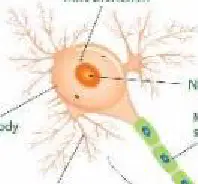
In the neuron diagram, which structure primarily receives incoming signals and directs them toward the cell body?
Axon terminal of efferent neurons
Dendrites of the neuron
Myelin sheath along the axon
Synaptic bulb at the presynapse
Which statement best distinguishes afferent and efferent neurons?
Afferent only in autonomic nerves; efferent only cranial
Afferent carry impulses away; efferent carry toward CNS
Afferent carry impulses toward CNS; efferent carry away
Afferent transmit neurotransmitters; efferent block them
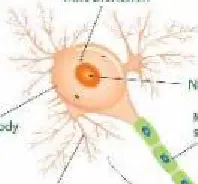
Match each neuron component to its primary function.
Dendrites
Receive signals toward soma
Axon
Carry impulses away from soma
Synaptic bulb
Release neurotransmitter to synapse
Myelin sheath
Increase conduction speed along axon
Which neurons primarily connect one neuron to another within neural circuits?
Associative (interneurons)
Sensory (afferent)
Motor (efferent)
Autonomic postganglionic
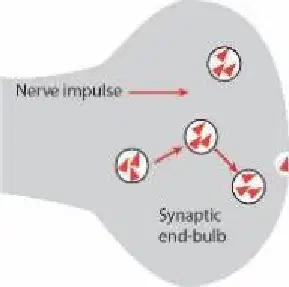
In the synapse diagrams, what is the role of chemical neurotransmitters?
They block receptors to stop conduction
They generate action potentials inside soma
They facilitate impulse movement across synapse
They insulate axons to prevent leakage
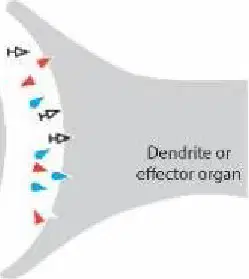
Which scenario would most directly reduce postsynaptic activation in the diagram?
Increased neurotransmitter mimicry at receptors
Enhanced neurotransmitter blockade at receptors
Thicker myelin along the presynaptic axon
More dendrites branching from the soma
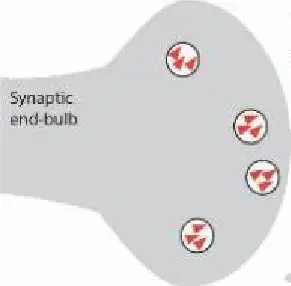
Select all statements that correctly describe synaptic bulbs.
Located at presynaptic axon terminals
Contain vesicles releasing neurotransmitters
Receive neurotransmitters onto dendrites
Enable chemical signaling to the next cell
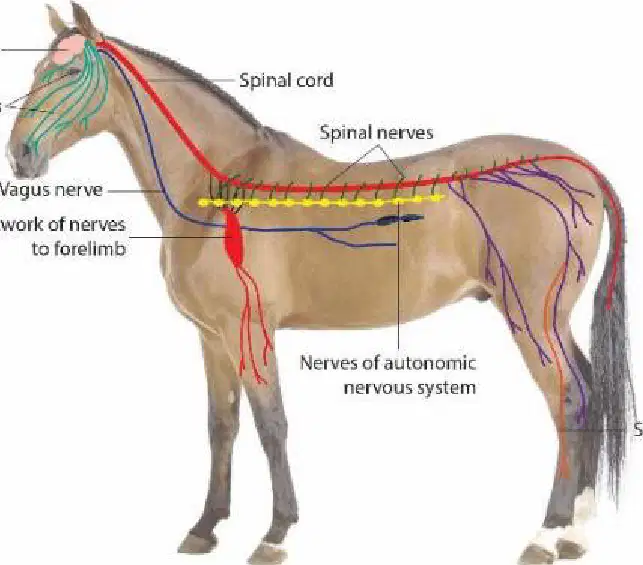
In the horse nervous system diagram, which pathway would an efferent motor impulse follow?
From brain through spinal nerves to muscles
From skin receptors to spinal cord then brain
From dendrites to soma within cranial nerves
From sciatic nerve sensory fibers to CNS
Which statement best distinguishes autonomic and somatic nervous systems?
Autonomic controls involuntary effectors
Somatic regulates involuntary effectors
Autonomic controls skeletal muscle
Somatic regulates cardiac muscle
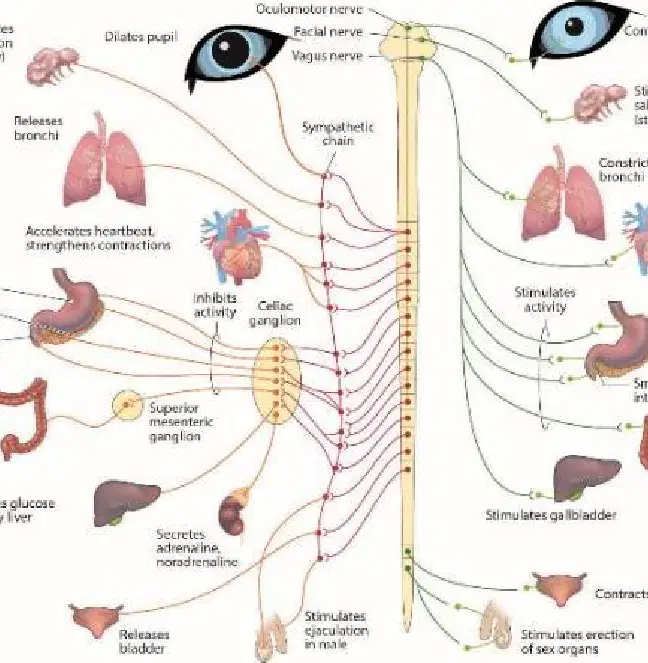
During a fight-or-flight response, which change is most characteristic?
GI motility increases greatly
Bronchi constrict firmly
Pupil constricts markedly
Heart rate accelerates strongly
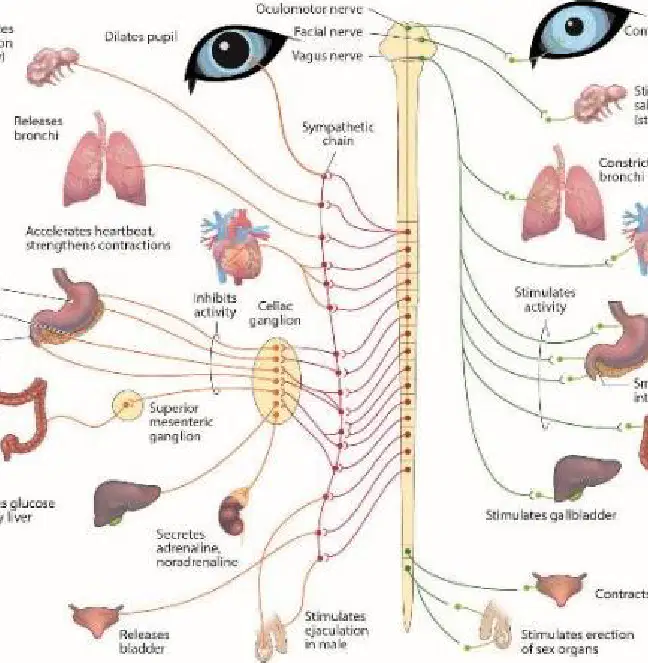
Rest-and-digest responses typically include which effect?
Stimulated salivation strongly
Inhibited gallbladder action
Accelerated glucose release
Enhanced bladder relaxation
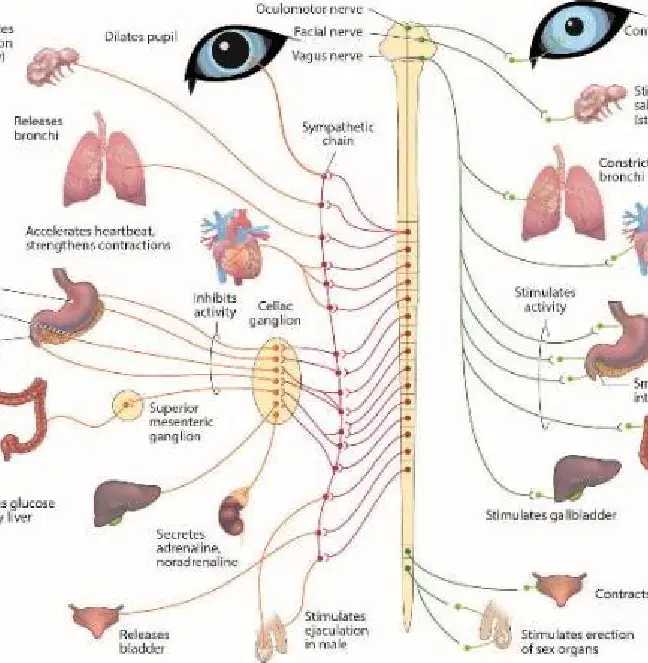
Match each branch with a hallmark pupil effect.
Sympathetic branch
Pupil dilation
Parasympathetic branch
Pupil constriction
Both branches
Modulate light response
Which target tissues are primarily innervated by autonomic efferent fibers?
Cardiac muscle and glands
Smooth muscle of viscera
Skeletal muscle of limbs
Skin sensory receptors
Which organ response is more likely under parasympathetic dominance?
Bronchoconstriction with mucus
Bronchodilation with dryness
Decreased intestinal peristalsis
Tachycardia with force
Within the peripheral nervous system, which divisions are voluntary versus involuntary?
Somatic voluntary, autonomic involuntary
Autonomic voluntary, somatic involuntary
Both voluntary control pathways
Neither has voluntary control
Which pairing correctly links branch to bladder effect?
Parasympathetic contracts bladder
Sympathetic contracts bladder
Sympathetic promotes micturition
Parasympathetic relaxes sphincter
Which statement about ANS functions is accurate?
Processes conscious pain perception
Regulates heart rate and contraction
Generates intentional speech output
Controls voluntary limb movement
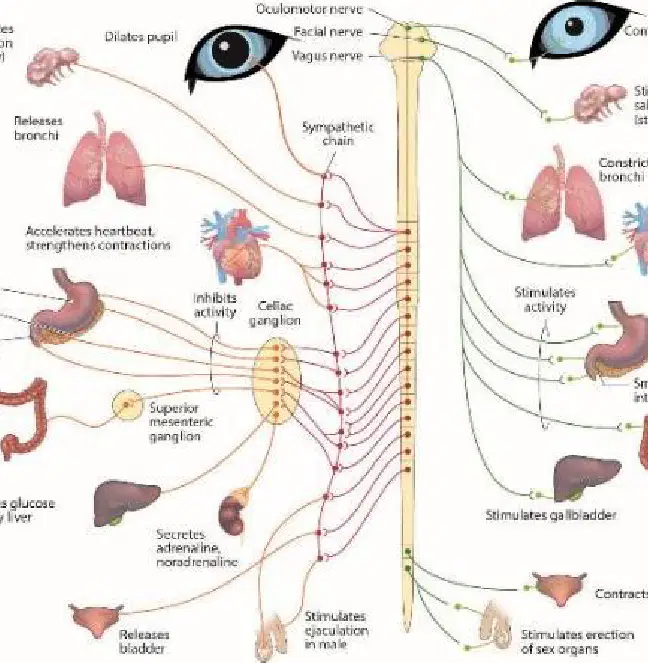
Match each organ with its sympathetic effect shown.
Heart
Accelerated rate and force
Liver
Stimulated glucose release
Male reproductive organs
Stimulated ejaculation
Stomach
Inhibited activity
Which pairing correctly matches system to primary neurotransmitter category?
Sympathetic—dopaminergic signaling
Parasympathetic—cholinergic signaling
Sympathetic—cholinergic signaling
Parasympathetic—adrenergic signaling
A drug labeled as “-lytic” most likely does which action at a receptor?
Promotes neurotransmitter synthesis
Blocks neurotransmitter binding
Enhances receptor gene transcription
Stabilizes postsynaptic membrane potential
Select all effects typically associated with sympathetic activation.
Constriction of bladder detrusor
Glycogenolysis and glucose release
Bronchoconstriction and mucus secretion
Increased heart rate and contractility
When one autonomic division is stimulated, the other is inhibited. What is the functional consequence for homeostasis?
Persistent receptor desensitization
Uniform amplification of signals
Randomized organ responses
Balanced opposing effects on organs
Match each drug class suffix to its mechanism of action.
-mimetic
Mimics neurotransmitter effect
-lytic
Blocks neurotransmitter effect
Adrenergic drug
Targets sympathetic pathways
Which statement best describes a cholinergic drug’s likely physiological outcome?
Blocks muscarinic receptors broadly
Triggers fight-or-flight responses
Inhibits acetylcholine synthesis
Stimulates rest-and-digest activities
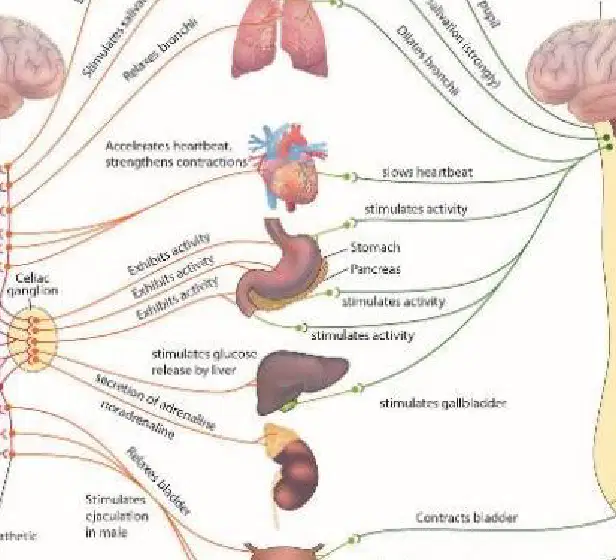
Choose the actions most consistent with parasympathetic activation in the diagram.
Stimulates salivation and lacrimation
Slows heart rate
Contracts bladder for voiding
Dilates bronchi widely
An anti-cholinergic drug would be expected to produce which effect profile?
Tachycardia, reduced secretions
Bradycardia, increased GI motility
Urinary urgency and detrusor contraction
Miosis, enhanced gland secretion
Which neurotransmitter primarily mediates cholinergic signaling in the parasympathetic nervous system?
Epinephrine
Acetylcholine
Dopamine
Norepinephrine
Adrenergic drugs most directly mimic the effects of which endogenous compounds?
Acetylcholine and dopamine
Epinephrine and norepinephrine
Serotonin and histamine
GABA and glutamate
Which effect is most consistent with Alpha-1 receptor activation?
Relax bladder sphincter
Increase insulin secretion
Dilate bronchioles
Constrict arterioles and veins
Alpha-2 receptor activation is best associated with which outcome?
Decrease intestinal motility
Constrict skeletal muscle
Dilate pupils
Increase glandular secretions
Select the correct pairings of sympathetic receptor types with one primary function.
Alpha-1
Constrict arterioles and veins
Alpha-2
Decrease insulin secretion
Beta-1
Increase heart rate and conduction
Beta-2
Vasodilation of bronchioles
Which combination of effects aligns with Beta-2 receptor activation?
Vasodilation of bronchioles
Constriction of ciliary muscles
Vasodilation of veins
Vasoconstriction of arterioles
Beta-1 receptor stimulation most directly causes which cardiac changes?
Decreased rate and contractility
Vasodilation of arterioles
Increased rate and contractility
Decreased conduction velocity
Which statement best distinguishes muscarinic from nicotinic receptor activation in parasympathetic responses?
Muscarinic dilates pupils; nicotinic relaxes bladder
Muscarinic increases blood pressure; nicotinic dilates bronchioles
Muscarinic decreases heart rate; nicotinic causes muscle contraction
Muscarinic raises insulin; nicotinic constricts arterioles
Which set of effects is characteristic of muscarinic receptor stimulation?
Decrease heart rate
Constrict bronchioles
Relax bladder muscles
Increase cardiac contractility
A drug that inhibits acetylcholine binding would most likely do what?
Increase muscarinic activation
Mimic norepinephrine signaling
Produce anticholinergic effects
Enhance parasympathetic activity
Which effect would you expect from Alpha-1 activation on the eye and gastrointestinal tract?
Decrease intestinal motility
Dilate pupils
Increase glandular secretions
Relax ciliary muscles
Match each receptor to its most likely tissue response.
Alpha-1 on bladder
Sphincter constriction
Beta-1 in heart
Increased rate and contractility
Muscarinic in airways
Bronchoconstriction
Nicotinic at neuromuscular junction
Skeletal muscle contraction
Which anticholinergic is commonly used preanesthetically to reduce secretions and treat cardiac arrhythmias?
Metoclopramide
Pilocarpine
Bethanechol
Atropine sulfate
Bethanechol is best described as a drug used to:
Treat neurogenic dry eye
Provide short-term sedation
Cause ophthalmic pupil dilation
Increase bladder contractility
Which statement about glycopyrrolate is accurate?
Anticholinergic used preanesthetically
Cholinergic that increases peristalsis
Beta-agonist for bronchodilation
Alpha-2 agonist for sedation
Metoclopramide’s therapeutic focus primarily includes:
Glaucoma in dogs
Penile paralysis prevention
Acute heart failure
Gastroparesis and vomiting
Pilocarpine in veterinary practice is now mainly used to manage:
Cardiac arrhythmias preanesthetically
Neurogenic keratoconjunctivitis sicca
Urethral smooth muscle relaxation
Bronchoconstriction in cats
Match each drug with its primary use.
Atropine sulfate
Organophosphate antidote and preanesthetic
Bethanechol
Increase bladder contractility
Glycopyrrolate
Cardiac arrhythmias, preanesthetic
Metoclopramide
Treat gastroparesis and vomiting
Which note is appropriate for anticholinergics like atropine and glycopyrrolate?
Causes severe hypertension
Ruminants highly sensitive
Monitor vital signs during CRI
Use caution with GI infections
Which form is correct for pilocarpine?
Injectable only
Ophthalmic solution
Capsule dosage
Syrup formulation
Which adrenergic is primarily a bronchodilator for airway disease?
Albuterol sulfate
Dobutamine
Xylazine
Propranolol
Dobutamine is indicated for:
Acute heart failure
Preanesthetic sedation
Glaucoma therapy
Urethral relaxation
Xylazine is classified pharmacologically as:
Cholinergic secretagogue
Alpha-2 agonist sedative
Muscarinic antagonist
Beta-blocker antiarrhythmic
Which caution applies specifically to xylazine?
Never combine with epinephrine
Adjust dose to patient response
Can cause severe hypertension
Ruminants are extremely sensitive
Acepromazine is commonly used for:
Bronchodilation in airway disease
Sedation and tranquilization
Reversal of xylazine overdose
Decreasing cardiac output
Which warning is correct for acepromazine use?
Rarely used for glaucoma
Risk of ruminant sensitivity
Monitor for CRI metabolism
Avoid with epinephrine
Phenoxybenzamine’s therapeutic role is mainly:
Increase bladder contractility
Preanesthetic anticholinergic
Vasodilation for urethral relaxation
Treat broncho constriction
Which beta-blocker decreases heart rate and blood pressure, used for tachyarrhythmias?
Dobutamine
Timolol
Albuterol
Propranolol
Timolol is indicated for management of:
Acute heart failure
Penile paralysis
Gastroparesis
Glaucoma
Which reversal agent is used for overdoses of xylazine and detomidine?
Phenoxybenzamine
Atropine
Yohimbine
Bethanechol
Match each adrenergic or antiadrenergic drug with its main clinical use.
Albuterol
Bronchodilation for airway disease
Dobutamine
Acute heart failure management
Propranolol
Decrease heart rate and blood pressure
Yohimbine
Reversal of alpha-2 agonists
Which drugs are anticholinergics commonly used preanesthetically to reduce secretions?
Atropine sulfate
Glycopyrrolate
Pilocarpine
Bethanechol
Which statement best describes how inhalant anesthetics enter the body and reach the brain?
Inhaled into alveoli then carried by bloodstream
Absorbed through skin then diffuses into brain
Injected into muscle then travels via lymph
Swallowed and absorbed in the small intestine
Which property most enables inhalant anesthetics to cross the blood–brain barrier?
Active transport by neuronal pumps
Strong binding to hemoglobin
Lipid solubility of the molecules
High water solubility in plasma
Match each location with its relative anesthetic gas concentration during initial uptake.
Alveoli
Higher concentration initially
Bloodstream
Lower concentration initially
Brain tissues
Rises as delivery continues
Which mechanisms are proposed for the neural action of inhalant anesthetics? Select all that apply.
Dissolving in nerve cell membranes to reduce impulses
Blocking sodium channels at the neuromuscular junction
Enhancing GABA neurotransmission to inhibit neurons
Stimulating glutamate release to excite circuits
What determines anesthetic depth during inhalational anesthesia?
Total volume of gas stored in cylinders
Partial pressure of anesthetic gas in the brain
Rate of patient’s respiratory frequency only
Amount of dissolved oxygen in arterial blood
A patient’s vaporizer is turned down, reducing anesthetic delivery to the alveoli. What is the most immediate effect on anesthetic planes?
Planes fluctuate randomly without pattern
Planes deepen as brain gas increases
Planes remain unchanged for hours
Planes lighten as alveolar concentration falls
Which statement about circulation and distribution of inhalant anesthetics is most accurate?
Evenly distribute to all tissues simultaneously
Preferentially distribute to low‑flow tissues first
Deliver more rapidly to high‑blood‑flow organs
Require active uptake by brain capillaries

