
 Worksheets
Water Cycle Quiz
Total questions: 48
Worksheet time: 24mins
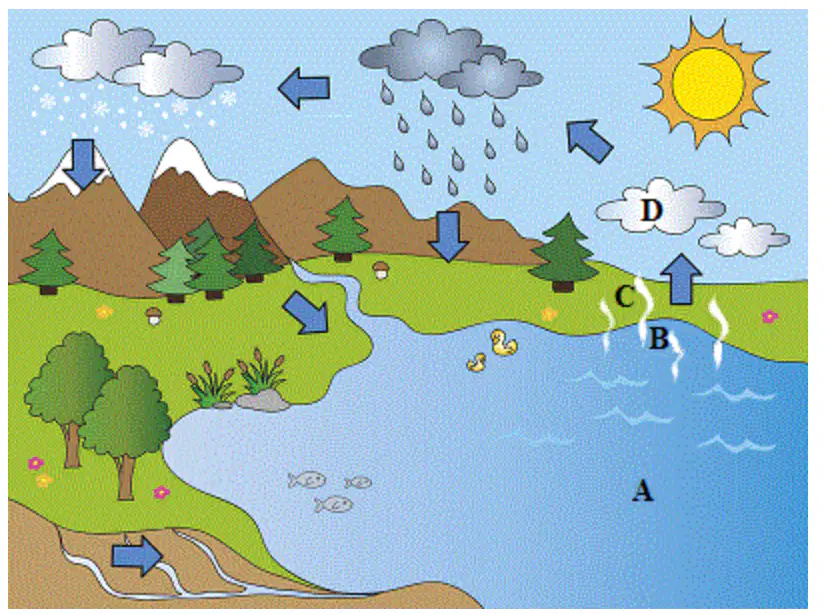
At which location is heat energy lost to the atmosphere due to a change in state (phase) of water?
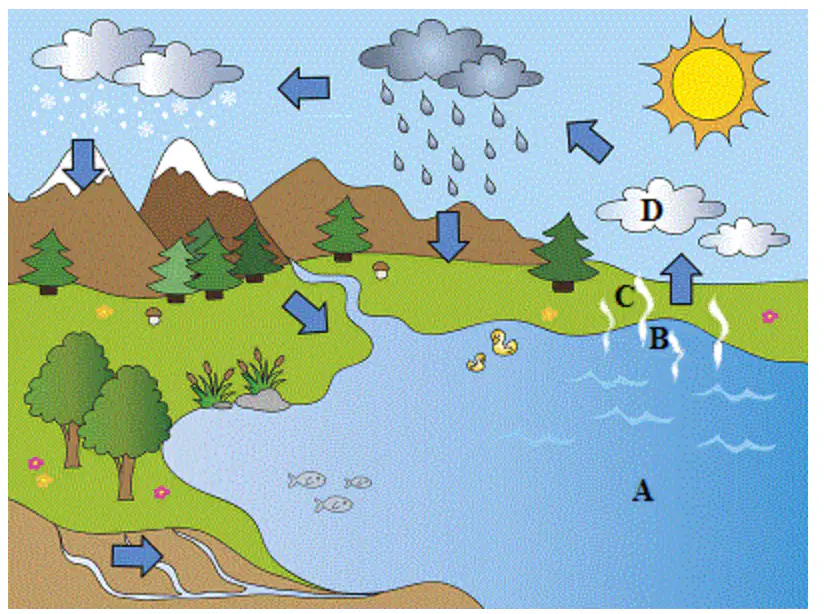
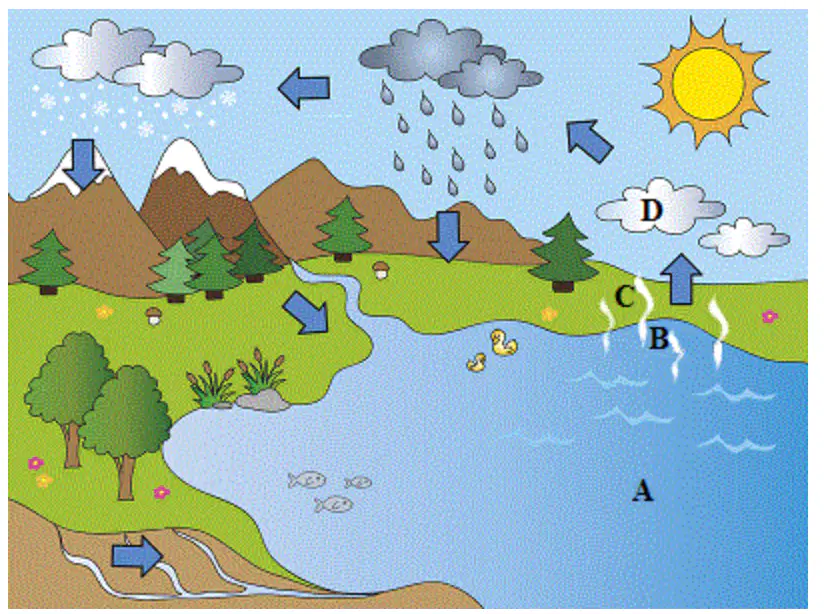

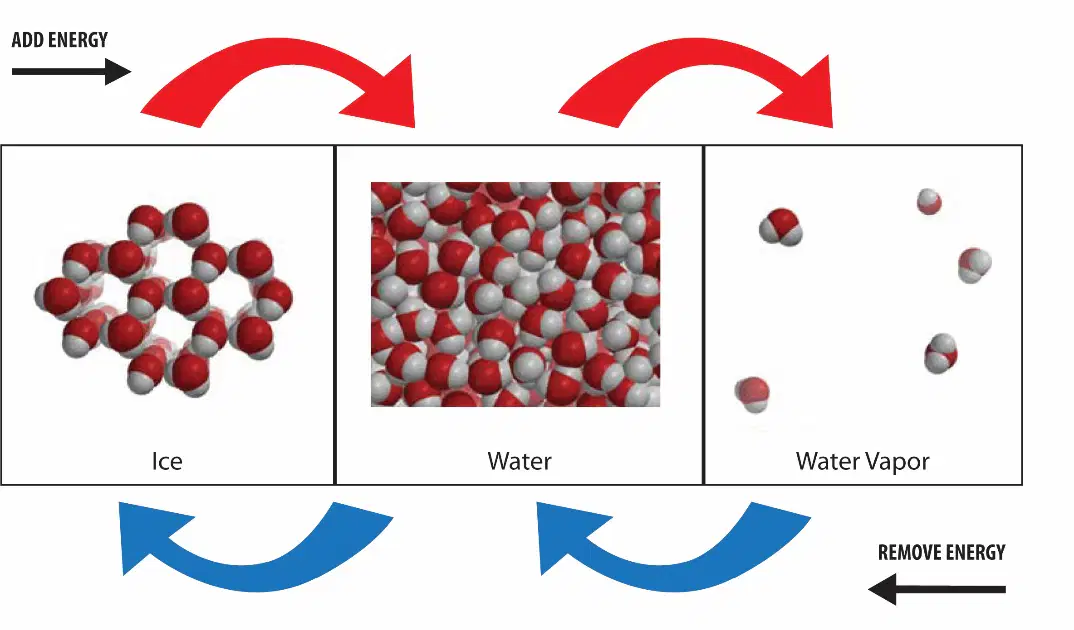
9. Look at this illustration to review the state changes of water on the molecular level. In the illustration, "Add Energy" means heating, and "Remove Energy" means cooling. If you add energy to ice, the speed of the molecules:
decreases
stays the same
increases
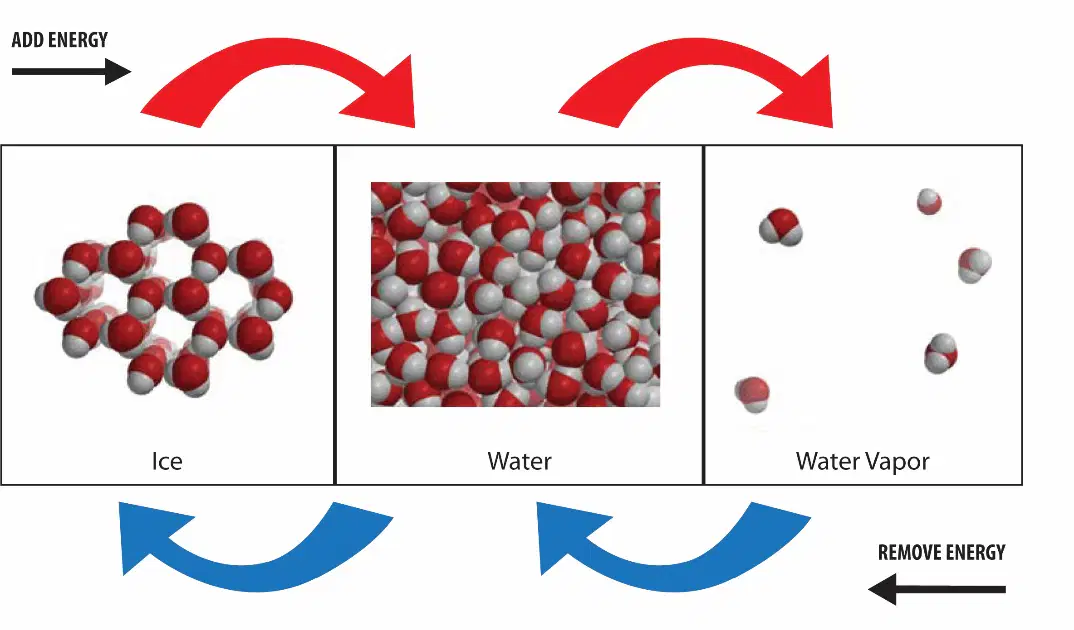
10. Look at this illustration to review the state changes of water on the molecular level. In the illustration, "Add Energy" means heating, and "Remove Energy" means cooling. If you add energy to ice and it melts, how does the arrangement of the water molecules change?
the molecules spread apart and slide past each other
the molecule move closer together and vibrate in fixed positions
the molecules move closer together and slide past each other
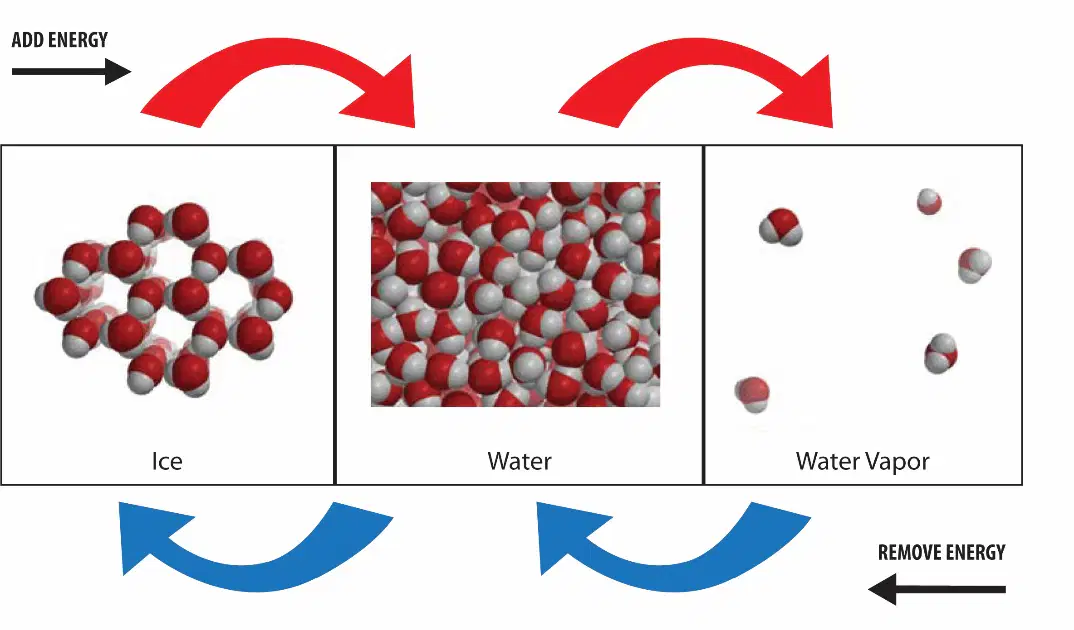
11. Look at this illustration to review the state changes of water on the molecular level. In the illustration, "Add Energy" means heating, and "Remove Energy" means cooling. When water changes from liquid to gas (evaporates):
water molecules break up into individual hydrogen and oxygen atoms
water molecules separate from other water molecules
The state changes of water are similar to and different from the state changes in most other substances in which of the following ways?
Water has unique melting and boiling points compared to most substances, but the process of changing states is similar.
Water changes state at the same temperatures as most other substances.
Water does not undergo state changes like other substances.
Water's state changes are completely different from all other substances.
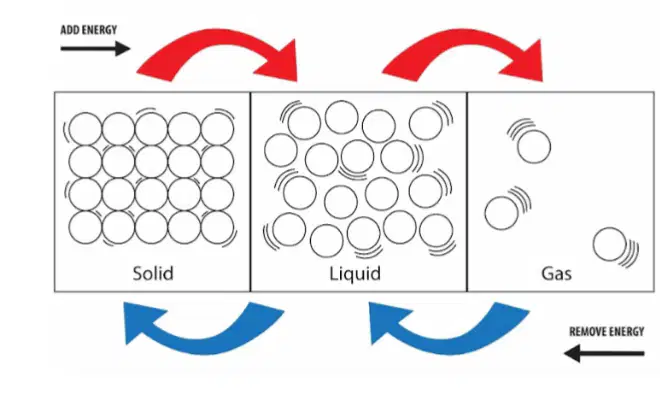
How is this different than what happens when water changes from a liquid to a solid?
When water changes from liquid to solid, it freezes, while other substances may evaporate or condense.
Water changing from liquid to solid involves melting, while other substances may freeze.
Water changing from liquid to solid involves evaporation, while other substances may condense.
When water changes from liquid to solid, it boils, while other substances may freeze.
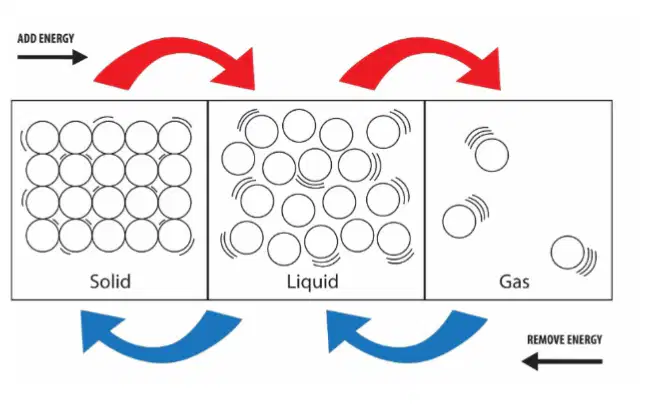
When energy is removed from a gas, it changes to a _______.
liquid
solid
plasma
gas
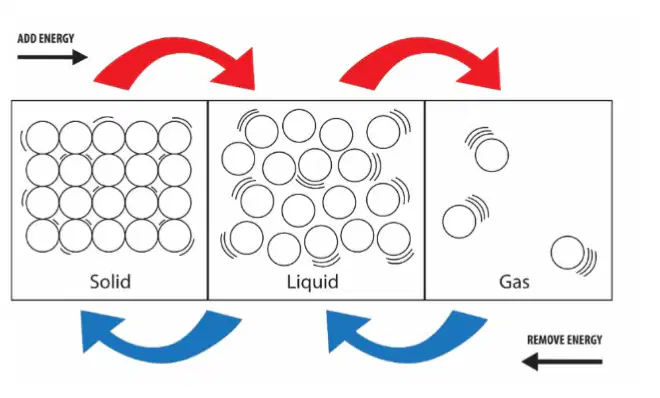
The illustration below shows molecules during state changes of almost every other substance other than water. In which state are the molecules most spread out?
Solid
Liquid
Gas
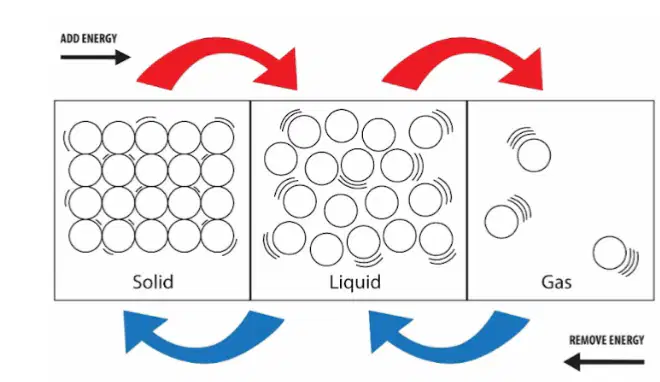
How did the motion and arrangement of the water molecules change as the ice melted?
The molecules moved faster and became more randomly arranged.
The molecules moved slower and became more orderly arranged.
The molecules stopped moving and stayed in a fixed position.
The molecules moved at the same speed but became more orderly arranged.
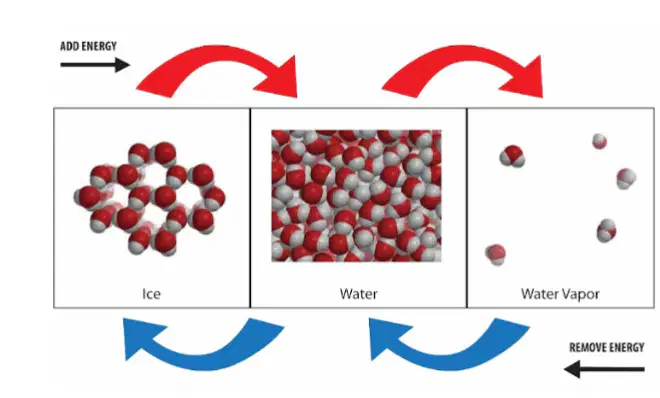
Look at this illustration to review the state changes of water on the molecular level. In the illustration, "Add Energy" means heating, and "Remove Energy" means cooling. If you add energy to ice, the speed of the molecules:
decreases
stays the same
increases
Energy from the sun causes water to evaporate from the land and from bodies of water. As this water vapor moves high into the air, the surrounding air cools it, causing it to condense and form ________________.
runoff
evaporation
clouds
groundwater
Why does running a dehumidifier in your home during the summer help make you feel more comfortable?
It lowers humidity so sweat evaporates more easily and the air feels less sticky.
It raises humidity to cool the air through condensation.
It increases air temperature to reduce the heat index.
It removes oxygen, making the air feel lighter.
Why do bathroom mirrors fog while you are taking a shower?
Warm, moist air from the shower condenses on the cooler mirror surface.
Soap residue reacts with the mirror and forms clouds.
The mirror emits steam when heated.
Air pressure drops and creates fog on any surface.
When water evaporates
Water molecules separate into one oxygen atom and two individual hydrogen atoms
The motion of water molecules causes them to stay in the liquid
The motion of water molecules causes them to leave the liquid and become a gas
The water increases in mass
Hot water evaporates faster than room-temperature water because:
Molecules of hot water are lighter
More water molecules move fast enough to break away from other water molecules
Room temperature water has more mass
The molecules in room temperature water are moving faster
Cooling water vapor makes it condense faster because
Cooling the vapor causes the molecules to get further apart
The molecules slow down and their attractions bring them closer together
Colder temperatures speeds up the molecules
Water vapor is less dense than liquid water
Ice melts to become liquid water mainly because
The water molecules move fast enough to break out of their fixed positions
Water molecules slow down so much that they melt
Water molecules react with oxygen to produce melting
Ice is less dense than water
If you compare ice and liquid water on the molecular level, you could say that
The molecules in liquid water are closer together
The molecules in ice are closer together
The molecules in ice slide past each other
The molecules in liquid water are smaller
To conduct a valid experiment, variables need to be identified and ________.
controlled, or kept the same
measured, or changed frequently
ignored, or left out
randomized, or altered
What does it mean to “control a variable” in an experiment? Give an example.
“Controlling a variable” means that you try to keep everything about the experiment the same except for the one thing you are trying to find out about. For example, if you are trying to see if temperature affects the rate of evaporation, you would keep the amount of water and the surface you put the water on the same. The only thing you would change would be the amount of heat you apply to the water.
“Controlling a variable” means that you change all aspects of the experiment at once to see which one has the biggest effect.
“Controlling a variable” means that you do not record any data during the experiment.
“Controlling a variable” means that you only perform the experiment once and do not repeat it.
Why is it important to control variables when conducting an experiment?
By controlling variables, you can tell if the thing you are testing actually was the cause of the result. If you didn’t control the variables, other things could cause the result you see and you couldn’t be sure if it was the thing you were testing or something else.
Controlling variables makes the experiment faster and easier to complete.
Controlling variables ensures that the experiment will always produce the same results.
Controlling variables allows you to use more materials in your experiment.
Imagine that you place a drop of water on each of two paper towels. Then you place one on a bag of hot water and the other on a bag of room temperature water. Which drop will evaporate first? Why?
The drop on the bag of warm water will evaporate first because more of the molecules have enough energy to break away from the other water molecules.
The drop on the bag of room temperature water will evaporate first because cooler temperatures speed up evaporation.
Both drops will evaporate at the same rate because temperature does not affect evaporation.
Neither drop will evaporate because paper towels prevent evaporation.

Write a caption beneath the illustration to describe how differences in molecular motion cause one of the drops to evaporate first. Label each illustration to show which is an example of the drop that has been warmed and which has been cooled.
The warmed drop evaporates first because increased molecular motion causes faster evaporation.
The cooled drop evaporates first because decreased molecular motion causes faster evaporation.
Both drops evaporate at the same rate regardless of temperature.
Evaporation does not depend on molecular motion or temperature.
Cooling water vapor increases the rate of condensation because:
It slows down the movement of water molecules, allowing them to come together and form liquid.
It increases the movement of water molecules, preventing them from forming liquid.
It adds energy to the water vapor, causing it to evaporate faster.
It causes water vapor to turn into ice directly without forming liquid.
On days when the air is humid, tiny droplets of water appear on the outside of a glass of cold water. This liquid forms because:
Water vapor in the air slows down and condenses on the cold glass due to attractions between water molecules.
Water from inside the glass leaks through to the outside.
The glass itself produces water droplets when cold.
Air molecules turn into water on contact with the glass.

In this experiment, one cup of cold water is placed in a plastic bag. The bag is sealed, and as much air as possible is removed from it. This experimental design tests whether the moisture that appears on the outside of a cold cup comes from the air or not by:
showing that moisture does not form when air is removed, indicating it comes from the air
proving that moisture always forms regardless of air presence
demonstrating that moisture comes from the water inside the cup
showing that the plastic bag creates moisture on its own
Is this a description of water molecules during evaporation or condensation? When water molecules speed up enough that their kinetic energy exceeds their intermolecular attractions, they break away from other water molecules and become water vapor.
evaporation
condensation
freezing
sublimation
Is this a description of water molecules during evaporation or condensation? When water molecules in the air slow down so much that their attractions overcome their speed, they join together forming liquid water.
condensation
evaporation
sublimation
melting
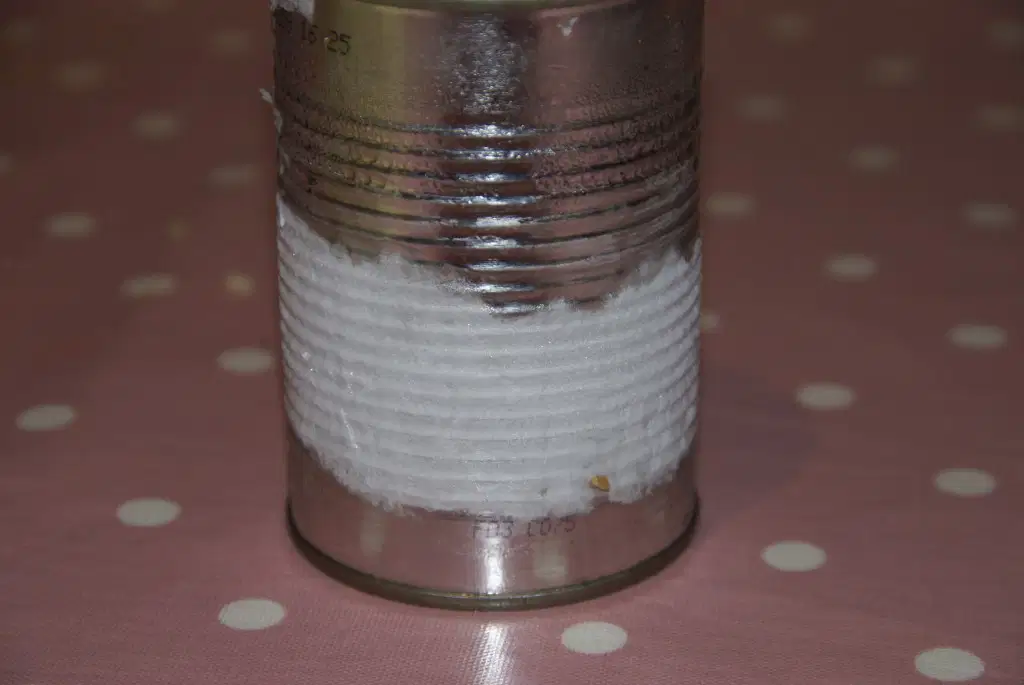
If you place ice and salt in a metal can, the can will become so cold that frost may form on its outside if the air is humid enough. Use the ideas of motion and attractions between water molecules to explain how this frost forms.
Frost forms because water vapor in the air slows down and sticks together on the cold can, forming solid ice due to reduced molecular motion and increased attraction.
Frost forms because the salt causes water molecules to move faster and evaporate from the can's surface.
Frost forms because the metal can releases heat, causing water molecules to break apart and freeze.
Frost forms because the air around the can becomes dry, forcing water molecules to condense and freeze.
Water expands when it freezes because:
the molecules arrange in a crystalline structure that takes up more space
the molecules move closer together
the temperature increases during freezing
the pressure decreases significantly
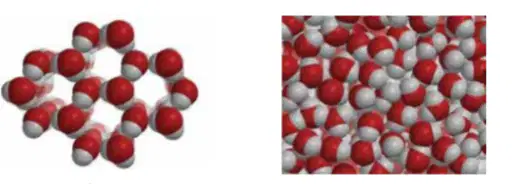
Write labels beneath each of the illustrations below to show which one represents water and which one represents ice.
Left image: Ice; Right image: Water
Left image: Water; Right image: Ice
Left image: Water; Right image: Steam
Left image: Steam; Right image: Ice
If you are going to place a bottle of water in the freezer, you should not fill the bottle completely. Instead, you should leave some space at the top and then tighten the cap. Explain why it is best to leave some space at the top.
Water takes up more space when it is frozen than when it is a liquid. Leaving some space at the top of the bottle gives the ice room to expand. If you fill the bottle all the way and seal it tightly, the bottle might burst.
Leaving space at the top helps the water freeze faster.
Leaving space at the top prevents the bottle from getting too cold.
Leaving space at the top keeps the water from evaporating.
Describe how the motion and arrangement of water molecules change as ice is warmed and begins to melt.
As ice is warmed and begins to melt, water molecules move faster and become less orderly arranged.
As ice is warmed and begins to melt, water molecules move slower and become more tightly packed.
As ice is warmed and begins to melt, water molecules stop moving and remain in a fixed position.
As ice is warmed and begins to melt, water molecules become more orderly and form a solid structure.
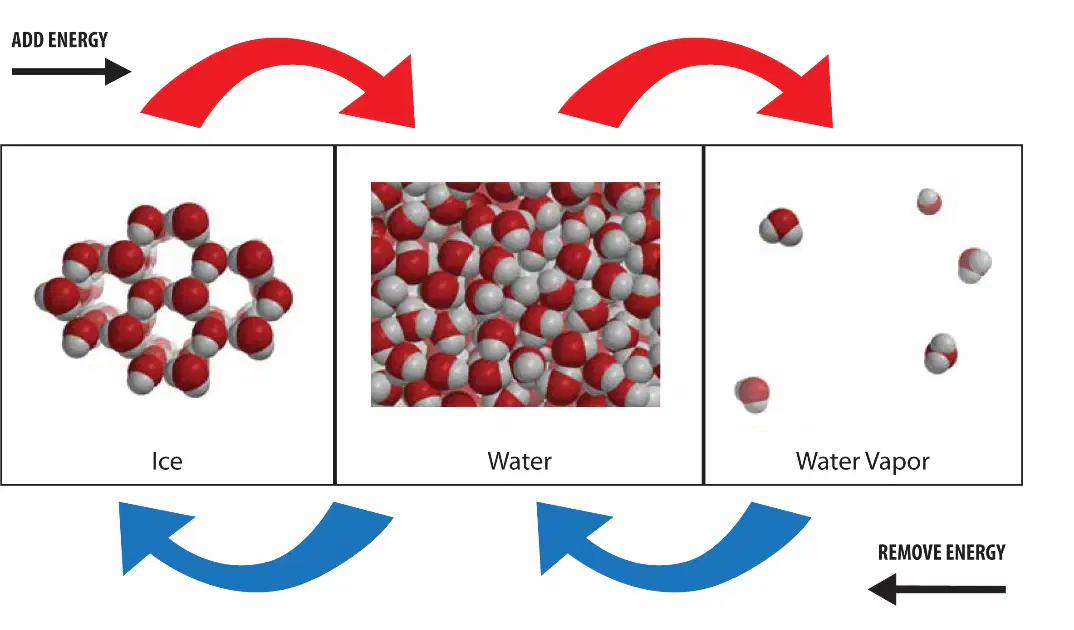
Write the words evaporation, condensation, freezing, or melting near each red or blue arrow to correctly name the processes as water changes state from one form to another. (Refer to the diagram showing ice, water, and water vapor with arrows labeled melting, evaporation, freezing, and condensation.)
Red arrow from ice to water: melting; Red arrow from water to water vapor: evaporation; Blue arrow from water vapor to water: condensation; Blue arrow from water to ice: freezing.
Red arrow from ice to water: freezing; Red arrow from water to water vapor: condensation; Blue arrow from water vapor to water: melting; Blue arrow from water to ice: evaporation.
Red arrow from ice to water: condensation; Red arrow from water to water vapor: freezing; Blue arrow from water vapor to water: evaporation; Blue arrow from water to ice: melting.
Red arrow from ice to water: evaporation; Red arrow from water to water vapor: melting; Blue arrow from water vapor to water: freezing; Blue arrow from water to ice: condensation.
A student tested whether placing ice in water would make the ice melt faster. The student added room-temperature water to a cup until it was half full. Then the student placed a small piece of ice in the water and another small piece of ice in a cup without water at the same time. The student allowed both pieces of ice to melt for 2 minutes. What is the independent variable?
2 small pieces of ice same size
2 small clear plastic cups same size and shape
a cup half filled with room temperature water and a cup without water
The amount of ice that melts after 2 minutes
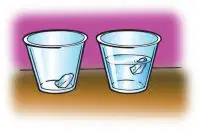
A student tested whether placing ice in water would make the ice melt faster. The student added room-temperature water to a cup until it was half full. Then the student placed a small piece of ice in the water and another small piece of ice in a cup without water at the same time. The student allowed both pieces of ice to melt for 2 minutes. What is the dependent variable?
2 small pieces of ice same size
2 small clear plastic cups same size and shape
a cup half filled with room temperature water and a cup without water
The amount of ice that melts after 2 minutes
A student tested whether placing ice in water would make the ice melt faster. The student added room-temperature water to a cup until it was half full. Then the student placed a small piece of ice in the water and another small piece of ice in a cup without water at the same time. The student allowed both pieces of ice to melt for 2 minutes. What are the constants in this experiment?
2 small pieces of ice same size
2 small clear plastic cups same size and shape
a cup half filled with room temperature water and a cup without water
The amount of ice that melts after 2 minutes
Placing the ice in the cup at the same time.

