
 Worksheets
VIII RECAP
Total questions: 216
Worksheet time: 2hrs 4mins

In which season does this crop is cultivated
rainy
winter
summer
spring
what is done last in agricultural practices
irrigation
sowing
storage
harvesting
which of following picture is a tool for sowing


process of seperation of grain and chaff is
winnowing
harvesting
threshing
2,4-d is a
weedicide
fertiliser
pesticide
manure
what are tools used for preparation of soil


Bacteria present in root of leguminous plants are called as:
Lactobacillus
Rhizobium
Azotobactor
Cyanobacteria
Which of the following should be used by a farmer with a large farm to harvest his crops quickly and efficiently?
Winnowing machine
Combine
Sickle
Seed drill
Compost is a
manure
pesticide
weedicide
Fertilizer
Seed drill is used for
sowing
weeding
harvesting
cleaning the seed
The chemical substances rich in nutrients are called
weedicide
pesticides
fertiliser
herbicides
Supply of water to crops at appropriate intervals is called
harvesting
irrigation
sowing
cultivation
Arrange the following agricultural practices in the order in which they are followed.
Harvesting
Sowing
Storage
Irrigation
Preparation of soil
5→2→4→1→3
2→1→3→5→4
1→2→3→4→5
5→3→4→1→2
The process of loosening and turning the soil is known as:
Ploughing
Winnowing
Threshing
Harvesting
Rhizobium bacteria in the root nodules of leguminous plants help in fixing:
Oxygen
Hydrogen
Nitrogen
Sulphur
Which of the following is a rabi crop?
Mustard
Soyabean
Rice
Maize
BHC (Benzene hexachloride) is a......
fertiliser
pesticides
weedicide
fungicide
Nitrogen is absorbed by the plants in the form of
Nitrates
Ammonium
Nitrites
All
Nitrogen fixation is the conversion of
N2 to N
N2 to NO3–
N2 to urea
N2 to NH3
Ammonification is the formation of
Ammonia from amino acids
Ammonia from nitrates by nitrogen fixers
Ammonia from nitrogen
Ammonia from nitrates by decomposers
Rabi Crops are grown in _______ season
Winter
Summer
Spring
rainy
What is a crop?
A house plant
A cultivated plant that is grown on a large scale
A succulent
None of the above
Which of the following is neither a kharif crop nor a rabi crop?
Paddy
Wheat
Maize
Watermelon
Why is it necessary to maintain distance between two crops while the sowing of seeds?
To prevent overcrowding
To prevent competition between the crops for sunlight, nutrients, water, etc.
Because its fun
To protect it from weeds
Harvesting is the process of
separating grains from stalk
preparing soil for sowing seeds
collecting ripened crops from the field
removing undesired plants from the crop field
Transplantation is done in the case of
Wheat
Paddy
Maize
Barley
Rice
Weeds can be defined as
Useful plants present in the field
Undesirable plants present in the field
Plants that cannot be used at all
Undesirable insects present in the field.
Manures are
Organic in nature
Inorganic in nature
Organic as well as inorganic in nature
None of above
_________________ is the process of loosening and turning of the soil.
Threshing
Ploughing
Levelling
Manuring
The practice of leaving the field uncultivated is called ____________
wheat
harvesting
fallowing
weeding
Manure obtained by the decomposition of dead plants and animals is called __________
winnowing
green manure
farmyard manure
compost
horse manure
Supplying water to crops in the fields at specific intervals is called ________
crop rotation
fertilizing
weeding
irrigation
Often water must be treated to become _______, safe to drink
pathogen
potable
clarified
bonifide
Process used in water treatment process where water is pushed through screens, sand, gravel and coal to remove organisms and trash
filtration
chlorination
coagulation
bioreactors
Which of the following is NOT a residential use of water>
cooking and drinking
washing dishes and clothes
washing cars and watering the lawn
watering the crops
showers and toilets
What is the best way to CONSERVE water use in an agricultural setting...
low flow toilets
reuse cooling water
drip irrigation
high power overhead irrigation
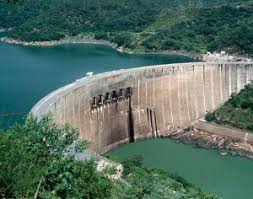
The image here is how humans control rivers for the last few hundred years. This is
diverting water thru canels
create an aquaduct
damming a river
desalination plant
Which of the following is a disadvantage of dams and reservoirs?
man made lakes used for drinking water, recreation and industry
hydroelectric power
existing ecosystems changed, displacing species and humans
flood control
While expensive and inefficient now, the removal of salt from ocean water may help create more potable water in the future
water transport
towing icebergs
desalination plants
xeriscaping
When two forces act in opposite directions, then net force acting is the
sum of two forces
difference between two forces
both of these
none of these
The force exerted by a charged body on another charged or uncharged body is called
gravitational force
electrostatic force
non-contact force
contact force
Two boys A and B are applying force on a block. If the block moves towards the boy A, which one of the following statements is correct?
Magnitude of force applied by A is greater than that of B.
Magnitude of force applied by A is smaller than that of B.
Net force on the block is towards B.
Magnitude of force applied by A is equal to that of B.
Opening a door is an example of a
(a) contact force
(b) non-contact force
(c) muscular force
both (a) and (c)
Force changes the
motion of body
speed of body
shape of body
all of these
The pressure which is exerted by air around us is known as
force
atmospheric pressure
muscular force
friction
Force acting on per unit area is called
non-contact forces
contact forces
force
pressure
The force exerted by the earth to pull the object towards itself is called
electrostatic force
gravitational force
muscular force
contact force
The strength of force is expressed by its
weight
mass
magnitude
longitudinal force

A container is filled with water as shown in the given figure. Which of the following statements is correct about pressure of water?
Pressure at A > Pressure at B > Pressure at C
Pressure at A = Pressure at B = Pressure at C
Pressure at A < Pressure at B > Pressure at C
Pressure at A < Pressure at B < Pressure at C
What is the SI unit of force?
Newton
Galileo
Einstein
Pascal
Which of the following is proper example(s) to explain that force on an object may change its shape
A ball of dough rolled into chapati
Pressing a rubber ball kept on table
Making model using clay
All of the above
A ball rolling on the ground slows down and finally stops. This is because of
Force
Less force applied
Friction
None of the above
If In a tug-of-war, when two teams are pulling a rope, and the rope does not move towards any team, it implies that
Equal force is being applied in the same direction
Equal Force is being applied in opposite direction
No force is applied in any direction
Cannot be explained
An example of a non- contact force is
Force exerted by us to lift a bucket
Push a stationary car
Force exerted by magnet
Hit a cricket ball for a 6 run
The SI unit of force is (a)
The (a) force can be used to gather iron pins scattered on the floor.
If two forces applied to an object are equal and act in opposite directions, the net force acting on the object will be (a)
Which one among the following is not a type of non-contact forces?
Muscular force
Magnetic force
Gravitational force
Electrostatic force
The pressure exerted by a liquid (a) with depth.
Atmospheric pressure (a) with increasing height.
The SI unit of pressure is (a)
A pressure of 10Pa acts on an area of 0.3 m2. The force acting on the area will be
.03 N
30 N
3 N
300 N
friction is a _________ force
Non contact
Contact
magnetic
electrostatic
Effects of Force are _____
It may make an object move from rest.
It may change the speed of an objecti if it is moving.
It may change the direction of motion
of an object.
It may bring about a change in the
shape of an object.
It may cause some or all of these effects
A rocket has been fired upwards to launch a satellite in its Orbit name the forces acting downwards on the rocket immediately after leaving the launching pad
Propelling force of gases emitted by combustion of fuel
magnetic force of Earth
gravitational force of Earth
no force acting downwards
Identify the agent exerting the force while taking out paste from a toothpaste tube
toothpaste tube
toothpaste filled in the tube
muscles of our fingers
no force required
Which type of force is force of gravity
contact force and attraction
non contact force and attraction
contact force and repulsive
Non contact force and repulsive
Which of the following is a non contact force
muscular force
frictional force
magnetic force
mechanical force
If we release a magnet held in our hand it falls to the ground the force responsible for this is
magnetic force
Electrostatic force
Muscular force
Gravitational force
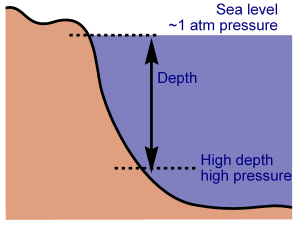
When you increase your depth under water, the water pressure on your body
increases
decreases
stays the same
How do you Calculate Pressure
Force(N)/Area(m2)
Force(kg)/Area(mi2)
Area(m2)/Force(N)
Why won't you sink in mud if you wear boots?
Because the surface area is larger creating less pressure.
Has air in it to keep you floating.
Because the mud won't want you.

Diagram shows the design of a dam. Why does the thickness of the dam increase with its depth?
The design of this structure is stronger.
Water pressure increases with depth.
The cost of construction is lower.
Water pressure acts uniformly in all directions.

Watch the tyres of tractor rolling. Rear tyres are broader because
It looks good.
Broader tyres lessen the muscular Force required.
Broader tyres lessen the pressure on ground.
Broader tyres lessen the friction on ground.

This is an example of the everyday application of pressure in:
Solids
Liquids
Gases
Plasma


Without friction, an object in motion would never stop.
true
false


The amount of sliding friction depends on which things?
acceleration
type of surface
weight of the moving object
the rotundness of the man on the pogo stick
What is static friction?
the friction between two objects that are not moving
friction between a rolling object and the surface that it is rolling on
friction is friction where an object rubs against another surface
friction of something going through any type of liquid or air
What is sliding friction?
friction between two surfaces that aren't moving relatively to each other
friction between a rolling object and the surface that it is rolling on
friction where an object rubs against another surface
friction of something going through any type of liquid or air
The process of transfer of charges from a charged object to the earth is called
earthing
lightning
oscillation motion
electron movement
The power of an earthquake is expressed on a scale called
seismic scale
iron scale
Richter scale
large scale
Which instrument is used to measure earthquake?
Richter scale
Seismograph
Polygraph
None of these
Which is not a natural phenomena?
Earthquakes
Cyclones
Lightning
Earthing
How many types of charges are gained by rubbing objects?
1
2
3
4
Where is the lightning rod attached to protect the building from lightning?
On the top of the building
On the bottom of the building
In the middle of the building
All of these
Lightning always follows
rain pour
a thunder
the easiest path
a straight path
Tsunami means
earthquake
floods
earthquake under the sea
eruption of volcano in a sea
The waves produced on the earth’s surface is called
seismic wave
longitudinal wave
Micro wave
Radio wave
Which is the surest test of charge on a body?
Repulsion
Lightning
Combustion
Insulation
Which of the following occurs during lightning?
Acid rain
Nitrogen fixation
Green house effect
Earthing
Which of the following can be charged with static electricity ?
Metal
alloy
Semiconductor
Insulator
Which of the following can be charged by rubbing?
Ebonite
Plastic
Amber
All the above
When two bodies are rubbed against each other, they acquire
equal and like charges
unequal and like charges
equal and unlike charges
unequal and unlike charges
It is a convention to call the charge acquired by a glass rod when it is rubbed with silk as __________
Negative
Positive
Neutral
Can be any one
A device used to test whether an object is carrying charge or not is called ______.
Electrometer
Charge meter
Electroscope
Chargoscope
During lightning actually _____________ takes place
Electric discharge
Electric charging
Electric charge accumulation
All of the above
During a thunderstorm which action may be done?
Using Telephone having cord
Switching on / off electric lights
Using a mobile phone
None of the above
During thunderstorm it is safer to
Carry an open umbrella
Take shelter under short trees
Take shelter under tall trees
Stand in open fields
To protect tall buildings from the damage of lightning, what can be done?
Not to build tall buildings
Install lightning conductors
Install many TV antennas
Have a roof top garden with tall trees
Which part of human ear converts sound vibrations into electrical signals
Hammer
Stirrup
Tympanic membrane
Cochlea
Speed of sound depends upon
temperature of medium
pressure of medium
Temperature of source producing sound
. Temperature and pressure of medium
Which characteristic is this? We can distinguish between sound having same pitch and loudness.
tone
pitch
amplitude
timber
Loud sound can travel a larger distance, due to
Higher amplitude
Higher energy
High frequency
High speed
what are transverse waves ?
In these waves the individual particles of the medium move in a direction parallel to the direction of propagation of the disturbance
In these waves the individual particles of the medium move in a direction perpendicular to the direction of propagation of the disturbance
both 1st and 2nd options
none of above
longitudinal waves are?
In these waves the individual particles of the medium move in a direction perpendicular to the direction of propagation of the disturbance
In these waves the individual particles of the medium move in a direction parallel to the direction of propagation of the disturbance
both 1 and 2
none of these
sound is a ..............
transverse wave
longitudinal wave
both a and b
none of these
click the right match.
low pitch (frequency of sound) - small wavelength
high pitch(frequency of sound) - long wavelength
high pitch(frequency of sound) - small wavelength
none of the above
The hearing range of human ear is
20 Hz to 20,000 Hz
Less than 20 Hz
More than 20,000 Hz
20 Hz to 25,000 Hz
If the speed of sound in water is 1500 m/s, then what is the depth of the sea?
6000
1500
3000
15000
On increasing the temperature, the speed of sound in air:
decrease
remain same
increase
decrease just half the speed
Sound of frequency below …………… is called infrasonic sound
2000 hZ
200 Hz
20,000 Hz
20 Hz
Part of the ear which collects sound from surroundings_____
Cochlea
Pinna
Ear drums
Stapes
What is a tool that makes sounds louder called?
pitch
wavelength
amplifier
outer ear
If you increased the tension on a guitar string the pitch would
increase
decrease
stay the same
the string would be silent
What do dolphins, bats and porpoise use
Ultrasound
Infrasound
Both a and b
None of them
How does the speed of sound change with the change in medium?
It increases with the change in medium
It remains constant in all mediums
It changes due to the difference in the density and elasticity of the medium.
It decreases with the change in medium
Define echo and explain how it is produced.
An echo is the reflection of sound off a surface. It is produced when sound waves bounce off a surface and return to the listener's ears.
An echo is caused by the refraction of sound waves
An echo is produced by the interference of two sound waves
An echo is the result of a sound wave being absorbed by a surface
Explain the working principle of a sonar.
Sonar works by detecting electromagnetic waves from underwater objects.
Sonar works by analyzing the temperature of the water to locate underwater objects.
Sonar works by sending sound waves and receiving their echoes to determine the distance and shape of underwater objects.
Sonar works by using light waves to determine the distance and shape of underwater objects.
How does the sound produced by a vibrating body reach our ears?
Through the movement of air particles
Through the transmission of electrical signals
Through the reflection of light waves
Through the propagation of sound waves

If the direction of the vibration of particles is parallel to the direction of the propagation of wave, then the wave is a ...
transverse wave
longitudinal wave
electromagnetic wave
All the above.
Speed of light in air is:
5100 m s-1
3*108m s-1
330 m s-1
3*1010 m s-1
The speed of sound in air at 0oC is nearly:
330m s-1
1450 m s-1
5100 m s-1
450-1
_____________ is the highness or lowness of a sound.
Amplitude
Pitch
Volume
Vibration
As the temperature of a medium increases, the sound waves will travel ____________.
Faster
Slower
As the same speed
State two properties of the medium on which the speed of the sound depends
Elasticity
Density
Both A and B
None
What is Ultrasound
Sound of frequency above 20kHz
Sound of frequency below 20kHz
Sound of frequency above 50kHz
None
Choose the Properties of Ultrasound that makes it useful to us
High energy content
High directivity
Both A and B
None
Can you hear he sound produced due to vibrations of seconds pendulum?
Yes
No
The hearing range of human ear is
20 Hz to 20,000 Hz
Less than 20 Hz
More than 20,000 Hz
20 Hz to 25,000 Hz

In which part of the wave does the motion of the vibration move away from the compression and the particles spread apart again?
compression
frequency
rarefaction
wavelength
Sonar makes use of
Infrasonic sound
Ultrasound
light
Ordinary sound
The heart of a man Beats 75 times a minute. What is its (A)Frequency (B)Time period?
1.25 s-1, 0.8 s
(a) 1.25 s-1 (b) 0.7 s
(a) 1.26 s-1 (b) 0.7 s
(a) 1.28 s-1 (b) 0.8 s
A man can hear the sound of frequency:
1 Hz
1000 Hz
200 Hz
5MHz
Name the subjective property of light related to its wavelength.
refractive index
frequency
colour
velocity

Jyothi puts a pencil into a glass container having water and is surprised to see the pencil bend.Name the phenomenon responsible for the change.
Reflection of light
Refraction of light
total internal reflection of light
partial reflection and partial refraction
As the ray of light passes from air to glass, state how the wavelength of light changes.
wavelength increases
wavelength decreases
wavelength remains constant
wavelength decreases and then increases
A boy uses blue colour of light to find the refractive index of glass. He then repeats the experiment using red colour of light .How will the refractive index of glass be ?
the same
μ decreases
μ increases
same as speed of light
When a ray of light enters from one medium to another having different optical densities it bends. beacuse
of different optical densities
speed of light changes
obstruction of light changes
frequency of light changes
choose the conditions where light does not bend when entering a medium of different optical density,
incident ray is normal to the refracting surface
any obliquely incident ray
angle of incidence is 90°
angle of incidence is 0°
Which colour of light travels fastest in any medium except air ?
yellow
red
violet
white
flint glass n=1.70
barium glass n=1.60
crown glass n=1.523
water n=1.33
diamond n=2.45

What happens to the light rays in a convex lens?
Converge
Diverge
Surge
Reflect
In a lens diagram, what does "u" mean?
Object distance
Image distance
Focal Point
Focal Length

Looking at the diagram, describe the object distance.
u>2f
u=2f
u=f
f<u<2f
This happens when the eyeballs are too long or the eye lenses are too thick
Hypermetropia
Myopia
Utopia
Hyperion
A ____ is formed when the sky is refracted on the road during hot sunny weather.
Rainbow
Halo
Mirage
Green flash

As a hunter you see a fish in a river. Where should you aim your spear?
Exactly at the fish
Below the fish
Above the fish
Nevermind, you will miss anyway.
What happens to the light when it travels from less dense to more dense medium?
speed up
slows down
breaks
parks
When white light enters a prism, it gets split into its constituent colours. This is due to
different refractive index for different wavelength of each colour
each colours has same velocity in the prism.
prism material have high density.
Scattering of light
The air layer of atmosphere whose temperature is less then the hot layer behave as optically
denser medium
rarer medium
inactive medium
either denser or rarer medium
Refraction of light by the earth’s atmosphere due to variation in air density is called
atmospheric reflection
atmospheric dispersion
atmospheric scattering
atmospheric refraction
The deflection of light by minute particles and molecules of the atmosphere in all direction is called ____________ of light.
dispersion
scattering
interference
tyndell effect
One cannot see through the fog, because
refractive index of the fog is very high
light suffers total reflection at droplets
fog absorbs light
light is scattered by the droplets
At noon the sun appears white as
light is least scattered
all the colours of the white light are scattered away
blue colour is scattered the most
red colour is scattered the most
Twinkling of stars is due to atmospheric
dispersion of light by water droplets
refraction of light by different layers of varying refractive indices
scattering of light by dust particles
internal reflection of light by clouds.
The clear sky appears blue because
blue light gets absorbed in the atmosphere.
ultraviolet radiations are absorbed in the atmosphere.
violet and blue lights get scattered more than lights of all other colours by the atmosphere.
light of all other colours is scattered more than the violet and blue colour lights by the atmosphere.
The danger signals installed at the top of tall buildings are red in colour. These can be easily seen from a distance because among all other colours, the red light
is scattered the most by smoke or fog
is scattered the least by smoke or fog
is absorbed the most by smoke or fog
moves fastest in air
The bluish colour of water in deep sea is due to
the presence of algae and other plants found in water
reflection of sky in water
scattering of light
absorption of light by the sea
When white light enters a glass prism from air, the angle of deviation is least for
blue light
yellow light
red light
violet light
When white light enters a glass prism from air, the angle of deviation is maximum for
blue light
yellow light
red light
violet light
Which of the following is a natural phenomenon which is caused by the dispersion of sunlight in the sky?
Twinkling of stars
Stars seem higher than they actually are
Rainbow
Advanced sunrise and delayed sunset
For which colour, refractive index of glass is maximum?
red
violet
green
yellow
The broad wavelength range of visible spectrum is-The broad wavelength range of visible spectrum is
(10000-20000) A
(4000-7000) A
(2000-4000) A
None of these

When a beam of white light falls on a glass prism, the colour of light which will deviate least is:
Violet
Red
Green
Blue

In which of the following cases will no dispersion take place when sunlight passes through it?
a
b
c
d
How will you use two identical prisms so
that a narrow beam of white light incident
on one prism emerges out of the second
prism as white light?
(a) One placed inverted with respect to the other.
(b) One placed on top of the other.
(c) Just put them side by side.
(d) Parallel to each other.

Study the following diagram. In this diagram, the angle of incidence, the angle of emergence and the angle of deviation respectively have been represented by
a) y, p, z
b) x, q, z
c) p, y, z
d) p, z, y

In which of the following diagrams is the
path of a ray of light passing through a
glass prism is shown correctly?
(I)
(II)
(III)
(IV)

In the given figure, a light ray AB is incident normally on one face PQ of an equilateral glass prism. Find out the angles at faces PQ and PR.
60°
30°
45°
90°
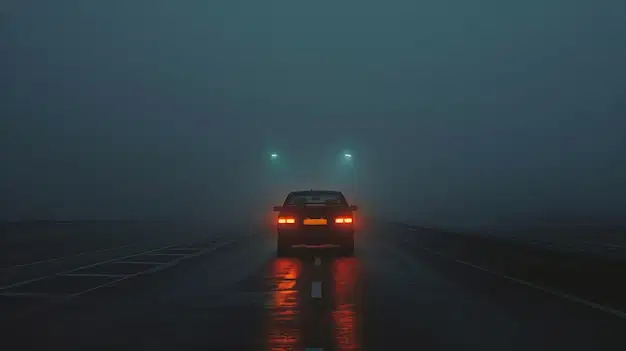
Which coloured light is most suitable to be used for headlights during a foggy weather?
Red
Green
Yellow
White
The splitting of light into its component colours is known as ___________ .
scattering of light
dispersion of light
tyndall effect
refraction of light
Which of the following colours has the largest angle of deviation when light splits into seven colours?
Blue
Red
Orange
Yellow
We see sky as blue because ________________ .
red colour is scattered more in the atmosphere and only blue colour reaches our eyes
blue colour rays have the highest wavelength that is why it gets scattered
sky has a tendency to absorb the colour of the ocean
blue colour is scattered more than the lights from other colours in the atmosphere
Why does danger signals are always red in colour?
Red colour has the least wavelength among all the seven colours
Red colour is most scattered by the environment
Red colour has the highest wavelength
Red colour moves the fastest in the any medium
Assertion (A): Rainbow forms after the rain. Reason (R): Sunlight gets refracted, dispersed and internally reflected in the molecules of water present in the atmosphere.
A and R both are true and R is the correct explanation of A
A and R both are true but R is not the correct explanation of A
A is true and R is false
A is false and R is true

