
 Worksheets
AP Chem 6.1, 6.2 Review
Total questions: 24
Worksheet time: 34mins
In a system, 60 Joules of heat are absorbed by the system, while the system does 50 Joules of work. Use ΔE=q+w to calculate the total internal energy change of this system.
+q A system gains heat
-q A system loses heat
+w Work is done on the system
-w Work is done by the system
10 J
−10 J
110 J
−110 J
A system releases 100 Joules of heat, while 70 Joules of work are done on the system. Use ΔE=q+w to calculate the total internal energy change of this system.
+q A system gains heat
-q A system loses heat
+w Work is done on the system
-w Work is done by the system
30 J
−30 J
170 J
−170 J
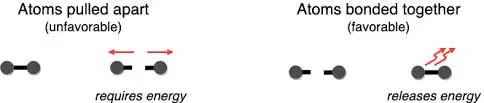
During formation of chemical bonds energy is __________.
released
absorbed
conserved without change
converted entirely to work
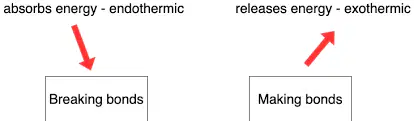
The breaking of chemical bonds is a(n) __________ process.
exothermic
endothermic
isothermal
adiabatic
Stretching a rubber band until it breaks is a(n) __________ process.
endothermic
exothermic
isothermal
adiabatic
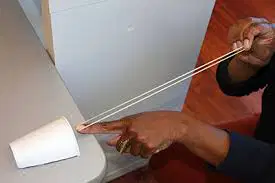
Releasing a stretched rubber band is a(n) __________ process.
endothermic
exothermic
isothermal
adiabatic
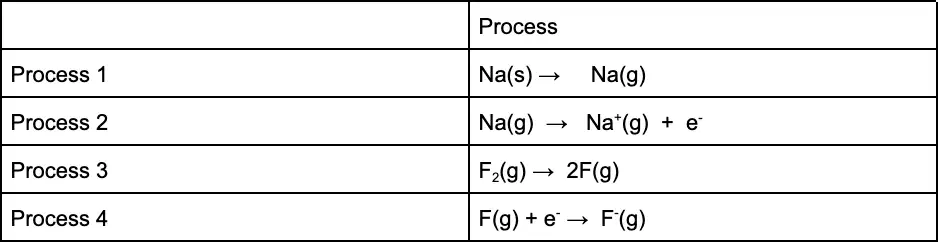
Select all steps that are endothermic in the process table:
Hint: Which steps require an input of energy?
Process 1: Na(s) → Na(g)
Process 2: Na(g) → Na⁺(g) + e⁻
Process 3: F₂(g) → 2F(g)
Process 4: F(g) + e⁻ → F⁻(g).
Process 1: Na(s) → Na(g)
Process 2: Na(g) → Na⁺(g) + e⁻
Process 3: F₂(g) → 2F(g)
Process 4: F(g) + e⁻ → F⁻(g)
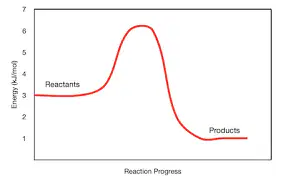
In which direction does thermal energy (heat) travel in the reaction-energy diagram showing products at lower potential energy than reactants?
Hint: The system is the reaction. The surroundings are anything outside of the reaction such as a beaker or the air.
from the surrounds to the system
from the system to the surroundings
heat does not travel
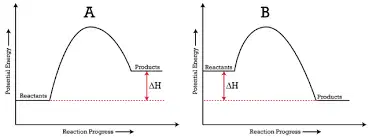
An experiment was performed in an insulated container and the temperature increased inside the container. Which diagram demonstrates this experiment?
Option A shows an endothermic profile (products higher than reactants with an upward ΔH arrow).
Option B shows an exothermic profile (products lower than reactants with a downward ΔH arrow).
A
B
In the spring, blossoms on cherry trees can be damaged when temperatures fall below -2°C. When the forecast calls for air temperatures to be below -5°C for a few hours one night, a farmer sprays his blossoming cherry trees with water, claiming that the blossoms will be protected by the water as it freezes. Which of the following is a correct scientific justification for spraying water on the blossoms to protect them from temperatures below -2°C?
Water on the blossoms will not freeze unless the air temperature falls significantly below -5°C.
Water is a good thermal conductor that transfers heat from the cold air to the blossoms, keeping the blossoms from going below -2°C.
The freezing of water is an endothermic process; thus, water that freezes on the blossoms absorbs heat from the atmosphere, which in turn keeps the blossoms above 0°C.
The freezing of water is an exothermic process; thus, water that freezes on the blossoms releases heat to keep the blossoms at or above -2°C.


This reaction would be considered ......
endothermic.
exothermic.
which is exothermic?
temperature decreases
breaking bonds
system releasing heat to surroundings
chemical reaction
Energy is required to ________bonds.
form
break
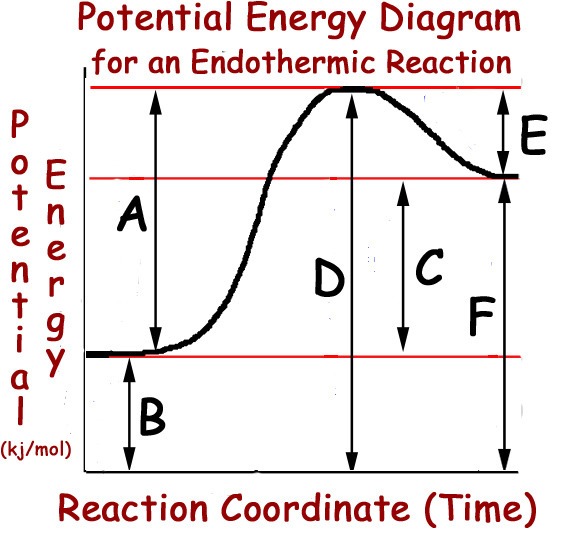
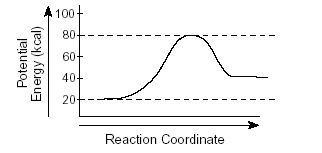
What is the ΔH of this reaction?
40 kJ
20 kJ
80 kJ
-60 kJ
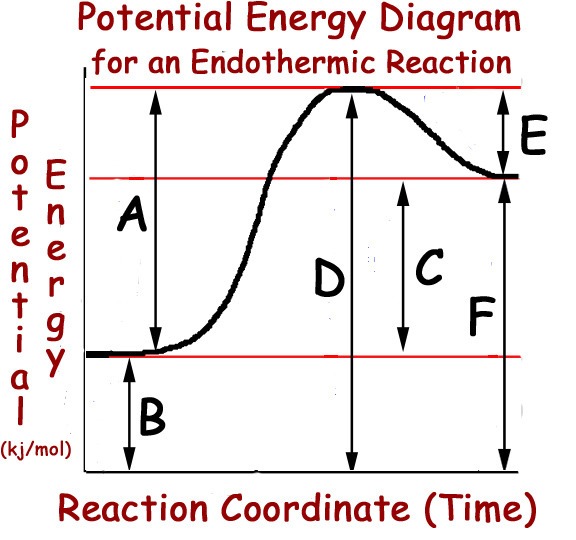

What is the sign of ΔH for all endothermic reactions?
zero

What is the ΔH of this energy profile?
-100 kJ
+100 kJ
+50 kJ
-50 kJ

What is the approximate ΔH for this energy profile?
-100 kJ
+800 kJ
+400 kJ
-75 kJ
+100 kJ
-175 kJ
-50 kJ
+75 kJ
A chemical reaction that releases heat from the system to the surroundings.
endothermic reaction
exothermic reaction
synthesis reaction
decomposition
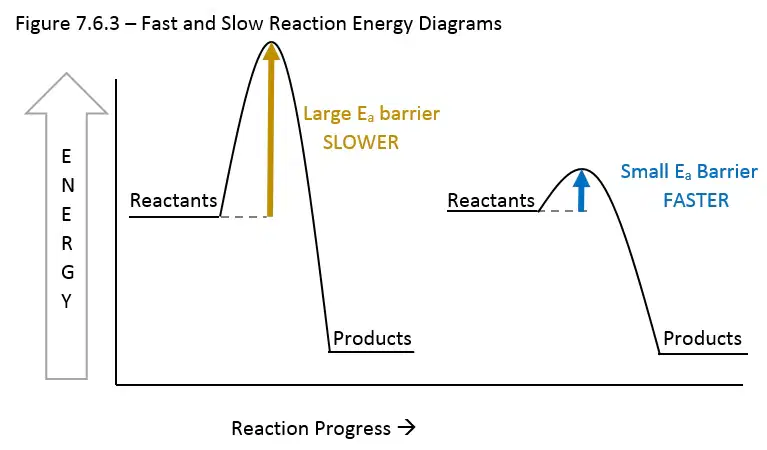
What does it mean when a reaction has a high activation energy?
the reaction is exothermic
that reaction does not take place
the reaction is fast
the reaction is slow

