
Resource Type


5th Grade Area of Quadrilaterals Quizzes
Master the area of quadrilaterals with engaging Grade 5 math quizzes that help students practice calculating the area of rectangles, squares, parallelograms, and trapezoids. These interactive assessment tools provide instant feedback and self-paced learning opportunities to strengthen understanding of quadrilateral area formulas and problem-solving skills.

15 questions
Area of Quadrilaterals Trapezoids Triangles Circles

Quiz
•
5th Grade
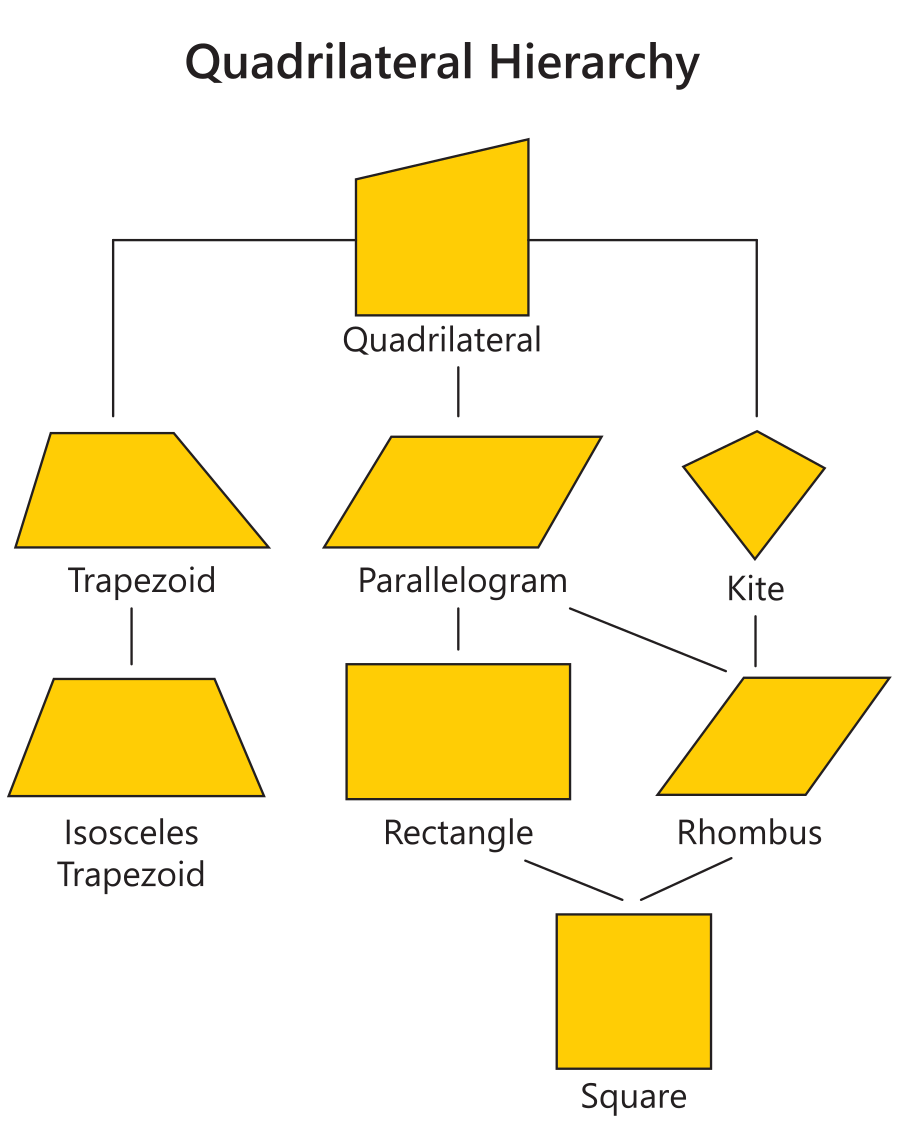
10 questions
Quadrilateral Hierarchy
Quiz
•
5th Grade

20 questions
Classifying Quadrilaterals
Quiz
•
5th Grade

21 questions
Quadrilaterals
Quiz
•
5th Grade

16 questions
Classifying Quadrilaterals and Triangles
Quiz
•
5th Grade

7 questions
Mr. Webster's Fun with Quadrilaterals and Area
Quiz
•
5th Grade
19 questions
Parallelogram Notes
Quiz
•
5th Grade
19 questions
module 5 Topic D quadrilaterals and triangles.
Quiz
•
5th Grade
10 questions
Quadrilaterals
Quiz
•
5th Grade
12 questions
Classifying Polygons, Triangles, & Quadrilaterals
Quiz
•
5th Grade
19 questions
Triangles and Quadrilaterals
Quiz
•
5th Grade
15 questions
Area of Quadrilaterals Find Missing Side Measurement
Quiz
•
4th Grade
Explore 5th Grade Area of Quadrilaterals Quizzes
Area of quadrilaterals represents a fundamental geometric concept that Grade 5 students must master to build strong mathematical foundations. Through comprehensive assessment tools available on Wayground, students engage with practice questions that systematically develop their understanding of calculating areas for squares, rectangles, parallelograms, and trapezoids. These quizzes provide immediate feedback as students work through problems involving measurement, formula application, and real-world scenarios, helping them recognize patterns and relationships between different quadrilateral shapes. The interactive format allows students to practice identifying appropriate formulas, substituting values correctly, and interpreting their results within mathematical contexts that reinforce both procedural fluency and conceptual understanding. Wayground supports educators with access to millions of teacher-created quiz collections specifically designed for area of quadrilaterals instruction at the Grade 5 level. Teachers can efficiently search and filter resources that align with state mathematics standards, selecting from differentiated materials that accommodate diverse learning needs and skill levels. The platform's customization tools enable educators to modify existing quizzes or combine questions from multiple sources, creating targeted assessments for remediation, skill reinforcement, or enrichment activities. These digital-first delivery options integrate seamlessly into classroom instruction, homework assignments, and independent practice sessions, providing teachers with flexible resources that support comprehensive lesson planning and ongoing student progress monitoring in geometric measurement concepts.
FAQs
How do I teach area formulas for different quadrilaterals in Grade 5?
Start with rectangles, then transform or decompose parallelograms, trapezoids, and rhombuses to connect each new formula to an area model students already understand. Keep the height perpendicular to the base in every diagram so students learn that a slanted side is not automatically the height.
What exercises help fifth graders practice quadrilateral area?
Use labeled diagrams for initial formula practice, followed by missing-dimension problems and real-world tasks involving floors, signs, or garden plots. Include mixed sets so students must identify the quadrilateral and select a method before calculating.
What errors should I look for when assessing quadrilateral area?
Students may use a slanted side as the height, forget to divide when finding a trapezoid’s area, or apply the rectangle formula to every four-sided figure. Have them label the base and perpendicular height before writing any equation.
How can I assign these Grade 5 area of quadrilaterals quizzes?
Teachers can host a quiz as a digital quiz on Wayground or print the PDF for paper-based practice, accommodating different teaching settings and student preferences. Every quiz includes a complete answer key, and the Wayground for Teachers app can scan or capture completed paper work for grading.
How does quadrilateral area connect to the Common Core Grade 5 curriculum?
Common Core Grade 5 geometry emphasizes classifying two-dimensional figures and using earlier rectangle-area knowledge in broader problem solving. Decomposing a trapezoid or parallelogram into familiar pieces prepares students for the generalized area formulas used more formally in middle school.
How can I differentiate Grade 5 quadrilateral area practice?
Provide larger diagrams and a dyslexia-friendly font for students who have trouble tracking dimensions. Read Aloud can support multi-step word problems, while enrichment versions can omit the formula or require students to justify a decomposition.
What quadrilateral area skills should a fifth grader know?
A fifth grader should reliably find the area of rectangles and squares, interpret labeled dimensions, and decompose unfamiliar quadrilaterals into manageable parts. Practice with parallelograms, trapezoids, and rhombuses can bridge that foundation to middle-school geometry.

Accessibility
Features
Wayground Super
School & District
Wayground for Business
Create a quiz
Create a presentation
Wayground AI
Subjects
Mathematics
Social Studies
Science
Physics
Chemistry
Biology
About
Our Story
Wayground Blog
Media Kit
Careers
Support
F.A.Q.
Help & Support
Privacy Policy
Terms of Service
Teacher Resources
2026 Wayground


Get our app

