

Carnivores Quizzes
Test your knowledge of carnivores with this interactive science quiz designed to assess understanding of meat-eating animals and their characteristics. Practice key concepts through self-paced questions with instant feedback to strengthen your grasp of carnivorous organisms in the animal kingdom.

20 questions
Herbivores, Carnivores, and Omnivores

Quiz
•
3rd Grade

8 questions
Carnivores, Omnivores, and Herbivores
Quiz
•
2nd Grade - Professional Development

15 questions
Carnivores
Quiz
•
2nd Grade
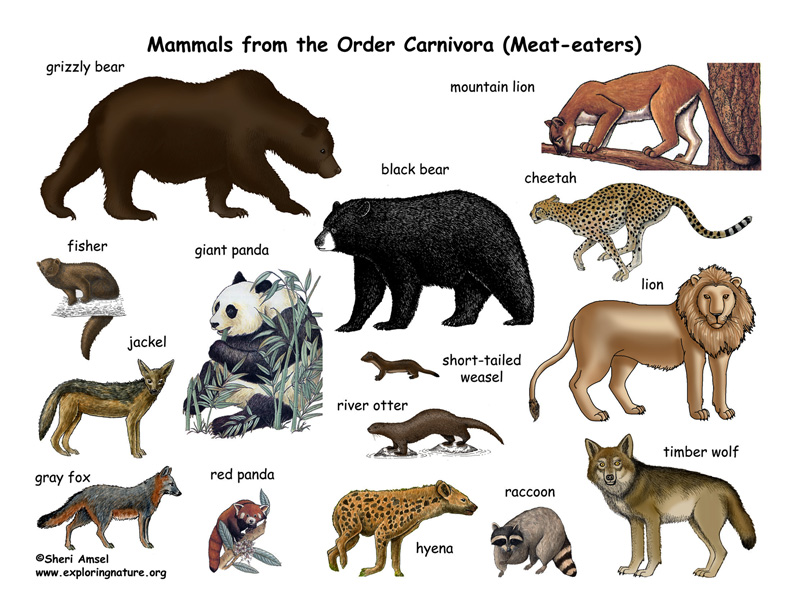
10 questions
Carnivores
Quiz
•
2nd - 4th Grade
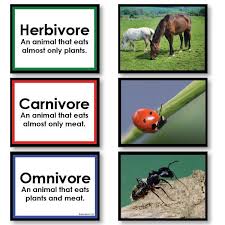
7 questions
Herbivores Carnivores
Quiz
•
3rd Grade

15 questions
herbivores carnivores and omnivores
Quiz
•
3rd Grade
12 questions
Carnivores/Herbivores/Omnivores
Quiz
•
KG - 2nd Grade
10 questions
The Food Chain
Quiz
•
3rd Grade
10 questions
The Foodchain
Quiz
•
1st Grade - Professional Development
20 questions
Parts of a food Chain Review
Quiz
•
3rd - 5th Grade
12 questions
The Food Chain
Quiz
•
2nd - 4th Grade
20 questions
Animals Diet Quiz
Quiz
•
3rd Grade
Explore Carnivores Quizzes
Carnivores represent a fascinating group of organisms that have evolved specialized adaptations for hunting and consuming other animals, making them essential components of ecosystems worldwide. Science quizzes focused on carnivorous animals provide students with comprehensive assessment opportunities to explore the anatomical, behavioral, and ecological characteristics that define these predatory species. Through targeted practice questions, learners can deepen their understanding of carnivore classification, feeding strategies, habitat requirements, and their crucial role in maintaining ecological balance. These interactive assessments offer immediate feedback on complex concepts such as food webs, predator-prey relationships, and the diverse hunting techniques employed by different carnivorous species, from microscopic protozoans to apex predators like lions and sharks. Wayground's extensive collection of teacher-created carnivore quizzes draws from millions of educational resources, providing educators with robust search and filtering capabilities to locate materials perfectly aligned with their curriculum standards and learning objectives. Teachers can easily customize these digital assessments to accommodate diverse learning needs, implementing differentiation strategies that support both remediation for struggling students and enrichment opportunities for advanced learners. The platform's flexible delivery formats enable seamless integration into various instructional approaches, whether used for formative assessment during lessons, summative evaluation of student progress, or independent practice sessions. These comprehensive quiz collections support effective lesson planning while reinforcing critical life science skills, allowing educators to track student mastery of carnivore concepts and adjust instruction to ensure all learners develop a thorough understanding of these remarkable predatory organisms.
FAQs
How do I teach students the difference between obligate and facultative carnivores?
Start by anchoring the distinction in real-world examples: obligate carnivores like cats cannot synthesize certain nutrients without animal protein, while facultative carnivores like bears supplement meat with plant matter. Use a comparison chart to have students match organisms to their dietary category and explain the biological reason behind each classification. Tying the concept to anatomical features — such as tooth structure and digestive tract length — helps students understand why these distinctions exist rather than simply memorizing definitions.
What exercises help students understand how carnivores fit into a food chain?
Food web mapping activities are especially effective: give students a set of organisms and ask them to construct a food chain that correctly positions carnivores as secondary or tertiary consumers. Follow-up questions should require students to explain what happens to the food web if a top predator is removed, reinforcing the concept of trophic cascades. Carnivore quizzes that combine food chain diagrams with short-answer analysis push students beyond identification toward ecological reasoning.
What misconceptions do students commonly have about carnivores?
A frequent misconception is that all carnivores are large, aggressive predators — students often overlook small or invertebrate carnivores like spiders, dragonflies, and pitcher plants. Another common error is conflating 'carnivore' with 'apex predator,' when many carnivores are themselves prey for larger animals. Students also tend to oversimplify food chains, assuming carnivores eat only one type of prey rather than functioning within complex, interconnected food webs.
How do carnivore quizzes help students analyze predator-prey relationships?
Well-designed carnivore quizzes present predator-prey scenarios that require students to interpret population graphs, identify cause-and-effect patterns, and predict outcomes when one species' population shifts. This moves students from passive recall to applied ecological thinking, which aligns with life science standards at the middle school level. Practice problems that include real data sets — such as wolf reintroduction in Yellowstone — give students concrete context for abstract concepts like population dynamics.
How can I use Wayground's carnivore quizzes in my classroom?
Wayground's carnivore quizzes are available as printable PDFs for traditional classroom use and in digital formats for technology-integrated or remote learning environments. Teachers can also host quizzes directly as a quiz on Wayground, allowing for real-time student responses and built-in assessment. The included answer keys make it straightforward to use these materials for independent practice, formative assessment, or structured remediation sessions without additional prep work.
How can I differentiate carnivore lessons for students at different skill levels?
For foundational learners, focus on identifying basic carnivore characteristics and placing familiar animals — lions, owls, sharks — into food chain diagrams. Advanced students can examine anatomical adaptations in detail, compare obligate versus facultative carnivores across ecosystems, or analyze how invasive carnivore species disrupt native food webs. On Wayground, teachers can apply accommodations such as reduced answer choices or read-aloud support to individual students, ensuring the same core content is accessible across a range of learning needs without disrupting the rest of the class.

Accessibility
Features
Wayground Super
School & District
Wayground for Business
Create a quiz
Create a presentation
Wayground AI
Subjects
Mathematics
Social Studies
Science
Physics
Chemistry
Biology
About
Our Story
Wayground Blog
Media Kit
Careers
Support
F.A.Q.
Help & Support
Privacy Policy
Terms of Service
Teacher Resources
2026 Wayground


Get our app

