


3rd Grade Classifying Angles Quizzes
Master classifying angles with our comprehensive Grade 3 quiz collection on Wayground, designed to help young learners identify and categorize right angles, acute angles, and obtuse angles through engaging practice questions. These self-paced assessments provide instant feedback to strengthen your students' understanding of angle classification while building essential geometry skills.

11 questions
Classifying Angles - Acute, Right, or Obtuse

Quiz
•
3rd - 4th Grade
23 questions
Classifying Angles - Acute, Right, or Obtuse
Quiz
•
3rd - 4th Grade

18 questions
Classifying Angles Acute Obtuse and Right Angles
Quiz
•
3rd - 4th Grade

10 questions
Classifying Angles
Quiz
•
3rd - 4th Grade

22 questions
Classifying Angles
Quiz
•
3rd - 4th Grade

25 questions
Classifying Angles
Quiz
•
3rd - 5th Grade
19 questions
Classifying Angles and Lines
Quiz
•
3rd - 5th Grade
10 questions
Classifying Angles by Degrees
Quiz
•
1st - 4th Grade
10 questions
Classifying Angles
Quiz
•
3rd - 6th Grade
9 questions
Classifying Angles by picture
Quiz
•
1st - 4th Grade
10 questions
Classifying Angles
Quiz
•
3rd - 12th Grade
10 questions
Measuring and Classifying Angles
Quiz
•
3rd - 12th Grade
Explore 3rd Grade Classifying Angles Quizzes
Classifying angles forms a fundamental component of Grade 3 mathematics geometry instruction, building students' spatial reasoning and mathematical vocabulary through systematic categorization of right angles, acute angles, and obtuse angles. These comprehensive quizzes available through Wayground provide targeted assessment opportunities that help young learners develop essential angle recognition skills while strengthening their understanding of geometric relationships. The practice questions guide students through careful observation and measurement techniques, offering immediate feedback that reinforces correct identification strategies and addresses common misconceptions about angle types and their real-world applications. Wayground supports Grade 3 teachers with an extensive collection of millions of teacher-created angle classification quizzes that align with mathematics standards and accommodate diverse learning needs in the elementary classroom. The platform's robust search and filtering capabilities enable educators to quickly locate resources that match specific curriculum requirements, student ability levels, and instructional objectives for geometry units. Teachers can customize quiz content and delivery formats to support differentiated instruction, whether providing remediation for students struggling with angle concepts or offering enrichment activities for advanced learners, while the flexible digital format facilitates both classroom instruction and independent practice sessions that reinforce geometric reasoning skills.
FAQs
How do I teach classifying angles to third graders?
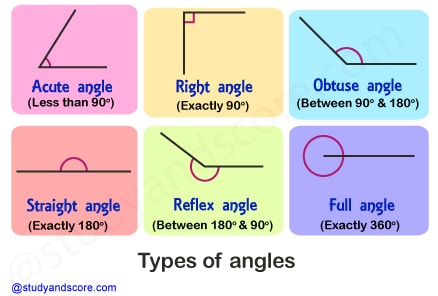
Start by helping students find right angles in squares, rectangles, classroom objects, and folded paper. Use the right angle as a visual benchmark so students can describe smaller openings as acute and larger openings as obtuse before introducing more formal measurement.
What classifying angles exercises work well for Grade 3?
Third graders benefit from circling right angles, sorting pictured angles into acute, right, and obtuse groups, and finding angle types in familiar objects and geometric shapes. Tracing or constructing angles adds hands-on reinforcement and builds spatial reasoning alongside vocabulary.
What mistakes do Grade 3 students make when classifying angles?
Third graders may focus on ray length, the angle's orientation, or the overall shape instead of the opening between the rays. Rotating the same angle and comparing it with a square corner helps students see that its classification does not change when its position changes.
How can I use Grade 3 classifying angles quizzes on Wayground?
Wayground quizzes are available as printable PDFs and in digital formats, allowing teachers to host a quiz as a digital quiz or print and assign it on paper. Every quiz includes a complete answer key, and teachers can grade physical submissions by scanning or capturing student work with the Wayground for Teachers app.
How does classifying angles fit into the Common Core progression for Grade 3?
Common Core geometry in the elementary grades builds from analyzing shape attributes toward formal angle measurement and classification in the next stage of instruction. Grade 3 work with corners, right-angle benchmarks, and comparisons among angle openings provides useful preparation for that progression without requiring students to depend on protractors.
How can I differentiate Grade 3 classifying angles practice?
For students needing support, use clear visuals, familiar objects, and right-angle corner guides; for students ready for enrichment, include rotated angles and figures containing several angle types. Wayground can provide extended time, Read Aloud, reduced answer choices, and reading mode, while quiz versions can use larger text, wider spacing, a dyslexia-friendly font, or translation.
What grade do students learn to classify angles?
Students commonly begin informal angle recognition in Grade 3 by identifying right angles and comparing other openings with them. Formal angle measurement and systematic classification are typically developed more fully in Grade 4, making Grade 3 practice an important conceptual foundation.

Accessibility
Features
Wayground Super
School & District
Wayground for Business
Create a quiz
Create a presentation
Wayground AI
Subjects
Mathematics
Social Studies
Science
Physics
Chemistry
Biology
About
Our Story
Wayground Blog
Media Kit
Careers
Support
F.A.Q.
Help & Support
Privacy Policy
Terms of Service
Teacher Resources
2026 Wayground


Get our app

