


3rd Grade Measuring Angles Quizzes
Test your Grade 3 students' understanding of measuring angles with our comprehensive collection of interactive quizzes on Wayground. These self-paced assessment tools provide instant feedback to help young learners practice identifying, comparing, and measuring different types of angles through engaging questions designed specifically for third-grade mathematics curriculum.
20 questions
Measuring Angles Kinds of Angles

Quiz
•
3rd Grade

20 questions
Measuring Angles
Quiz
•
3rd Grade

20 questions
Polygons and Angles-3rd Grade
Quiz
•
3rd Grade

14 questions
Drawing and Measuring Angles
Quiz
•
3rd - 4th Grade
7 questions
16-3 Measuring Angles
Quiz
•
3rd - 4th Grade

11 questions
Measuring Angles and Fractions of a Circle
Quiz
•
3rd - 4th Grade
12 questions
Measuring Angles
Quiz
•
3rd - 5th Grade
20 questions
Measuring Angles
Quiz
•
3rd - 5th Grade
8 questions
Measuring Angles
Quiz
•
3rd - 5th Grade
11 questions
Understanding and Measuring Angles
Quiz
•
3rd - 5th Grade
20 questions
Measuring Angles Review!
Quiz
•
3rd - 5th Grade
11 questions
Measuring Angles
Quiz
•
3rd - 6th Grade
Explore 3rd Grade Measuring Angles Quizzes
Measuring angles forms a fundamental component of Grade 3 mathematics curriculum, introducing young learners to the concept of rotational measurement and spatial reasoning. These interactive quizzes provide comprehensive assessment opportunities for students to demonstrate their understanding of angle measurement concepts, including identifying right angles, acute angles, and obtuse angles using various tools and visual representations. Through carefully structured practice questions, students develop essential skills in recognizing angle types, comparing angle sizes, and understanding the relationship between angles and geometric shapes. The feedback-driven format allows learners to immediately identify areas of strength and weakness while building confidence in their mathematical reasoning abilities. Wayground's extensive collection of measuring angles quizzes draws from millions of teacher-created resources, offering educators powerful search and filtering capabilities to locate materials perfectly aligned with their instructional objectives and curriculum standards. Teachers can easily customize these digital assessments to support differentiated instruction, selecting questions that match individual student readiness levels while maintaining focus on core Grade 3 angle measurement competencies. The platform's flexible delivery options enable seamless integration into various classroom environments, supporting both whole-class instruction and independent practice sessions. These comprehensive quiz collections serve as invaluable tools for lesson planning, targeted remediation, and skill reinforcement, helping educators track student progress while providing multiple opportunities for learners to master essential angle measurement concepts through engaging, interactive experiences.
FAQs
What do 3rd graders learn about measuring angles?
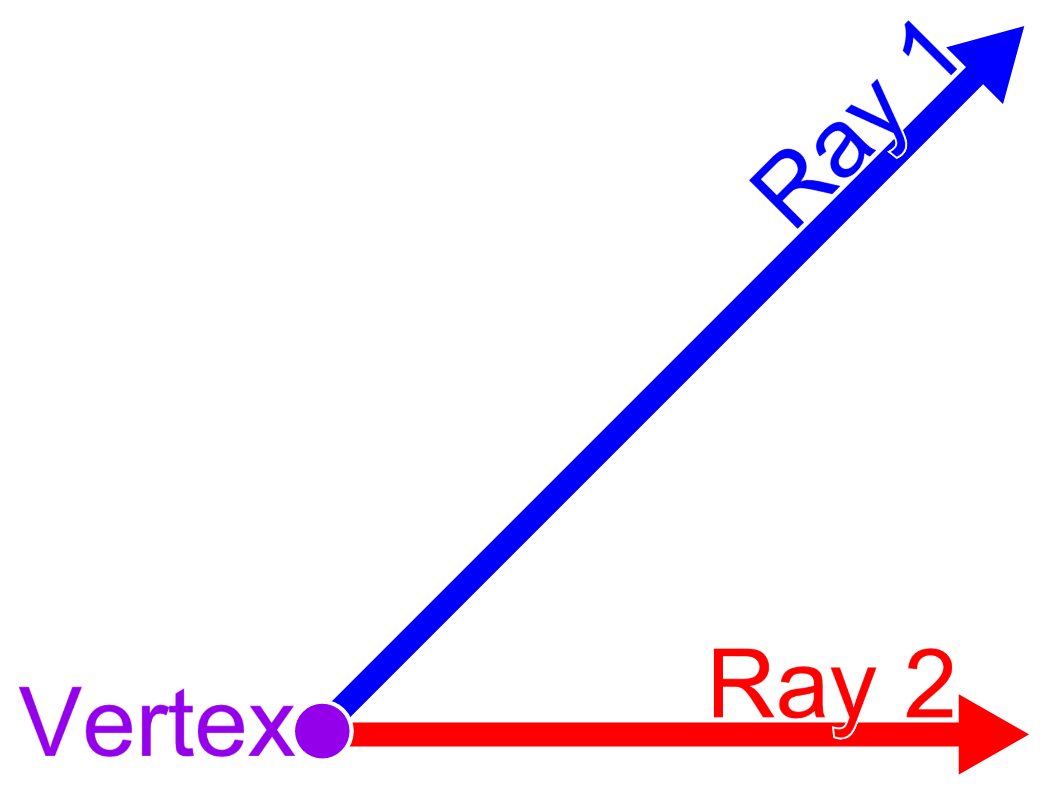
In Grade 3, the focus is on building a conceptual foundation. Students learn to identify angles and recognize that a right angle is a square corner. They practice comparing other angles to a right angle, describing them as either greater than or less than, rather than measuring them in degrees with a protractor.
How can I introduce angles to third graders?
Use physical and visual aids. Have students use their arms to show a right angle, an angle smaller than a right angle (acute), and an angle larger than a right angle (obtuse). Using a paper square to check corners in the classroom is also a great hands-on activity to solidify the concept of a right angle.
What's a common misconception for 3rd graders learning about angles?
A very common misconception is that the length of an angle's rays determines its size. Students will often claim an angle with longer lines is 'bigger' than an angle with shorter lines, even if the degree measure is smaller. It is crucial to clarify that an angle's size is about the 'opening' between the rays, not their length.
What exercises are best for practicing angles in Grade 3?
Activities should be visual and comparative. Good exercises include sorting shapes based on whether they have right angles, circling the right angles in a set of polygons, or identifying which of two angles is larger without measuring.
How does this align with Common Core standards for Grade 3 math?
In Grade 3, Common Core standards focus on helping students categorize shapes based on their attributes. These quizzes support that goal by teaching students to identify and describe angles, particularly right angles, which is a key attribute used to classify quadrilaterals and other polygons.
How can I use these Grade 3 angle quizzes?
These quizzes are ideal as printable PDFs for hands-on activities like sorting and coloring. Since the focus is conceptual, paper-based practice allows for drawing and direct comparison. Each quiz includes an answer key for easy self-checking or quick grading.

Accessibility
Features
Wayground Super
School & District
Wayground for Business
Create a quiz
Create a presentation
Wayground AI
Subjects
Mathematics
Social Studies
Science
Physics
Chemistry
Biology
About
Our Story
Wayground Blog
Media Kit
Careers
Support
F.A.Q.
Help & Support
Privacy Policy
Terms of Service
Teacher Resources
2026 Wayground


Get our app

