
Resource Type


4th Grade Distributive Property Quizzes
Test your Grade 4 students' understanding of the Distributive Property with this comprehensive quiz designed to assess their ability to break apart multiplication problems. Practice questions provide instant feedback to help students master this fundamental arithmetic concept at their own pace.

15 questions
Distributive Property

Quiz
•
4th Grade

13 questions
Distributive Property of Multiplication
Quiz
•
4th Grade

22 questions
Distributive Property Test
Quiz
•
4th Grade
19 questions
Multiplying Two Digit Numbers Using The Distributive Property
Quiz
•
4th Grade

20 questions
Distributive Property Factors
Quiz
•
4th Grade

10 questions
Distributive Property
Quiz
•
3rd - 4th Grade
19 questions
Distributive Property
Quiz
•
3rd - 4th Grade
11 questions
Distributive Property
Quiz
•
2nd - 5th Grade
11 questions
Distributive Property
Quiz
•
1st - 5th Grade
6 questions
Distributive Property
Quiz
•
4th - 8th Grade
11 questions
Distributive Property
Quiz
•
4th Grade
10 questions
Area using distributive property
Quiz
•
3rd Grade
Explore 4th Grade Distributive Property Quizzes
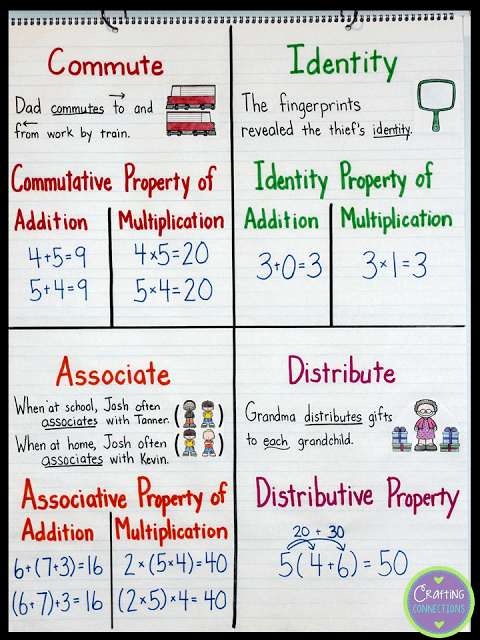
The distributive property represents a fundamental mathematical concept that Grade 4 students must master to build strong computational skills and algebraic thinking. Through Wayground's comprehensive quiz collection, students engage with carefully designed practice questions that systematically develop their understanding of how multiplication distributes over addition and subtraction. These assessment tools provide immediate feedback as students work through problems like 3 × (4 + 2) = (3 × 4) + (3 × 2), helping them recognize patterns and apply the distributive property to solve complex arithmetic expressions. The quizzes progressively build from concrete examples using visual models to more abstract numerical relationships, ensuring students develop both conceptual understanding and procedural fluency with this essential mathematical principle. Wayground supports mathematics educators with access to millions of teacher-created quiz resources specifically aligned with Grade 4 distributive property standards and learning objectives. The platform's robust search and filtering capabilities enable teachers to quickly locate assessment materials that match their specific instructional needs, from introductory concept checks to advanced application problems. Customization tools allow educators to modify existing quizzes or combine multiple resources to create differentiated assessments that accommodate varying student readiness levels within their classrooms. These digital quiz formats provide flexible delivery options for both individual practice and whole-class review sessions, while detailed analytics help teachers identify areas requiring additional instruction or remediation. The extensive resource library supports comprehensive lesson planning by offering varied question types and difficulty levels that reinforce distributive property concepts through multiple mathematical contexts and real-world applications.
FAQs
How do I teach the distributive property to fourth graders?
Begin with arrays or area models so students can see one multiplication problem split into two smaller products. For example, show 6 × 13 as 6 × (10 + 3), then connect the model to 6 × 10 + 6 × 3 before introducing property notation.
What exercises help Grade 4 students practice the distributive property?
Use a short progression: break apart a factor, write the matching expanded expression, and solve both forms to confirm they are equal. Include addition and subtraction examples so students learn that multiplication distributes over either operation.
What mistakes do fourth graders make with the distributive property?
Students often multiply only the first number inside the parentheses or lose track of the operation between the two products. Have them draw arrows from the outside factor to both terms and check that the original and expanded expressions have the same value.
How can I use a Grade 4 distributive property quiz in class?
Assign the quiz as a digital quiz hosted on Wayground or print the PDF for paper practice. Every quiz includes a complete answer key, and teachers can scan or capture completed paper work for grading with the Wayground for Teachers app.
How does the distributive property fit into the Grade 4 Common Core math progression?
Common Core develops the distributive property through multiplication strategies, equations, and area models. It builds on students’ understanding of equal groups and prepares them to multiply larger numbers by decomposing a factor into easier parts, such as changing 7 × 16 into 7 × 10 + 7 × 6.
How can I differentiate distributive property practice in Grade 4?
Provide larger print or wider spacing for students who have trouble tracking factors across an expression, and use reduced answer choices in digital sessions to limit cognitive load. Students who are ready for enrichment can explain two different ways to break apart the same factor.
What grade do students learn the distributive property?
The distributive property is commonly developed as a multiplication strategy in Grade 4. At this stage, students use arrays and number decomposition to make larger products easier to calculate, laying groundwork for later algebraic expressions.

Accessibility
Features
Wayground Super
School & District
Wayground for Business
Create a quiz
Create a presentation
Wayground AI
Subjects
Mathematics
Social Studies
Science
Physics
Chemistry
Biology
About
Our Story
Wayground Blog
Media Kit
Careers
Support
F.A.Q.
Help & Support
Privacy Policy
Terms of Service
Teacher Resources
2026 Wayground


Get our app

